Pickleball Two-Tap Drill: Soften the Ball and Control the Kitchen Exchange
A practical pickleball two-tap drill for learning soft hands, controlled height, balanced footwork, and repeatable kitchen-line touch.
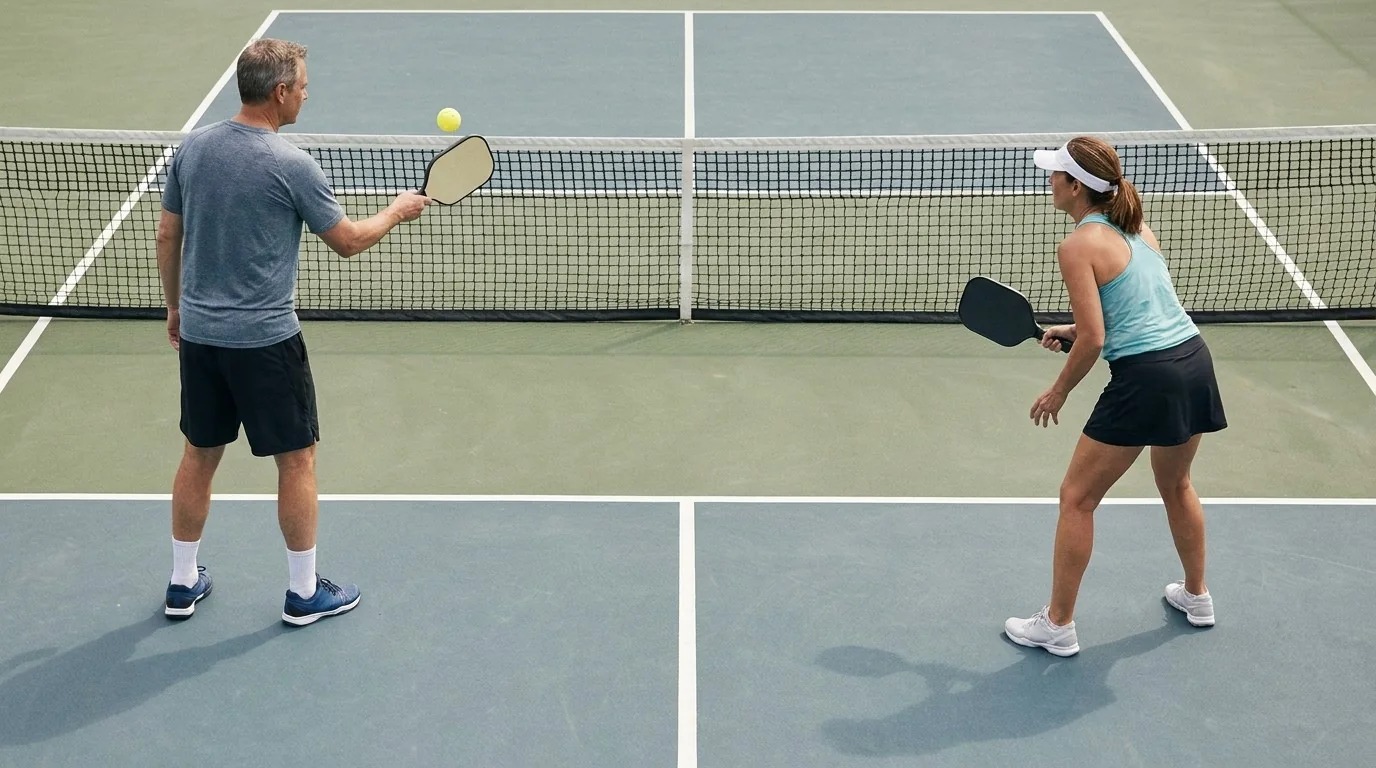
The two-tap drill turns a simple kitchen-line exchange into a focused touch exercise. Instead of sending the ball straight back, you tap it upward once, let it settle, and then send it across the net. That extra contact slows the rally enough to reveal grip pressure, paddle angle, balance, and decision-making.
Set up the drill
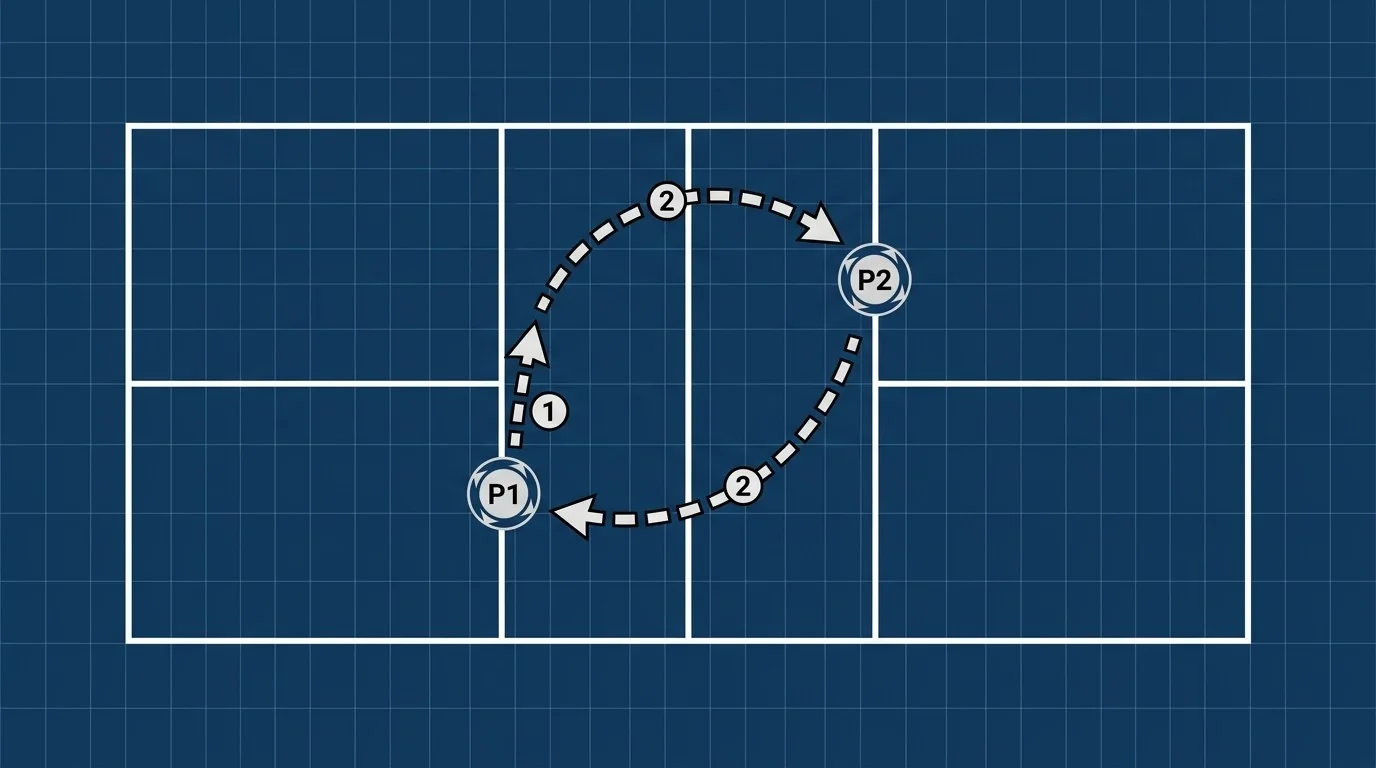
Stand with a partner on opposite non-volley-zone lines, directly across from each other. Start on half a court so the exchange stays compact. The point is control, not chasing a wide ball or trying to win the rally. Use a cooperative feed and agree to keep the ball calm and repeatable.
Keep the paddle in front of your body and your grip relaxed. This is not a full swing followed by another full swing. The first tap should lift the ball only enough to give you time to organise the next contact.
Make the first tap useful
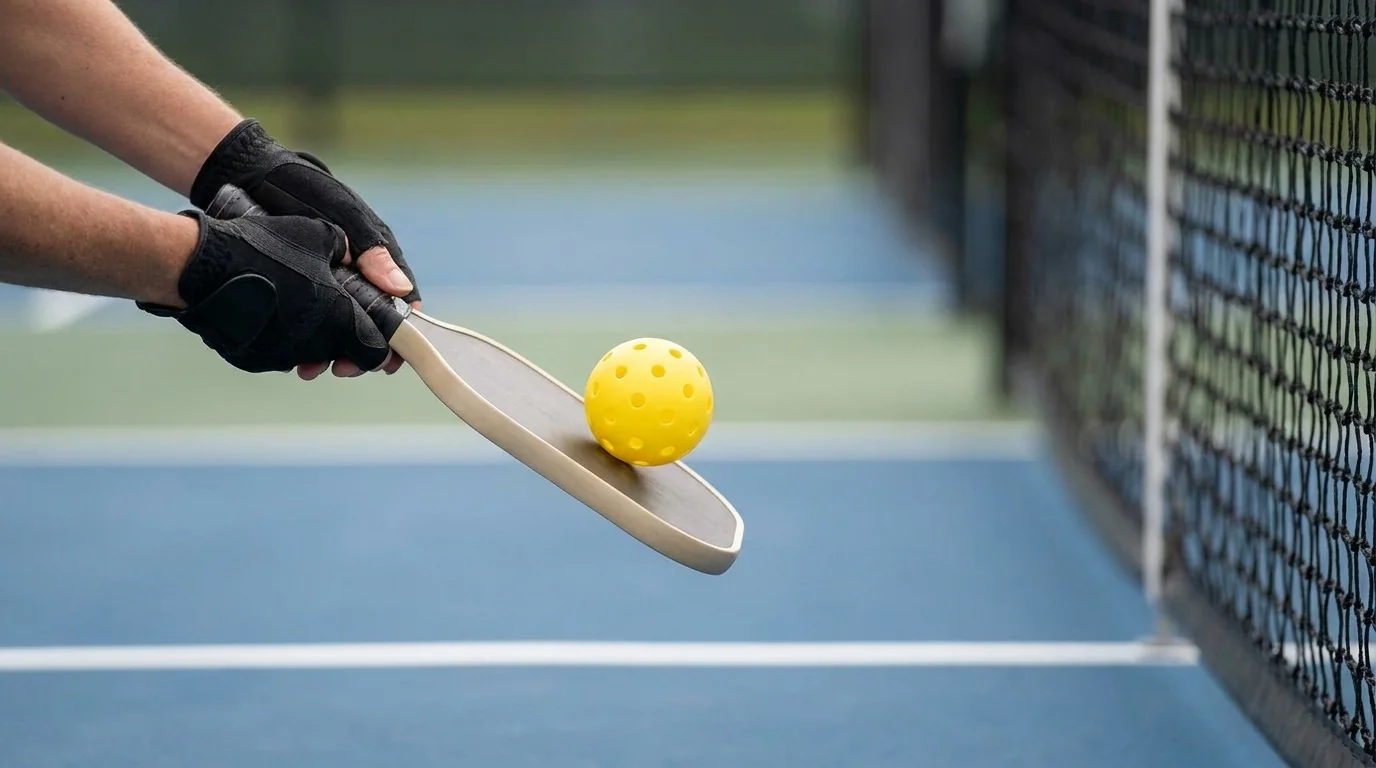
When the ball arrives, soften the paddle face and tap it upward in front of your body. Do not scoop with a large wrist motion. A quiet hand and small adjustment steps make the ball easier to manage. If the tap rises too high, the face may be too open or the contact too firm. If the ball dies immediately, you may be absorbing too much pace or contacting it too low.
The first tap also checks your balance. Stay on the balls of your feet with your knees comfortably flexed, and keep your head steady. Move your feet to meet the ball instead of reaching from a fixed base. A self-tap that leaves you ready for the next ball matters more than one that merely stays in the air.
Return with the same calm shape
After the self-tap, track the ball and send it back with a short, gentle motion. Aim through a safe window over the net and toward an area your partner can reach. Do not turn the second contact into a drive just because the ball is available. The drill works when both players protect the rhythm and offer each other a manageable ball.
As your control improves, vary the height of the incoming feed slightly. Keep the same priorities: get behind the ball, contact it in front, cushion its pace, and recover the paddle to a ready position. A small change in height or direction should test whether the technique still holds.
Progress the challenge
Start with five consecutive two-tap exchanges. Build toward ten without losing balance or sending the ball above a comfortable defensive height. Count only repetitions in which both the first tap and the return are controlled. That keeps a long rally from hiding a string of rushed contacts.
Next, alternate forehand and backhand feeds while staying on the same half court. Add a small side step before the tap so your feet, rather than an extended arm, handle the change of direction. Later, let your partner choose a slightly wider feed. If the ball becomes frantic, return to the cooperative pattern.
Know when to stop tapping
The two-tap pattern is a training constraint, not a rule for live play. In a game, a ball may require an immediate dink, block, or attack. Use the drill to build the touch and balance behind those choices, then remove the extra tap and see whether the same calm paddle control survives a normal kitchen exchange.
A productive session has a clear target: relaxed grip, manageable height, stable feet, and a return that gives your partner a good ball. When one of those qualities disappears, reduce the pace, shorten the distance, or take a brief reset. Soft hands come from repeatable contacts, not from forcing the rally to continue.