Pickleball Volley Choices: Block, Punch, and Swing With Control
A practical guide to choosing block, punch, and swing volleys by contact height, incoming pace, target, and recovery needs.
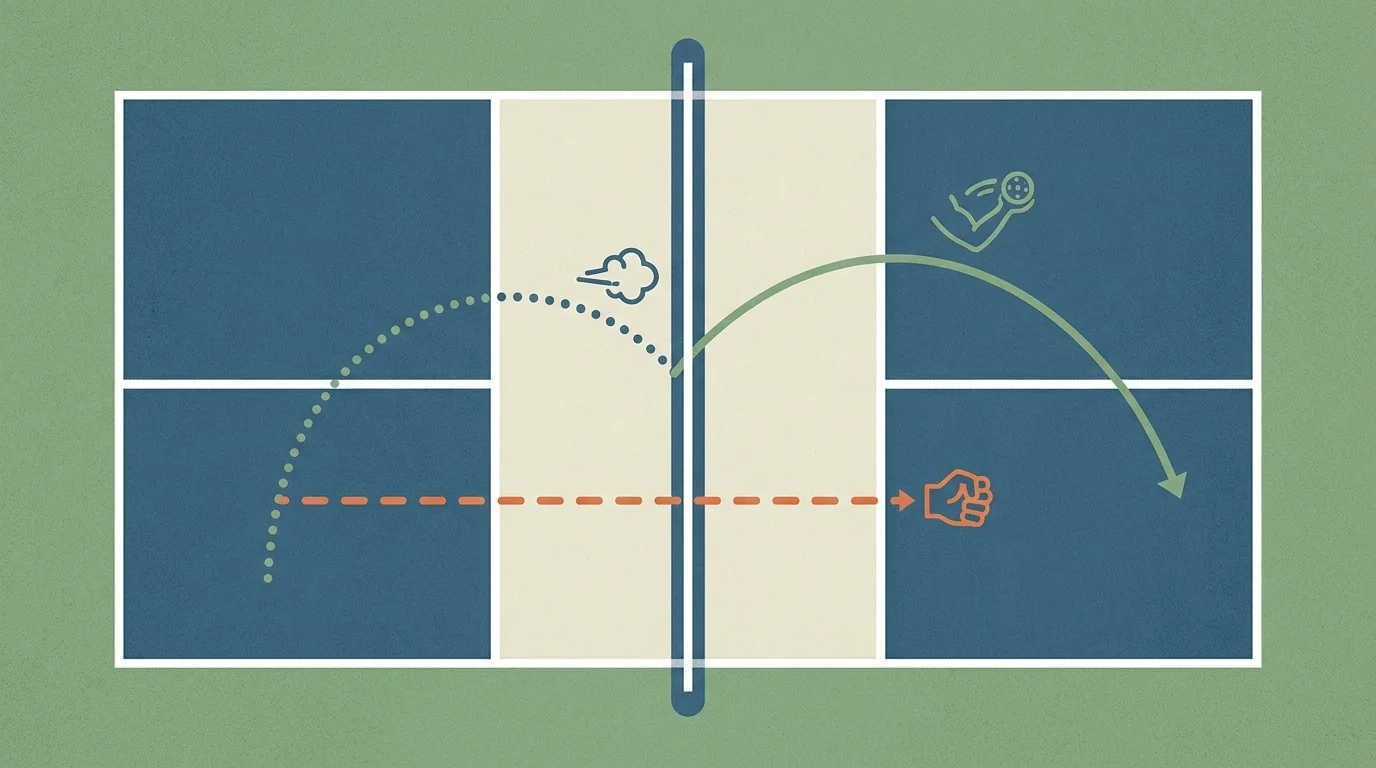
Choosing a pickleball volley starts with the ball in front of you, not with a favorite swing. Near the kitchen line, a soft block, a compact punch, and a controlled swing each have a different job. Read the ball's height, pace, and direction, then use the smallest response that keeps you balanced for the next exchange.
Start with the contact you can control
A volley is a shot played before the ball bounces. Most volleys happen near the Non-Volley Zone line, where there is little time to react and the next ball can arrive quickly. The useful question is not what the shot is called. Ask whether the ball is above, level with, or below your comfortable contact point. Also notice whether its pace gives you time or rushes your preparation.
Keep the paddle and hands in front of your body. Set your feet when the ball allows it, and avoid a large backswing. A stable base gives you more choices than a dramatic swing made while reaching. If you are late, protect your contact space first.
Block fast or awkward balls
Use a block when the ball is fast, low, or awkward enough that adding pace would create unnecessary risk. Present a steady paddle face, absorb some of the incoming energy, and guide the ball toward a safe, low target. The motion is short. The point is to neutralize the exchange and regain your shape, not to force a winner from a defensive contact.
A block is especially useful when the ball reaches your body or arrives while your feet are still organizing. Keep contact in front when you can. Do not turn a difficult ball into a high pop-up. When the ball is too low to attack, clear the net with margin and keep the reply controllable.
Punch a comfortable ball
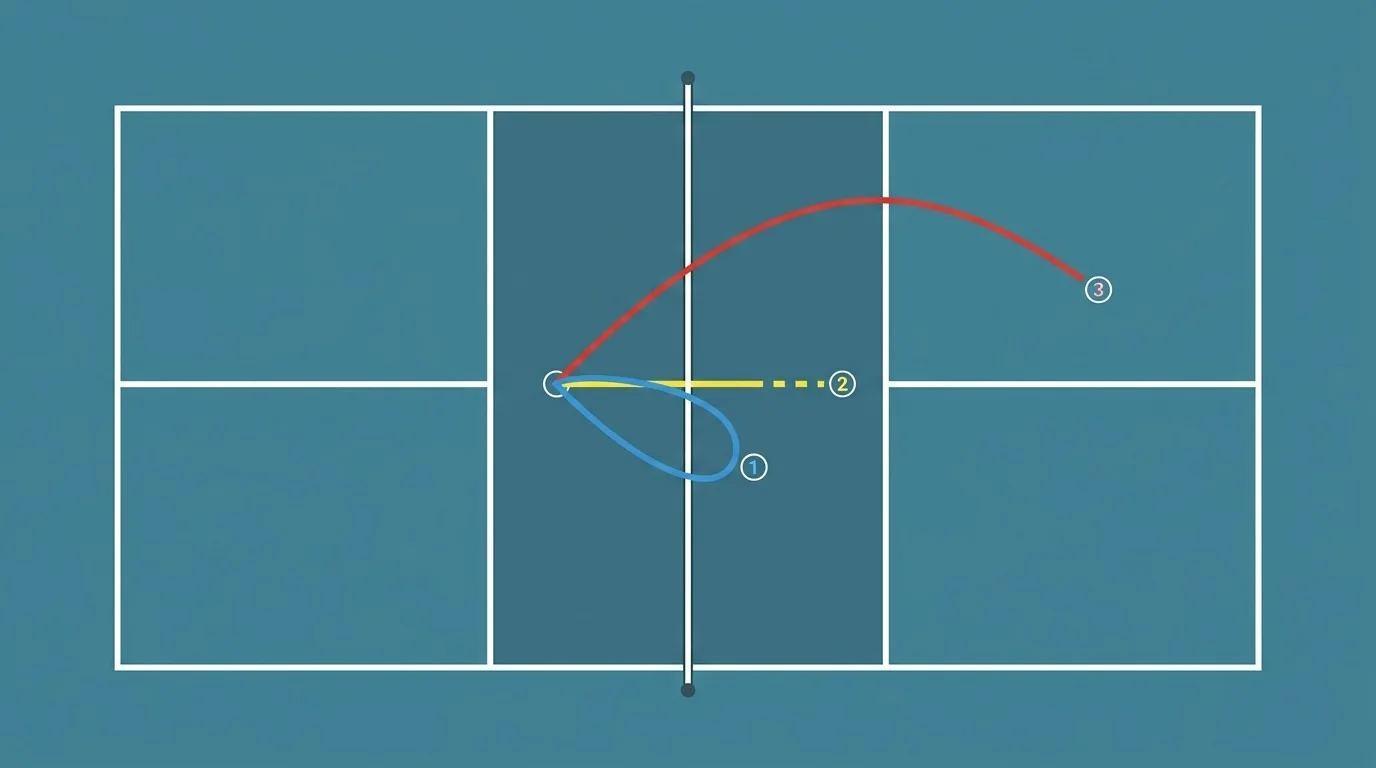
A punch volley fits a ball that reaches a manageable contact window. Use the shoulder and a small forward extension rather than a long arm swing. Direct the ball through an open target, such as the opponent's feet, hip area, or a space that makes them move. Leave enough height above the net to keep the shot reliable.
A punch should not become a slap. Finish under control and bring the paddle back to a ready position. If the ball drops below your dependable contact point, change the decision. A block or reset is better than forcing a punch from below the net.
Swing when height and balance support it
A controlled swing volley can apply more pressure when the ball is high enough and your body is balanced. Move into the ball, keep the path compact, and select the target before contact. A higher ball may allow a firmer response, but power helps only when the ball stays in the court and you can recover for the reply.
Do not swing just because the rally feels fast. A rushed swing from a low contact point often finds the net or gives the opponent an easy counter. If the ball is moving toward your feet, soften the response and buy another chance. The best decision is the one that preserves your next option.
Recover after every volley
The shot is only half the job. After a block, punch, or swing, return to a balanced base with the paddle available on both sides. Do not admire a successful punch or drift after a defensive block. Use the opponent's contact as the cue for your next split step and decision.
In doubles, keep your spacing connected to your partner. A hard volley that pulls you wide can expose the middle. A controlled block may give both players time to reset their shape. Communicate early when a ball is yours and choose a target that the pair can cover.
Practise the three decisions
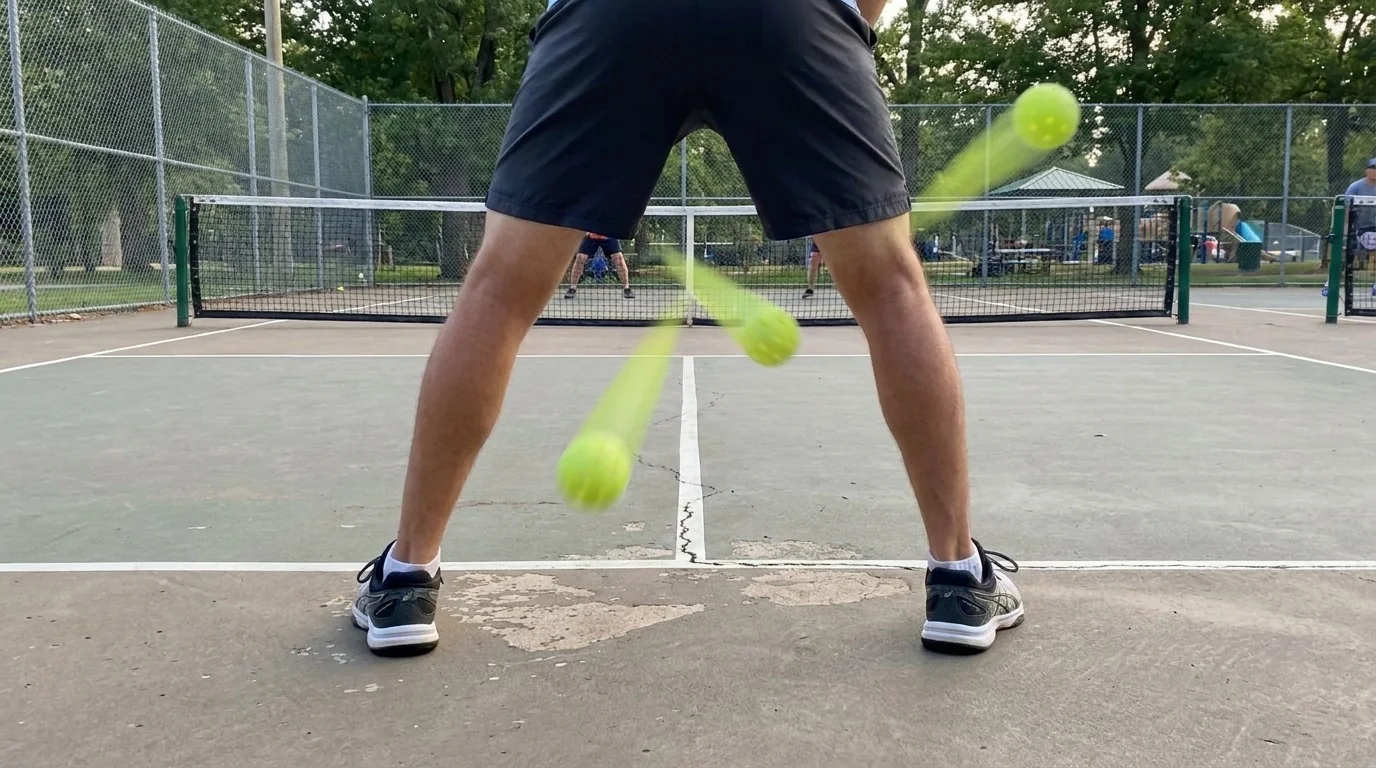
Start with cooperative feeds at the kitchen line. Have the feeder vary height and pace while you call "block," "punch," or "swing" before contact. Perform the chosen response with a compact motion, then freeze briefly in the recovery position so you can check your balance and paddle position.
Add direction next. Feed to the forehand side, backhand side, and body. Score the decision, contact height, and recovery, not only whether the ball landed. Finish with live exchanges and a simple rule: block low balls, punch comfortable balls, and swing only when height and balance support it.
Fix the common errors
- Swinging at every ball: let height and pace determine the response.
- Blocking with a stiff arm: soften the hands while keeping the paddle face steady.
- Punching from below the net: choose a reset when the contact is too low.
- Finishing beside the body: make room so contact stays in front, then recover the base.
- Standing after contact: use the opponent's contact as the cue to split and prepare.
The right volley matches the ball and keeps the next choice available. Read first, choose the smallest effective action, and recover before the next shot arrives.