Pickleball Volley Recovery Distance: Rebuild Kitchen Shape After Contact
A practical guide to recovering after a pickleball volley without retreating too far or leaving the middle open.
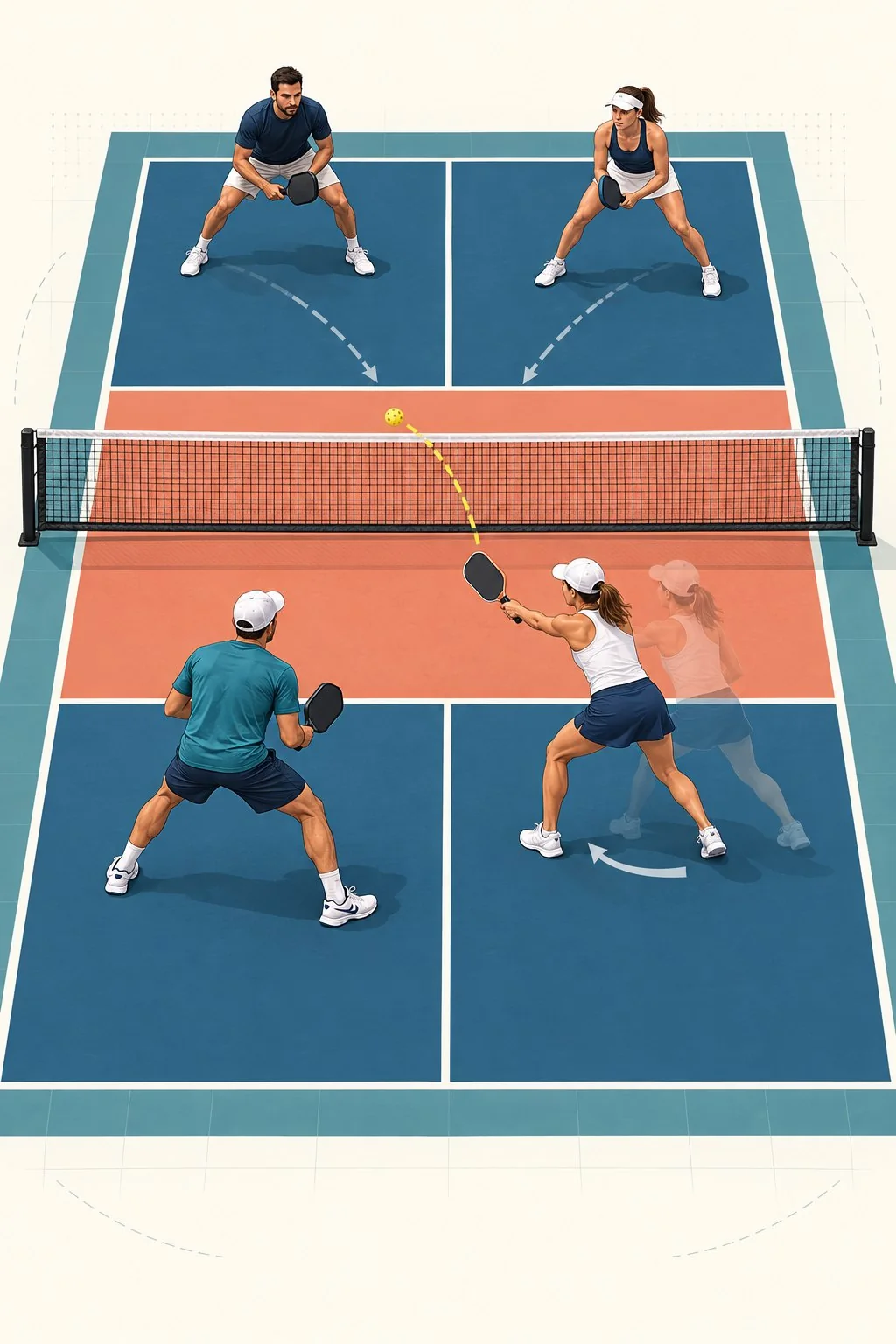
A volley is only half the job. As soon as the ball leaves your paddle, the opponent is preparing the next contact. Your recovery distance decides whether you stay connected with your partner, protect the middle, and keep the kitchen difficult to enter. The aim is not to back away after every volley. It is to finish in a balanced space where you can handle the reply.
Recover from the contact, not from habit
Make the volley from a stable base with a compact swing. Once the ball leaves, relax the hitting arm and return the paddle to the space in front of your body. Take a small recovery step before taking a bigger one. A hurried step backward may feel protective, but it can open a gap between you and your partner and give up the line you were trying to hold.
Choose the closest distance that still lets you handle the opponent's likely reply. If your volley lands deep or produces a weak response, you may hold your ground or take a controlled half-step forward. If you contacted while stretched, floated the ball, or see the opponent ready to counter, rebuild a wider athletic base instead of leaning over the kitchen line.
Use the kitchen line as a reference
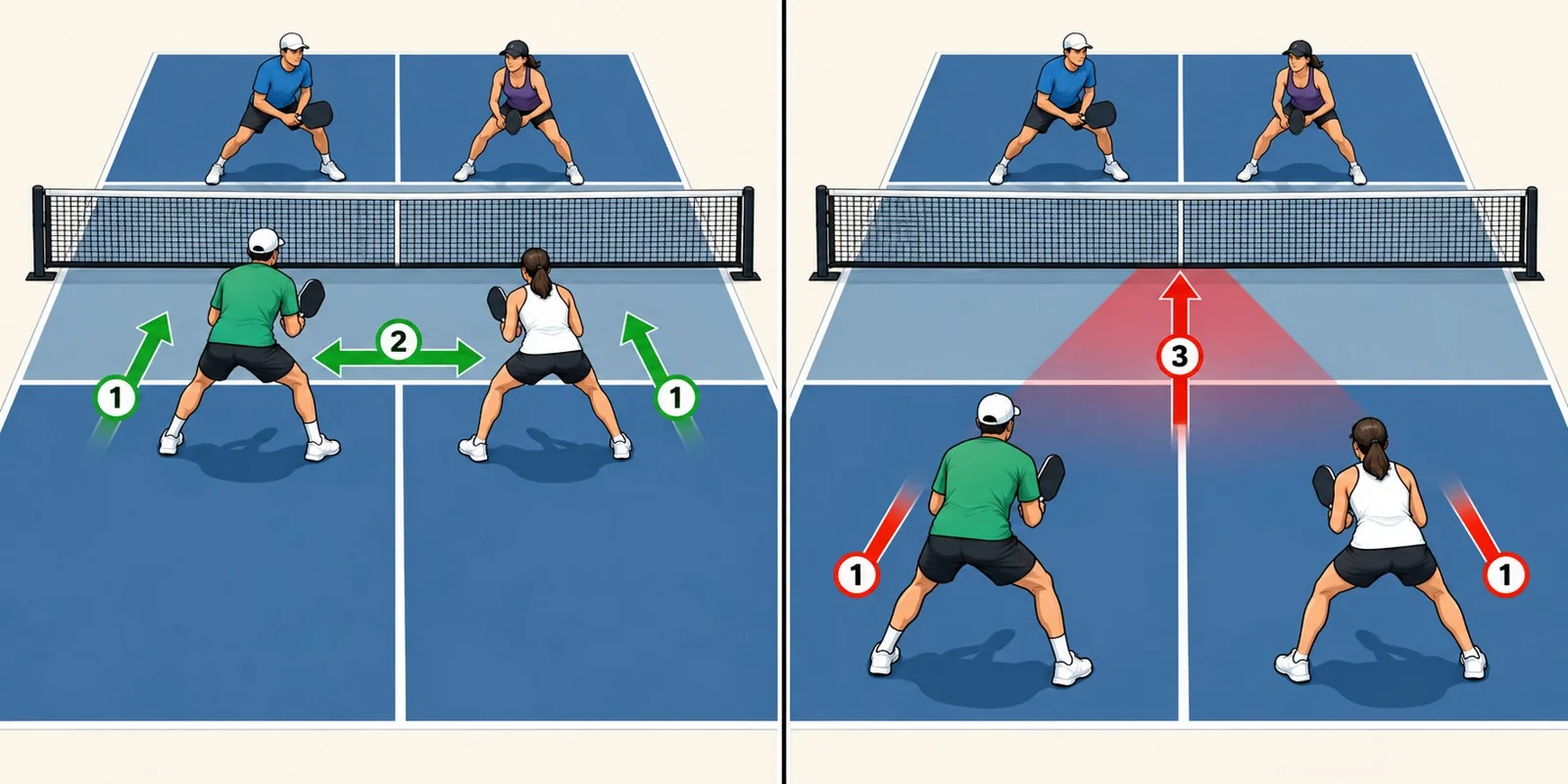
The non-volley zone line helps you judge distance, but it is not a spot where both feet must stay frozen. Remain close enough to cover a short ball while leaving yourself room to move forward, sideways, or back. Let the ball guide the adjustment. A low volley that travels safely may allow you to stay aggressive. A higher defensive volley calls for more readiness because the next ball may be an attack.
After each volley, check three practical details: can you see the opponent's paddle, can you move without crossing your feet, and is the space between partners still covered? If one answer is no, make a small adjustment before the next contact. This turns recovery into a tactical reset rather than an automatic retreat.
Rebuild the doubles shape
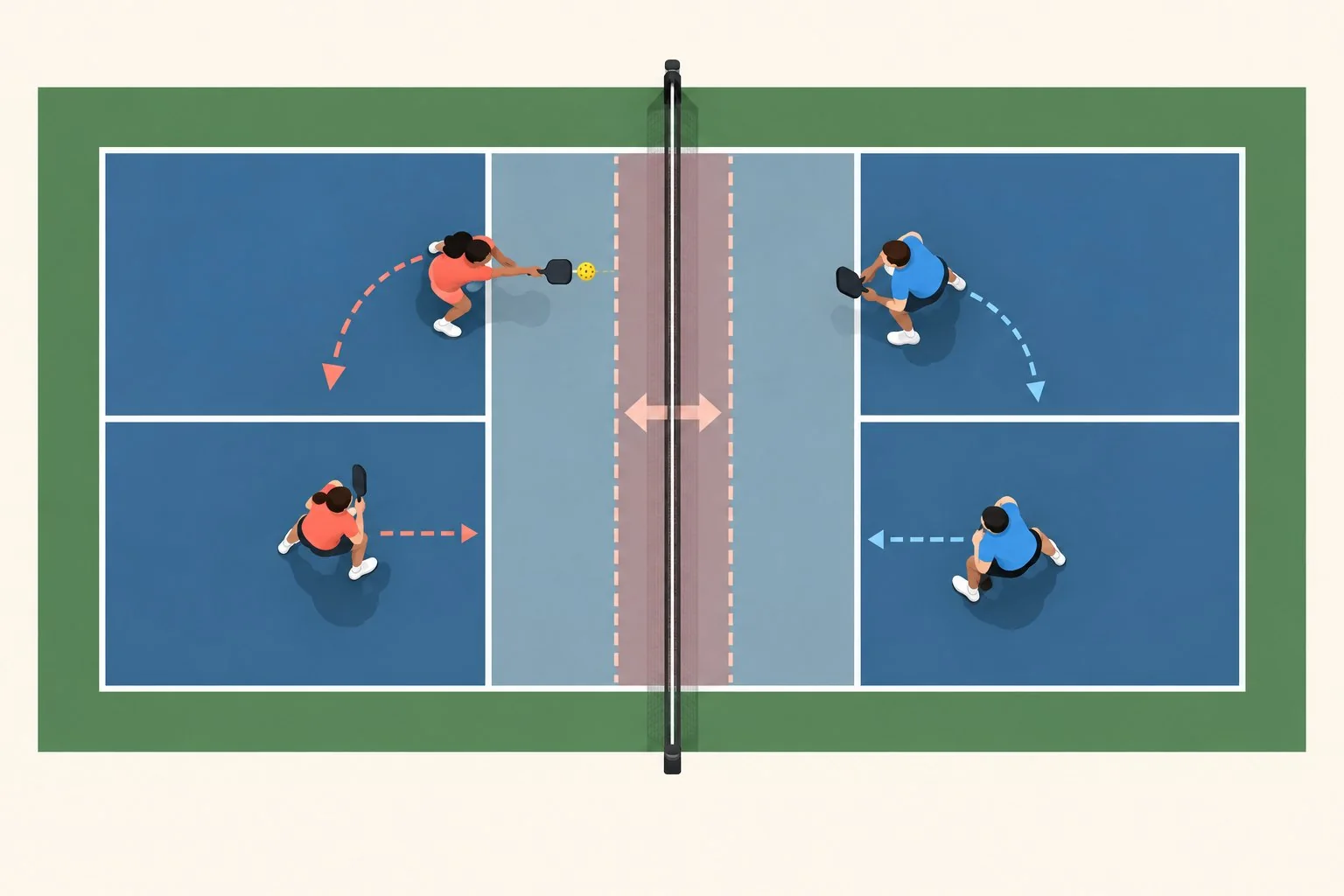
Recovery distance belongs to the pair. When one player moves wide for a volley, the partner should notice the open middle and shade over far enough to close it without abandoning the other sideline. The player who hit the volley should then recover toward that connected shape, not run back to a personal spot without looking.
A short call such as “middle” or “stay” can stop both players from chasing the same ball. If the volley pulls you outside, recover diagonally toward your partner while keeping the paddle visible in front. If your partner has already moved, take the shortest safe route into the gap instead of sprinting across the court after the shot.
Train the distance in stages
Begin with cooperative kitchen volleys. After every contact, freeze for one second. Have your partner check your distance from the line, paddle height, and relationship to the middle. Then repeat the same exchange without freezing while keeping the recovery step compact.
Add a wide feed next. Volley to a safe target, move back toward the middle without crossing your feet, and prepare for a second ball. Count the repetition only when you finish balanced and can move in either direction. To finish, play a live two-ball pattern: the feeder sends one ball to the side and the reply toward the middle. Recover after the first contact before choosing the second shot.
Good volley recovery is quiet and adjustable. Finish the swing, restore the paddle in front, take only the space you need, and reconnect with your partner. That distance keeps the next ball playable without giving away the kitchen.