Pickleball Volley Serve: Add Spin, Power, and Variety
Use a repeatable volley-serve release to create spin and rotation, then vary trajectory, target, and pace without sacrificing depth.
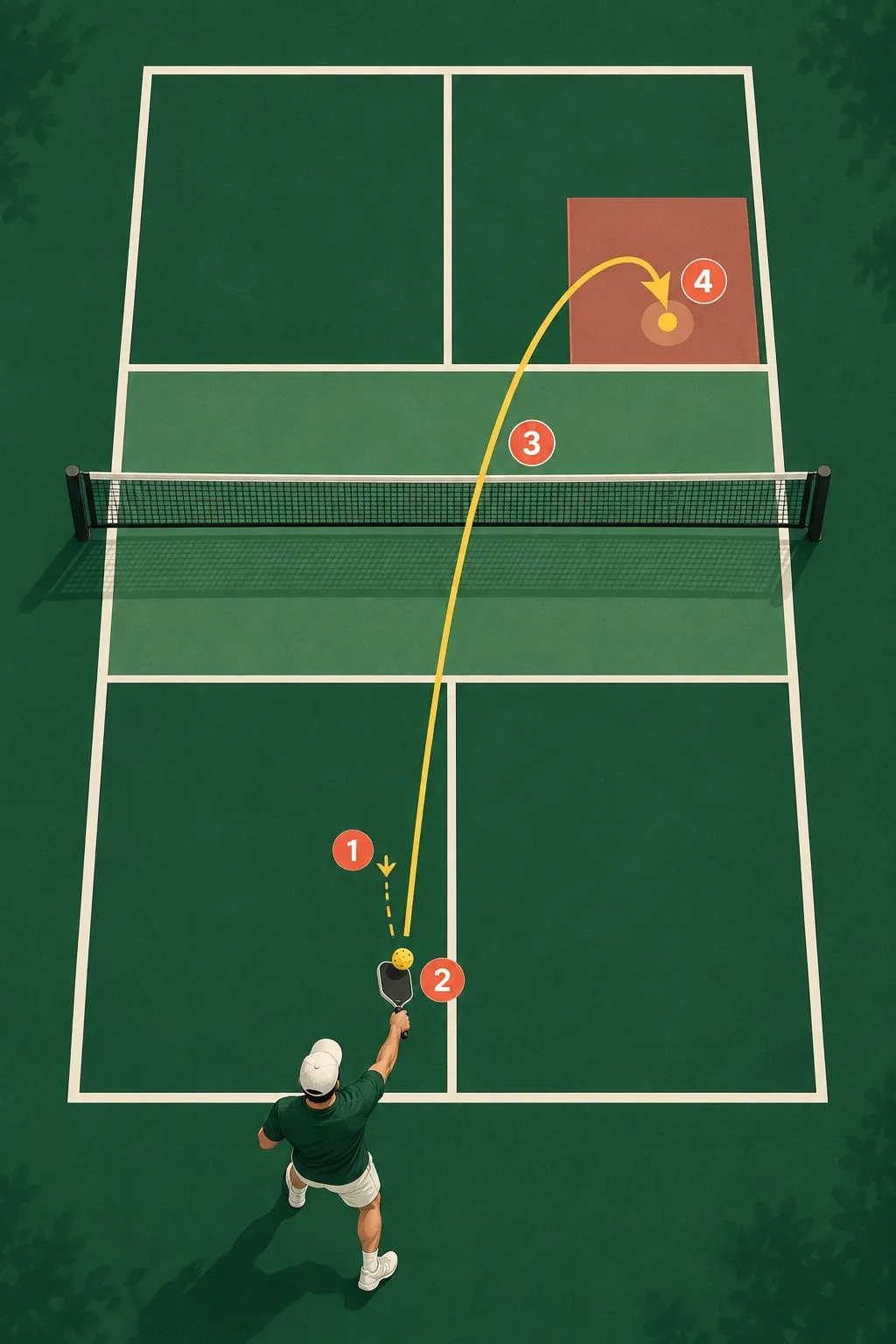
A reliable pickleball volley serve is more than a way to start the rally. When the ball is released and struck before it bounces, the server can coordinate the drop, contact, and body rotation to create a useful combination of pace and spin. The goal is not to swing harder every time; it is to make the serve difficult to read while keeping enough margin for consistency.
Let the drop create room for spin and rotation
The ball should descend into the contact rather than being struck immediately from the hand. That downward movement works with the paddle’s upward path, helping the server create friction and a higher, more controlled arc. A small, repeatable release is easier to time than a large toss. Keep the release in front of the body, let the ball fall, and meet it with an underhand motion that finishes toward the intended service box.
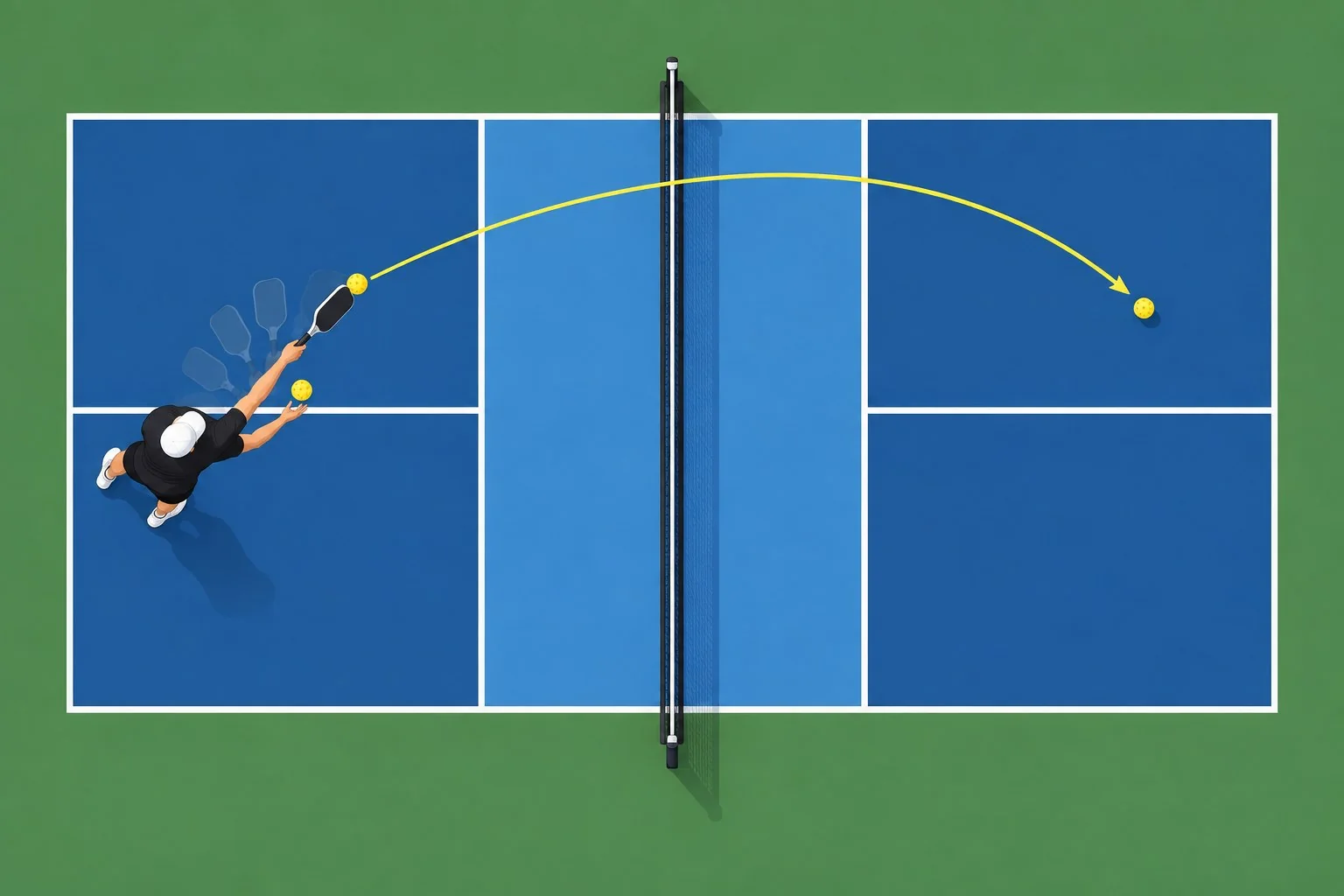
The extra room also lets the body rotate through the serve. If the ball is hit straight from the hand, the release arm can crowd the contact and limit the turn. Allowing the ball to drop gives the non-paddle hand time to clear, so the shoulders and torso can contribute without forcing a wristy hit. Build the motion around a relaxed shoulder and a smooth finish rather than trying to manufacture power at the last instant.
Vary spin, target, and pace with purpose
One serve pattern should not become a gift to the receiver. Keep the basic motion familiar, then change one variable at a time. A higher, looping topspin serve can give the ball a safe arc and a deep landing. A flatter, faster serve can challenge a receiver who needs more time. A slice can bend through the air and produce a different read. The right choice depends on the opponent’s timing and the conditions, so variation is useful only when you can still land the ball reliably.
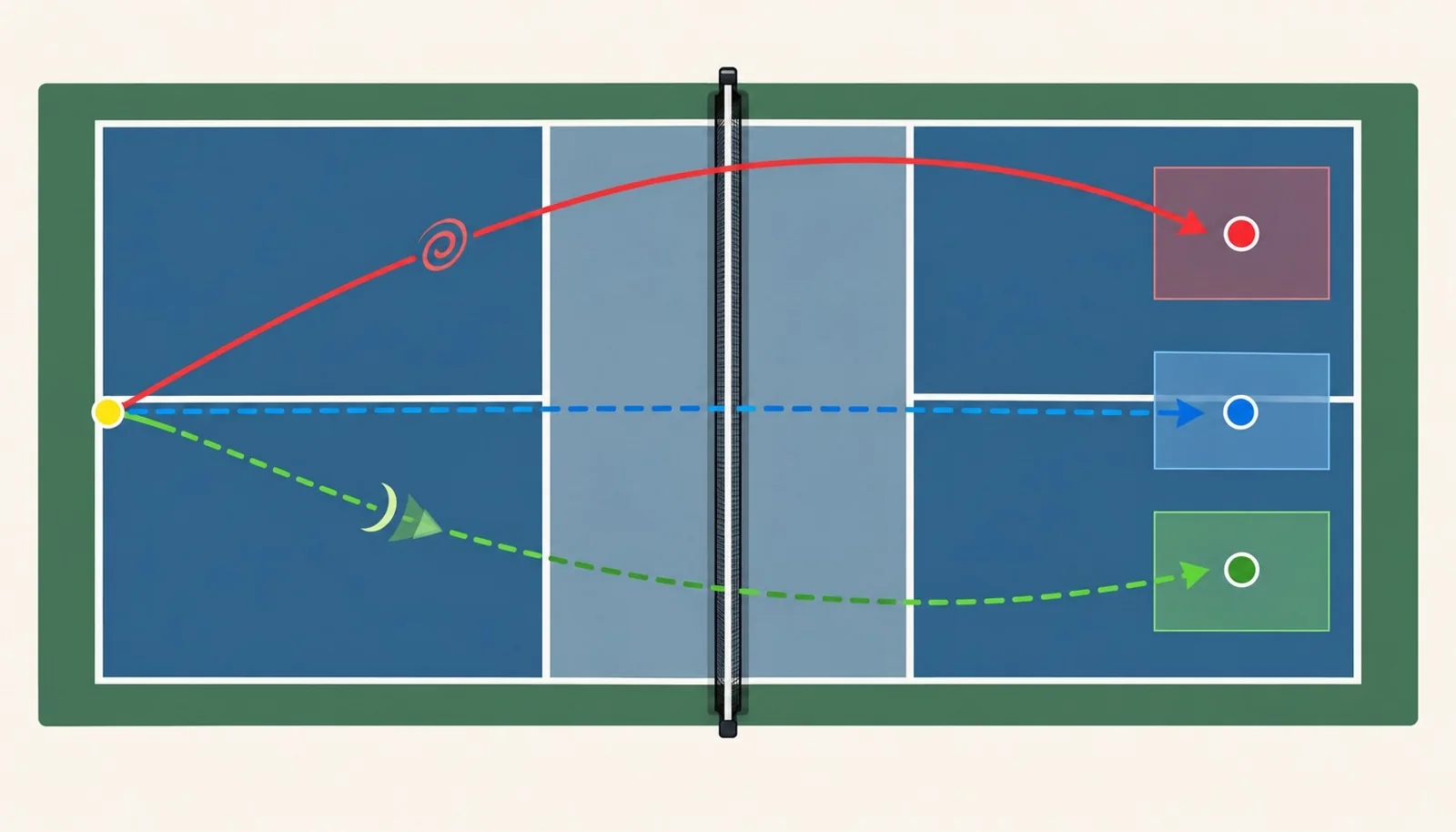
Change the target as well as the spin. Alternate between the receiver’s forehand, backhand, and body so the return contact does not settle into a comfortable rhythm. Serving toward the body can jam a player who likes to reach around the ball; a backhand target may test a weaker side; a forehand target can be useful when it moves the receiver away from a preferred position. Treat these as observations to test, not fixed rules for every opponent.
Practice a repeatable serve menu
Start with one dependable volley serve and mark a deep target in each service box. Once the release and contact are stable, practise three versions: a higher topspin ball, a flatter pace, and a controlled slice. Then rotate targets while keeping the same pre-serve routine. Track whether the serve lands deep and whether the receiver’s response changes, not just whether the ball looked fast.
After the shot, return to a balanced ready position and observe the receiver. A harder serve is not automatically better: some opponents use pace comfortably, while others struggle when they must create their own pace from a softer ball. Your best menu is the one you can place under pressure while continuing to learn which spin, target, or speed causes the most trouble.
The cover image above is not repeated in the body; use this final visual as a simple practice map and keep the actual cover separate when publishing.