Pickleball Volley Targets: Feet, Hips, and the Doubles Seam
A practical guide to pickleball volley targets: when to aim at the feet, hip, or doubles seam, and how to recover after a compact punch.
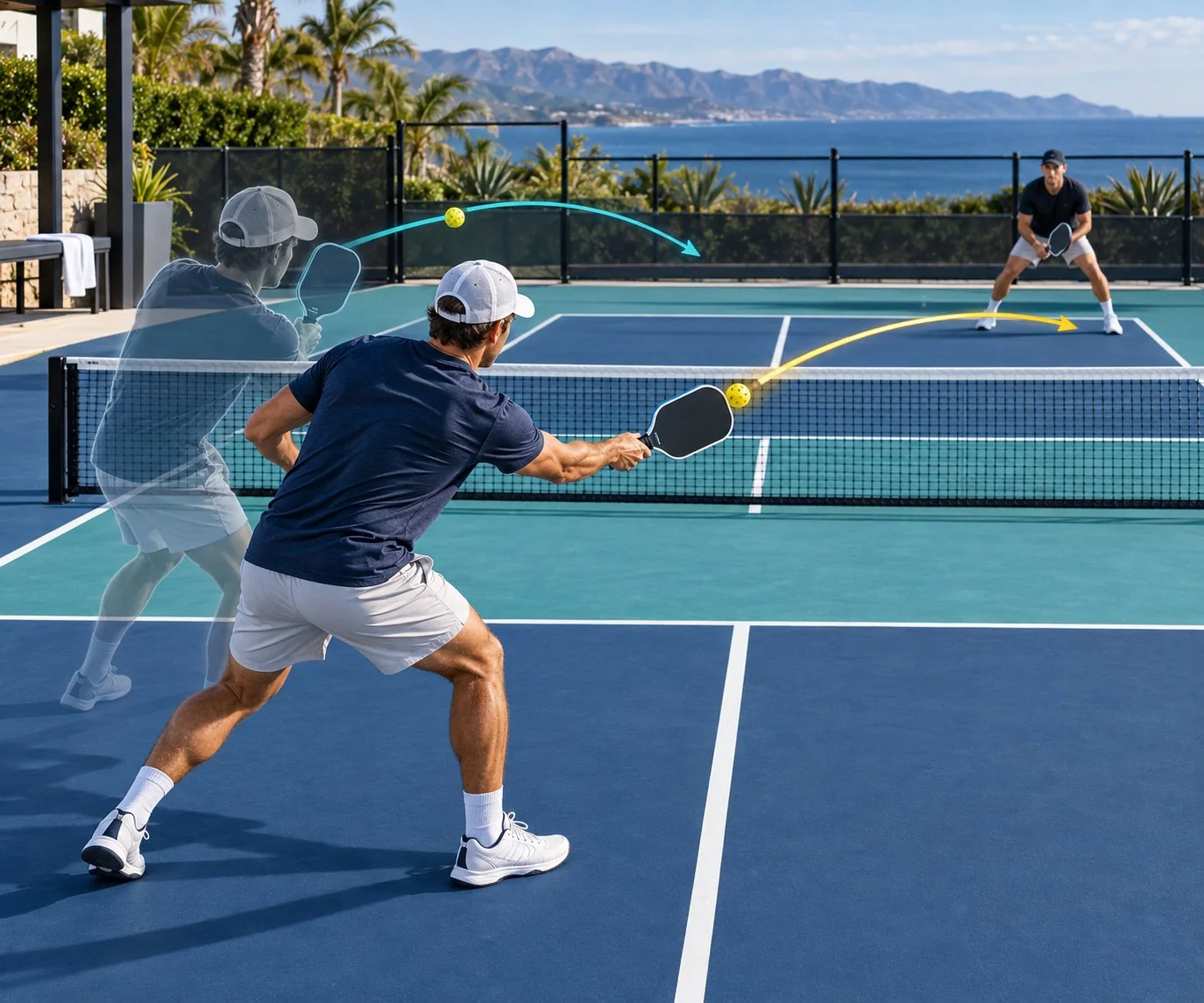
Choosing effective pickleball volley targets starts before the ball leaves your paddle. At the kitchen line, a compact punch can redirect pace, but the target determines whether the reply is merely playable or genuinely awkward. The practical sequence is simple: read height, make contact in front, choose feet, hip, or seam, then recover immediately.
Build the ready position first
Stand near the kitchen line with feet about shoulder-width apart, knees slightly bent, and weight forward on the balls of your feet. Keep the paddle in front at roughly chest height, with the head above the wrist. This gives you a short route to either side and avoids a large preparation movement that costs reaction time. A continental grip is a useful neutral starting point because it keeps the paddle face stable through both forehand and backhand exchanges.
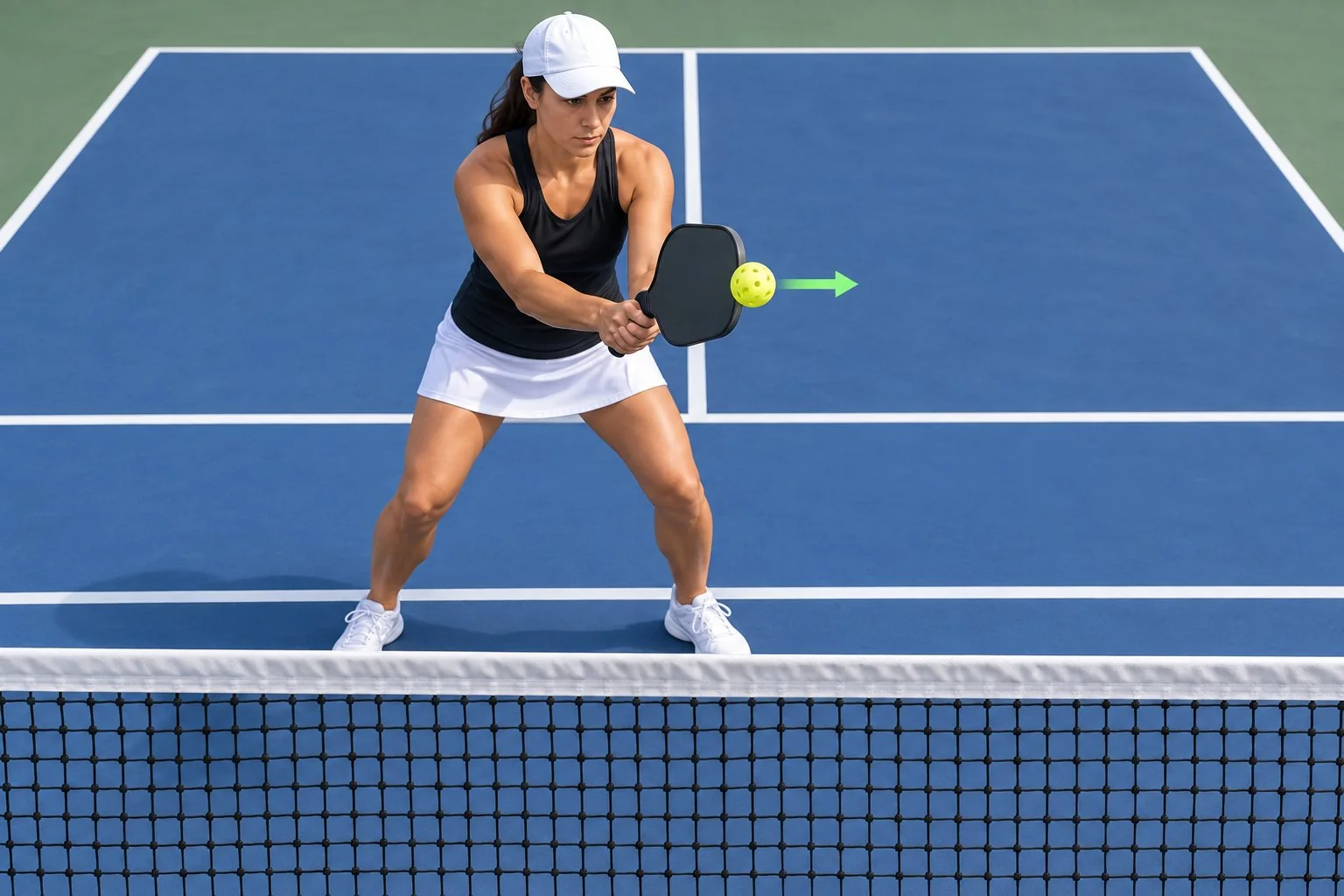
Use firm but relaxed pressure rather than squeezing. The paddle should feel secure, not locked in the hand. Keep the wrist quiet and let small foot adjustments create space. If the ball is moving toward your body, do not reach from a fixed stance; make a small lateral move so contact stays comfortably in front.
Make the punch compact and repeatable
The defining motion is a short forward extension, not a backswing and not a wrist snap. Keep the elbow slightly bent and reasonably close to the body, then extend the forearm toward the target for a small distance. The shoulder can help with direction, but the stroke should stay compact. Against a fast ball, redirect the incoming pace; against a slower ball, add only enough forward intent to keep the shot firm and low.
Contact should be slightly ahead of the lead foot, around the front of the body rather than beside the hip. Keep the paddle face close to perpendicular for a ball above net height; a small opening can help a ball arriving around net height clear safely. Drive forward through the contact rather than lifting. The follow-through should finish in front, then the paddle should return immediately to the ready position.
Choose targets and know when to block
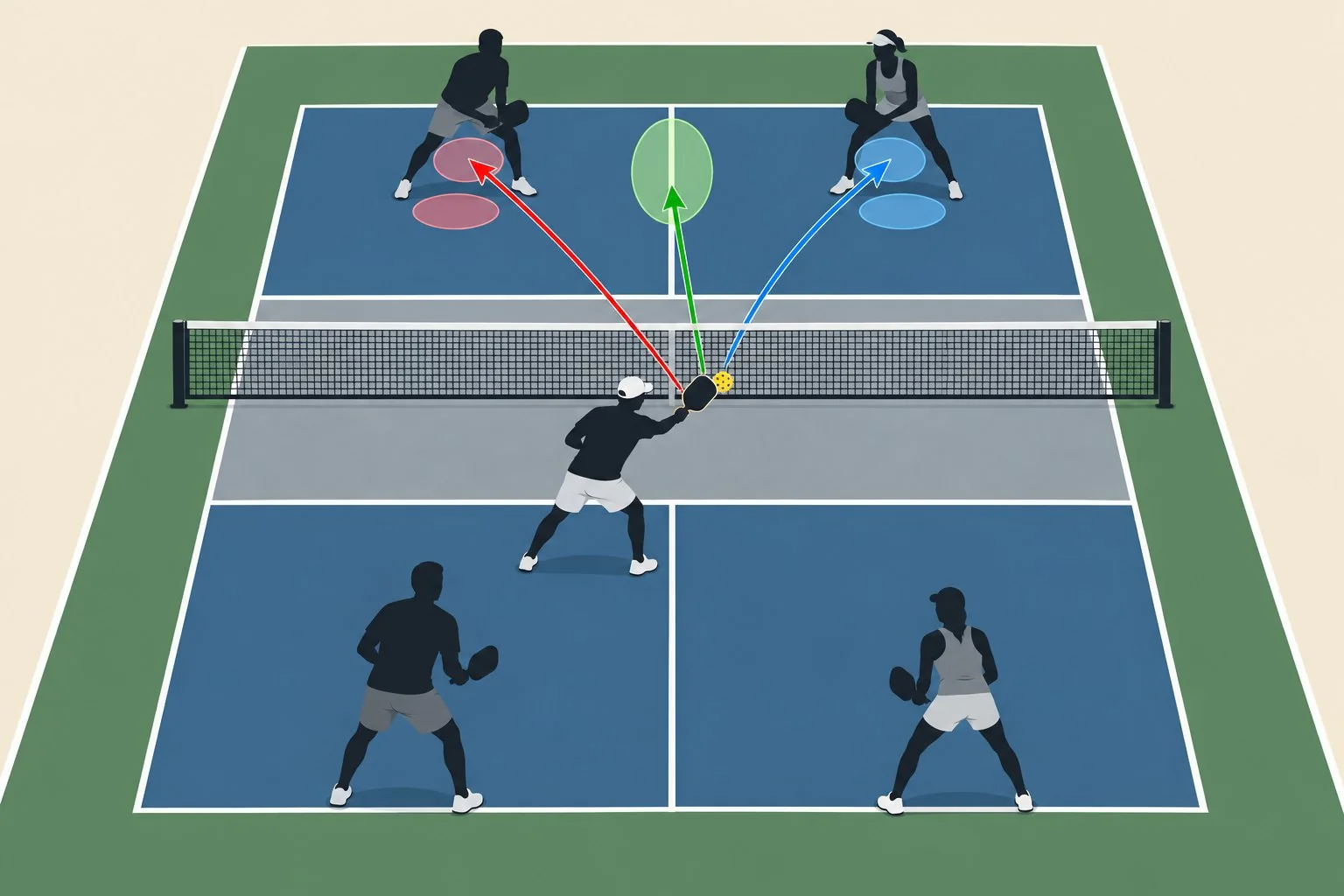
The safest first target is often the opponent's feet, where the ball forces an awkward low response. The hip can jam a player, while the seam between partners can create hesitation. Do not chase an open corner too early; a predictable target with a compact stroke is usually more valuable than extra pace. Keep both feet available for the next exchange and avoid rotating so far that the paddle finishes across the body.
Use the punch when the ball is comfortable and at a useful height, especially against a speed-up or a floating ball. If the ball is low, fast, or too close to the body, block instead: soften the grip, absorb pace, and send the ball safely back toward the kitchen. A punch is an active redirection; a block is a defensive reset. Confusing the two often produces either a pop-up or an overhit.
Practise the contact and recovery
Start with shadow repetitions: paddle up, compact extension, finish in front, and recover. Then use a wall from a comfortable distance, feeding balls at chest height and alternating sides. Keep the paddle travel short and count only contacts that finish under control. With a partner, practise medium feeds first, then add speed-ups at the body. Aim at feet, hips, and the doubles seam in separate rounds so placement remains deliberate.
The most useful checklist is short: paddle up, contact in front, no backswing, quiet wrist, compact extension, target the feet, and recover immediately. A punch volley becomes dependable when the same small movement survives a fast exchange. Practise control first; power should come from timing, spacing, and the opponent's pace rather than from a large swing.