Pickleball Wall Practice Setup: Mark Net Height, Distances, and Targets
A practical solo wall-drill plan for pickleball: set up useful reference lines, train touch and volleys, add footwork, and measure controlled contacts.
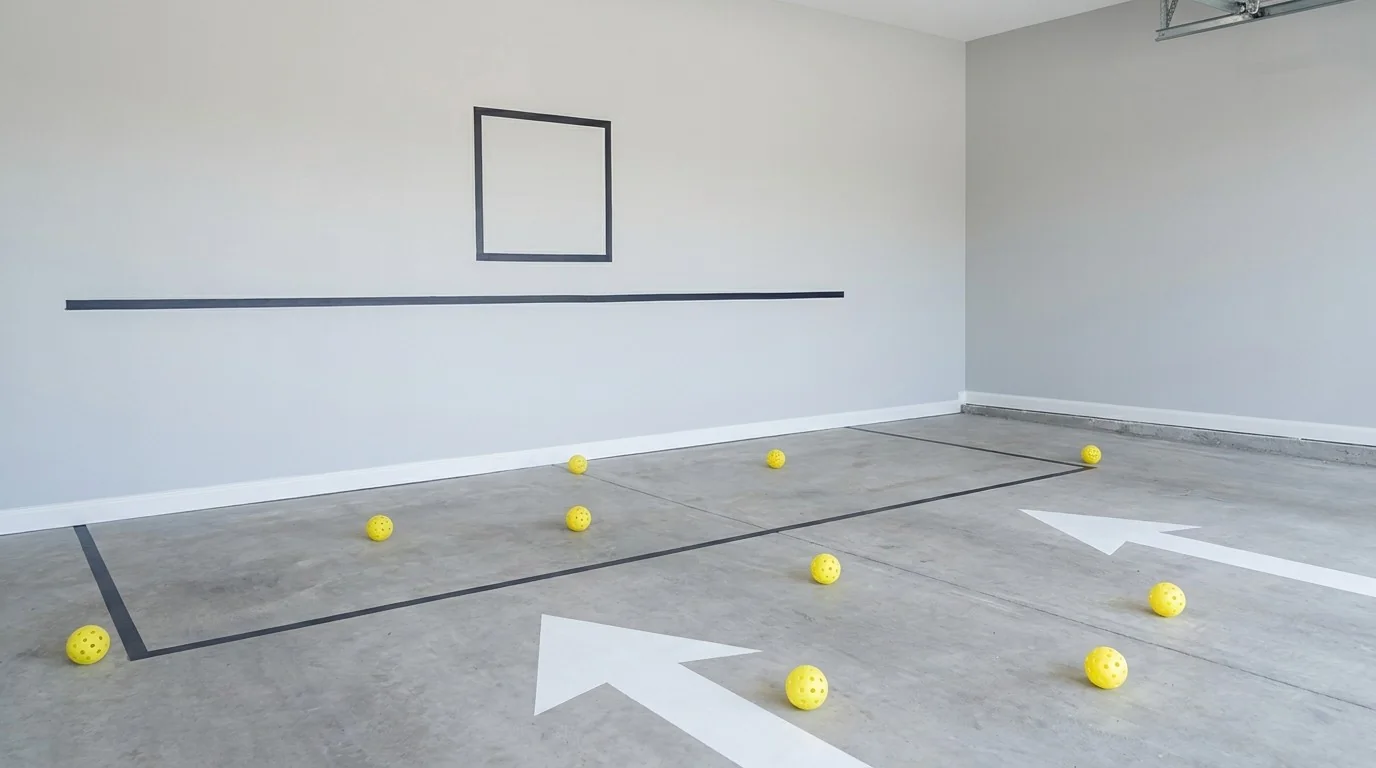
A wall is useful when you need repeatable contacts, but it is not a substitute for a live opponent. The rebound can still show whether your timing, contact, and movement are holding together. The setup matters: mark a clear reference line, choose one purpose for each practice block, and give yourself a target instead of simply hitting harder.
Set up the wall for useful feedback
Choose a flat, solid surface with enough width for safe rebounds. Mark a horizontal line at about net height. That line gives you a quick visual check for dinks, volleys, and groundstrokes. Add a floor mark for your kitchen-line distance and another farther back for groundstroke work. Clear the space behind and beside you before starting. A wall session should not send you into furniture, a fence, or another player.
A wall cannot tell you whether a real shot would land inside an opponent’s court, so add a broad target zone on the wall or floor. Keep the target generous while you learn the motion. Make it smaller only after you can repeat the contact with some margin.
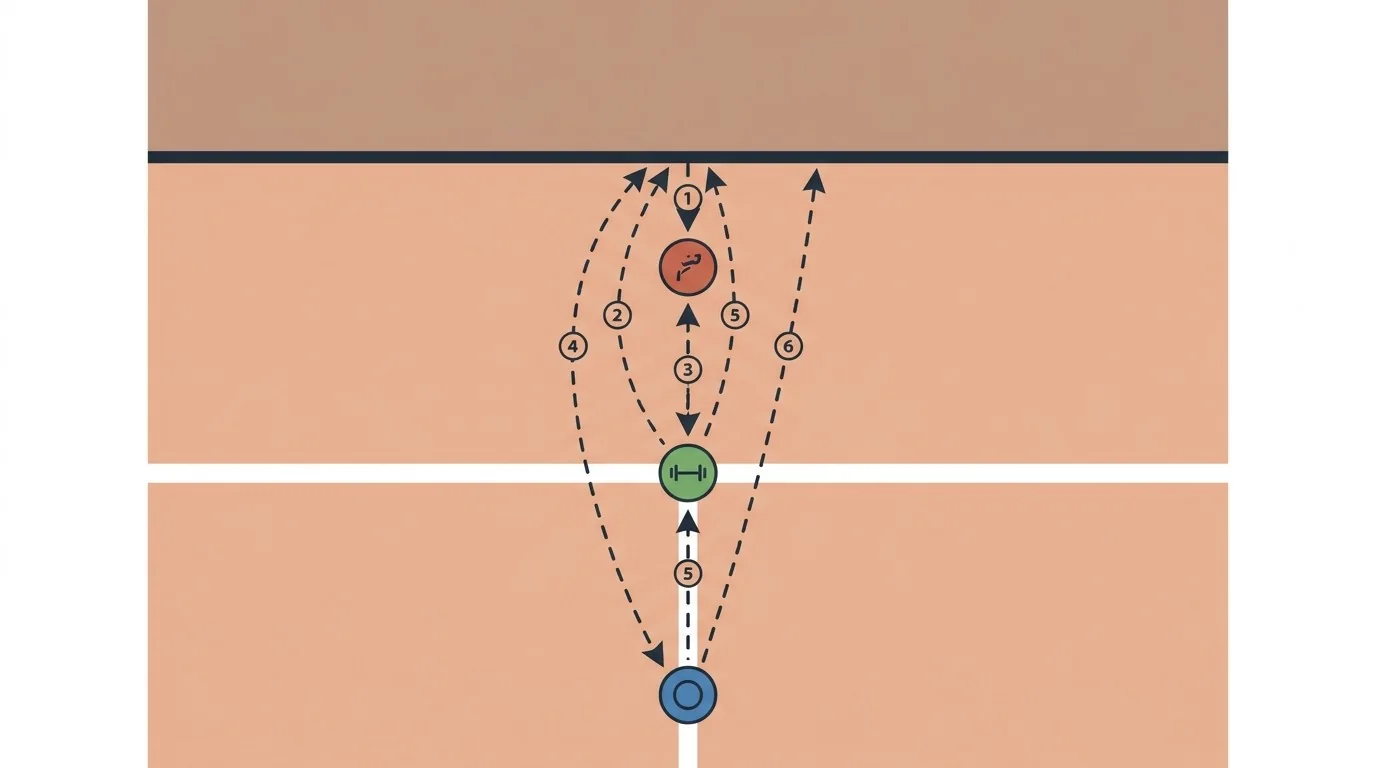
Start with touch and control
Begin close enough to make gentle contacts without chasing every rebound. Hit a compact forehand, then a compact backhand. Keep the ball above the reference line and avoid turning the drill into a series of high, wild rebounds. The first goal is a manageable return height while your body stays balanced.
After an easy sequence, alternate sides deliberately. If the ball leaves at an awkward angle, adjust your feet before reaching for it. A relaxed grip and contact in front make it easier to soften the rebound. Count consecutive controlled contacts, but stop the count when your shape falls apart. Desperate swings make the number look better without improving the skill.
Add volley and reaction work
Move closer for no-bounce volley practice. Start with forehand volleys at a comfortable rhythm, then add backhands and alternate sides. Keep the contact in front of your body and the paddle path compact. As you move closer, the rebound arrives sooner. Reduce the swing rather than trying to hit harder.
Progress through short rounds: easy volleys first, alternating volleys next, and then a round in which you absorb a firmer rebound and send back a softer ball. This challenges your hands without making every contact a drive. If the ball keeps dropping, step back slightly and rebuild the rhythm before moving forward again.
Make the feet part of the drill
A wall session becomes more useful when the feet have a job. Before selected contacts, take a small lateral adjustment step, settle into a ready base, and then hit. Keep the steps short enough to stop under control. Do not cross your feet or lean so far that the next rebound forces you to reach.
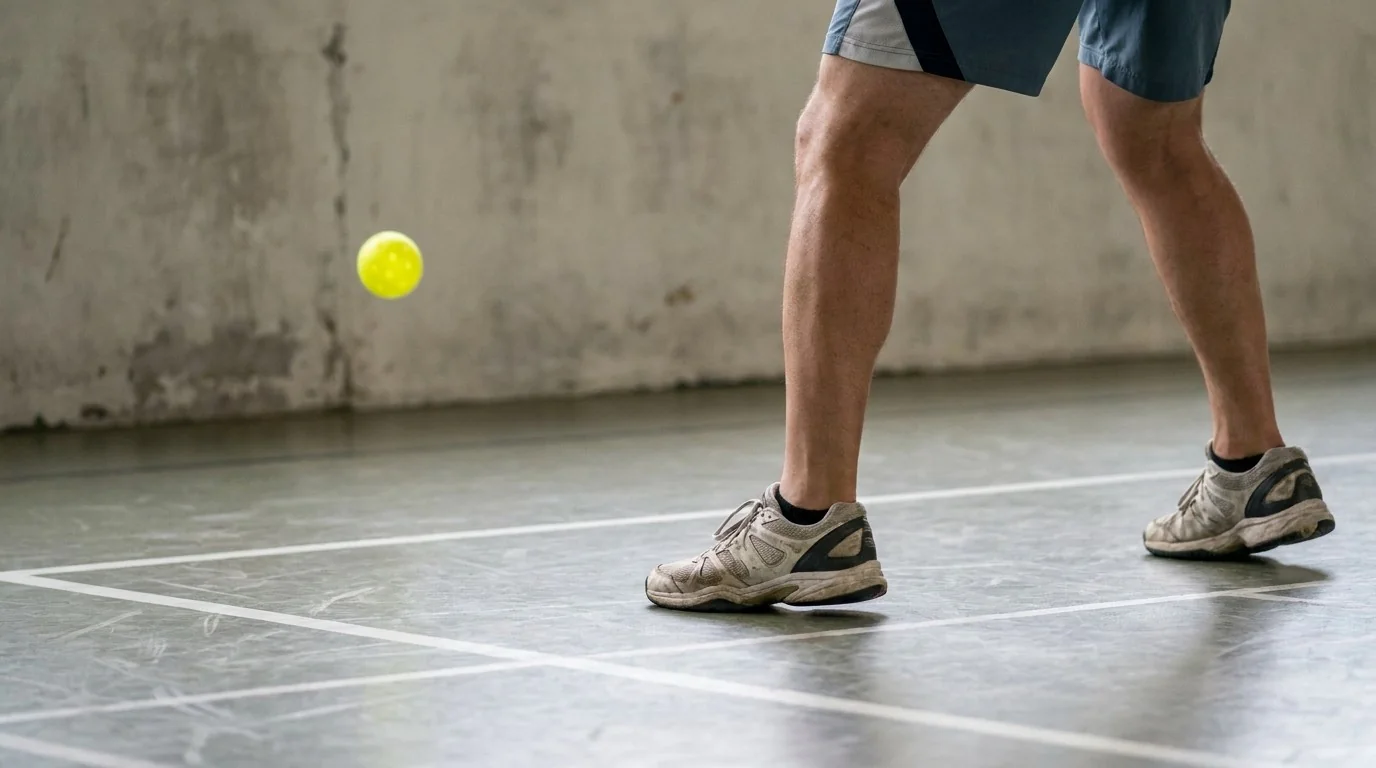
Change your distance between rounds rather than during every exchange. A closer position challenges reaction time. A middle position gives you room for dinks and resets. A farther position lets you rehearse a fuller groundstroke. Change one variable at a time so you can tell whether a miss came from distance, pace, footwork, or contact.
Build a focused practice session
Divide the session into four blocks. Warm up with gentle forehand and backhand contacts. Move closer for controlled volleys. Step back for touch shots and resets. Finish with alternating strokes plus a footwork constraint. Give each block a clear measure: a consecutive-contact count, a target-zone count, or a chosen number of balanced recoveries.
The wall is a feedback tool, not a complete match simulation. It does not move, change direction, communicate with a partner, or test whether your shot survives an opponent’s decision. Take the cleaner contact and movement back to the court, then use live practice to test placement, shot selection, and recovery.
Fix common wall-drill errors
- Every ball is hit too hard: shorten the swing and make control the score.
- The rebound keeps drifting sideways: check your contact point and paddle-face angle, then use an adjustment step before reaching.
- Only the forehand gets trained: alternate sides on purpose and keep the backhand block compact.
- The session becomes random: write down the goal before starting and change drills only at the planned interval.
- Footwork disappears: require a ready base after each contact and stop when fatigue makes the movement unsafe.
The best wall practice is repeatable: mark a useful reference, choose one technical purpose, use a measurable target, and finish while your contacts are still controlled.