Pickleball Wide-Ball Lunge: Reach the Kitchen Without Losing Your Base
A practical guide to choosing a short kitchen lunge or deeper load for pickleball control, stability, and recovery.
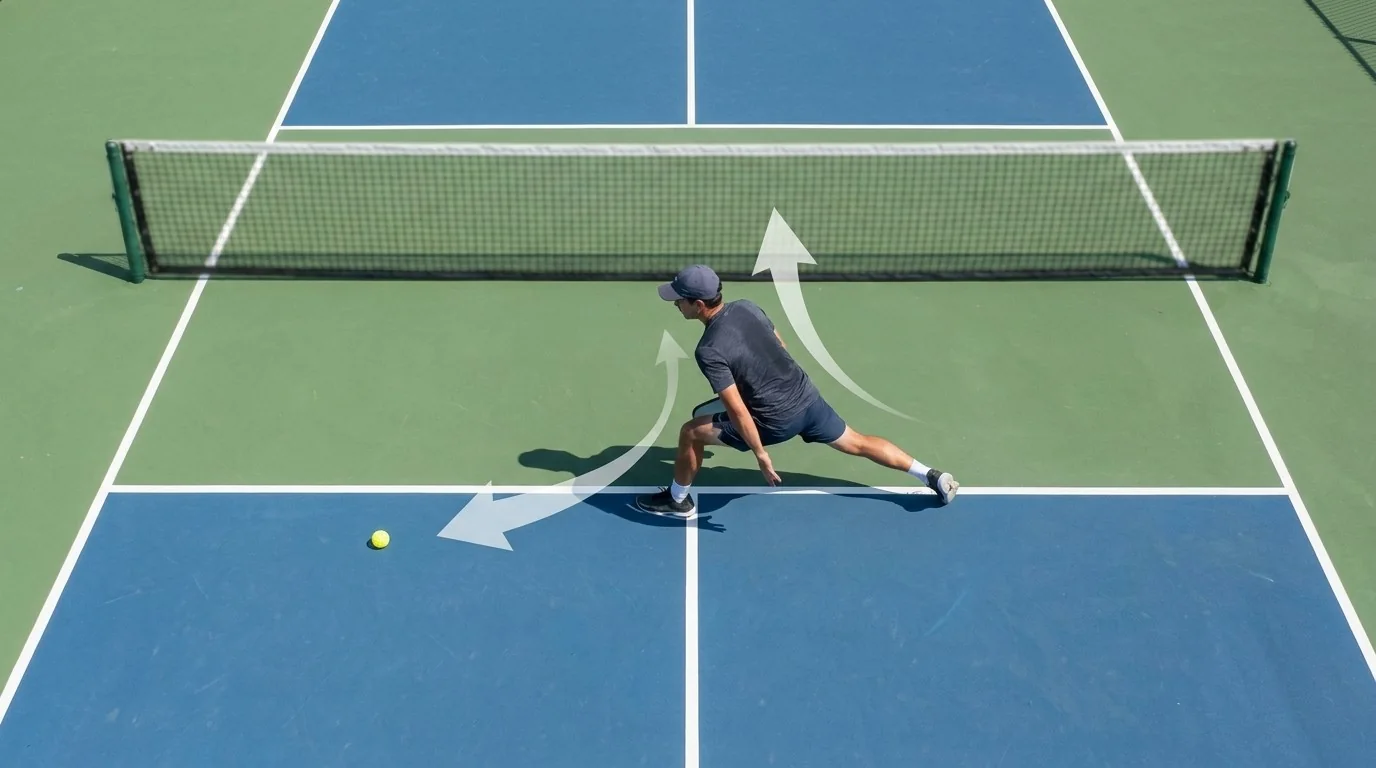
The pickleball wide-ball lunge is not just a reach. It is a choice about how much movement you can control and how quickly you need to be ready again. Use a short lunge for a nearby kitchen ball when you can stay stacked over your base. Use a deeper load when you need to brake, absorb more movement, or handle a low ball in transition. Treating the two movements as interchangeable is a reliable way to overreach.
Use a short lunge for nearby balls
At the kitchen line, lunge when the ball is within one controlled step and precision matters more than power. Step toward it with the outside foot. Keep your head and chest over the planted leg, and meet the ball in front of the knee rather than beside your body. The step should extend your reach without becoming a dive.
Keep the upper body quiet and let the knee track in the same direction as the foot. After contact, push off the inside leg and move back toward your base. A useful lunge gives you a stable platform for a dink, soft volley, or controlled counter while leaving room for the next movement.
Use a deeper load to absorb movement
Choose a deeper load when you have more ground to cover, are moving through the transition area, or need to stop forward or lateral momentum before a reset. Take a larger braking step, bend through the hip and knee, and settle your weight over the outside leg. Compared with a kitchen lunge, this movement is deeper and more deliberate. It gives your body time to stabilize before the shot.
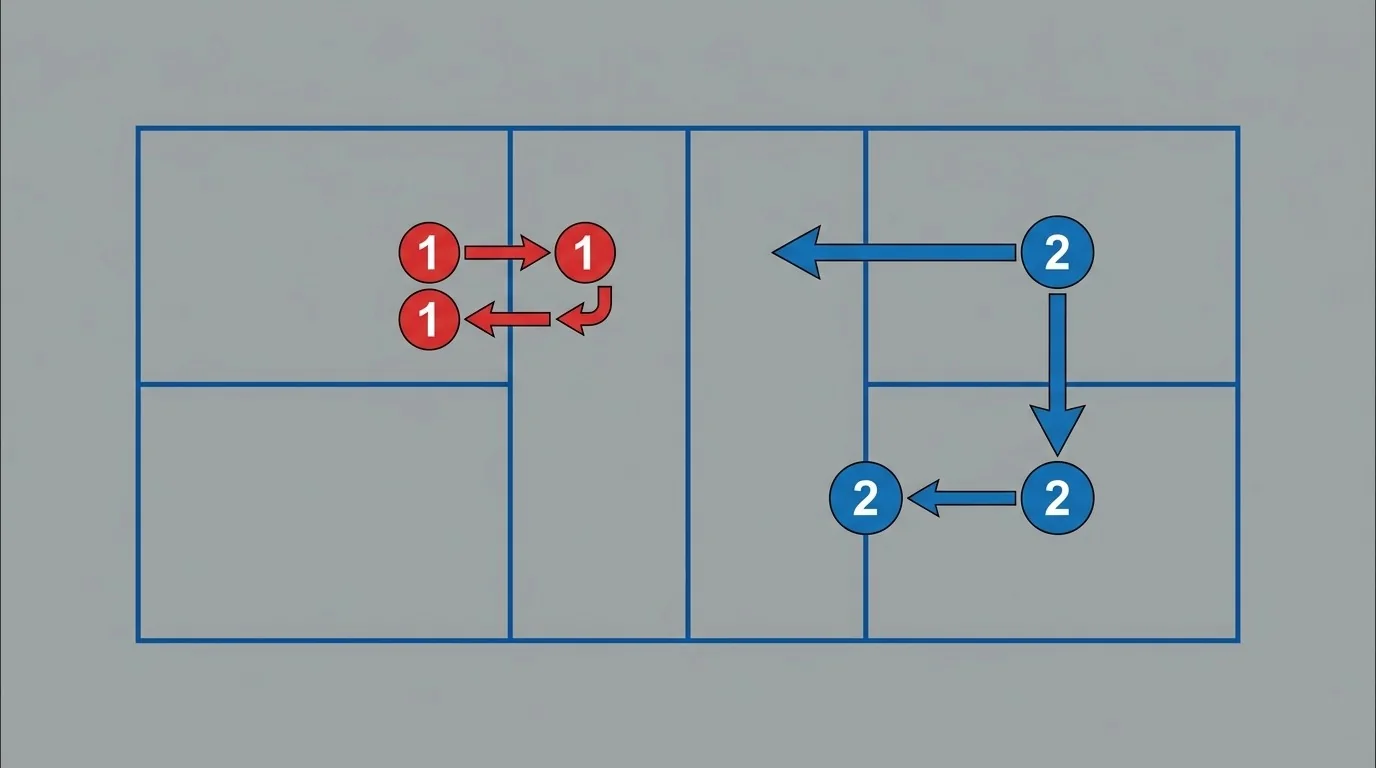
This load is useful when the ball reaches your feet or a rushed approach leaves you moving too fast. Re-center before you swing. Let your legs absorb the movement, then use a compact stroke and recover instead of hitting while you are still falling past the ball.
Let position and ball height decide
Your court position is the first filter. Near the kitchen, a small lunge usually preserves the line and keeps the exchange compact. In transition, a deeper load can stop you from reaching while your momentum is still carrying you forward. When the ball is wide, ask whether one controlled step will put you behind it. If it will not, use the larger stabilizing movement rather than stretching from a poor base.
Ball height matters too. A low ball demands margin and balance. A comfortable high ball may allow a firmer response, but your feet still have to support recovery. When you are unsure, choose the movement that leaves you able to play the next ball, not the one that reaches farthest in the least time.
Practise the two patterns in stages
Start without a ball. Mark a centered base, take a short lunge in five directions, stack over the planted leg, and push back to center. Repeat with a deeper load: make the braking step larger, pause briefly to settle, and then recover. Keep your head level and do not let your torso collapse toward the target.
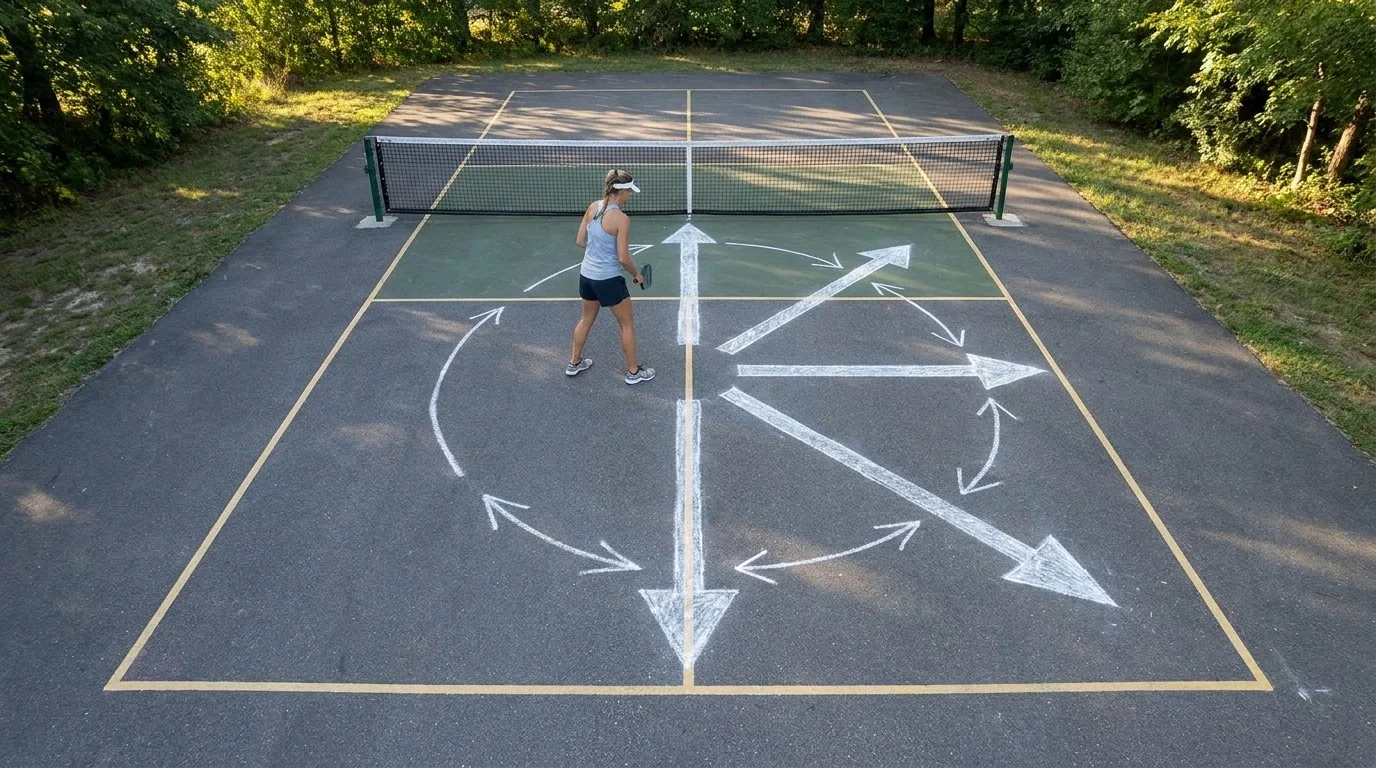
Add a partner feed next. Begin with predictable kitchen balls and focus on getting behind the ball before contact. Progress to transition feeds that require a braking load. Then alternate short and deep targets without announcing the direction. Judge the recovery separately from the shot: can you return to a useful base, keep the paddle ready, and stay balanced for the next feed?
Keep this cue in mind: lunge for short control; load for stability and absorption. The right movement is the one that gives the shot a platform and keeps your next decision available.