Should You Push to the Kitchen in Pickleball? Read the Ball First
A practical guide to advancing toward the kitchen without rushing: read ball height, opponent contact, pace, and your own balance.
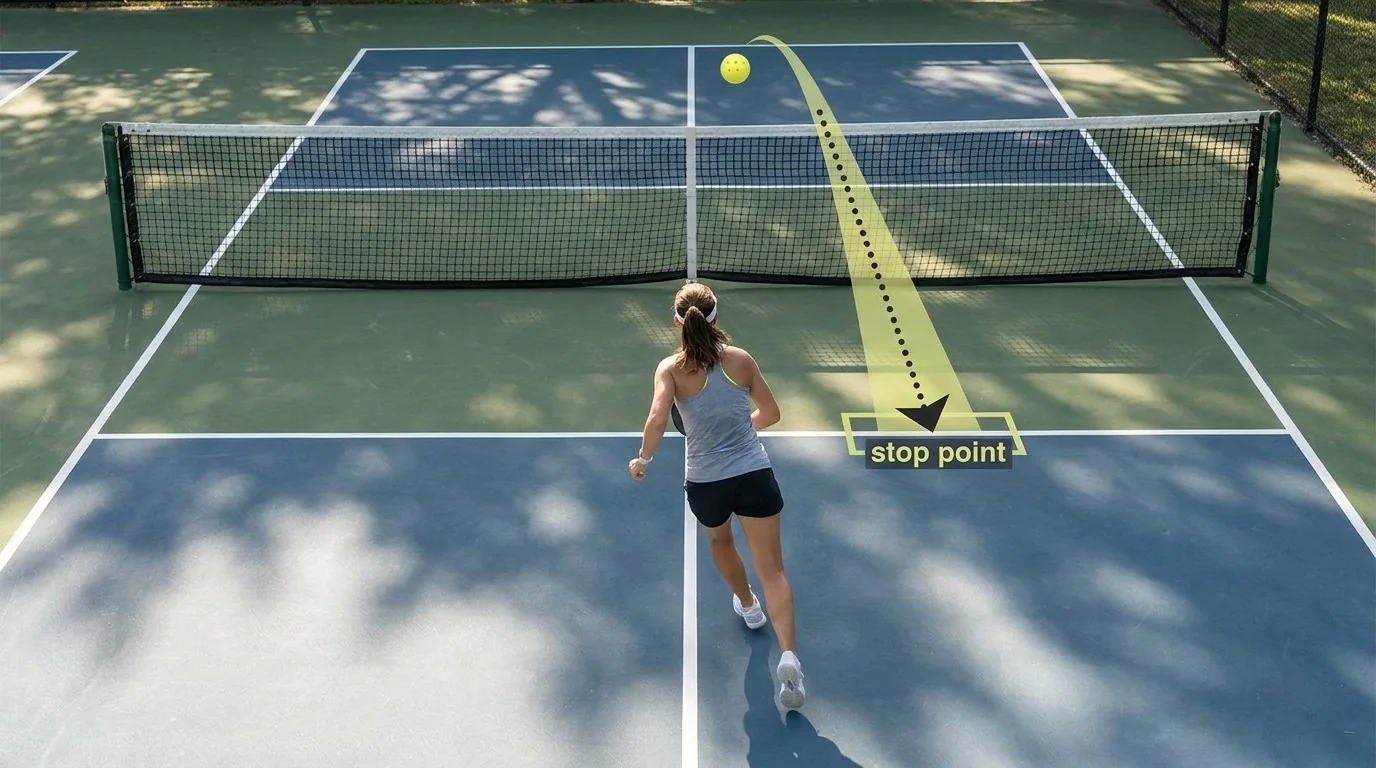
Moving toward the kitchen is useful only when the ball gives you time to arrive under control. Do not treat the kitchen line as a finish line. Read what your shot made the opponent hit, watch the opponent’s contact, and decide whether the next step improves your position or exposes your feet.
Why the kitchen is valuable, but not automatic
The kitchen line shortens the distance to the net and gives you a strong position for volleys and soft exchanges. That advantage disappears if you arrive while reaching, crossing your feet, or falling forward. An opponent can then aim at your shoes or use the space you left behind. Being near the line is not the same as being ready there: keep the paddle in front, see the ball clearly, and leave enough room to adjust either direction.
After a return, third-shot drop, or reset, advance in stages. Take controlled steps, slow down as the next contact approaches, and rebuild the paddle-ready stance. Reaching the line quickly matters less than reaching it balanced and prepared.
Let height and pace set the signal
A high, slower ball usually gives you time to take ground. Keep moving while the opponent is under pressure, but finish ready for the reply instead of admiring your shot. A low, fast ball asks for a different response. Absorb the pace, use a reset or controlled block when appropriate, and protect your feet before trying to move farther forward.
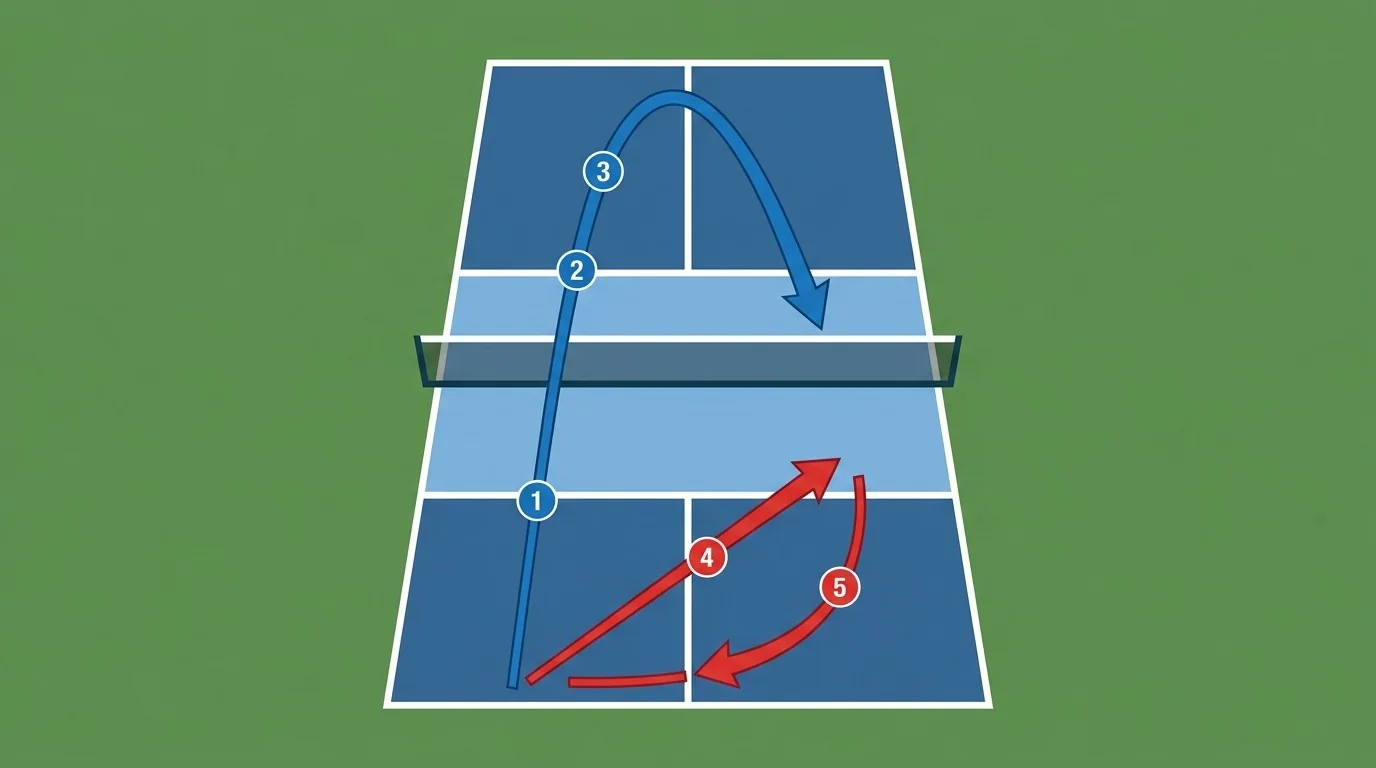
Watch the opponent’s contact while the ball travels. Contact below net height often means a low reply, so avoid committing too far forward. A ball that sits up may let you take space or handle a more aggressive response. These are cues, not automatic rules. The ball you receive determines the decision.
Brake when the approach becomes unstable
Use short adjustment steps when the ball is arriving at your shoes, your feet start to cross, or your weight is tipping forward. Lower your center of gravity and create a stable platform for the next shot. From that position, you can reset or continue advancing when the ball improves.
In doubles, include your partner in the decision. Advance with enough spacing to protect the middle and avoid opening a lane behind you. Communicate early when one player needs to hold or retreat. Partners who move in stages can keep their shape instead of arriving at different depths.
Practise advance or hold
Begin with cooperative feeds from the baseline. Before moving, call “advance” or “hold.” Advance on a high, manageable feed; hold and simulate a reset on a low feed. Add a partner or feeder who changes height, pace, and direction so the cue is not tied to one predictable ball.
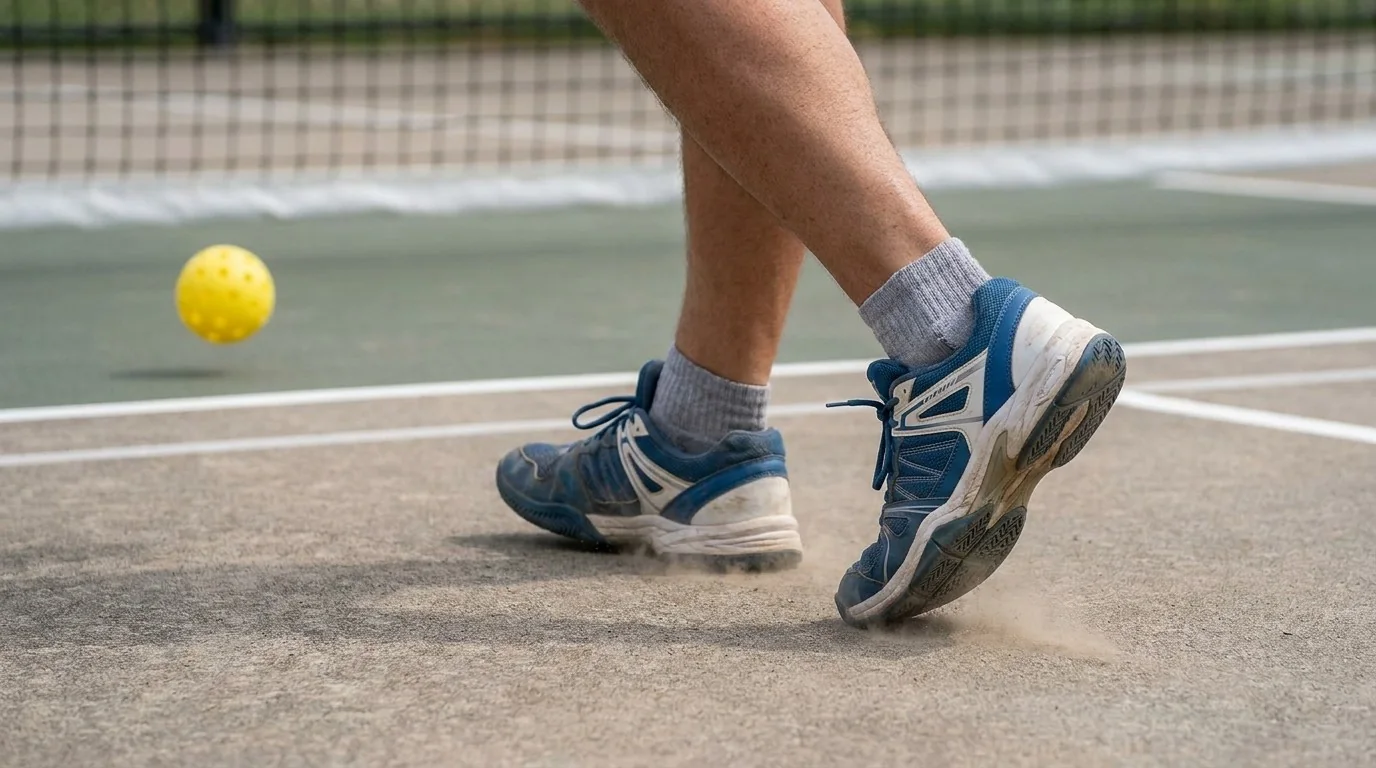
Score both the decision and the recovery. A repetition is useful when you choose appropriately, make the next contact under control, and finish balanced. The practical pattern is simple: move when the ball supports it, brake before control disappears, and keep the next contact in view. Give yourself time to see the reply before taking another step.