Soft Hands Under Pressure: The Pickleball Block Volley Guide
A practical guide to the pickleball block volley: ready position, soft hands, contact in front, shot selection, drills, and common fixes.
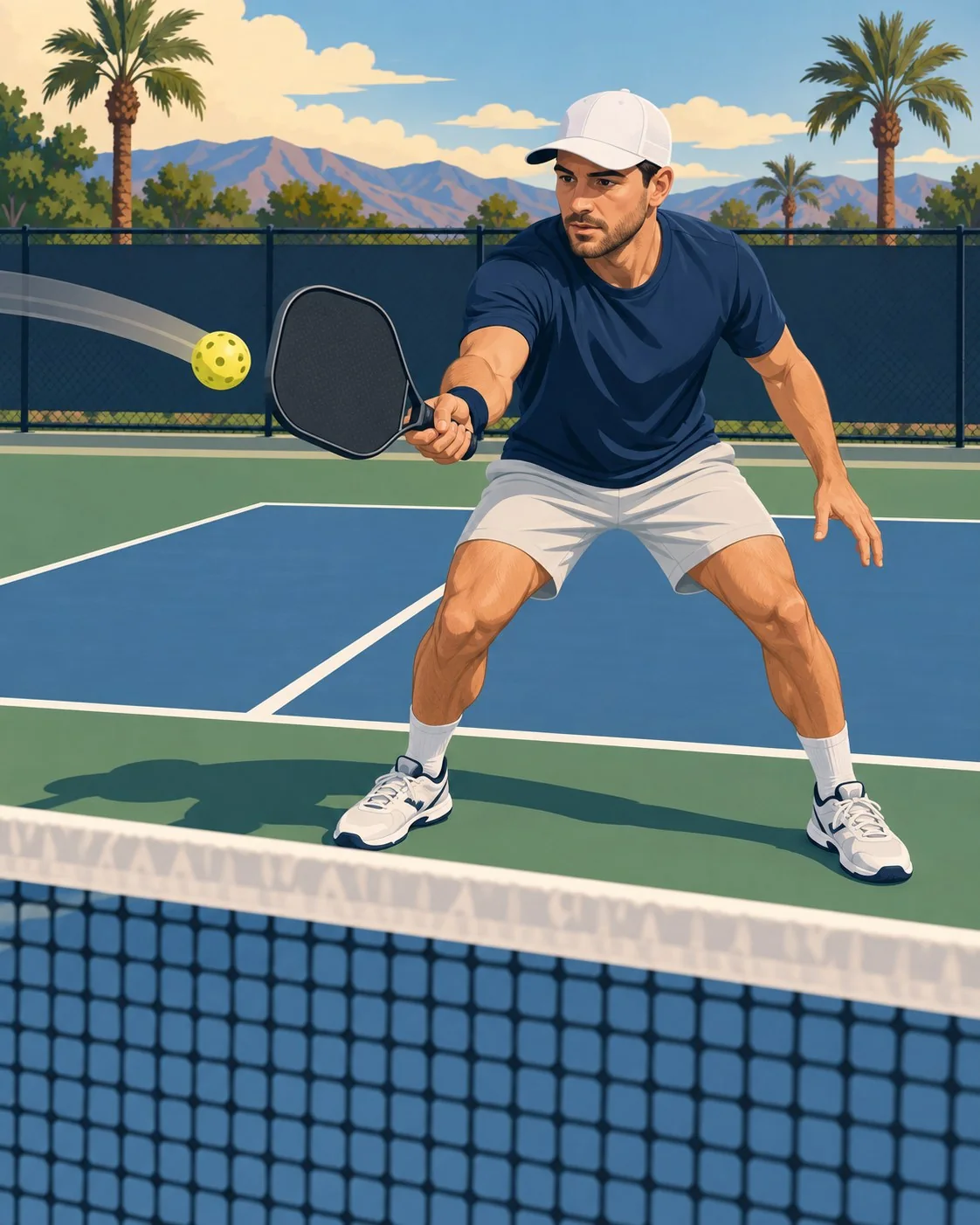
A pickleball block volley turns a fast attack into a soft, playable ball. Instead of swinging back, you present a stable paddle, absorb the incoming pace, and send the ball back toward the kitchen. The shot is defensive, but it is not passive: the quality depends on preparation, grip pressure, paddle angle, and a calm decision under pressure.
Set up before the ball arrives
Start at or near the non-volley zone with a balanced athletic stance. Keep the knees gently bent, weight slightly forward, and the paddle chest-high in front of the body. A small split step as the opponent contacts the ball keeps both directions available. If the paddle is down by the hip or your weight is on your heels, the block becomes a late emergency movement.
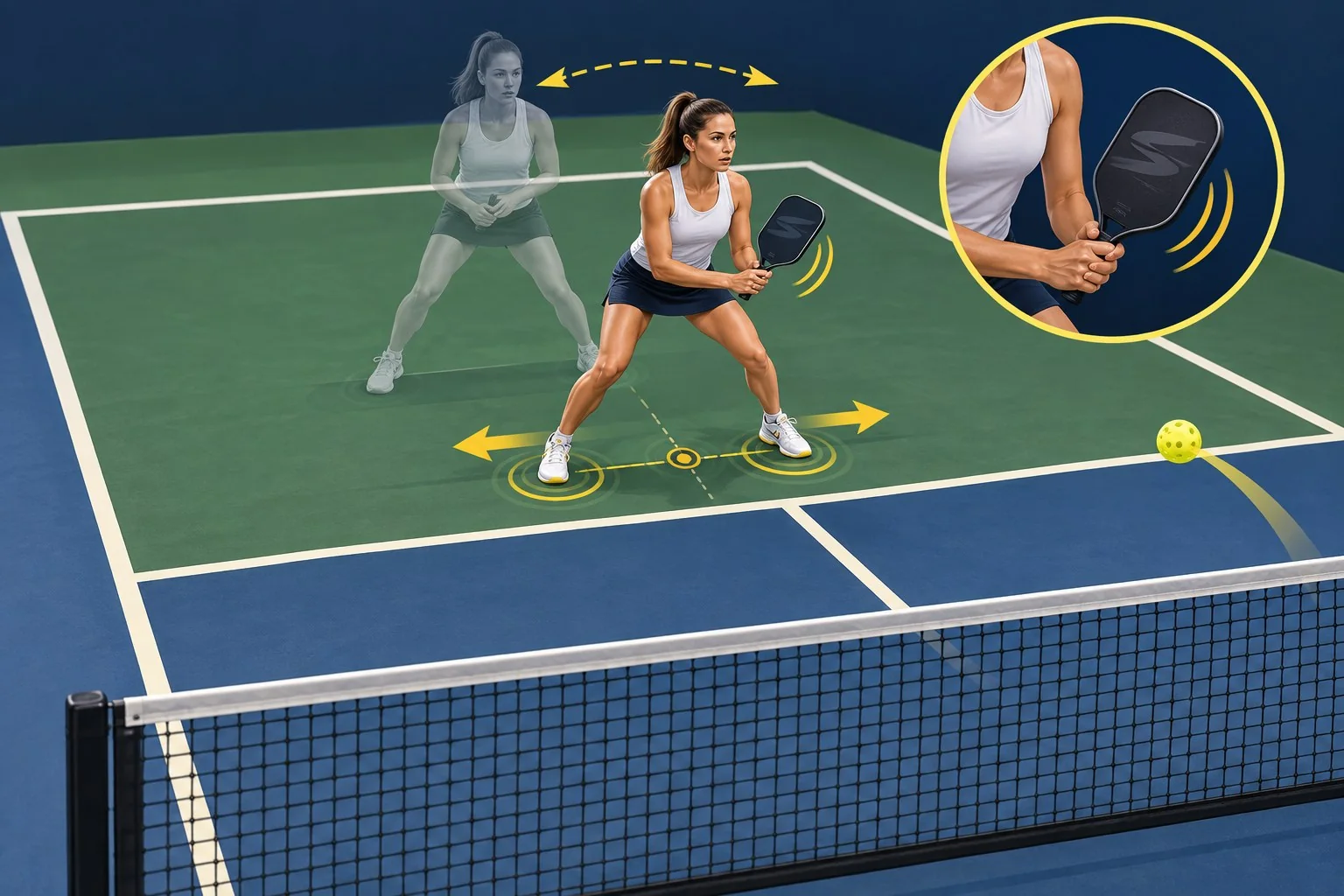
Use a continental, or hammer-style, grip so the same hand position can support either side. Relax the hand before contact. A useful feel is roughly three or four out of ten: secure enough to control the paddle, soft enough to let the face absorb energy. A tight grip makes the ball rebound too quickly and often produces a pop-up or a ball that travels long.
Meet the ball with soft hands
There is almost no backswing on a block volley. The paddle should already be in front of you, and contact should happen in front of the body rather than beside or behind the hip. Let the incoming ball meet a quiet face. A tiny yielding action through the hand and forearm can take pace off, but do not turn it into a swing.
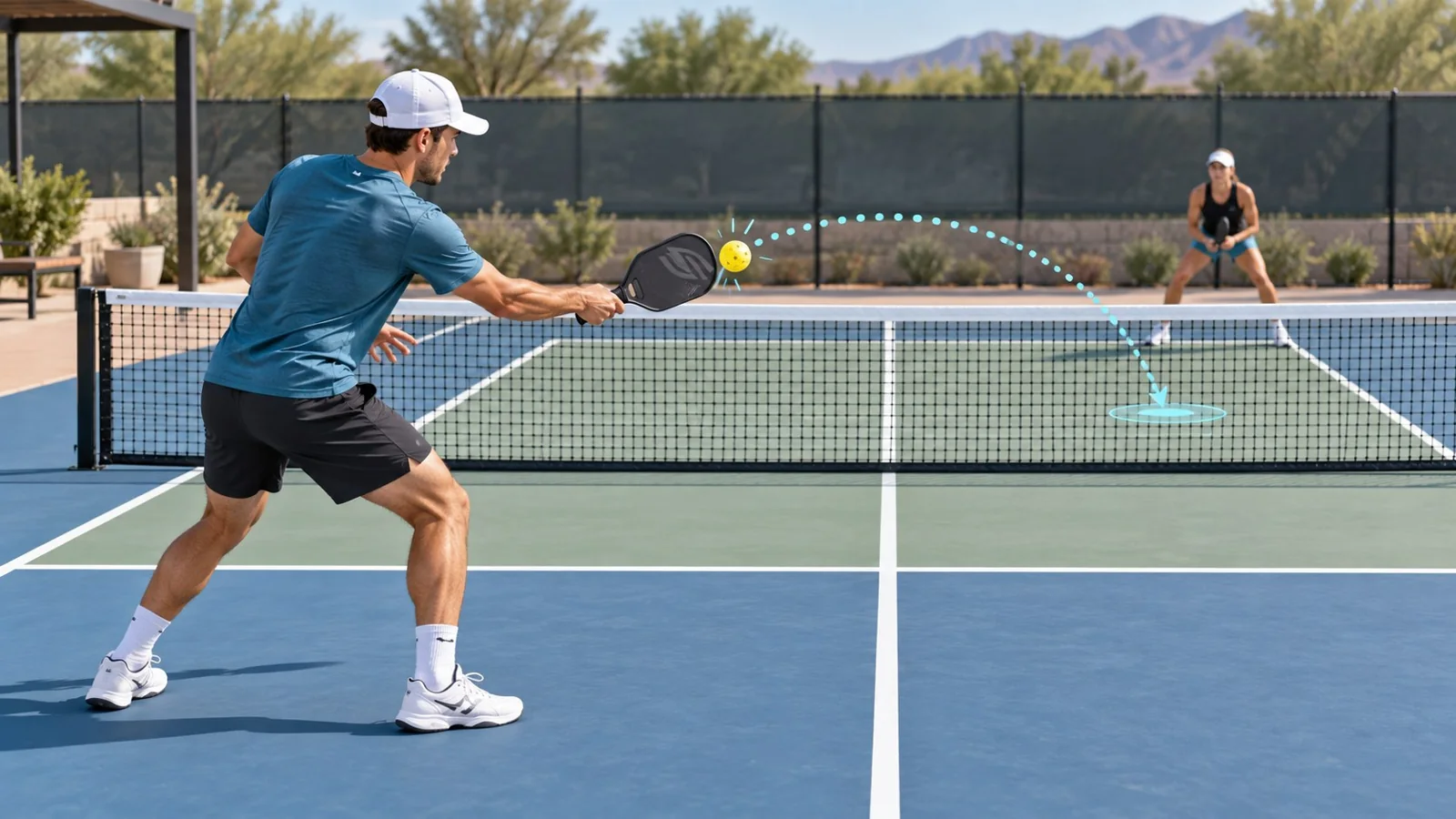
Keep the face close to neutral with a slight opening when you need enough lift to clear the net. Too closed sends the ball into the net; too open sends it high. The target is a low, controlled ball that lands in the opponent’s kitchen, giving your team time to recover. Move your feet to find the contact point instead of reaching behind yourself.
Decide when to block
Use the block when a fast drive or speed-up arrives at the body or above the waist and you are reacting rather than attacking. If the ball is slow and you have time to set your feet, a punch or counter may be appropriate. If it is below the net, a reset dink is usually the safer response. Reading speed and height prevents the common mistake of blocking every ball, including slow balls that should be attacked or shaped with touch.
A body shot often favors a backhand block because it keeps the paddle compact in the center. On either side, prioritize balance and a clear contact point over trying to create extra power. The block is successful when it lowers the rally’s speed and restores a neutral position, not when it looks dramatic.
Build the response with drills
Begin with a stationary feed from the transition zone. Stand at the kitchen line and block firm balls toward the kitchen without a backswing. Work on both forehand and backhand sides, keeping the paddle up and the grip soft. Next, use a speed-up-and-block sequence: exchange controlled dinks, have one player accelerate to the body, and let the defender block softly before returning to a dink. Aim for five clean block-reset sequences.
Finish with a decision drill in which the feeder varies height and pace. Call “block,” “counter,” or “reset” before contact, then make the smallest motion that fits the ball. If the ball flies long, check grip pressure and backswing first. If it hits the net, check the face angle and contact height. If it pops up, keep the ball in front and avoid locking the arm.
The reliable habit is simple: split early, keep the paddle high, loosen the grip, make contact in front, and absorb rather than chase the opponent’s speed. With deliberate repetitions, a hard attack becomes a situation you can neutralize instead of a reason to panic.