Third Shot Drive or Drop in Pickleball: Read the Return
A practical guide to choosing the third-shot drive or drop, building topspin, and transitioning behind the next ball.
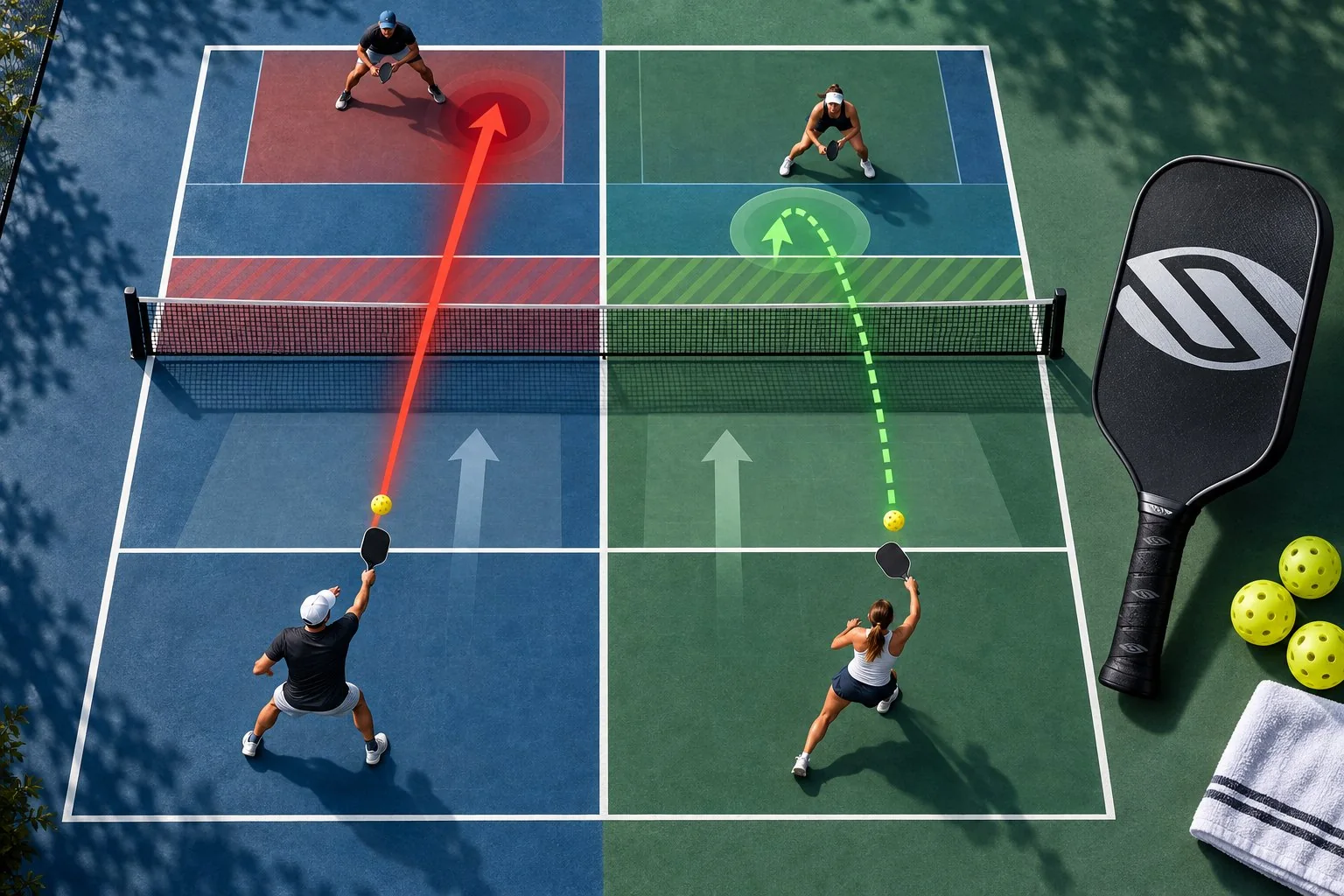
The third shot is not a personality test. You do not have to be a “drive player” or a “drop player.” The useful choice depends on the return you receive and the position your opponents have reached. Read the rally first, then select the shot that gives you the best margin and the clearest path forward.
When the third-shot drop is the percentage play
A third-shot drop is a soft, arcing ball intended to land in the non-volley zone. It removes pace, makes the opponents hit up, and gives the serving team time to move toward the kitchen. The drop is especially useful when the return is deep and you are still near the baseline. From that distance, a hard drive can hand two prepared opponents an easy ball to volley.
The drop is also the safer answer against a disciplined pair already set at the kitchen. Their position takes away the space a drive needs. A controlled ball that lands short changes the height and speed of the exchange instead of asking you to win a fast contest from behind the baseline.
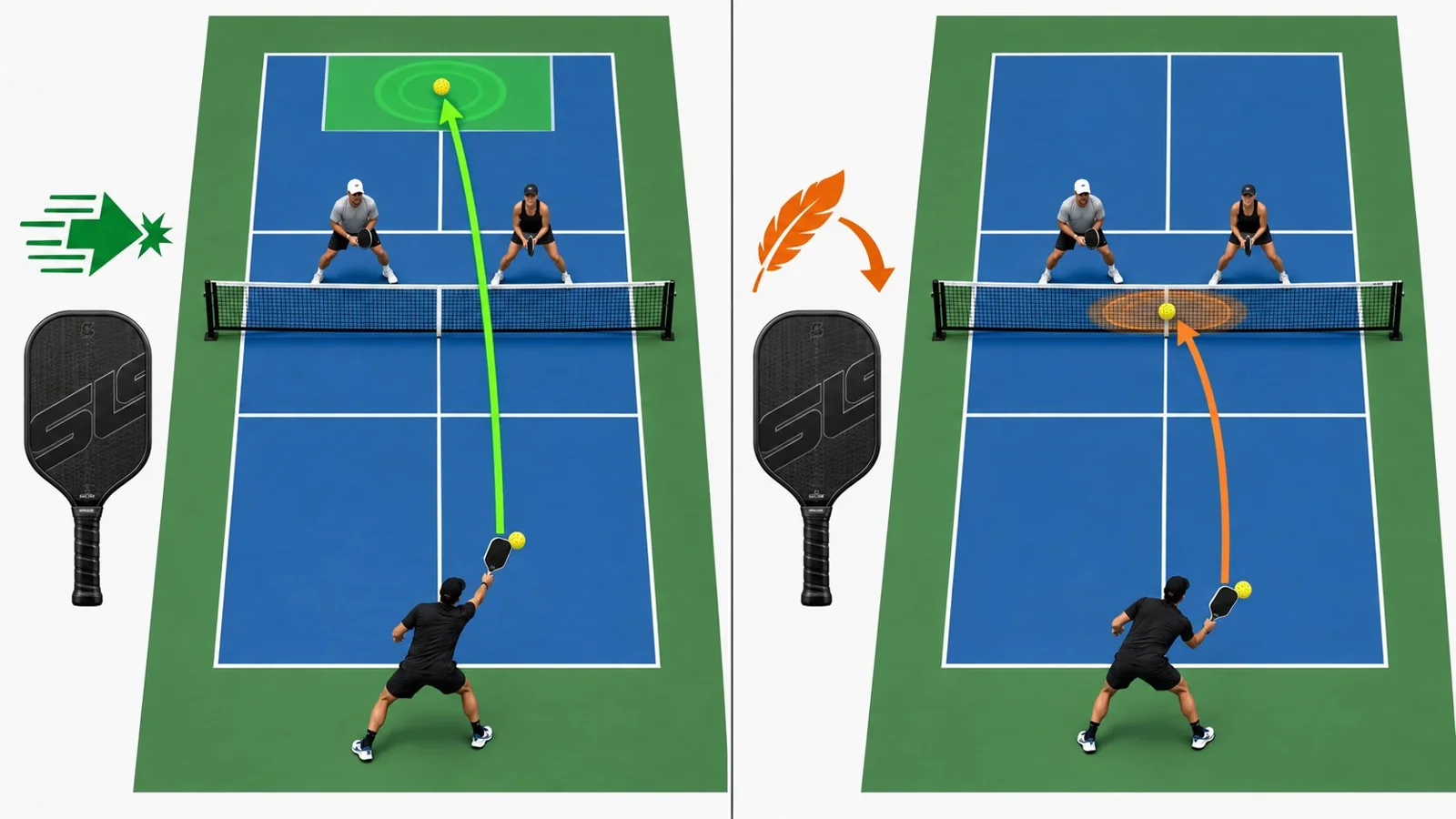
A drop is not required to be perfect to be useful. The goal is to make the opponent contact the ball below net height and hit upward. Crosscourt drops generally provide more room than down-the-line attempts because the diagonal path gives you a larger landing window and a lower net crossing point near the middle. Aim with a practical target rather than trying to paint the line.
When a third-shot drive earns the green light
A drive makes more sense when the return is short and gives you a ball you can contact in a comfortable strike zone. A short return leaves the opponents with less time and often places you closer to the kitchen when you swing. It is also a good option when one or both opponents are still moving forward, because pace can expose the gap before they become balanced.
The drive can target the middle, an inside shoulder or hip, or a backhand side that has shown weakness. Middle targets reduce the opponents’ angles and can create hesitation between partners. The objective is not simply to hit a winner. A firm, controlled ball should produce a block, pop-up, or other reply that lets you keep moving forward.
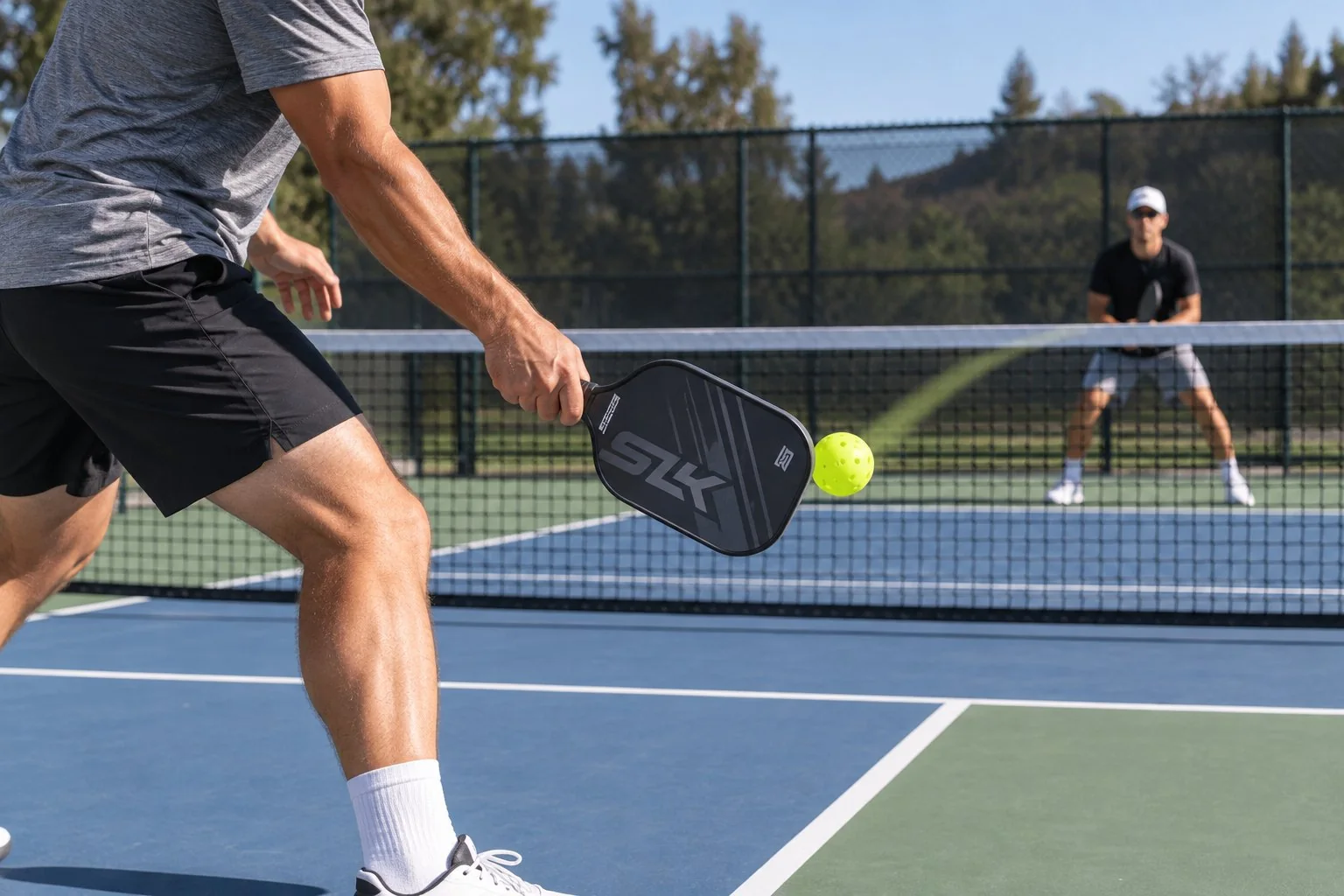
Read the return at the moment your opponent contacts it. Depth, height, pace, and opponent position are the four useful variables. A deep, low, fast return usually points toward a drop. A shorter return that sits up, arrives more slowly, or catches an opponent in transition is a better drive opportunity. If the picture is unclear, the drop is usually the safer default.
Build a drive that creates the next ball
Good drives begin with spacing. Make room between your body and the ball so the swing remains compact and balanced. Step into contact rather than reaching while your weight stays behind you. Contact should be in front of the hip, just after the bounce has risen to a manageable height.
Topspin supplies the safety that raw pace does not. Brush up through the back of the ball with a stable wrist and a controlled finish. The ball can clear the net with useful margin and then dip toward the opponent’s feet. A flat ball with no margin is easier to block or attack.
Crosscourt is often the higher-percentage direction because it gives the ball more court and a lower path over the net’s center. Down the line can work when you have earned the angle and identified a clear opening, but it leaves less room for error. Whatever direction you choose, decide the likely next reply before you swing.
The drive-to-drop sequence
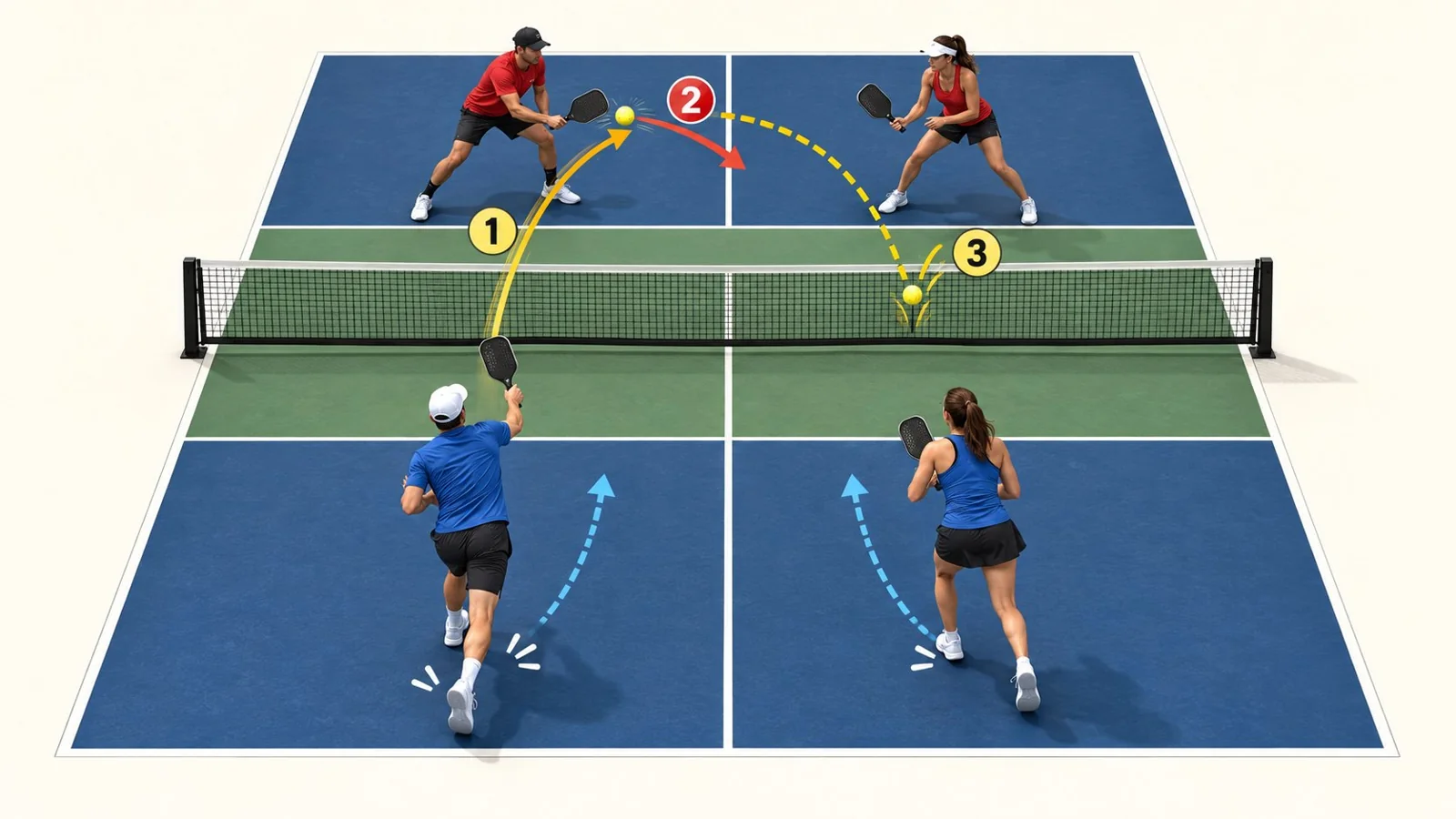
The drive does not end when the ball crosses the net. Move forward behind it with your partner, take a few quick steps into the transition zone, and split step as the opponents make contact. Keep the paddle up and expect a defensive block while respecting the possibility of a counterattack.
If the fourth shot comes back high or floats into the transition zone, continue with an aggressive volley or another controlled drive. If it comes back low and settles in front of you, a fifth-shot drop is often the smart answer. The first drive has made that drop shorter and more manageable than a full-court attempt.
The simple rule is to drive attackable balls and drop unattackable ones. Practice the decision, not just the stroke: have a partner vary the depth and pace of returns, call “drive” or “drop” as soon as the return is struck, and then execute the choice. When both shots are reliable, opponents cannot cheat toward one pattern and the whole point becomes easier to manage.