Third-Shot Drop Landing Zone: Aim Past the Net, Not at the Line
A practical guide to third-shot drop targets, net margin, compact mechanics, staged footwork, and progressive practice.
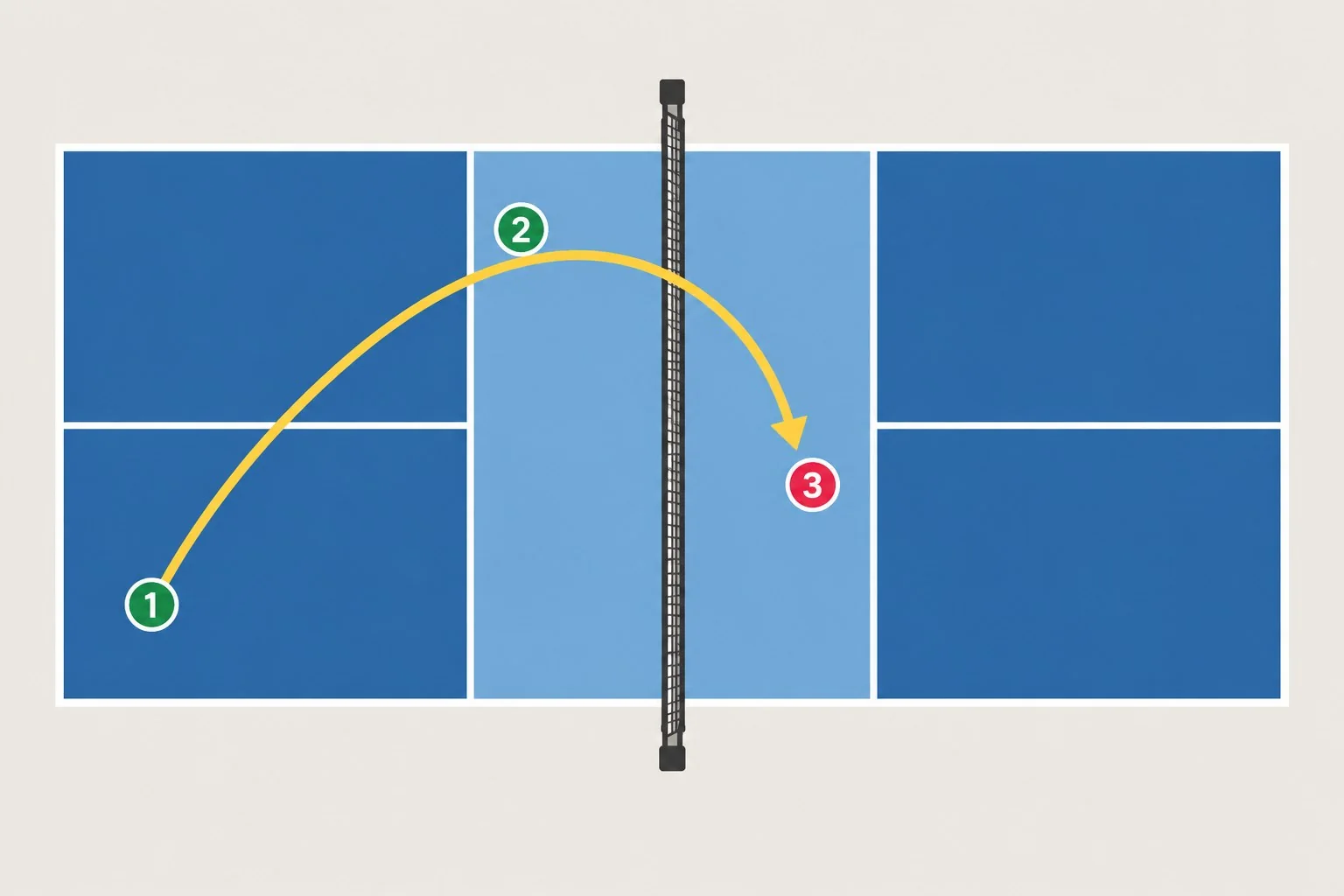
The third-shot drop is the serving team’s bridge from the baseline to the kitchen. After the serve and return, the receiving team can settle near the net while the serving team must play the third ball after a bounce. A controlled drop rises over the net, falls into the non-volley zone, and gives the hitter time to advance instead of donating a high ball to the net players.
Choose the landing zone before you swing
The safest target is not the kitchen line. Aim roughly two to four feet beyond the net, preferably toward the middle of the kitchen. That target gives the ball room to clear the tape and reduces the angles available to the opponents. A drop that lands a little deep but stays low is usually playable; a drop clipped into the net ends the point immediately.
Read the rally before choosing the shot. Drop when both opponents are established at the kitchen, when the return reaches you low, or when a hard drive would feed their quick hands. Drive instead when the return is short and high, when an opponent is still moving forward, or when the net team struggles with pace. A useful pattern is drive on the third shot, then drop the softer reply on the fifth, but only when the first drive creates genuine pressure.
Build an arc that falls before the net
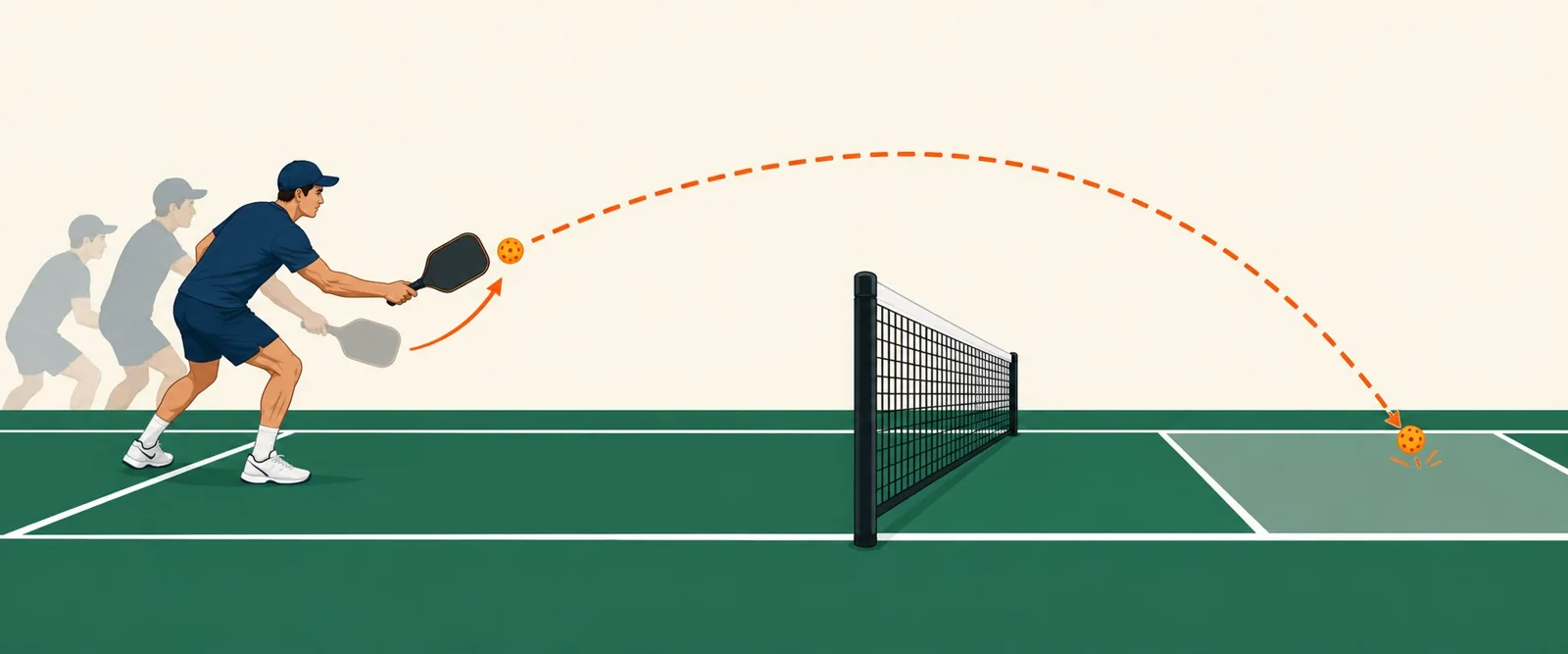
Start with a light grip and a compact backswing. The paddle travels from low to high, powered by a small lift from the legs and shoulder rather than a wrist flick. Meet the ball in front while it is low enough to support the lifting path. Keep the wrist quiet and let the follow-through point toward the kitchen.
Picture the top of the ball’s arc occurring on your side of the net. The ball should already be descending as it crosses the tape. If it is still rising at the net, it will often land deep and high, giving the opponents an easy volley. When in doubt, add clearance with a little more height, not more force.
Do not manufacture topspin before the basic motion is reliable. A slight brush can help the ball come down, but the foundation is a soft lift, stable contact, and margin above the net. If the ball sails, shorten the backswing. If it lands short, extend smoothly through contact rather than snapping the wrist.
Advance in stages after the drop
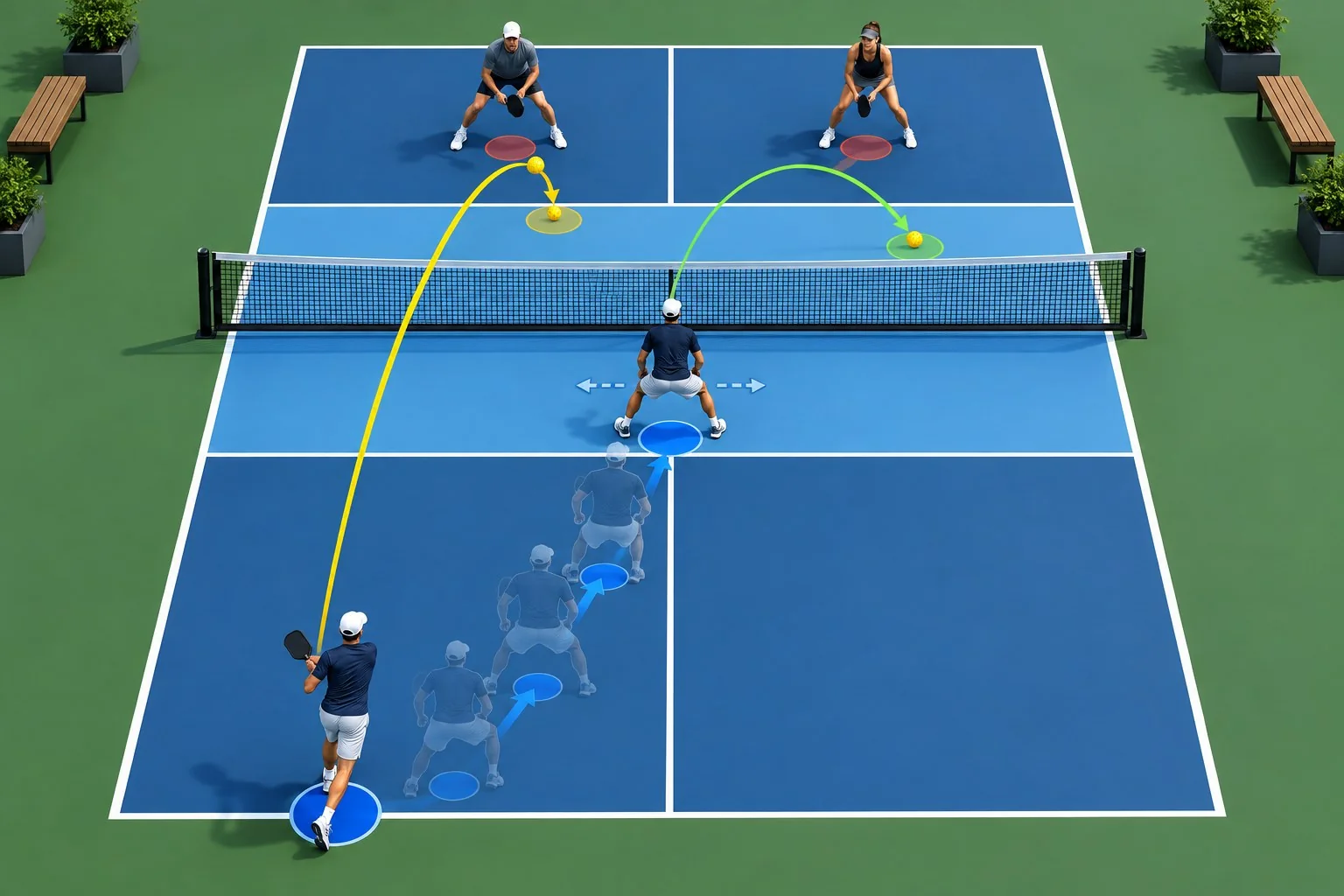
The drop is only half the job. Use the sequence hit, read, move. After contact, judge whether the ball is low enough to make the opponent lift. If it is, take controlled steps forward. If it floats high, pause in a balanced stance instead of sprinting into a ball at your feet.
Move through the transition zone in stages. Each time the opponent prepares to hit, use a small split step so your feet are quiet and ready to move either way. A fifth-shot reset may be necessary before you reach the kitchen; that is the next link in the same soft-shot sequence.
The common mistake is charging forward while watching the drop. Keep your attention on the opponent’s paddle and stop before contact. A good landing zone buys time, but only balanced feet let you use it.
Practice the target, not just the swing
Begin with self-fed balls from the baseline. Place a safe visual target in the middle of the kitchen and hit ten drops, counting only balls that clear the net and land softly. Work toward seven successful shots out of ten before adding movement.
Next, start closer to the net and move backward one step at a time. Then add a partner’s return, alternating straight-ahead and crosscourt drops. Finish with a drop-and-advance drill: hit the third shot, take two controlled steps, split step on the opponent’s contact, and play a fifth-shot reset if needed.
The goal is not a perfect line-hugging ball. It is a repeatable landing zone, enough height to clear the net, and movement that leaves you ready for the next reply. Once those pieces hold under pressure, the third-shot drop becomes a practical way to turn a baseline disadvantage into an even kitchen exchange.