Third-Shot Drop in Pickleball: Build a Reliable Arc
A practical guide to shaping the third-shot drop: create margin over the net, make the ball descend near the opponent’s feet, and advance only behind a playable shot.
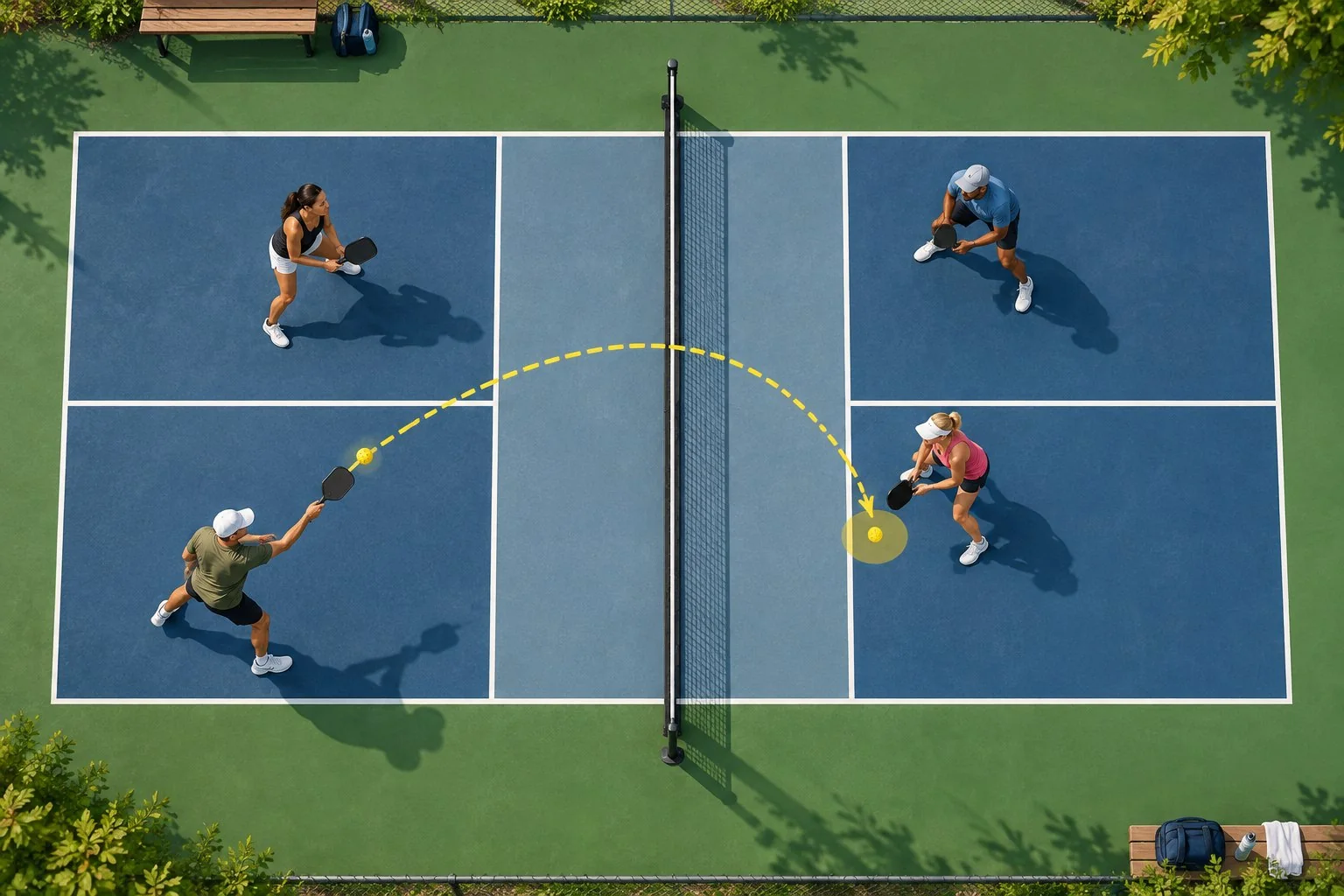
The third-shot drop pickleball is not a soft ball hit vaguely toward the kitchen. It is a deliberate bridge from the serving team’s backcourt to a neutral rally. The ball needs enough arc to clear the net, enough forward travel to reach the non-volley zone, and a descent that makes the opponent contact it below a comfortable attacking height. Think “peak early, fall before the opponent can swing down.”
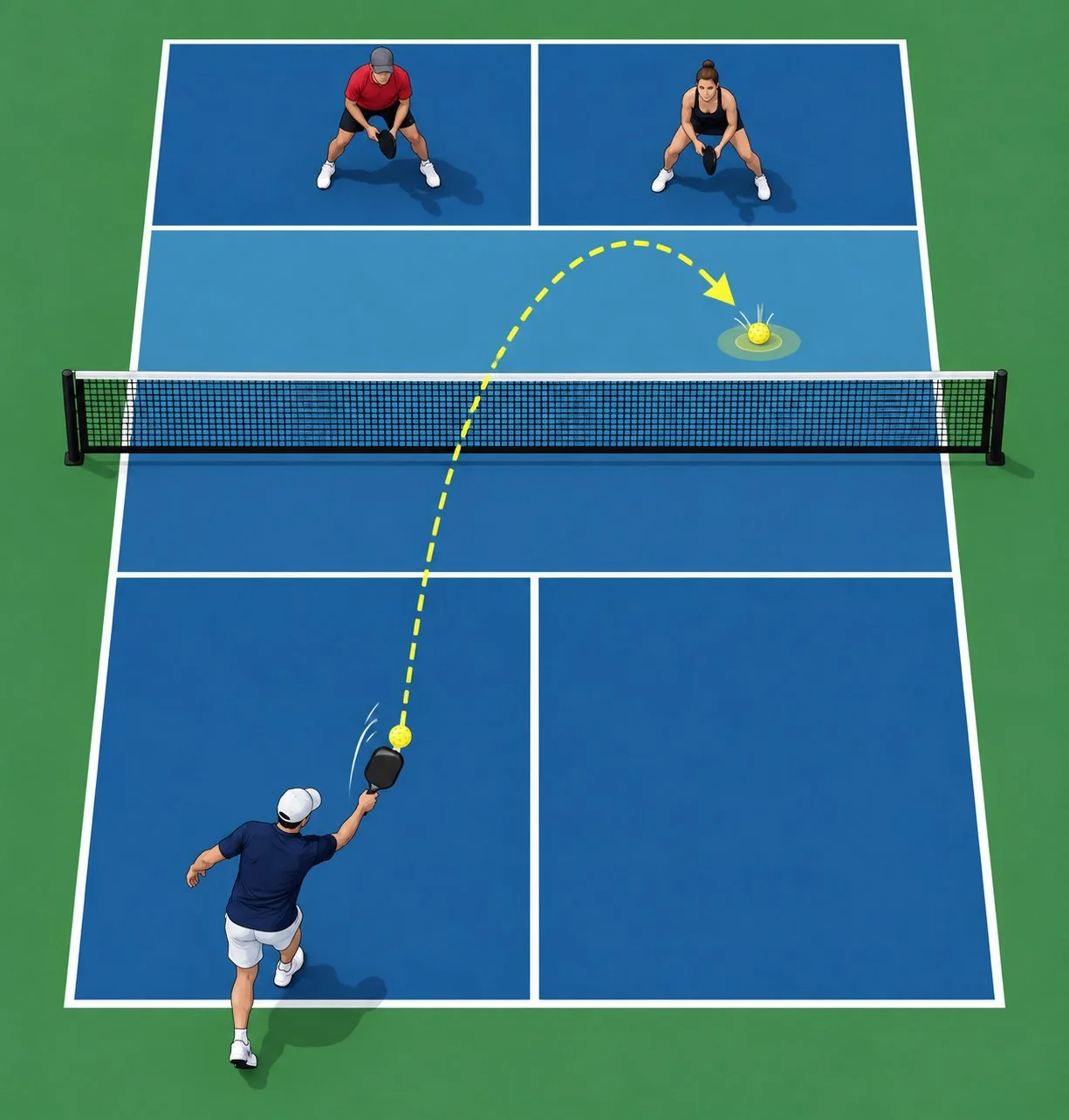
Build the shape before chasing precision
Start behind the baseline and let the return bounce. Move your feet so your body is behind the ball rather than reaching from a stretched position. Set a balanced base, bend the knees, and keep the paddle below the ball with a slightly open face. The hand should feel secure but relaxed; tension makes the face close and turns a touch shot into a net ball or a drive.
Use a compact swing led by the shoulder. Contact should be in front of the body, followed by a smooth extension toward the target. You are lifting and carrying the ball, not scooping it straight upward. A long backswing adds speed without giving you useful control. The farther you are from the net, the more the follow-through can extend, but the swing should remain calm.
The flight should rise early, pass the net with visible margin, then descend into the opponent’s kitchen. Do not judge the shot only by how high it looks over the net. A ball that is still climbing as it reaches the kitchen can be volleyed early, even when it lands legally. Conversely, an arc that rises several feet but is already falling can force a difficult, low contact.
Choose a target that buys a low reply
Aim toward the opponent’s feet or the back half of the kitchen rather than obsessing over the shortest possible landing. A drop that dies too close to the net may invite a reach and sharp angle. A controlled, slightly deeper ball can crowd the receiver’s contact and make them lift. Your target changes with the return: a deep, fast return needs more margin and a longer carry, while a short return lets you step in and use a flatter arc.
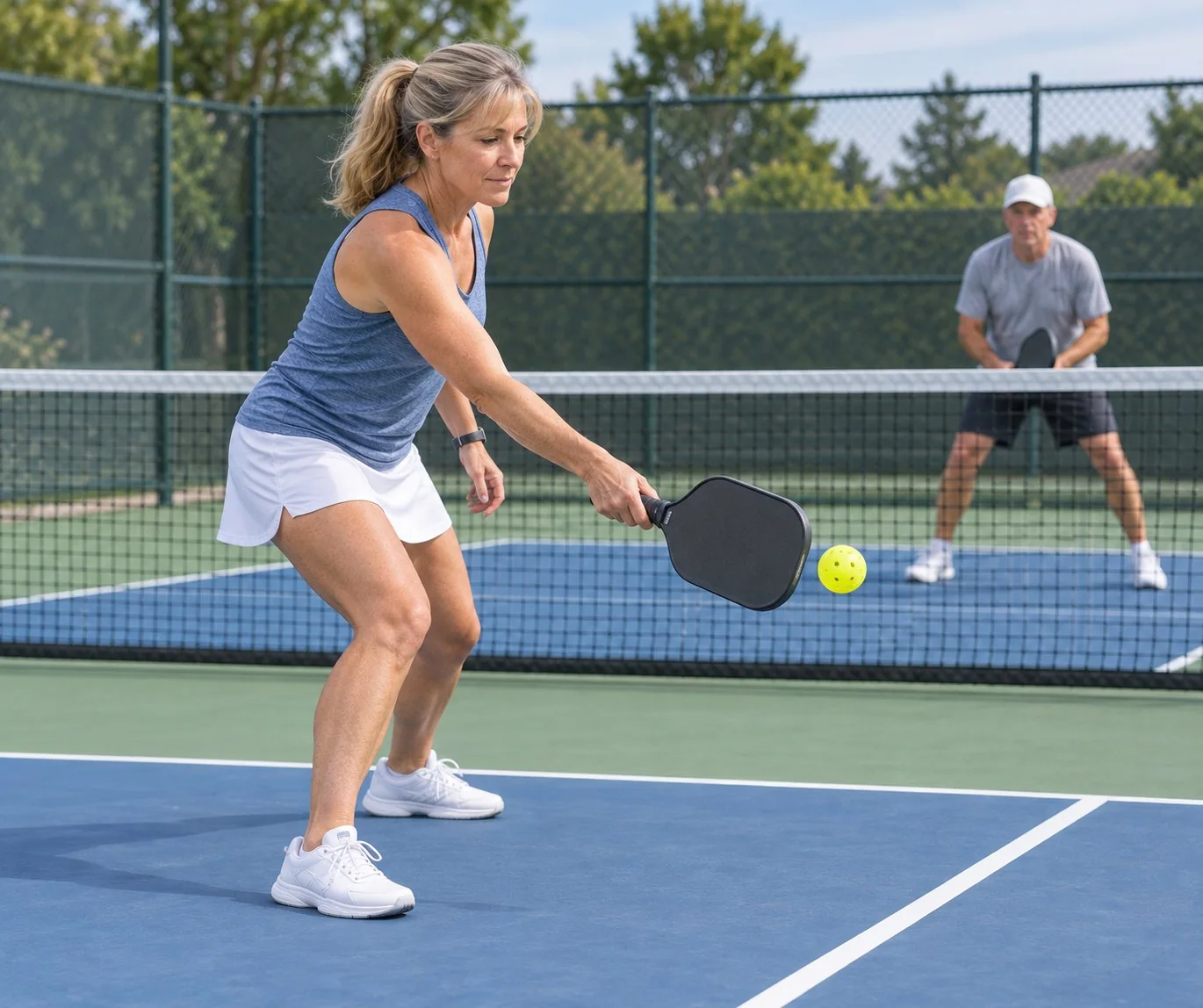
Keep the paddle face stable through contact. If balls consistently hit the net, first soften the grip and create height sooner. If they land in the kitchen but get attacked, check whether the apex is late or the ball is floating too high after the bounce. If they land short, send the swing forward instead of adding a wrist flick. Small foot adjustments are more reliable than leaning and reaching.
After the ball leaves the paddle, begin moving forward—but let the ball make the decision. Advance behind a drop that is descending and likely to force a low reply. If you hit a high or compromised ball, stop in a balanced position and prepare to defend. Charging into the kitchen after an attackable drop leaves you exposed.
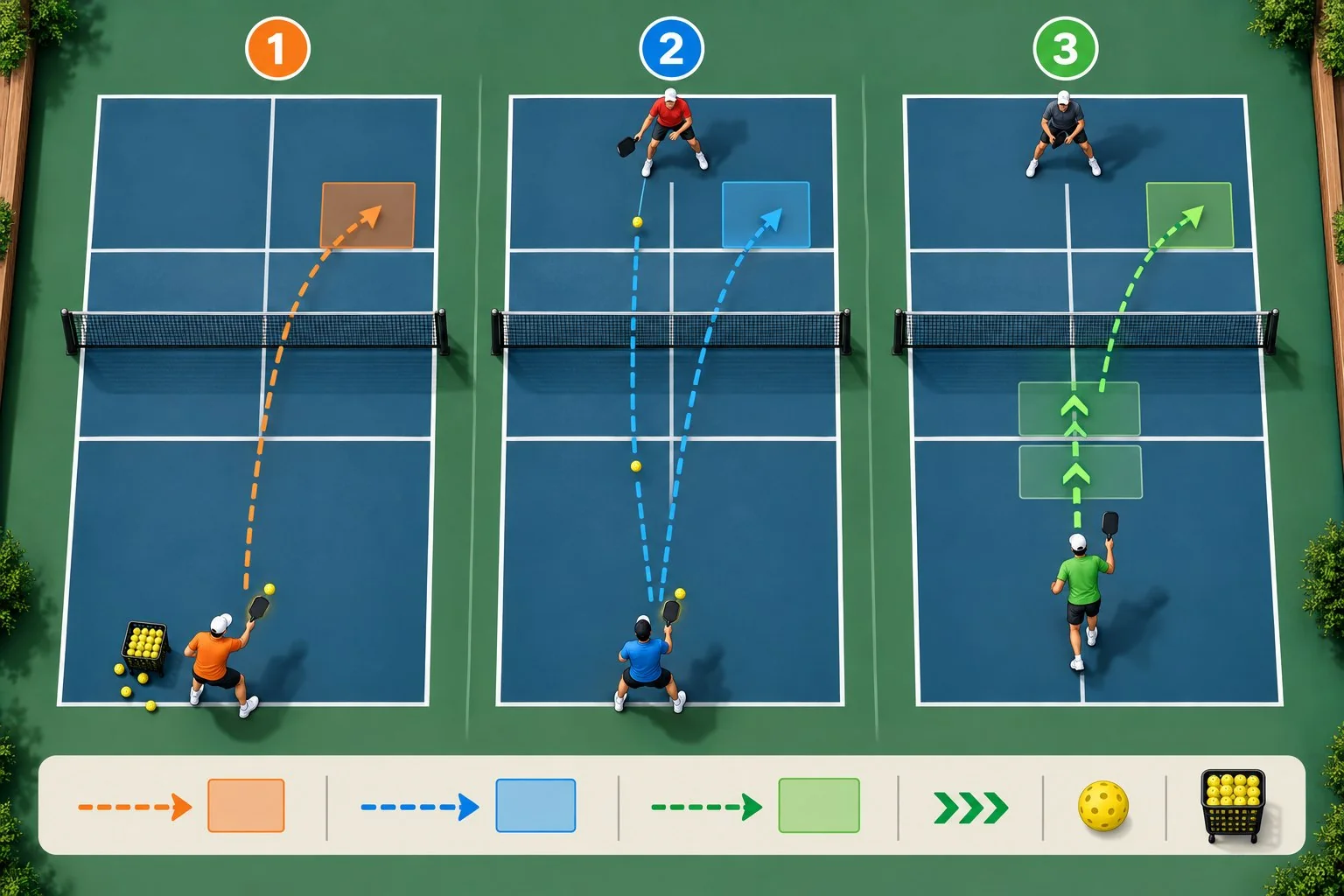
Practise the drop as a complete pattern
First, use a self-feed from the baseline. Drop the ball, let it bounce, and send it toward the center of the kitchen. Watch the complete flight rather than looking away after contact. Count a repetition as useful when it clears with margin, descends before the opponent’s contact zone, and lands where a receiver would need to hit up.
Next, have a partner stand at the kitchen and feed a predictable ball to both forehand and backhand sides. Ask the partner to call “low,” “high,” “short,” or “long” after each attempt. This outside view reveals whether a ball that feels soft is actually attackable. Once the arc is repeatable, alternate feeds and make the first decision—drop or drive—before the bounce reaches you.
Finally, repeat the pattern from the transition zone. You are closer, so reduce the lift and the swing length rather than keeping the baseline motion. Work in sets of ten and record the type of miss: net, long, short, or high. Correct one variable at a time. A reliable third-shot drop comes from repeatable contact, a forgiving arc, and disciplined movement—not from trying to hit the prettiest ball in the air.