Volley Footwork at the Kitchen: Split, Brake, Recover
A practical guide to split-step timing, braking forward momentum, and recovering after kitchen-line volleys.
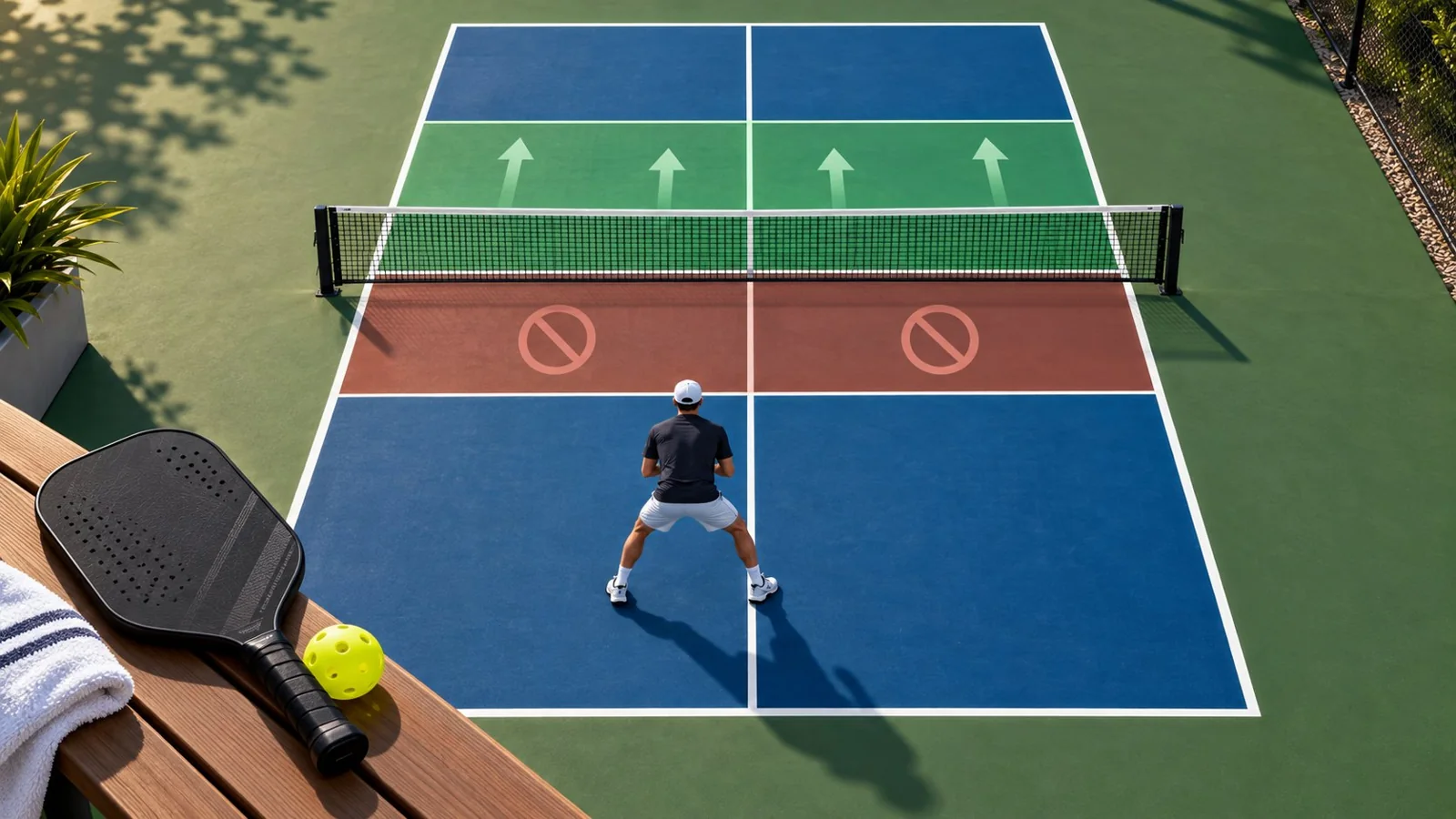
Good pickleball volley footwork starts before the ball reaches your paddle. A balanced split step, a short movement to the contact point, and a deliberate brake keep the volley compact and the next recovery available. At the kitchen line, this footwork lets you take time away without drifting into a non-volley-zone fault; in transition, it helps you absorb pace and reset.
Know the volley and the kitchen rule
Volleys are most common at the non-volley zone line, but they are legal from anywhere on the court as long as you obey the kitchen restriction. You may not volley while standing inside the non-volley zone or on its line. The restriction applies to your body, clothing, and paddle. If a ball bounces first, you may enter the zone and play it as a groundstroke.
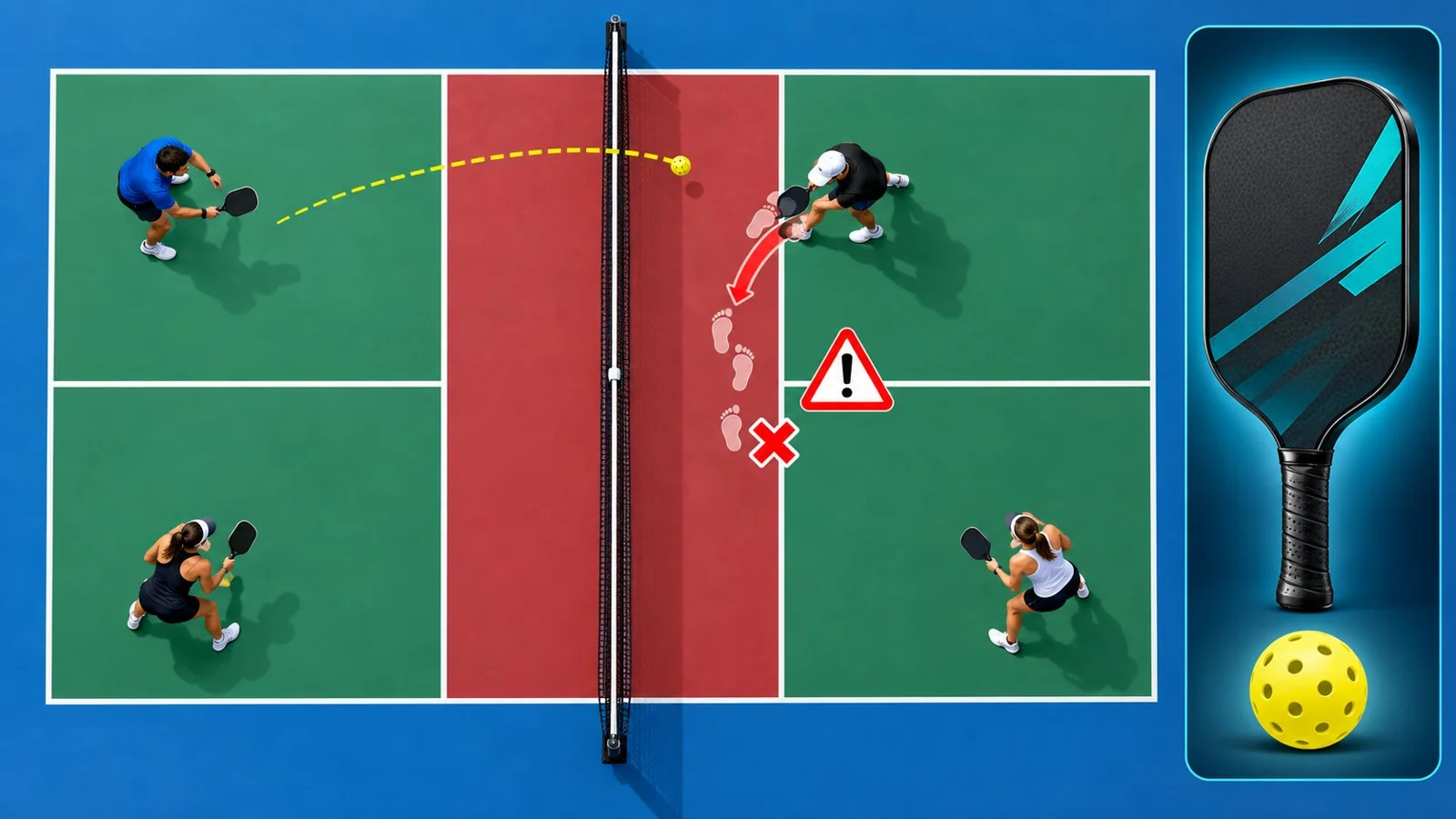
Momentum matters too. Starting behind the line is not enough if your forward movement carries you into the kitchen after contact. Brake with your feet, regain balance, and only then step into the zone. This is why a controlled base and a short swing are more valuable than lunging at every ball.
Choose the right type of volley
The punch volley is a firm, compact forward push for a ball at mid-height or above. Keep the face slightly open and use the shoulder rather than a large wrist action. A block volley is the safer answer to a hard drive or speed-up: hold a stable face, soften the grip, and let the incoming pace return the ball.
A roll volley brushes upward and forward to add topspin when the ball is lower but still attackable. A drop volley uses a soft grip and deceleration to place the ball just over the net, changing the rhythm against a player who is deep. Advanced players may add a speed-up during a dink exchange, a short snap volley, or a swing volley from mid-court when there is enough space for a larger motion.
The labels matter less than the question underneath: is the ball high enough to attack, or low enough that control comes first?
Build reliable mechanics
Start with a continental grip, similar to holding a hammer. It lets you move between forehand and backhand without changing your hand position. Hold the paddle in front of your chest, slightly forward, with an athletic base and relaxed shoulders.
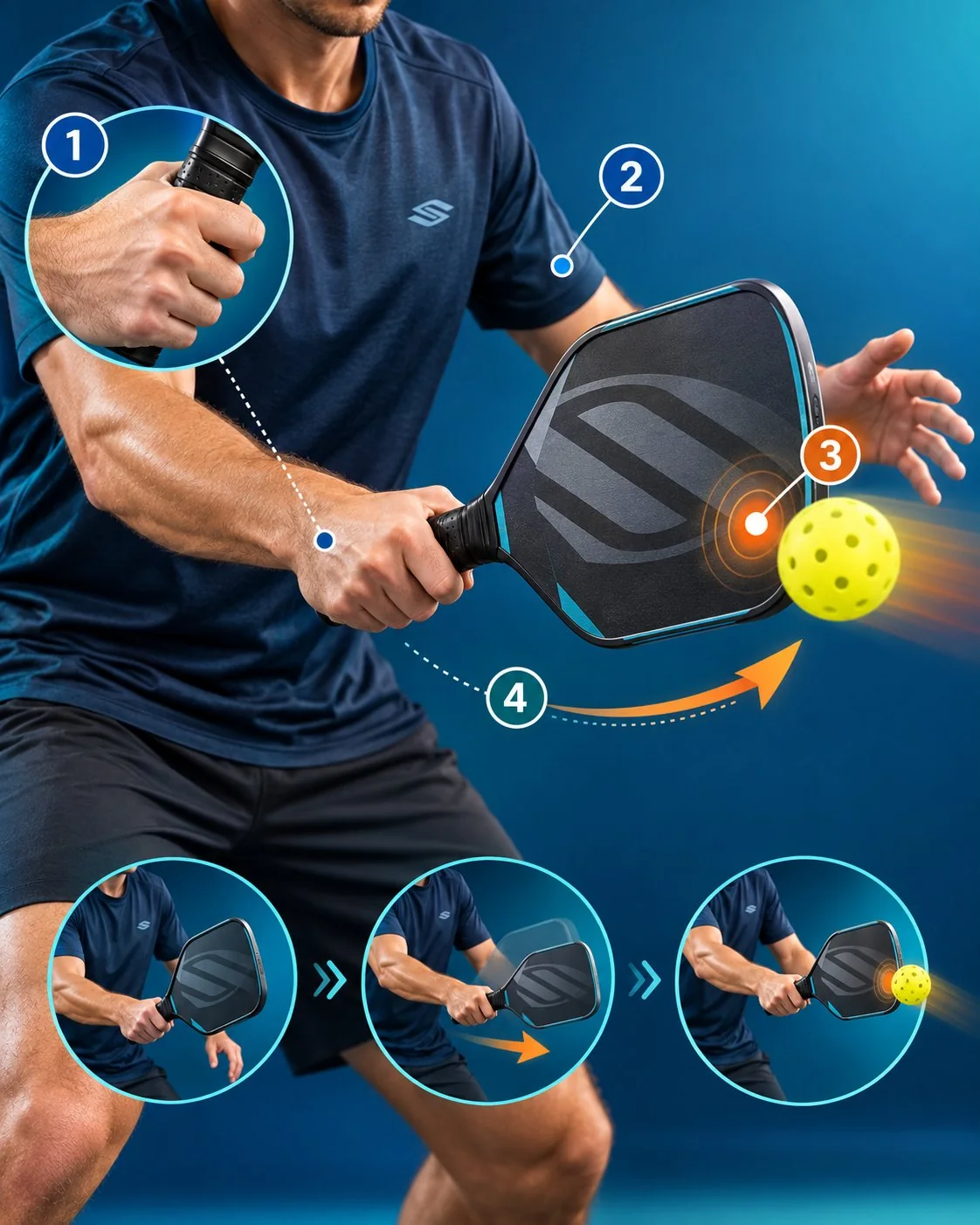
The third visual cue is the decision map below: use it to connect ball height with a realistic target rather than swinging automatically.
Keep the backswing short—no farther back than the shoulder line—and contact the ball well in front of the body. A wide or wrist-heavy swing takes too long and makes the paddle face unstable. On the backhand side, a firm shoulder-led push is usually more repeatable than trying to create speed with the wrist.
Attack high, reset low
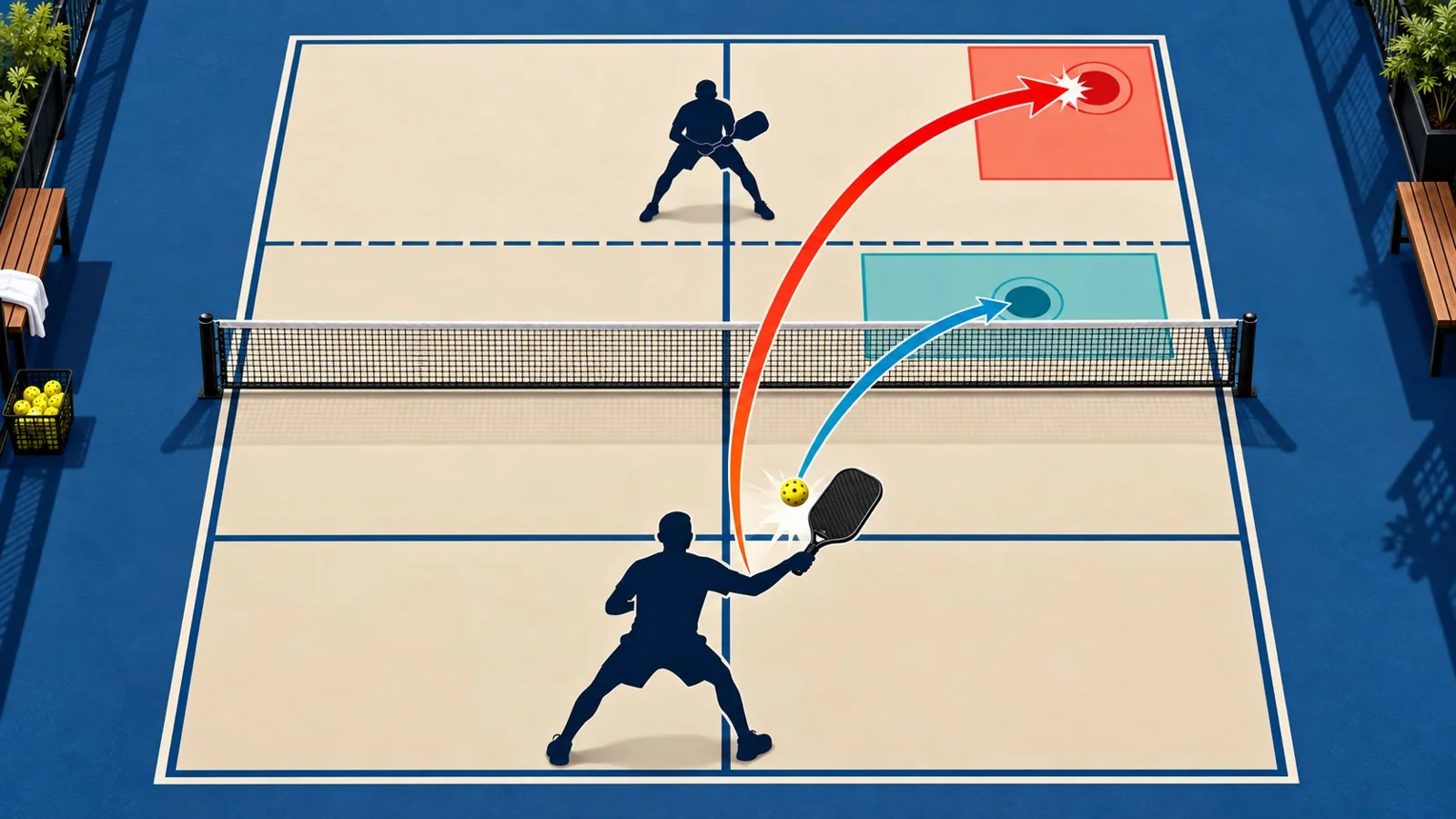
Use a practical decision rule: attack when the ball arrives above net height; reset when it arrives below it. A high ball can be punched, rolled, or sped up toward a body, gap, or open angle. A low ball needs a softer response, because trying to drive it upward with pace often sends it into the net.
The attack-versus-reset map belongs with the decision block above, so the next choice is visual rather than another text rule.
The most useful volley target is not always the nearest line. Look for the weaker player, exposed middle, or body lane. If an opponent’s paddle is low during a dink exchange, a controlled speed-up can force a defensive block. If the ball comes back low, loosen the grip, lower the paddle, and return to a soft exchange instead of continuing to attack.
Practice the transition
Begin with shadow repetitions: set the ready position, make a compact forehand and backhand punch, then freeze with the paddle in front. Add feeds at chest height and alternate punch volleys with blocks. Next, have a partner vary the feed height so you must call “attack” or “reset” before contact.
Finish with a kitchen-line drill that alternates three soft dinks, one speed-up, and one controlled block. Keep your feet behind the line, stop forward momentum, and recover to the ready position after every ball. The goal is not to memorize seven names. It is to recognize height and pace early, choose a suitable response, and make clean contact without giving away balance or court position.