Wide Pickleball Recovery Footwork: Protect the Middle After a Stretch
Learn the footwork and court-awareness habits that help you recover after a wide pickleball chase without leaving the middle open.
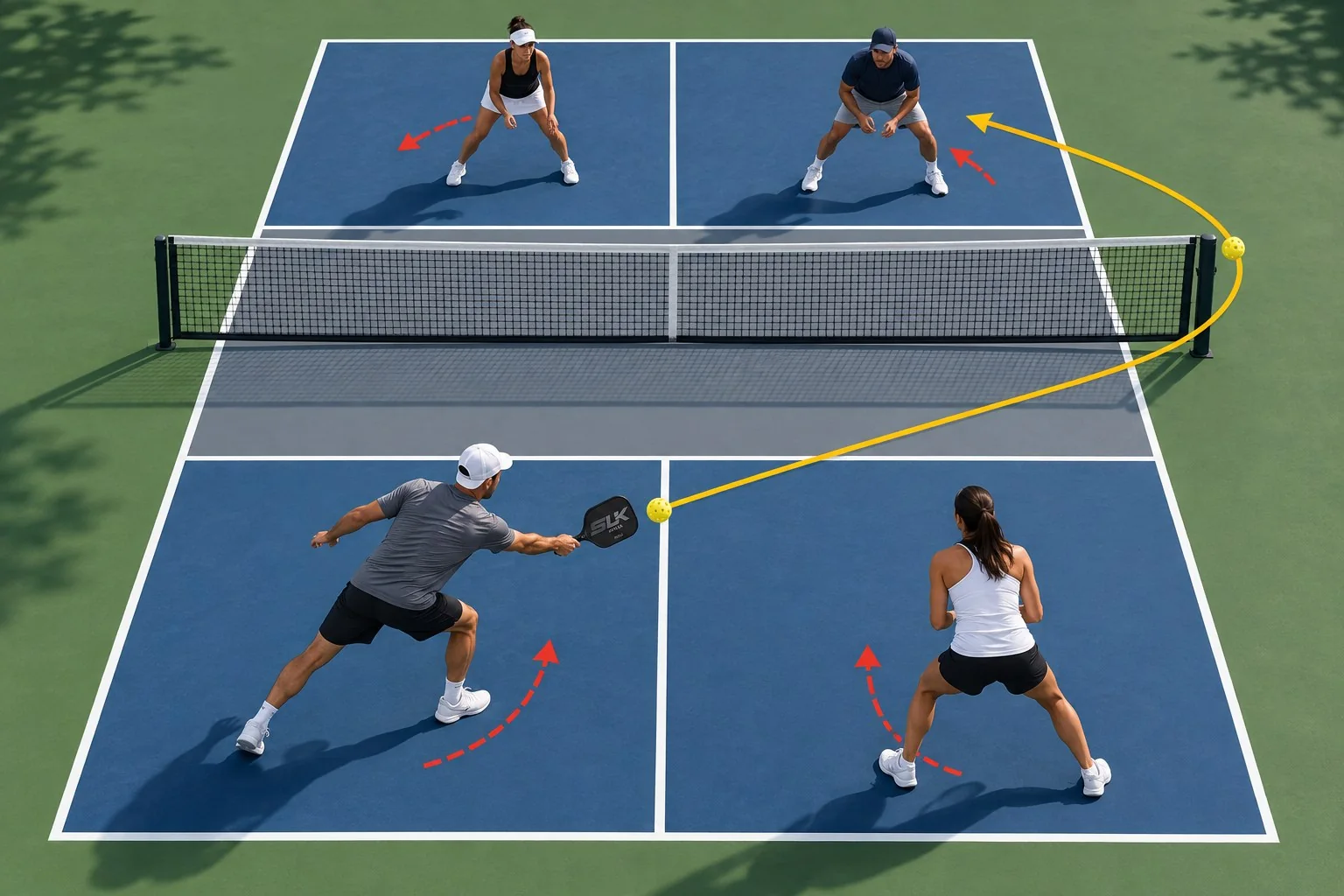
Wide recovery footwork is what keeps a difficult pickleball chase from becoming an easy point for the opponent. When a ball pulls you toward the sideline, the goal is not merely to reach it. You must choose a safe reply, brake under control, and protect the middle before the next contact.
Read the wide ball and choose a safe reply
Start with the geometry of the rally. A sharp crosscourt dink or drive can pull you beyond your normal lane. Turn your shoulders, use quick adjustment steps, and keep the paddle in front while you chase. Do not reach with a locked arm if a small extra step can create space for a balanced contact.
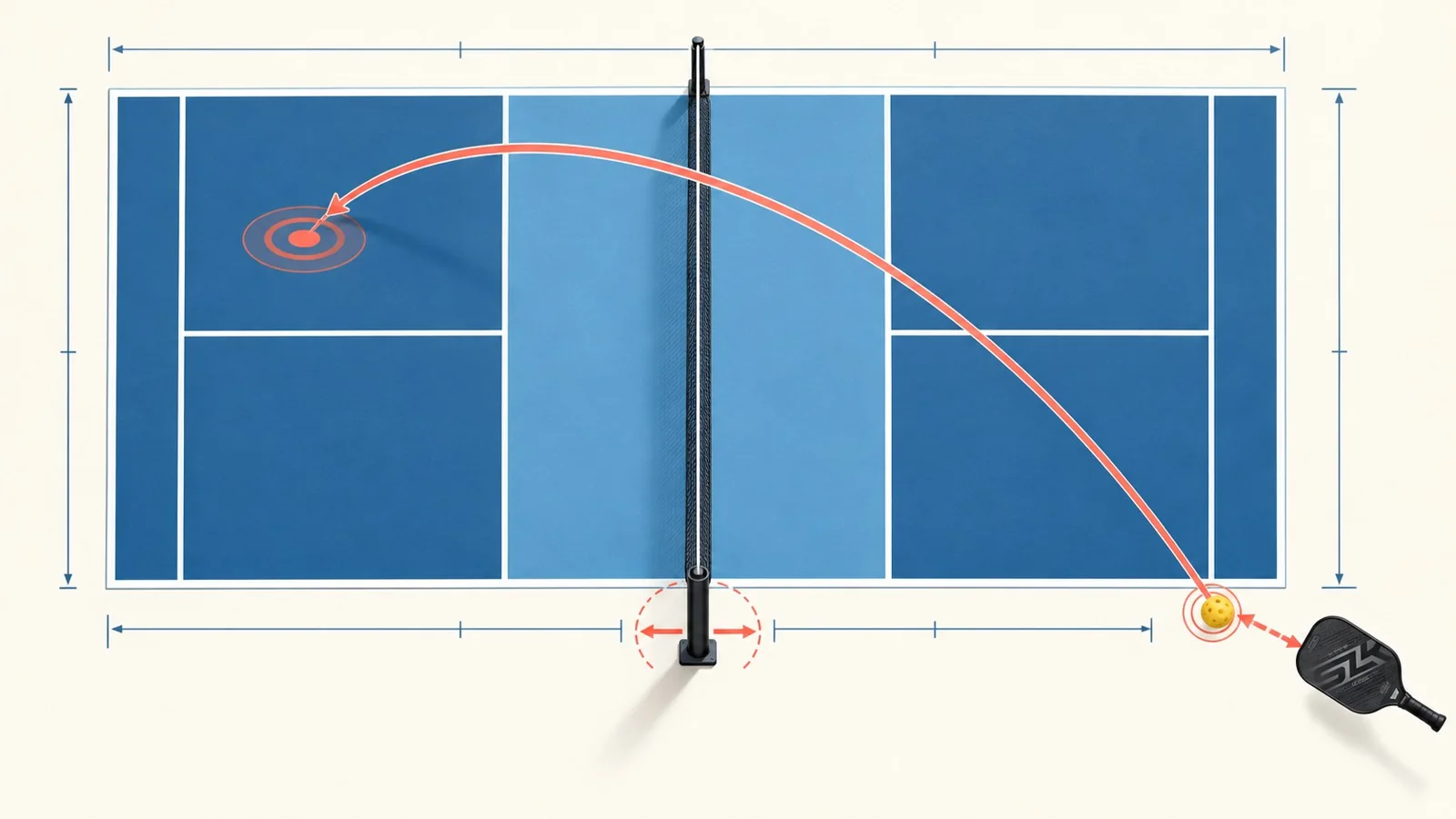
When you arrive late, favor height and margin rather than a low-percentage winner. A controlled crosscourt ball can buy time, while a soft reset can keep the reply low if the incoming ball is at your feet. If the ball is clearly out, let it go; chasing an out ball leaves you stranded and gives away court position.
Brake before you recover toward the middle
The recovery begins as soon as the ball leaves your paddle. Use the outside foot to slow the lateral drift, then turn your hips toward the center. A common mistake is running straight back to the place where you started. A diagonal recovery is usually more useful because it protects the middle and covers the opponent’s most dangerous reply.
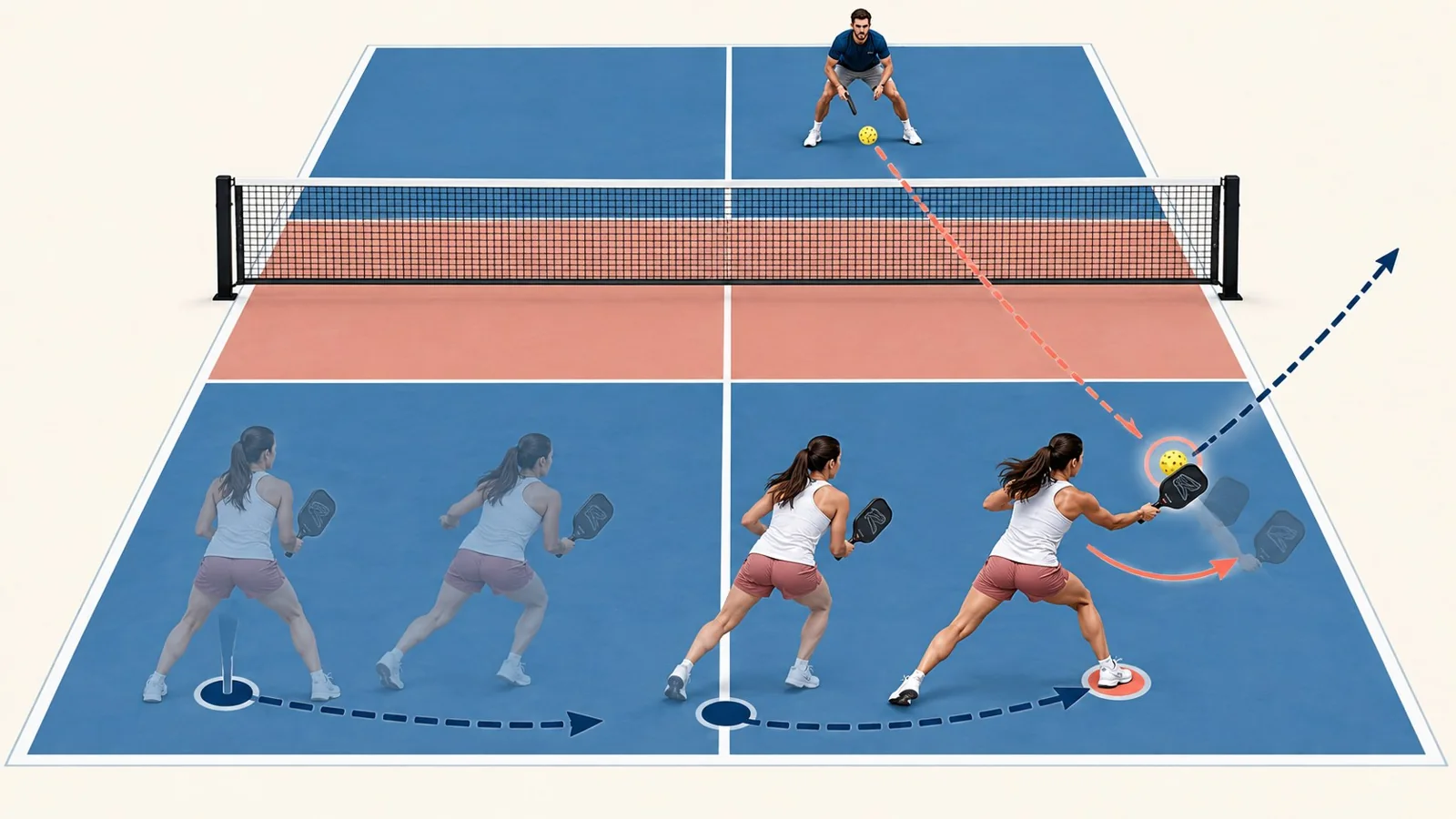
Keep your chest facing the net as long as the ball permits. Small crossover or shuffle steps can bring you back without losing sight of the opponent. If you must turn to chase a lob, use a drop step rather than backpedaling, then recover forward after the return. In doubles, communicate early: the partner should shade toward the center when one player is pulled wide.
Rebuild the ready position
Recovery is complete only when your feet are available for the next ball. Settle with knees flexed, weight slightly forward, and the paddle centered in front of the chest. If the opponent is preparing to strike, make a compact split step and land balanced. Do not keep drifting while trying to volley; stopping before contact improves face control and reaction time.
Practise the pattern in stages. First shadow a lateral chase, outside-foot brake, diagonal recovery, and split step. Then add a partner feed that varies the width. Call “reset,” “crosscourt,” or “out” before each response so the drill trains recognition as well as movement. Record whether you recover too late, expose the middle, or contact while still leaning.
The most common errors are predictable: reaching instead of adjusting the feet, stopping at the sideline, recovering in a straight line, and watching the shot instead of the opponent. Move with urgency, but finish under control. A safe reply followed by a protected middle is more valuable than a spectacular attempt that leaves the next court position uncovered.
Use a simple self-check after each repetition. Did you arrive behind the ball, or were you stretching? Did your reply give you time to recover? Did your first recovery step protect the middle? These questions turn a general footwork exercise into a repeatable decision process. With practice, the wide chase becomes less frantic: you recognize the space, create a stable contact, and return to a position that helps both teammates defend the next shot.