Continental Grip Pickleball: Faster Hands and Softer Touch
Learn how to find the continental pickleball grip, relax your hand, use it at the kitchen, adjust it with time, and practise the change.
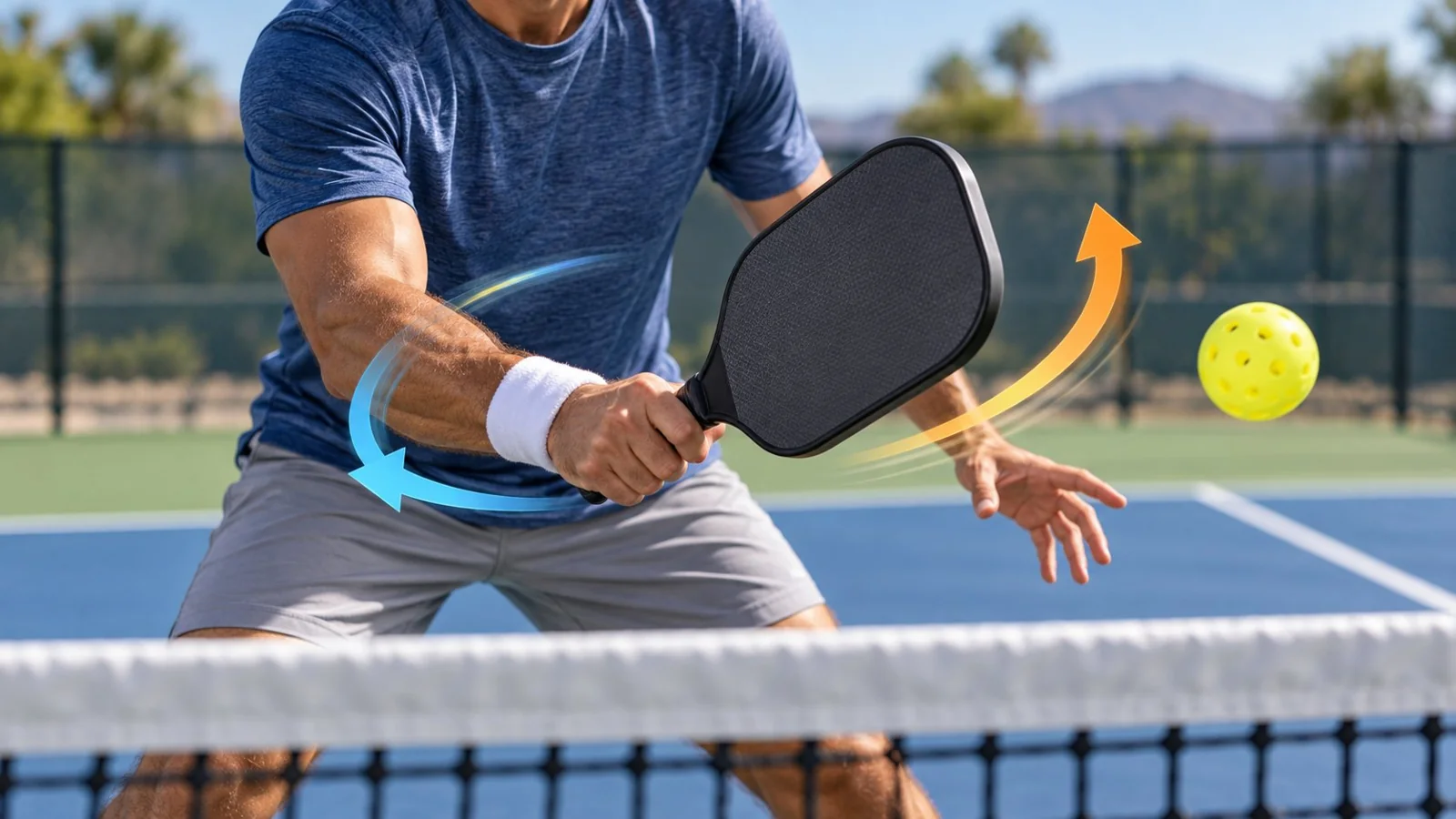
The continental grip pickleball gives a player one neutral hand position for quick exchanges, blocks, dinks, serves, and transitions. Often called the hammer grip, it feels plain at first, but that neutrality helps the paddle stay ready when a ball can arrive on either side of the body.
Find the continental grip without looking
Hold the paddle edge-on with your non-playing hand. Reach with the playing hand as though shaking hands with the handle, then wrap the fingers around it. The paddle should feel like a hammer in the hand rather than a frying pan. On an octagonal handle, the index knuckle and heel pad commonly settle around the second bevel for a right-handed player; left-handed players mirror the orientation.
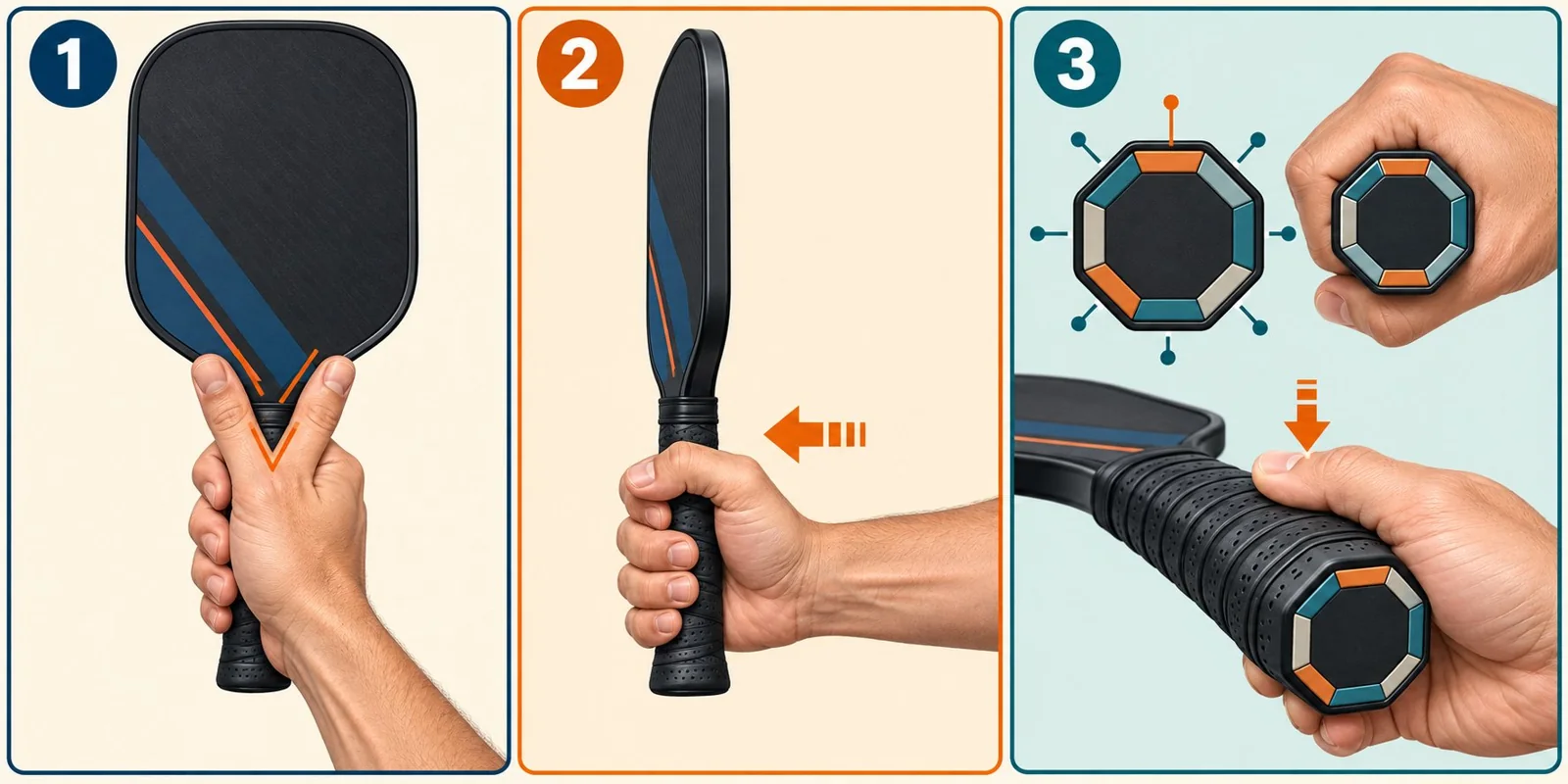
Keep the pressure relaxed between shots. A useful image is holding a tube of toothpaste without squeezing it: firm enough that the paddle cannot slip, loose enough that the forearm and wrist stay mobile. Excess pressure makes the hand slow and can turn soft contact into a pop-up.
Why neutral hands help at the kitchen
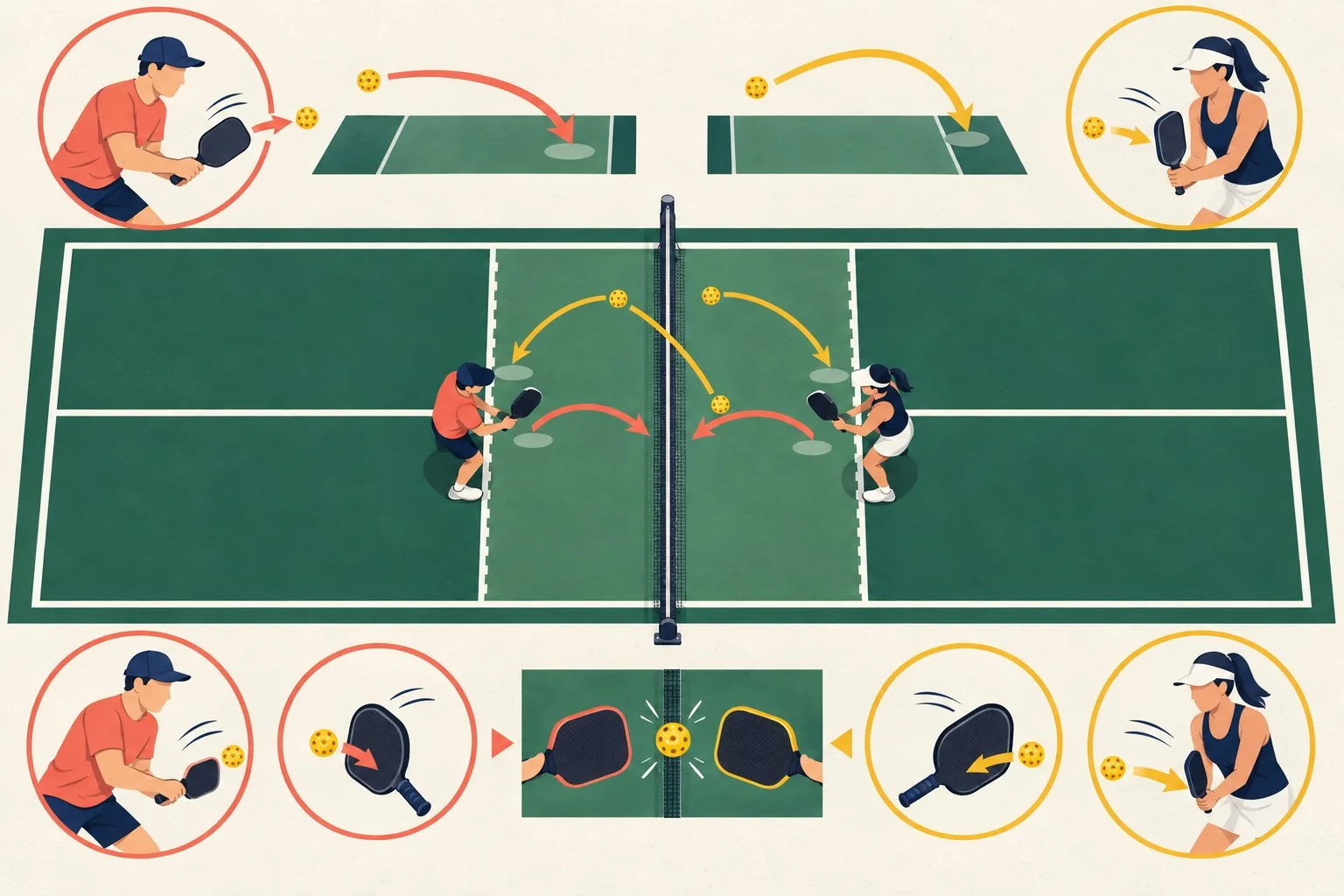
At the kitchen line, the ball travels too quickly for a full grip change before every contact. The continental position covers forehand and backhand volleys with the same basic setup, which makes a compact block or counter easier to prepare. Keep the paddle in front of the torso, then adjust the face with small wrist and forearm movements rather than turning the entire hand late.
The grip naturally presents an open face. That is useful for resets and soft dinks, but a flat forehand swing may send the ball upward. Keep the wrist organized and slightly hood the face when the shot needs a lower launch. The goal is not to lock the wrist; it is to avoid an uncontrolled flip.
Where to use it, and when to adjust
Use the continental grip as a home base for dinks, resets, blocks, counters, overheads, and many transition shots. It also supports a two-handed backhand because the non-dominant hand can supply the main drive while the dominant hand remains stable.
You may prefer a slight forehand-oriented adjustment when you have time for a serve or baseline drive and want easier topspin. That change is situational, not permanent. As you move toward the kitchen or the rally speeds up, return to neutral before the next ball arrives. Re-gripping during a hands battle is usually slower than managing the paddle angle.
A forehand-heavy grip can feel more powerful from the baseline, while the continental grip usually gives better all-purpose coverage. Neither choice replaces footwork. If you are stretched or late, changing the grip will not repair a poor position.
Practice the change until it disappears
Start close to a wall and volley softly with only the continental grip, alternating forehand and backhand contacts without re-grabbing. Once the rhythm is comfortable, move back. Hit a controlled forehand with a slightly adjusted grip, catch the rebound, return to continental, and simulate a volley. This links the slower baseline decision to the faster kitchen response.
Expect a short adjustment period. Forehands may feel weaker and the paddle face may open too much before your hand learns the new reference point. Practise for ten focused minutes, then test the grip in gentle dinks and blocks rather than forcing power. If pain persists in the wrist or forearm, stop and have a qualified coach check the mechanics; discomfort is not a badge of progress.