Cross-Court or Down-the-Line Dink: Choose the Safer Direction
Compare cross-court and down-the-line dinks through court geometry, opponent position, recovery, spin, and Erne risk.
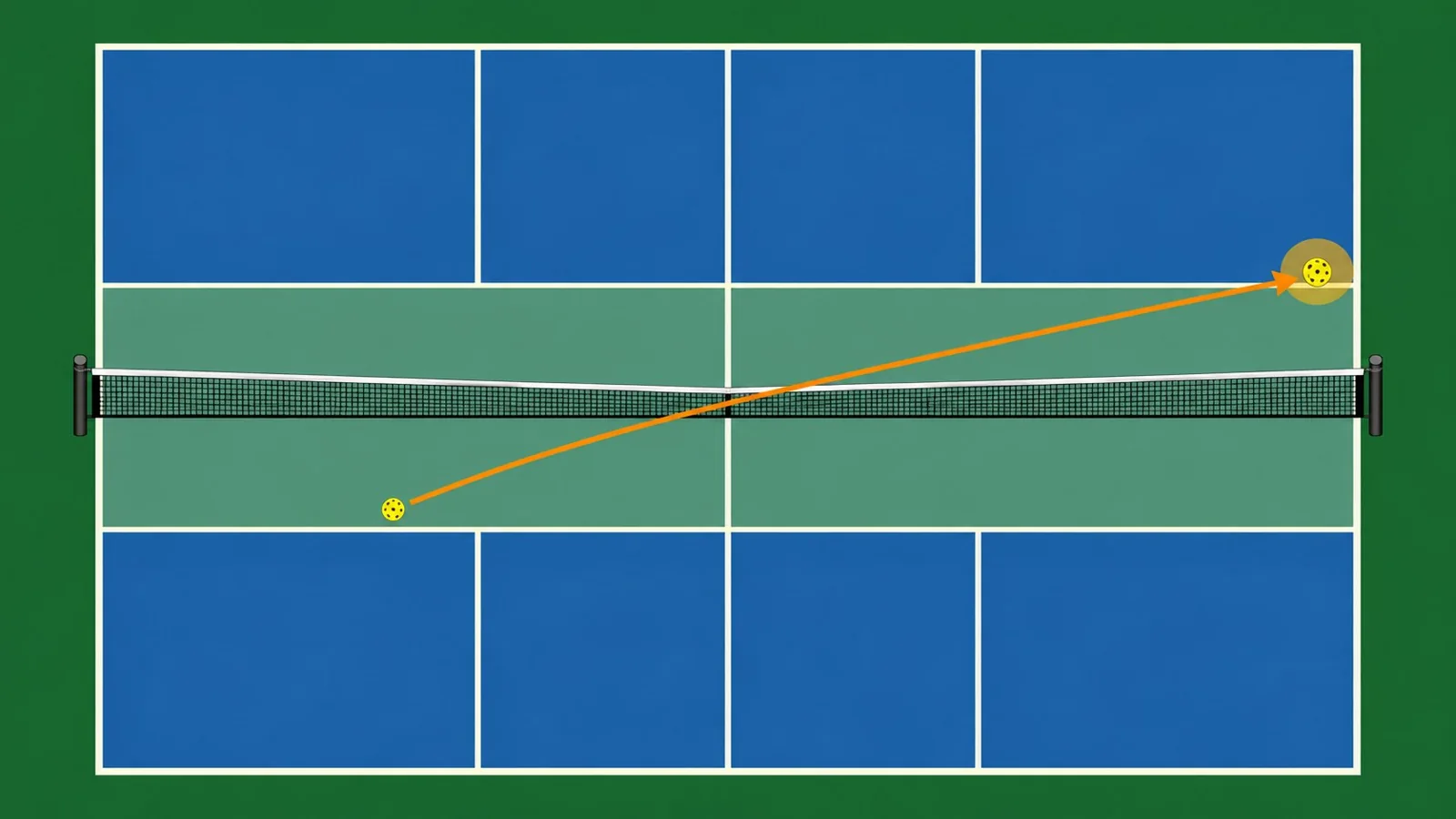
A kitchen dink is not just a soft shot; its direction changes the amount of court, net, and time you have to work with. cross-court dink vs down-the-line dink is a decision problem: use the diagonal as your high-margin default, then redirect down the line only when the opponent or the pattern gives you a clear reason.
Why the cross-court dink is usually safer
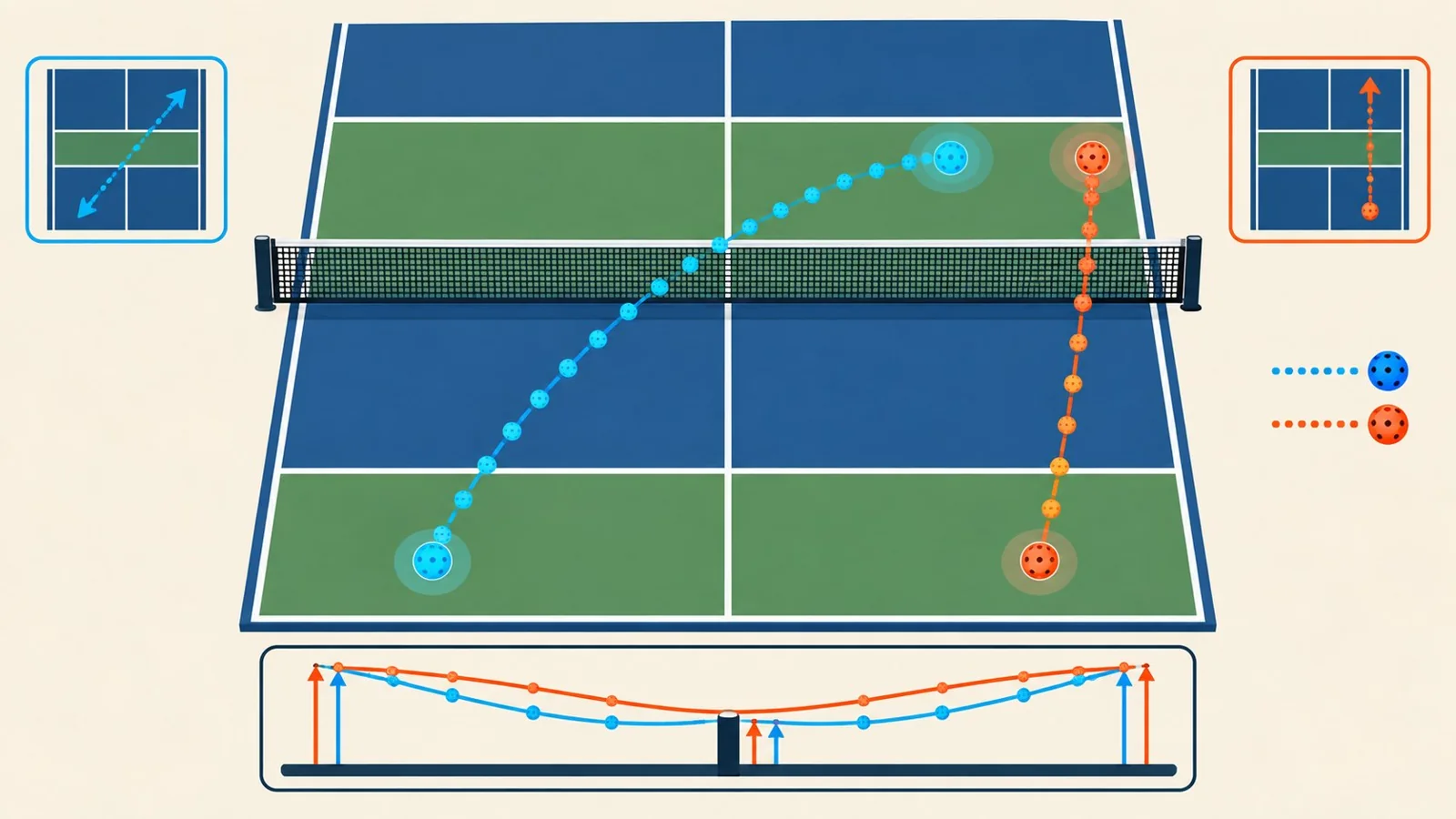
A cross-court dink travels diagonally from your kitchen corner to the opposite corner. That longer route gives the ball more time to descend, and it crosses the center of the net, where the net is lower than at the posts. The diagonal also gives you a broader practical landing area than a ball sent straight toward the sideline.
That geometry is useful when the rally is neutral, when all four players are established at the kitchen, or when you need a little extra time to recover after being pulled wide. The common outside-to-outside backhand exchange works for the same reason: it keeps the ball in a longer, more forgiving corridor while asking both players to move laterally.
Keep the stroke compact. Stay low, keep the paddle in front, and let the ball travel rather than trying to force it. A stable face and soft grip pressure matter more than a large swing. If the ball is low near your feet, prioritize height and control instead of trying to add ambitious spin.
What changes when you go down the line
A down-the-line dink travels straight across the court to the kitchen in front of the opponent. It can surprise someone who has shifted wide to cover your diagonal, but the shot has less room for error: the flight is shorter, the target is closer to the sideline, and the ball must clear the higher section of net near the post.
Use it as a change-up, not as a reflex. Look for an opponent whose feet have moved too far toward the cross-court angle, a partner who is visibly less comfortable in that exchange, or a ball that lets you guide the redirect without reaching. The goal is a soft ball just inside the line and near the opponent’s feet, not a fast attempt at the corner.
After the redirect, recover your own lane. A direction change that leaves you leaning or stranded can give away the advantage you created. Keep your shoulders and feet organized enough to respond to the next ball.
Read the risk before changing direction
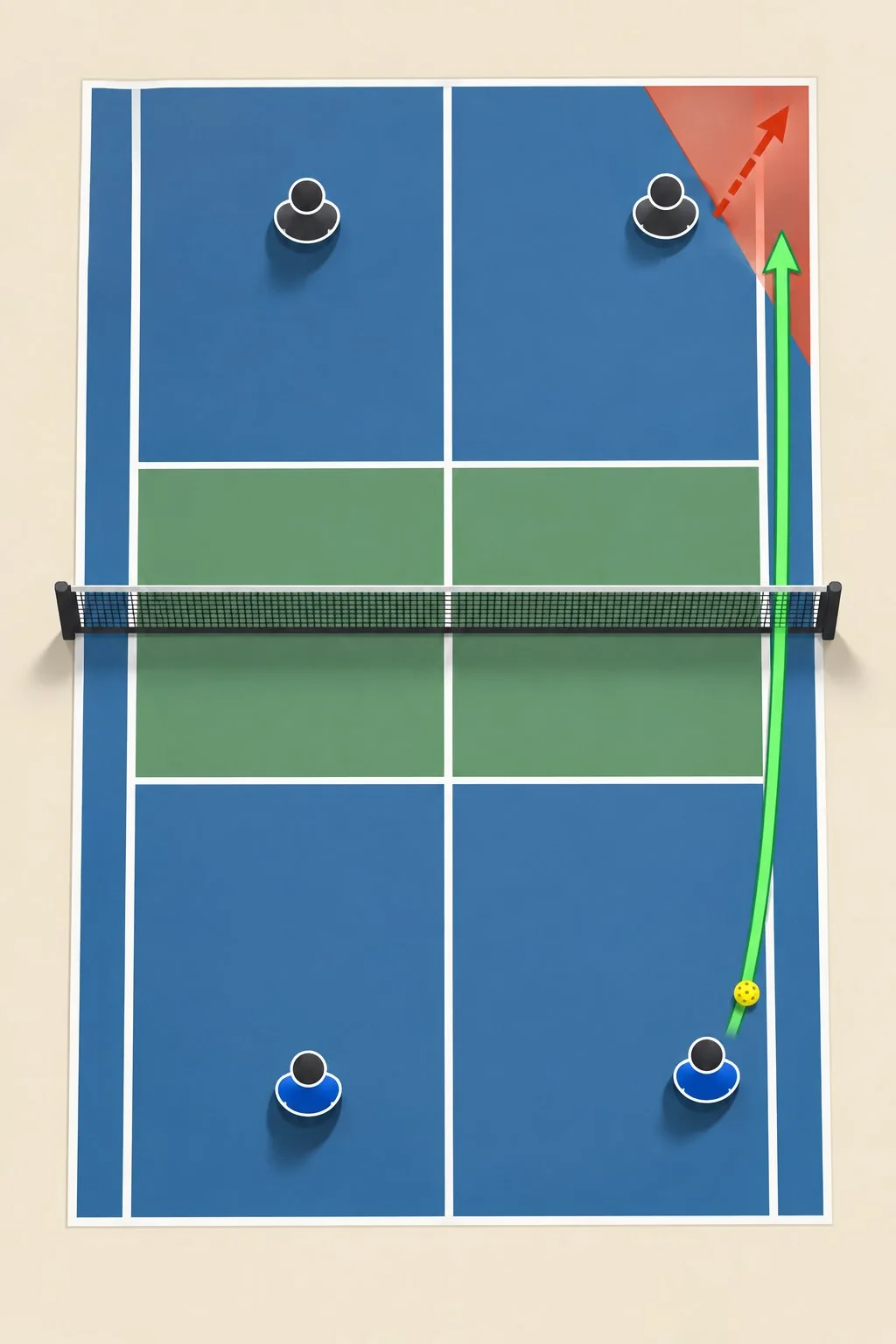
Before going down the line, check the opponent’s paddle and body position. A player already near the post with weight loaded toward the sideline may be preparing an Erne. In that case, the apparent opening can be a trap: hold the cross-court pattern or choose a safer middle dink instead.
The redirect is strongest when several signals agree. The opponent has over-shifted, their paddle is set for the diagonal, and their weight is moving away from the straight-ahead lane. If only one signal appears, the safer default is usually to keep the cross-court exchange.
Spin can change the feel without changing the decision. A subtle brush can help a cross-court ball dip or skid, but it should support a controlled path rather than replace sound contact. Do not add a large wrist action just to make the shot look advanced.
A simple practice plan
Start with cooperative cross-court dinks and count only balls that clear the center of the net, land in the kitchen, and leave both players balanced. Then have the feeder deliberately shuffle wide after several diagonal exchanges. Redirect once, recover, and return to the pattern. Add a final rule: if the defender is already guarding the sideline, do not redirect.
This trains the real skill: seeing the court before choosing the stroke. Cross-court is the patient foundation; down the line is the deliberate interruption. When the geometry, opponent position, and your balance all support the change, take it. Otherwise, keep the higher-margin ball in play and wait for a better signal.