How the Pickleball Kitchen Shapes Better Rally Decisions
A practical guide to how the pickleball kitchen shapes legal contact, positioning, soft shots, and better rally decisions.
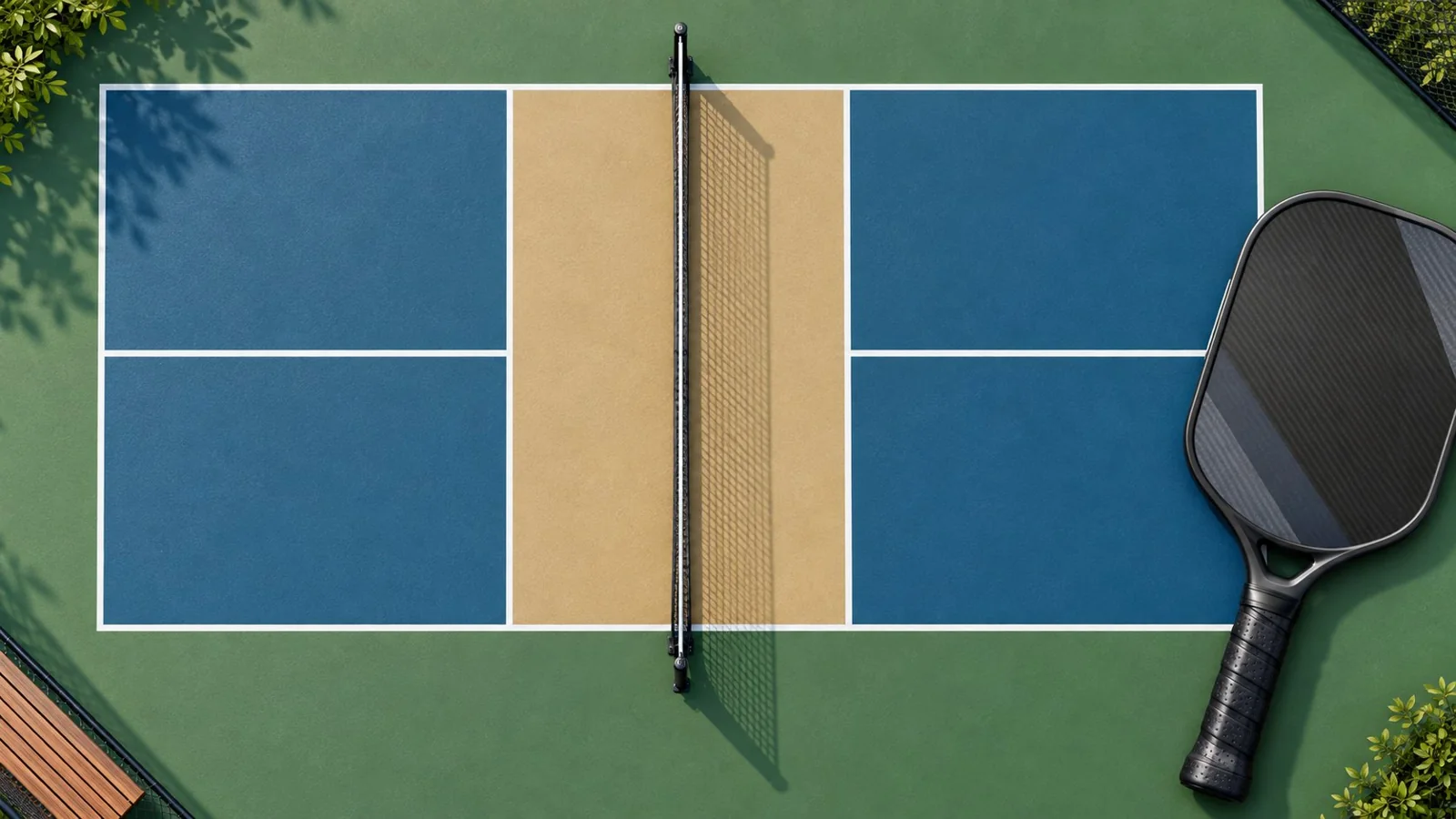
The kitchen is pickleball’s non-volley zone, the court area that rewards control instead of a rush to the net. It is a 14-foot area beside the net, extending seven feet into each side of the court. Learning its boundary and purpose helps you avoid faults while making better decisions during every rally.
What the kitchen rule means
A player may not volley while standing in the kitchen or touching its line. A volley is a shot taken before the ball bounces. You may reach over the line to contact a ball if your feet and anything you are wearing or carrying remain outside the zone. The restriction prevents players from simply standing beside the net and striking every ball downward.
The rule also includes momentum. If you volley legally outside the kitchen but your forward movement carries you into the zone afterward, the play can still become a fault. Finish under control, regain balance, and know where your feet are before the next exchange.
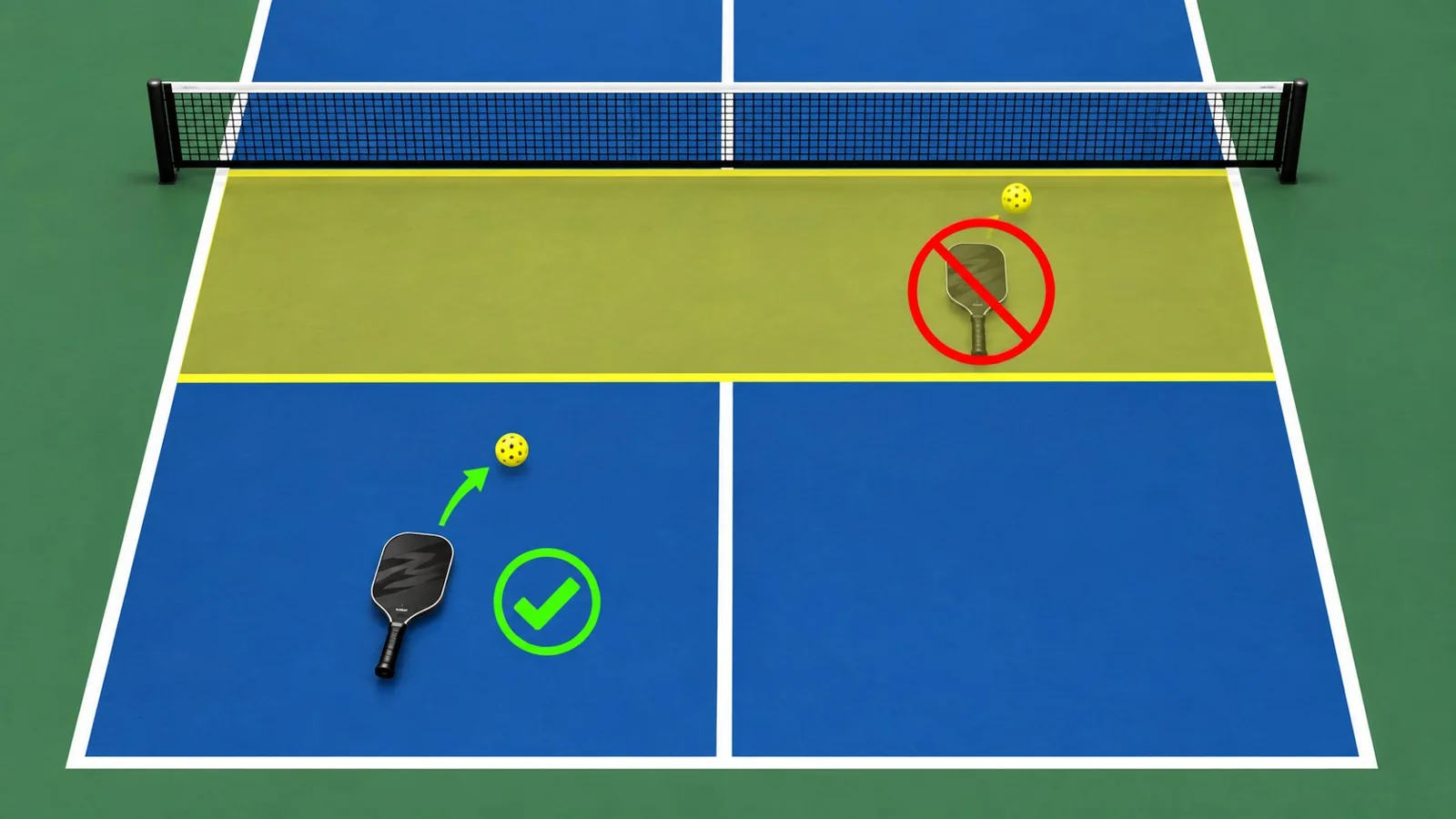
Why the kitchen changes shot selection
The kitchen is not a place to avoid. It is a strategic space where players can use soft shots to reduce an opponent’s attacking options. A dink or drop that lands in the zone forces the opponent to deal with a low bounce and usually hit upward. That gives the player who created the low ball more time to organize the next shot.
Dinks are controlled shots exchanged near the kitchen line. They are not automatically defensive or passive. A player can use them to move an opponent, create an awkward contact, or wait for a ball that rises high enough to attack safely. Patience matters because an unnecessary speed-up from a low ball often gives the other team an easy counter.
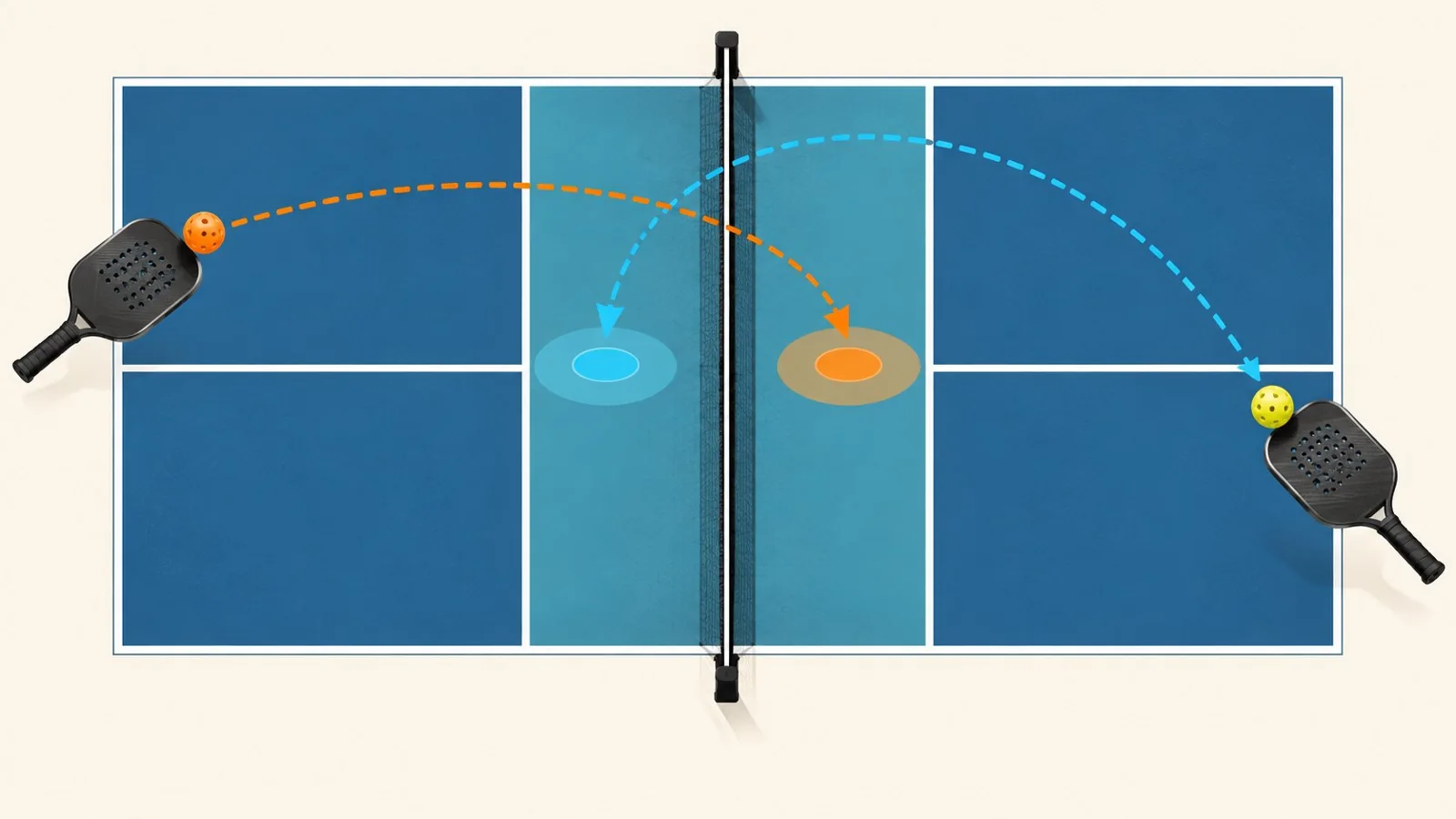
Positioning around the line
When both teams are settled near the kitchen, stand close enough to cover the line without touching it. Keep your paddle in front, knees soft, and weight ready to move in either direction. Small lateral adjustments are usually better than large lunges because they preserve balance for the next ball.
Do not treat the kitchen as a finish line that ends your footwork. Track the ball, keep space with your partner, and recover after every shot. If a ball pulls you wide, move under control and return toward a useful team position. If an opponent attacks, defend first rather than stepping into the zone while reaching.
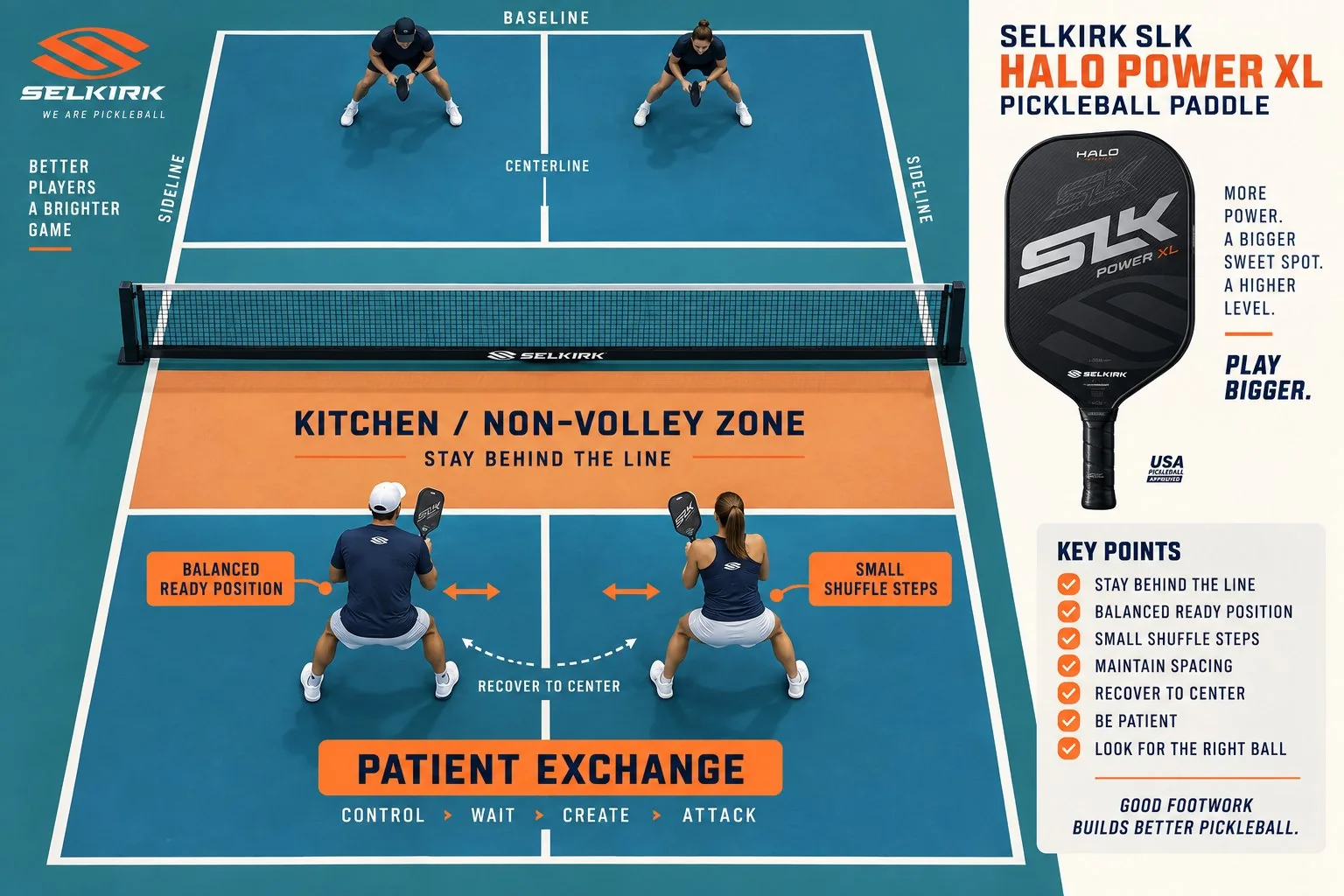
Practice the rule and the strategy together
Begin with a simple footwork exercise. Place a safe visual marker just behind the kitchen line and rehearse moving toward it without crossing. Add shadow volleys, stopping with both feet stable. Then have a partner feed easy balls that bounce in the kitchen, followed by balls that can be volleyed from outside the line. Call out “bounce” or “volley” before each contact so the decision becomes automatic.
For a dinking drill, start crosscourt with a relaxed grip and a compact swing. Aim for a low, controlled landing in the opposite kitchen, then recover your position immediately. Change the target between the opponent’s outside foot and the middle, but do not chase power. The goal is to maintain a low trajectory and make a sound decision about when to continue dinking.
In games, remember that kitchen control is built through positioning, touch, and patience. The rule prevents an illegal volley inside the zone, while the strategy encourages soft shots that make the opponent hit upward. Put those ideas together: stay balanced outside the line, use the kitchen as a target, and wait for a genuinely attackable ball rather than forcing one.