Pickleball Block Volley Reset: Cushion Pace and Protect Your Kitchen Position
A practical guide to pickleball block volley angle: read the ball, match the paddle face, choose a safe kitchen target, and recover.
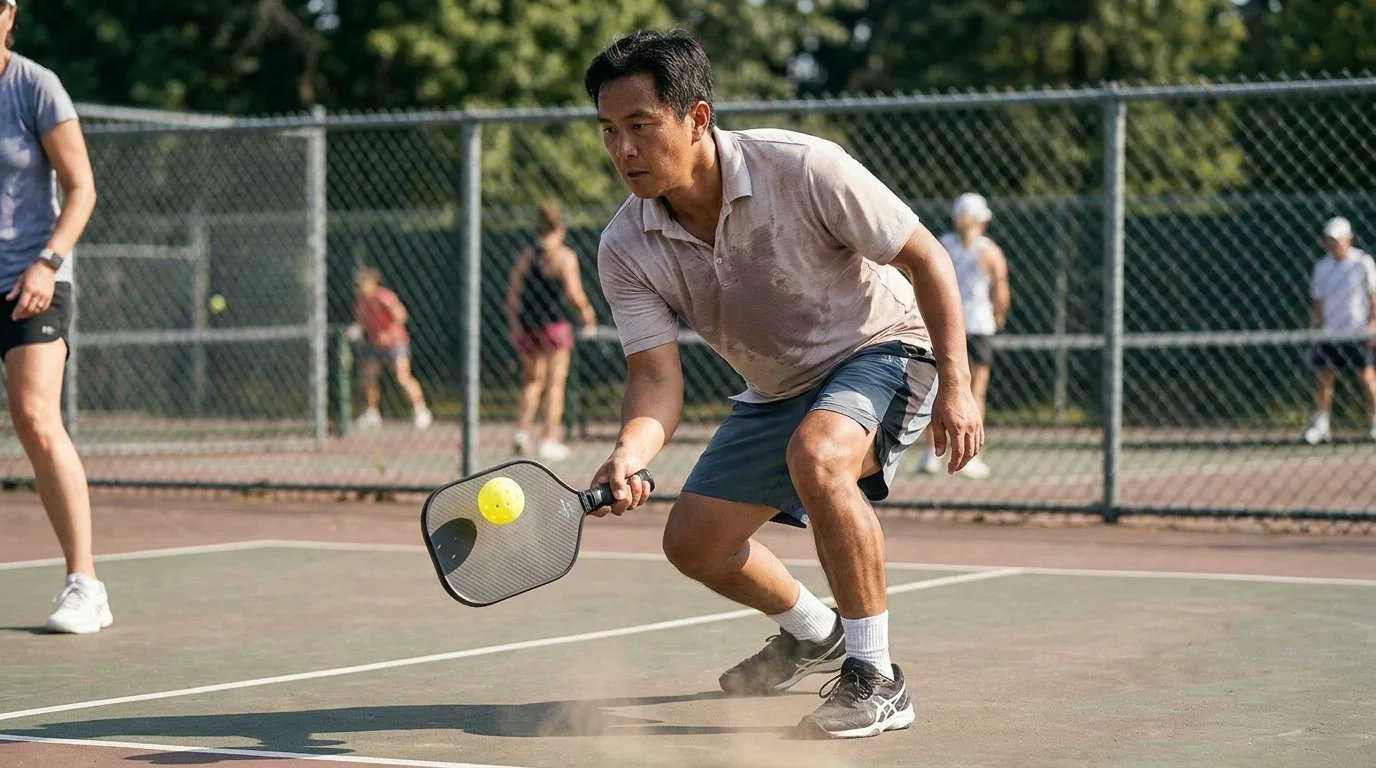
A pickleball block volley reset is a controlled answer to a fast ball. Instead of turning every hard exchange into a counterattack, keep the motion compact, present a stable paddle, and let the incoming pace do most of the work. The face guides the ball down toward a safe target. The right angle changes with the ball’s speed, height, and direction.
Read the ball before setting the face
First judge where the ball will meet you. A ball above the net gives you more choices. One that is already dropping may need a softer, slightly more open presentation. A hard ball aimed at your body often calls for almost no swing. Adding a full swing adds speed and can produce a pop-up or a ball that sails long.
Keep the paddle in front of your torso and use your feet to make room. Meet the ball in a comfortable contact window instead of reaching with a locked arm. Hold the grip lightly enough for the paddle to absorb pace rather than bounce the ball upward.
Match the paddle angle to the incoming pace
Against a fast, fairly high ball, a neutral or slightly open face can redirect the ball into the opponent’s kitchen. A lower ball may need a little more face opening to clear the net. When the ball is slow or floating high, do not open the face automatically. That can send the ball too deep and give the opponent an attackable reply.
Think of the paddle face as a quiet ramp. Opening it sends the ball higher; closing it sends the ball lower. Make small adjustments and keep the motion short. Large angle changes combined with a large swing make it hard to tell what caused the error.
Choose a landing target with margin
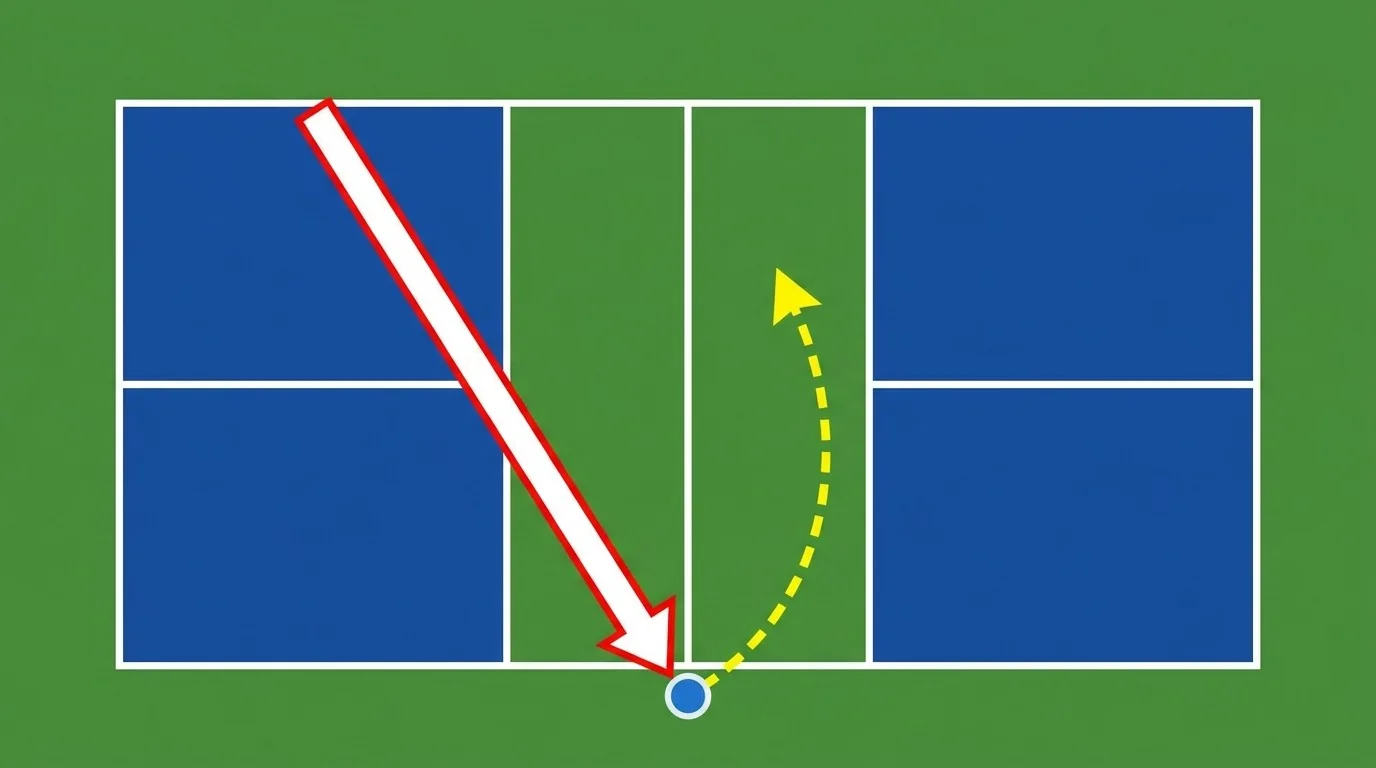
Do not make the nearest line your default target. Choose an area inside the kitchen with room for a small contact error. The middle can help when the opponents are unsure who should take the next ball. Let their footwork and paddle position guide the choice, and avoid sending a comfortable ball straight into an opponent’s strike zone.
Recover as soon as the block is away. Re-establish your balance, keep the paddle available, and watch the opponent’s contact. The shot is not finished when the ball leaves your paddle; it is finished when you are ready for the next one.
Practise the absorb-and-place sequence
Ask a partner to feed firm but manageable balls to your forehand, backhand, and body. Start in a ready position and use only a short movement. Count a repetition when the ball clears the net, lands in the chosen kitchen zone, and leaves you balanced. Then vary the feed height without changing the compact preparation.
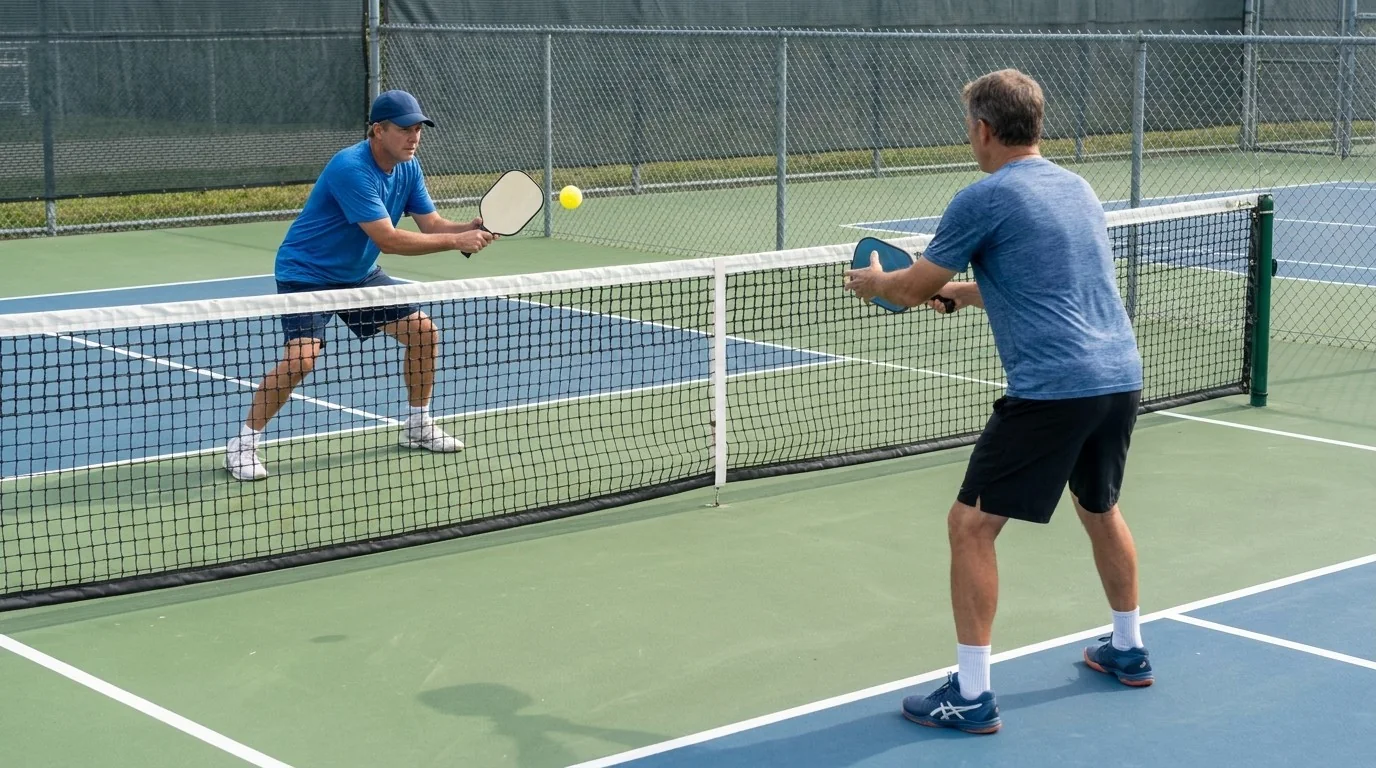
If the ball pops up, check for an upward swing or a face that is too open. If it goes into the net, check that you are not contacting behind your body and that your feet have not stopped short of the ball. If it travels long, reduce the face opening or soften your hands before trying to make the swing smaller.
Use a simple match decision
When the ball is fast and difficult to attack, block first and recover. When it is high enough and you are balanced, a controlled counter may be available, but a reachable ball is not automatically a good attacking ball. The block volley earns its place because it protects your position and makes the next decision easier.
Build the shot around four repeatable actions: read the ball, keep the paddle stable, adjust the face in small steps, and choose a kitchen target with margin. Once those pieces hold up, vary the direction without fighting the incoming pace or giving away an easy reply.