Pickleball Catch-and-Move Drill: Stop Reaching for Wide Dinks
Learn to move behind wide kitchen balls through a catch, paddle, and live-dinking progression that builds balance and control.
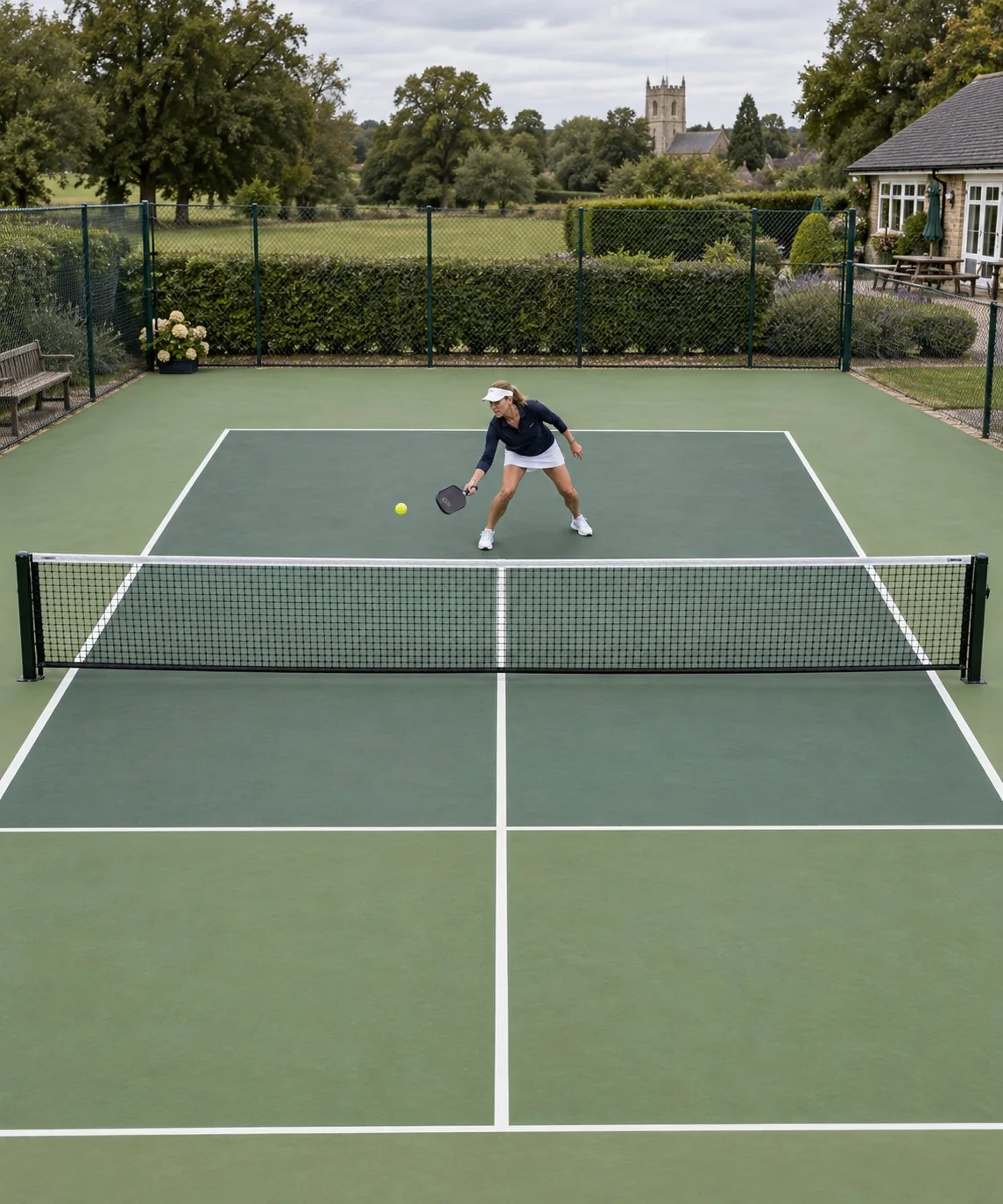
A kitchen footwork drill should teach your body to move behind the ball instead of reaching for it. This three-stage progression starts with a simple catch, adds the paddle, and finishes with live dinking. Each step keeps the goal clear: adjust the feet, create a comfortable contact point, and stay balanced for the next ball.
Progression one: catch and move
Stand at the kitchen line directly across from a partner. The partner gently tosses a ball several feet to your left. Move your feet so your body gets behind the ball, then catch it in front of your left knee. Toss it back and reset to a neutral stance. Repeat on the right side, catching the ball in front of your right knee.
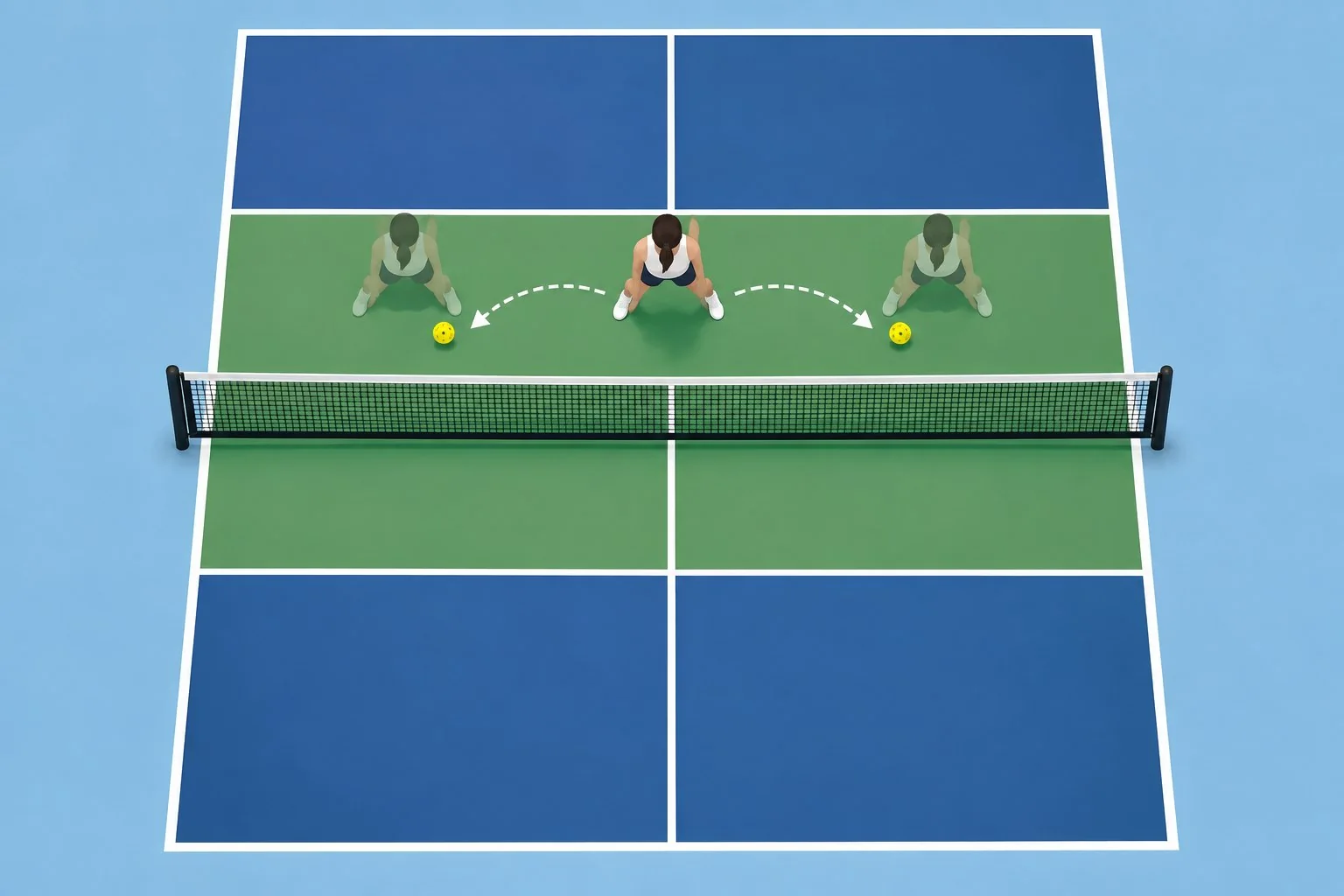
Keep the movement small and deliberate. Do not lean and reach with the arm while the feet stay planted. Let the feet carry the body into position, keep the head level, and catch in front rather than beside the hip. The catch gives you immediate feedback: if you cannot catch comfortably, your spacing or timing needs another adjustment.
Start with alternating left and right tosses at an easy pace. Once the pattern feels natural, vary the distance slightly, but keep every ball reachable. The aim is not to cover the greatest distance; it is to learn where your body should finish before the shot.
Progression two: add the paddle
Repeat the same feed, but replace the catch with a controlled dink. Your partner tosses to either side, you move behind the ball, and you send it softly back. The partner catches your dink and tosses to the opposite side for the next repetition.
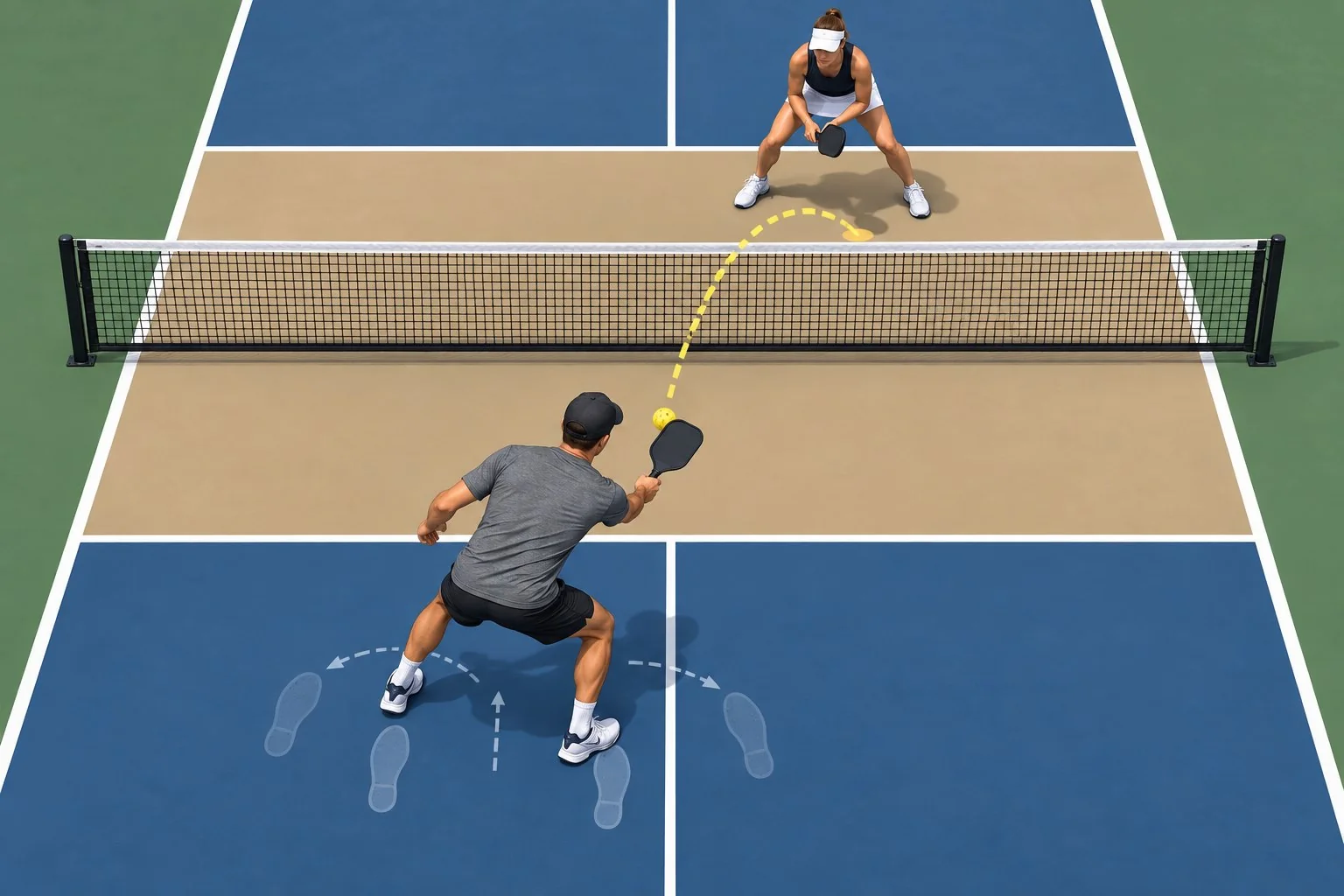
Use a compact stroke and keep the paddle in front of your body. The feet should finish the adjustment before the contact, so the upper body is not forced to rescue a late position. If the ball is wide, take the extra small step; do not turn every repetition into a lunge. After the dink, return to your neutral kitchen stance before the next toss.
Pay attention to balance and direction. A successful repetition is a dink made from a stable base that your partner can catch easily. If the ball pops up or flies wide, first check the footwork and contact spacing before changing the swing.
Progression three: live dinking
In the final stage, the partner uses a paddle instead of a toss. They dink alternately to your left and right, while you move your feet behind each ball before making contact. Dink directly back so the partner can continue the rally and keep the feed predictable.
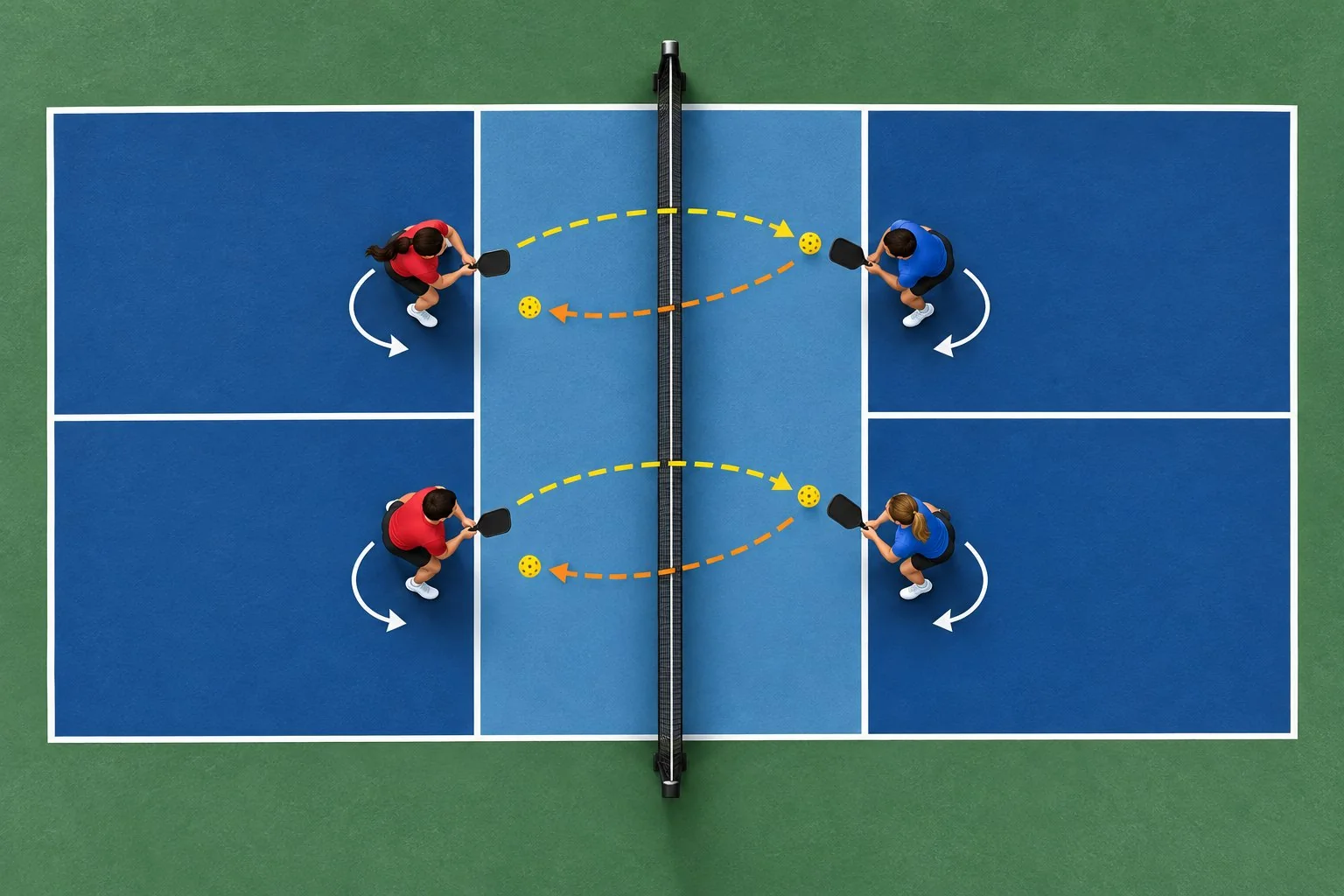
Begin slowly enough to preserve the pattern. See the ball, move the feet, set the contact, and recover. As consistency improves, let the partner vary the width and pace without turning the exercise into a speed contest. The quality of the movement matters more than the number of balls hit.
Why this footwork works
Players who reach for wide balls often lose their base, contact too far to the side, and send an inconsistent dink. Moving behind the ball creates a better platform for control and keeps the next recovery step available. The same habit helps during fast kitchen exchanges, when there is little time for a large swing.
Keep the paddle ready, stay light on the feet, and use small adjustment steps. If you drift too far forward, reset behind the kitchen line; if you become upright, soften the knees and lower your center of gravity. Footwork is not separate from the shot—it determines whether the shot starts from a position you can repeat.
Turn the drill into a routine
Spend a few minutes on each progression. Begin with catch and move until you can place the body behind the ball on both sides. Add the paddle only when the catch feels comfortable, then move to live dinking while preserving the same footwork. Finish by noting whether errors came from late movement, reaching, poor spacing, or failure to recover.
A short, focused routine is enough to build the habit. The objective is not to chase every ball with bigger steps. It is to arrive in position early, make a controlled contact in front of the body, and remain balanced for the next exchange.