Pickleball Dink Landing Zones: Use Three Targets to Train Control
Build a reliable pickleball dink with safe net clearance, a controlled descending arc, balanced contact, and recovery habits.
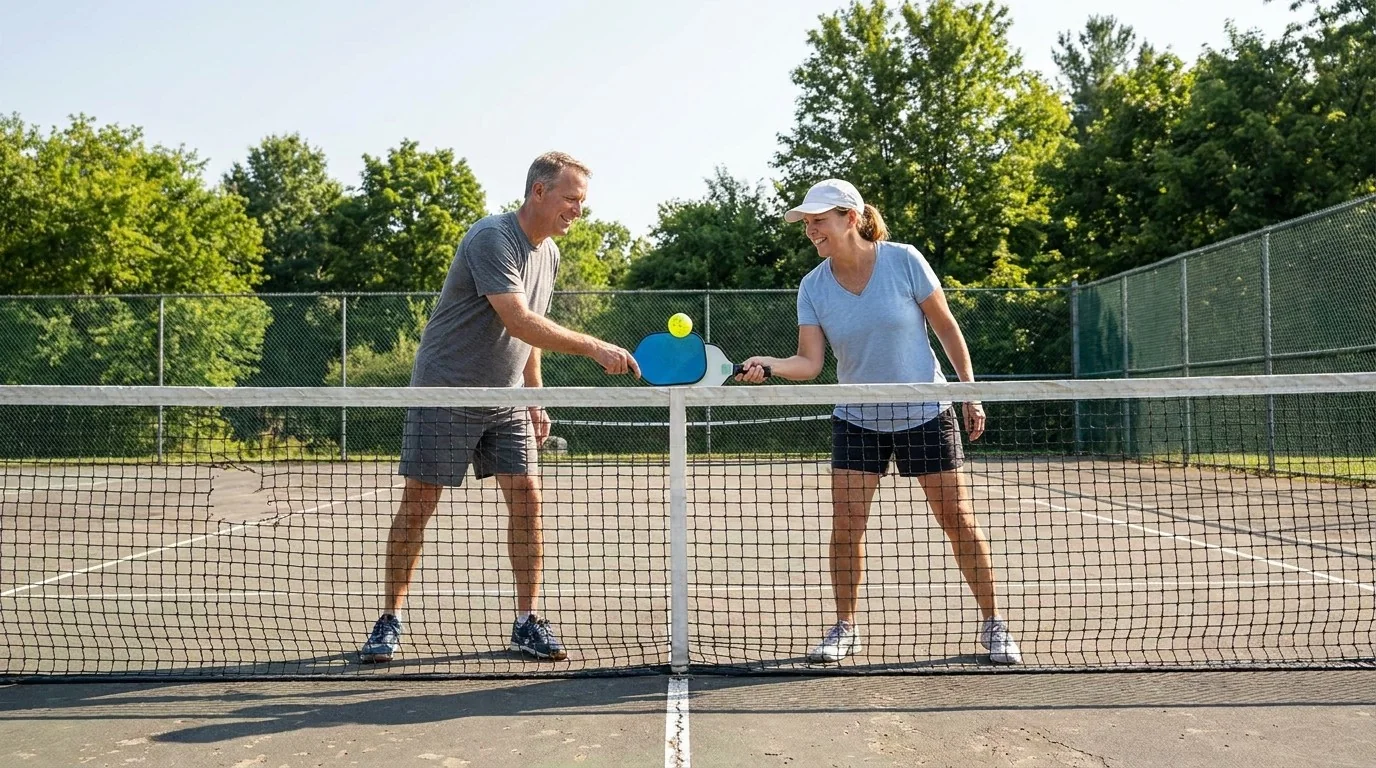
A useful pickleball dink is not the ball that flies closest to the net. It is the ball that clears the net with room to spare, then drops into the opponent’s non-volley zone without sitting up. That small margin gives you a safer shot and makes the next decision easier.
What the arc needs to do
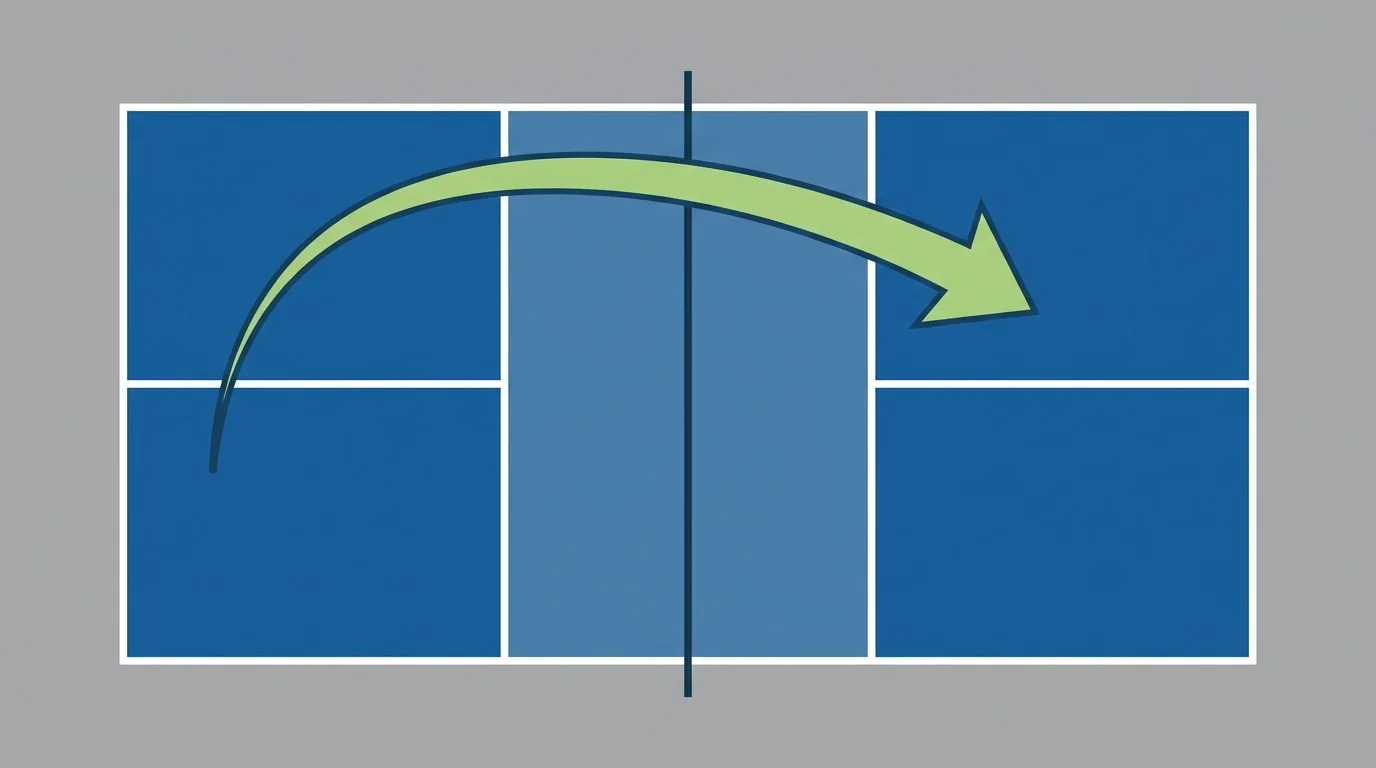
Picture the dink as a controlled arc. It rises over the net, travels far enough into the kitchen that it does not bounce near the line, and comes down before the opponent has a comfortable volley. A very tight clearance may look impressive, but it leaves no room for a slight miss or a different court surface.
The right height changes with contact height, target distance, and direction. A crosscourt dink has more court to work with than a straight dink. Start with a repeatable safety margin and lower the arc only after your contact and footwork are reliable.
Build the shot from a stable base
Start in a compact ready position with a relaxed grip and the paddle in front. Use small adjustment steps to get the ball in front of your body. Reaching from a rigid base makes the paddle face unstable and often forces you to lift the ball at the last moment.
Keep the swing short, using the shoulder and arm rather than a large backswing. The paddle should send the ball upward through contact, not scoop sharply underneath it. Let your feet create the space; keep the hand quiet.
Choose margin for the situation
A crosscourt dink can use a slightly higher arc because it has more distance. A straight dink has less room, so control the height and pace more carefully. When you are stretched, tired, or contacting a low ball, accept extra clearance instead of forcing a tight path.
Read the opponent as well. If they are deep or moving, a normal safe arc may be enough. If they are settled at the kitchen and ready to attack, keep the ball below their comfortable contact zone. Do not float it toward the paddle shoulder.
A low bounce does not require a dangerously low flight. The ball can clear the net with useful height and still land softly. The important part is a descending landing and a bounce that stays below attack height.
Recover after contact
The exchange does not end when the paddle meets the ball. Return the paddle to neutral, keep your feet active, and watch the opponent’s paddle. Be ready for a crosscourt reply, a middle ball, or a speed-up.
If your dink lands short or rises, expect pressure and prepare to block. If it lands deep in the kitchen and makes the opponent uncomfortable, hold your balanced position instead of rushing forward.
Height errors to fix
- Clipping the net: Add a little arc and improve contact in front.
- Floating the ball: Close the paddle face slightly and shorten the lift.
- Reaching at contact: Take adjustment steps before changing the swing.
- Using one height everywhere: Adapt to distance, contact height, and target.
- Watching the bounce: Recover your ready position as soon as you hit.
Drills for a repeatable arc
Begin with cooperative crosscourt feeds. Choose a landing area in the kitchen and count only balls that clear the net comfortably and descend before the opponent’s side line. Keep the grip relaxed and pause after each shot to check your balance.
Next, put a shallow target in the kitchen and alternate crosscourt and straight dinks. Keep the preparation the same while the distance changes. Have your partner occasionally send a low ball so you practise choosing more margin instead of forcing the usual trajectory.
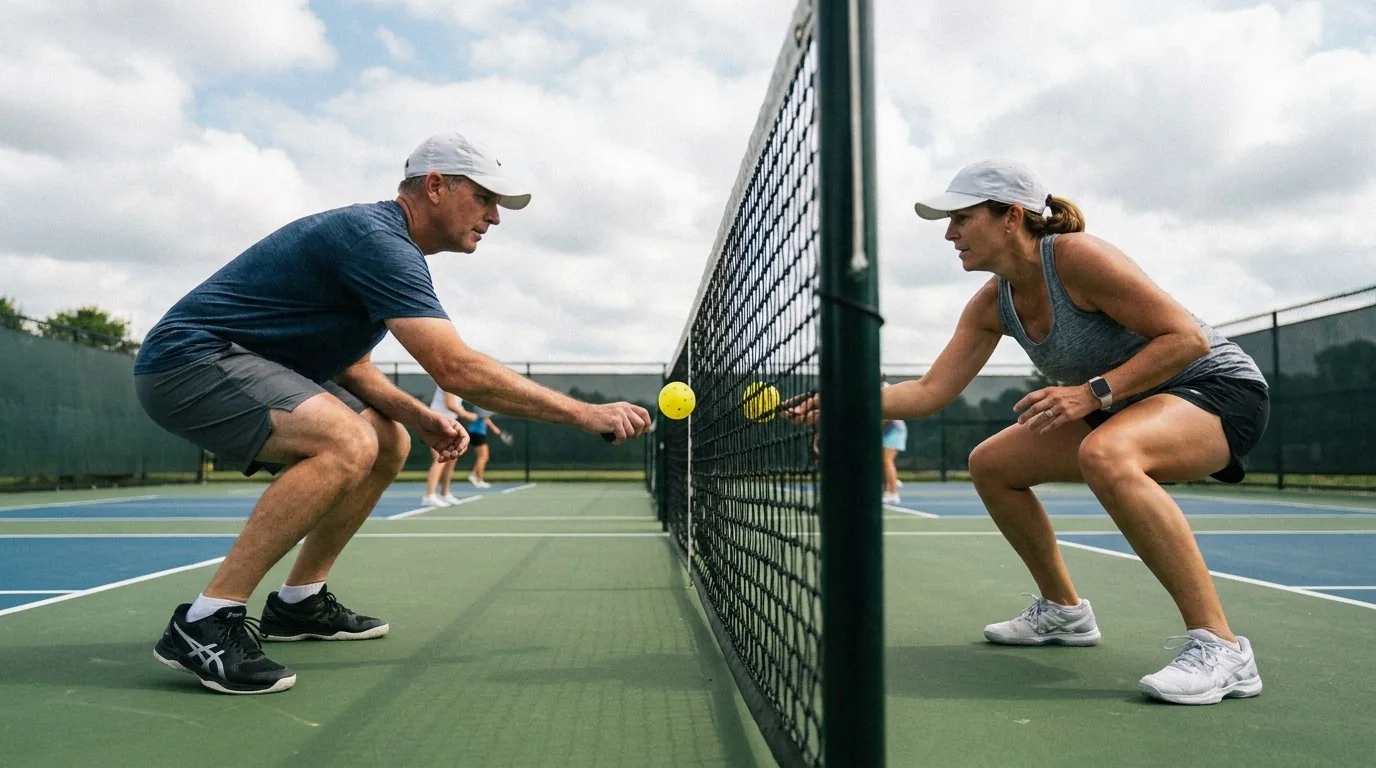
Finish with a live dink game in which a ball rising above attack height loses the rally. That turns height into a decision rather than a number to chase. After each miss, identify whether the cause was paddle angle, late footwork, or an overly ambitious target.
Reliable dink height comes from balance, a compact motion, a steady paddle face, and enough safety margin. Clear the net first, let the ball descend into the kitchen, and recover before preparing for the next shot.