Pickleball Dink Patterns: Hold the Crosscourt, Then Change Direction
Learn how to use crosscourt dink patterns, foot and middle targets, deliberate direction changes, and clear attack-or-reset decisions at the kitchen.
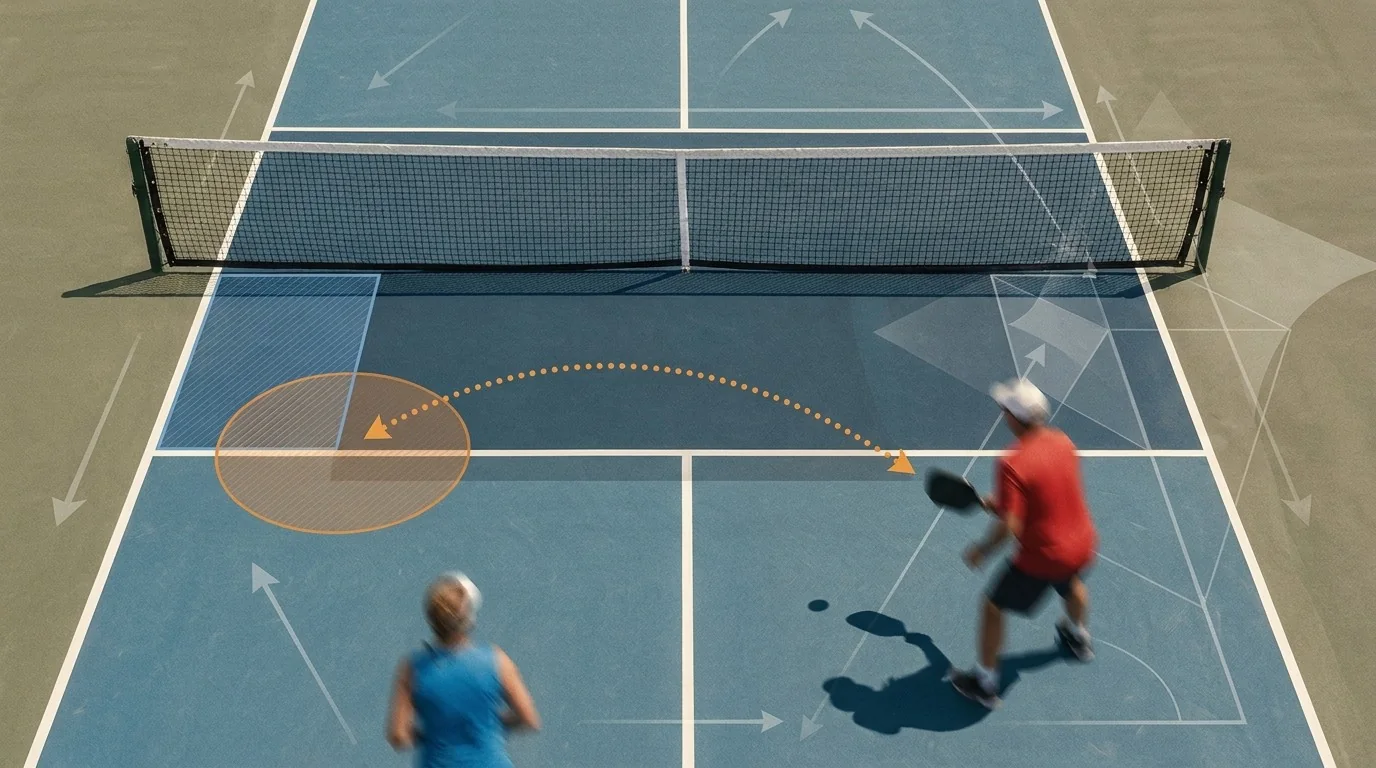
Dink patterns are more useful than a string of unrelated soft shots. A repeatable pattern can move an opponent, create a hesitation, and make your next decision easier. The aim is to control the kitchen exchange until a ball becomes attackable. It is not to speed up every contact.
Start with the safest pattern
The crosscourt dink is a sound place to start. The diagonal gives the ball more distance and sends it over a lower part of the net. That extra room does not make the shot automatic, but it helps you keep the ball low and short.
Prepare compactly, keep a relaxed grip, and hold a stable paddle face. Contact the ball in front when you can, then guide it toward a landing area in the opponent's kitchen. Your first job is not to win the rally. Make the opponent deal with another low ball.
Repeat before you change direction
A pattern only helps if you can repeat it without losing balance. Hit controlled crosscourt dinks while watching the opponent's feet and shoulders. If the player starts leaning toward the expected direction, a ball to the middle or down the line can force a late adjustment.
Make that change on purpose, not as a panicked swing. Pick the target before contact, leave enough clearance over the net, and accept more margin instead of hunting for a line. Predictability is fine when you are the player choosing when to break the pattern.
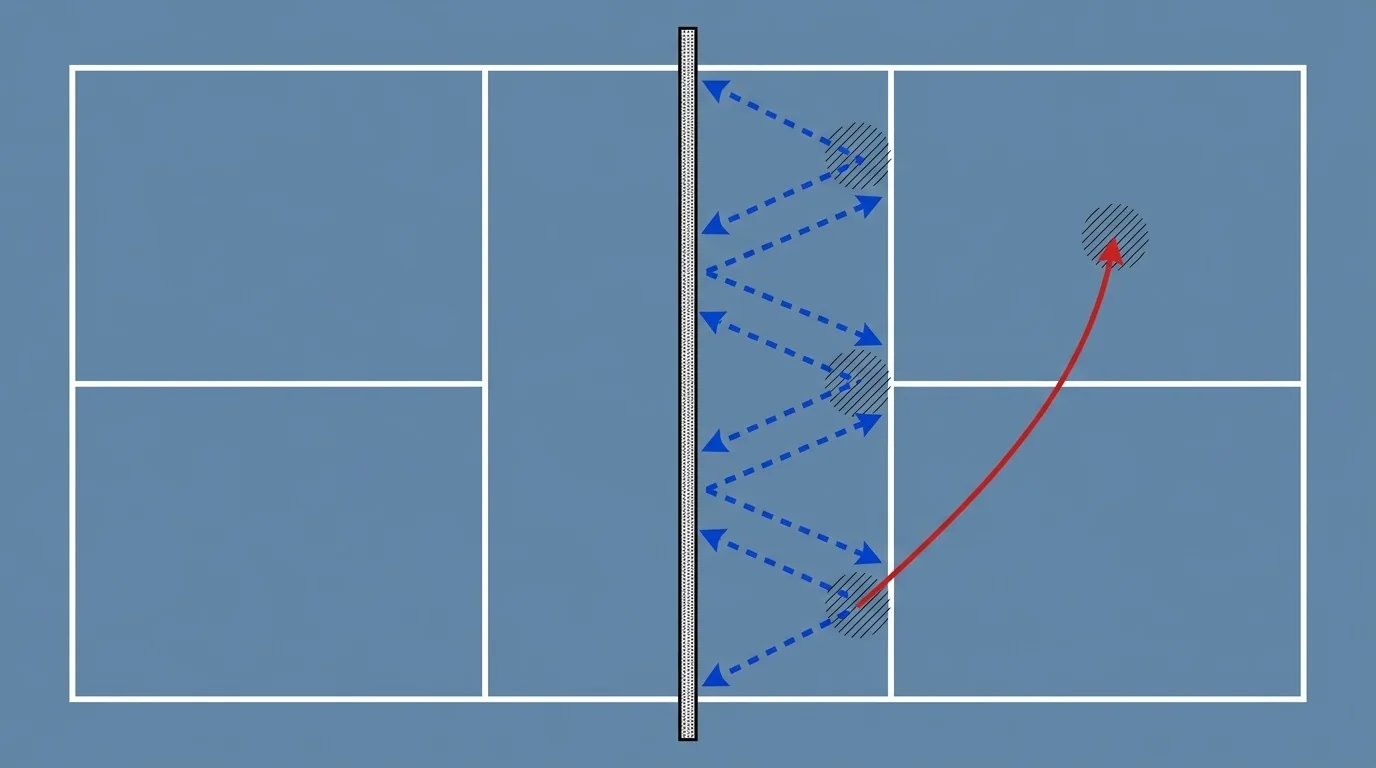
Use the feet and middle as pressure points
A dink toward the opponent's feet makes them bend and handle the ball from a less comfortable position. Watch whether the player stays balanced or starts reaching forward. In doubles, a middle dink creates a different problem: both players may hesitate over who owns the ball.
Neither target guarantees a winner. The purpose is to make the next contact harder. Keep the ball low enough that an opponent below net height has to lift it. If the ball rises, prepare for the attack rather than assuming the pattern will continue.
Decide whether to dink, attack, or reset
Attack when the ball is at or above net height, in front of you, and your feet are set. Choose the target before you accelerate. A ball that is low, behind you, or reached while you are leaning is usually not a good attacking ball. Continue the dink pattern or reset to buy time and recover.
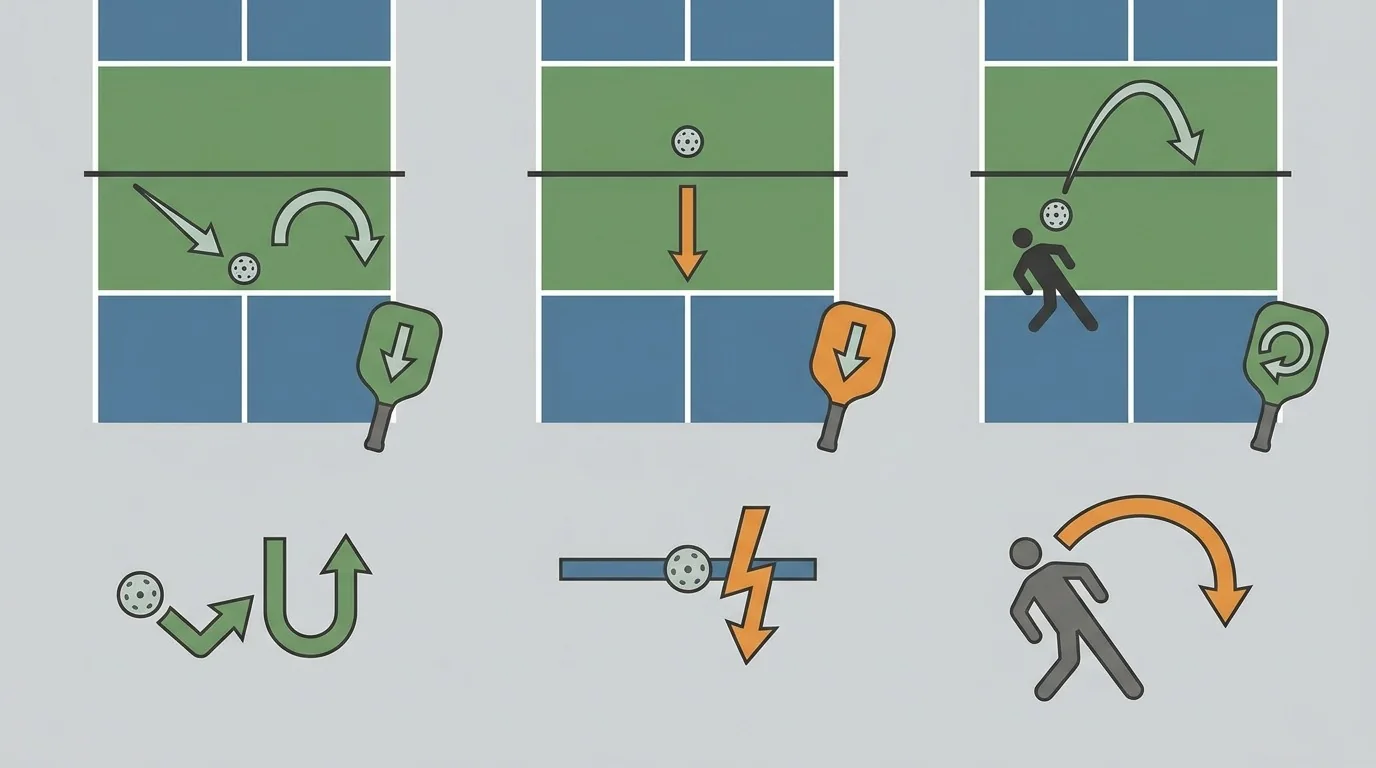
Use this simple sequence:
- Low and balanced: keep the ball low and continue the pattern.
- High enough and in front: choose a controlled attack target.
- Reaching or late: soften the pace, reset, and rebuild your position.
Practise the pattern under control
Begin with cooperative crosscourt dinks. Count a repetition only when the ball clears the net safely, lands in the intended kitchen area, and leaves you balanced for the next shot. After several good repetitions, call “change” before redirecting to the middle or down the line.
For a second drill, send three balls toward the feet and then one to the middle. The feeder should vary the height slightly so you have to read the ball instead of repeating a memorized swing. Finish with live points in which an attack is allowed only when the ball arrives at a comfortable height in front of your body.
A good dink pattern makes patience active. Hold a safe direction, watch the opponent's movement, change with a reason, and recover after every contact. The pattern has done its job when it improves the next decision, even if it does not end the point.