Pickleball Dink Placement: Vary Targets Without Losing Control
A practical guide to pickleball dink placement: build a reliable low dink, vary feet, middle, and wide targets, and recover without losing kitchen control.
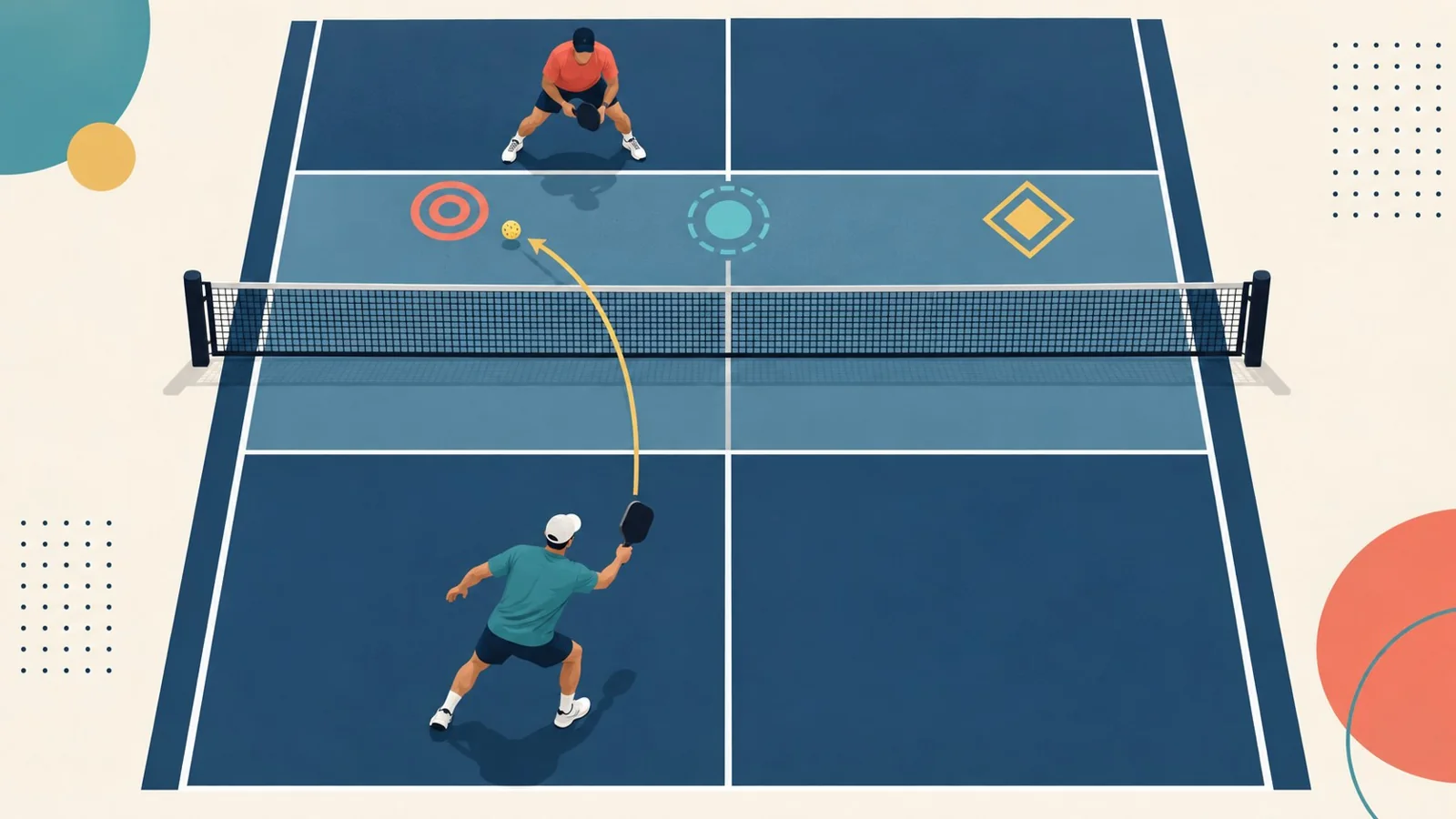
A dink is a soft shot played from near the kitchen line that lands in the opponent’s non-volley zone. Its value is not a quick winner. It keeps the ball low, slows the exchange, and asks the other player to make a difficult upward contact. Good pickleball dink placement turns that basic shot into a changing question: where will the next ball go, and can the opponent stay comfortable while answering it?
Build the dink before you vary it
Start with a compact motion. Keep the paddle face slightly open, the paddle in front of your body, and the swing small enough that you never need a dramatic correction. A relaxed grip—roughly a light two or three on a ten-point tension scale—helps the paddle absorb pace instead of adding unwanted speed. Keep the arm steady through contact and use the shoulder and forearm as a short unit rather than flicking the wrist.
Your feet are part of placement. Shuffle behind the ball so contact stays in front of the body; reaching from a fixed stance makes the face unstable and removes your best angles. Stay balanced near the kitchen line, with knees flexed and weight ready to move. The goal is a soft, repeatable ball that clears the net safely and lands in the opponent’s kitchen before you begin changing targets.
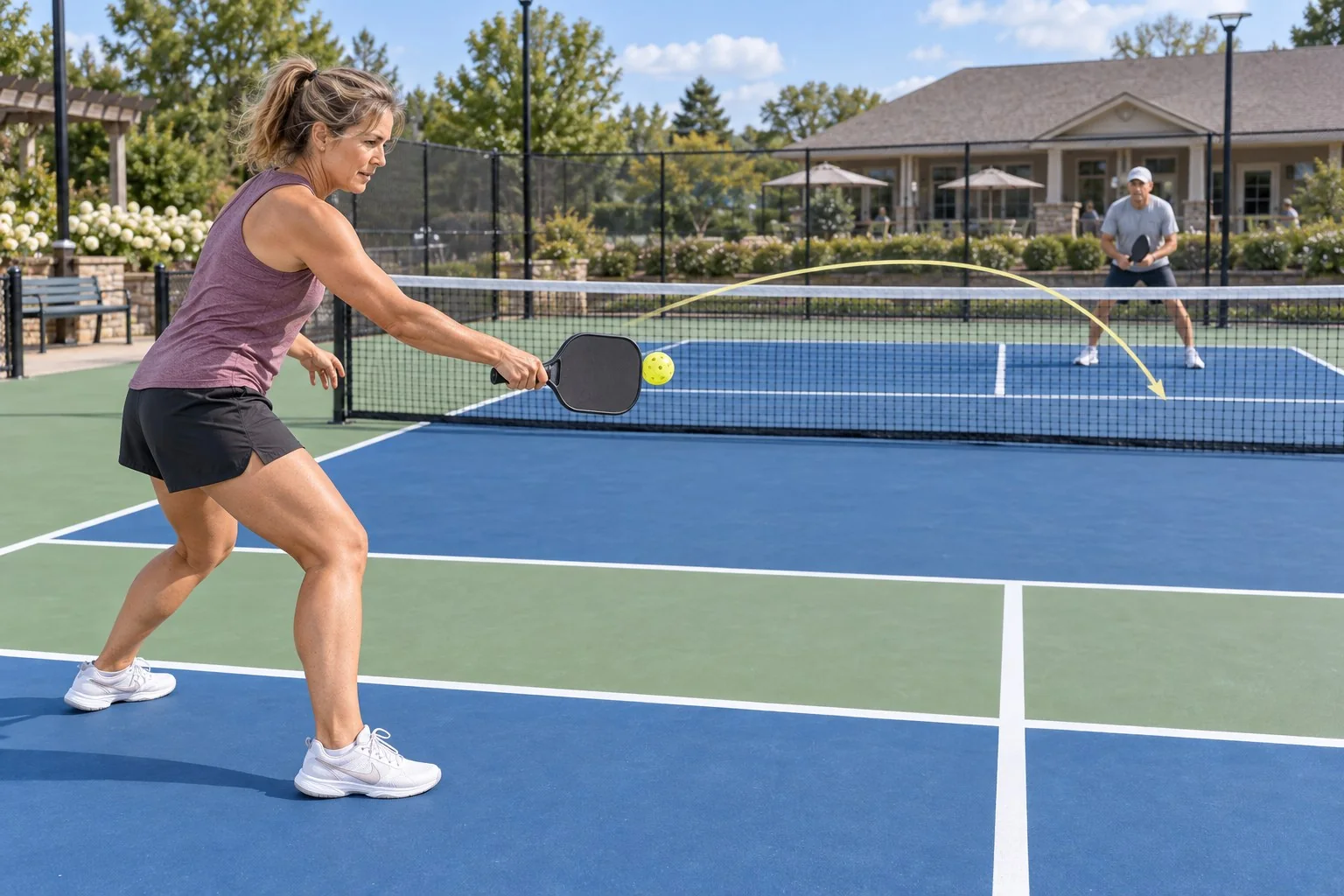
Crosscourt is a useful starting direction because the diagonal gives the ball more distance to travel and sends it over the lower middle portion of the net. Practise that route until the ball stays low without a forced swing. Then add a straight dink and a middle ball, keeping the same preparation so your target changes later than your opponent expects.
Vary targets without handing away control
Once the basic dink is dependable, rotate among three practical targets: the opponent’s forehand or backhand foot, the middle seam, and a wider part of the kitchen. A ball toward the feet can disturb balance and make the next reply rise. The middle can create hesitation between partners, especially when neither player calls early. A wide dink can pull a player away from the line, but it also requires you to recover your own position and protect the open angle.
Do not change targets on every ball just to appear unpredictable. Repeating the same location several times may be useful when it exposes a weakness, but move away before the opponent settles into a comfortable rhythm. A simple pattern is two crosscourt dinks followed by a middle ball, then a wide ball only when the opponent is already leaning or standing too far inside. Keep the preparation neutral and let the paddle face, contact point, and small directional change do the work.
Watch the opponent’s response rather than chasing a predetermined sequence. If the ball comes back high, you may have an attackable opportunity. If it returns low, continue the soft exchange. Patience matters: a low dink is a setup, not an instruction to speed up immediately.
Recover after every placement
After contact, return the paddle to the ready position and use small lateral steps to regain your lane. The wider the target, the more important recovery becomes. In doubles, communicate on middle balls and keep enough separation to cover the next angle. Never let a successful wide dink pull you so far that the center becomes free.
A useful practice block is ten minutes of crosscourt dinks, followed by ten balls alternating feet and middle, then a final round where the feeder varies the target. Count only balls that land in the kitchen with a controlled height. If a target causes pop-ups, shorten the swing and loosen the grip before trying to place the ball harder. Consistency first, variation second, and an attack only when the ball has genuinely risen above a comfortable defensive height.