Pickleball Dink Targeting: Move the Opponent Without Raising the Ball
A practical guide to controlling dink height, net clearance, landing depth, paddle angle, and recovery in pickleball soft-game rallies.
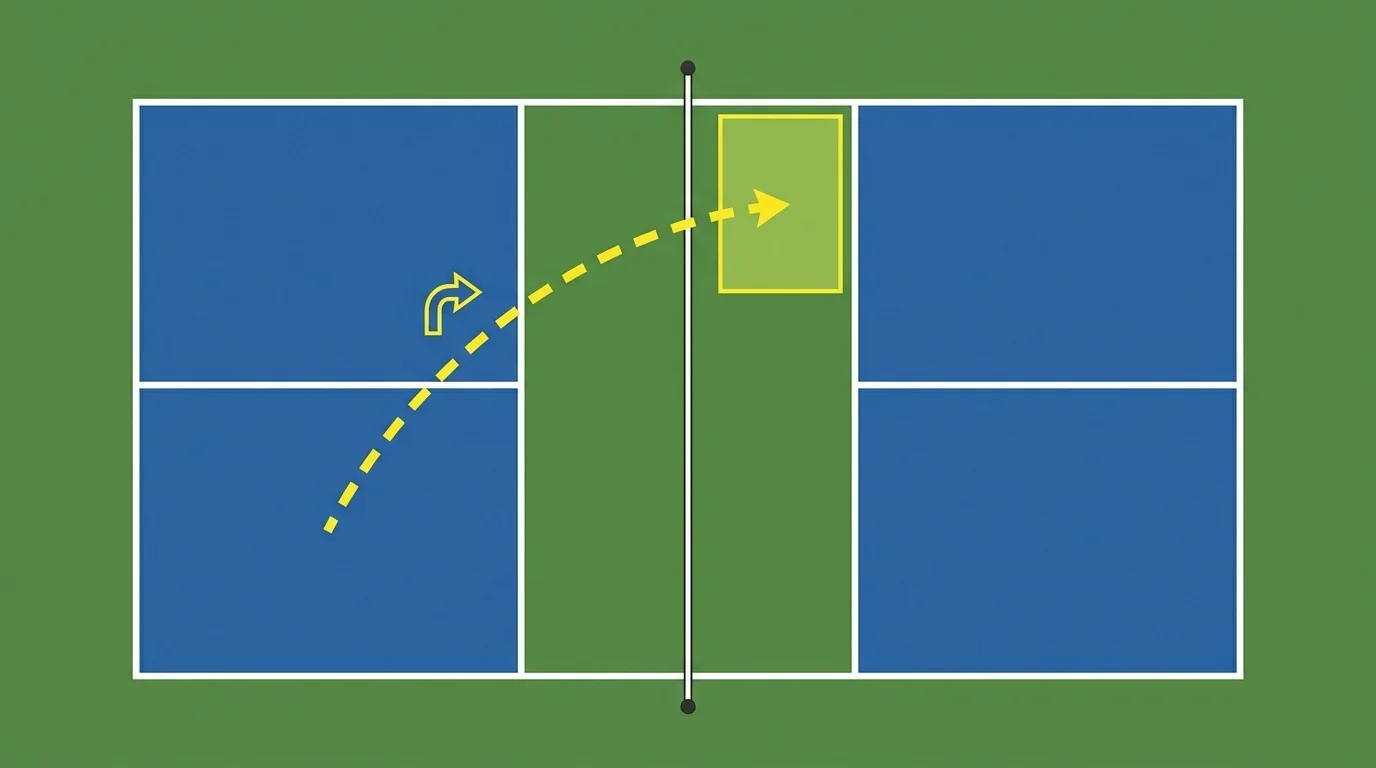
A good dink does more than clear the net. It arrives low enough to limit the opponent’s next contact and gives you a clear recovery position. Start with a safe arc, then choose the landing spot from the opponent’s balance and court position. You are trying to shape the next ball, not float a soft shot without a plan.
Give the ball room over the net
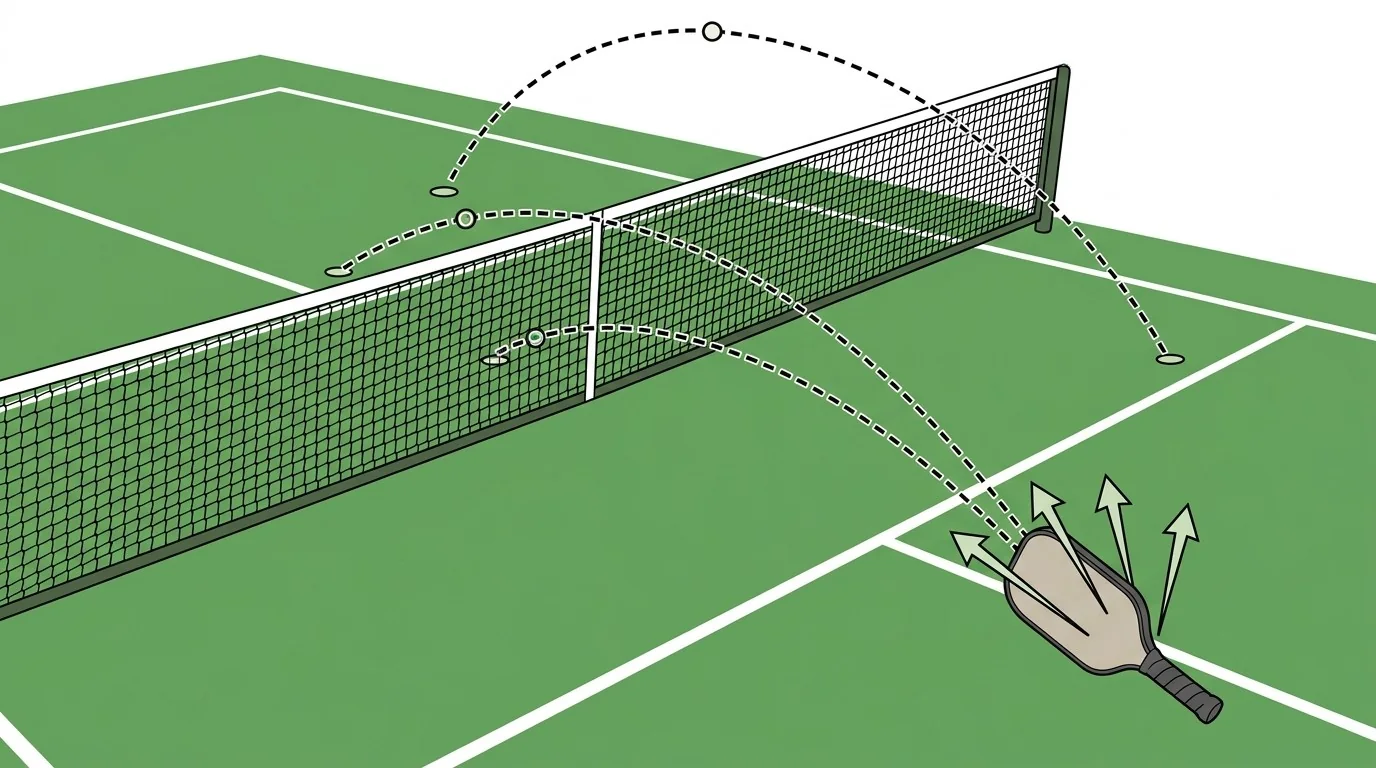
The net is lower in the middle than at the posts, which gives a crosscourt dink more clearance to work with. You still need a margin that fits your contact height and the pressure in the rally. When you contact the ball below net height, send it up enough to clear the net and let it descend. A higher contact can use a flatter path, but a fast, flat dink may sit up for an attack.
Keep the paddle face steady through contact. An open face adds lift; a slightly closed face lowers the launch. Neither adjustment works well if your feet are off balance or the contact point drifts behind you. Make the smallest face change that produces the arc you need instead of flipping the wrist.
Match the arc to the landing spot
A short crosscourt dink has more net distance and a wider landing window. A straight dink travels a shorter route, so its height and pace need tighter control. If the opponent is reaching forward, a short ball can keep the next contact low. If they are already comfortable at the kitchen line, send the ball deeper into the kitchen or toward the feet without lifting it.
Read the opponent’s paddle and balance. When they lean in, add enough depth to make them move before contact. When they are pulled wide, use the open space only if you can stay balanced. The target is not simply an empty part of the court. It is the contact you want to force next.
Keep your body quiet and recover
Use a compact backswing and a relaxed grip. Move your feet first so the ball stays in front of you, then guide the paddle through contact. Too much wrist action changes the face at the last instant and often produces a pop-up. After the shot, bring the paddle back to neutral and keep your feet ready for the reply.
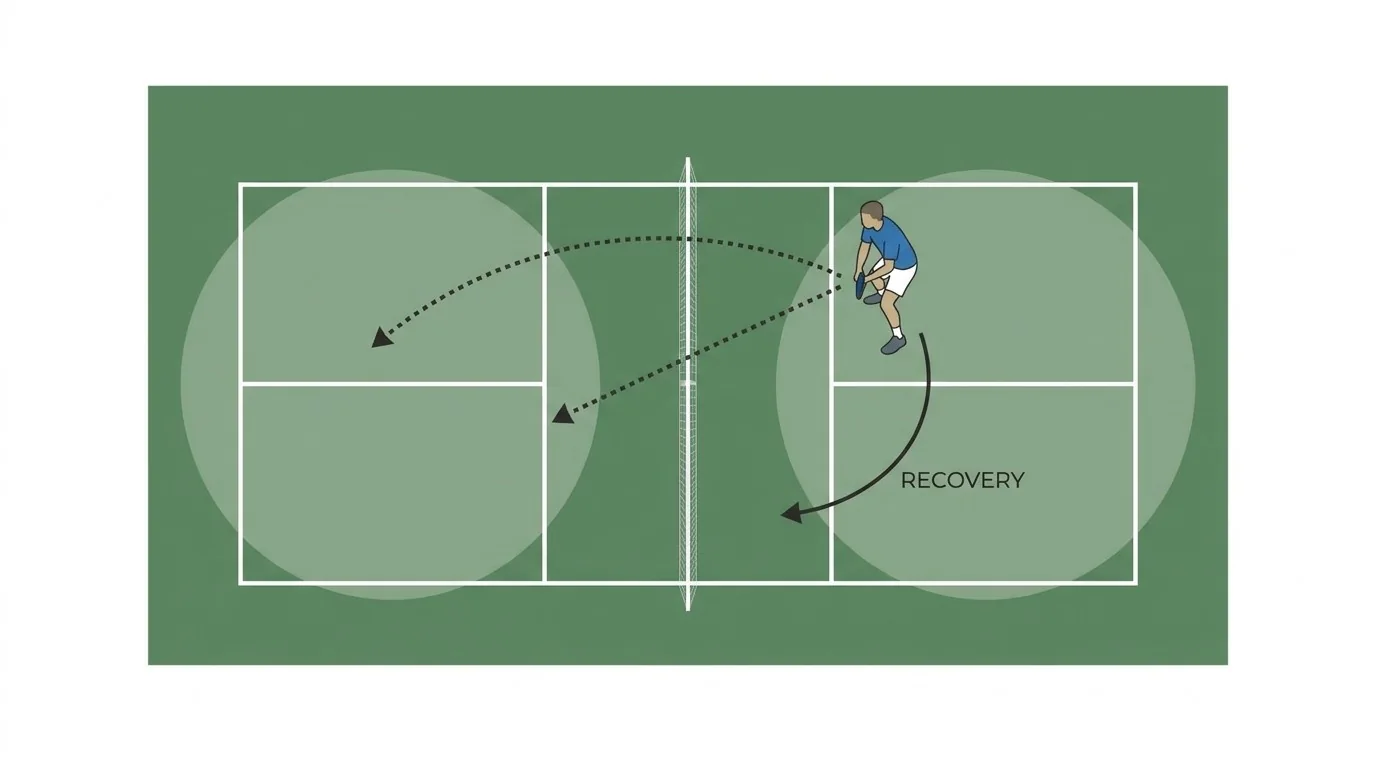
Do not try to make every dink perfect by lifting it high. On a low ball, accept a safer arc and protect net clearance. On a high ball, do not attack automatically; a controlled dink may be the better choice when the target is small or your feet are unsettled. Reliable height comes from reading the contact, not from repeating one swing shape.
Practise the decision, not just the stroke
Have a partner feed alternating forehand and backhand balls. Call “crosscourt,” “straight,” or “feet” before contact. Then check two things: did the ball clear the net with margin, and did it descend into the intended zone? Count only repetitions that finish with a balanced recovery.
Make the feed a little wider and vary the bounce height. Keep the preparation compact while your feet create space. Finish with cooperative dink rallies in which each player changes target only after reading the other player’s balance. The goal is a repeatable arc, a low landing, and a ready position, not maximum softness.
The best pickleball dink height is the lowest arc that clears the net safely and reaches a spot the opponent cannot attack comfortably. Build that margin first; let placement and recovery decide what comes next.