Pickleball Dink Technique: Soft Hands, Low Arc, Better Control
Build a reliable kitchen dink with a relaxed grip, balanced posture, forward contact, a low arc, and patient shot selection.
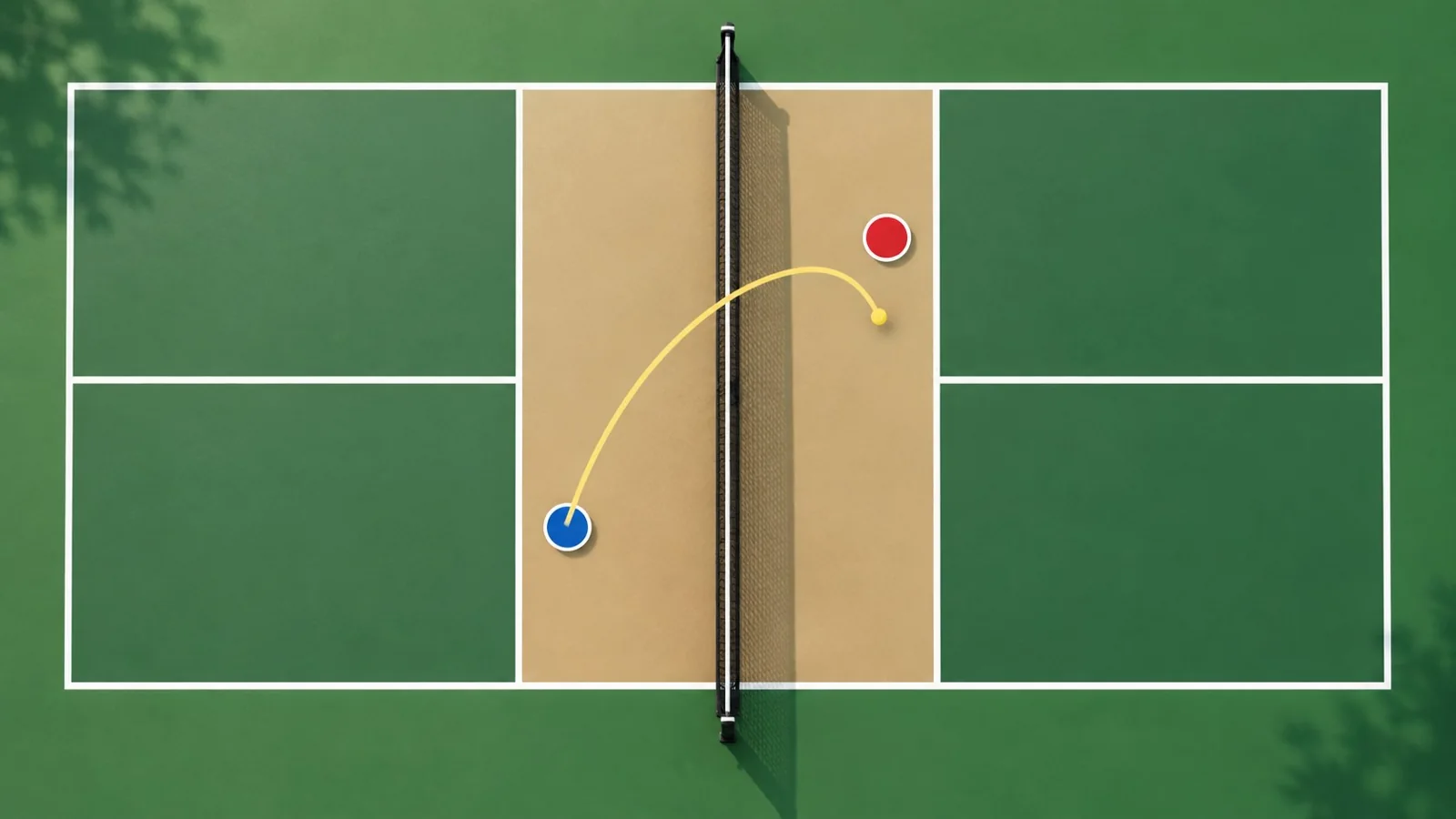
The pickleball dink technique is the soft-game foundation of a kitchen rally. It is a controlled shot that travels from near the non-volley zone and lands in the opponent’s kitchen, giving you time to move, probe, and wait for a ball worth attacking. The point is not to finish every exchange. It is to keep the reply low and make the next decision easier.
Set up the dink with soft hands
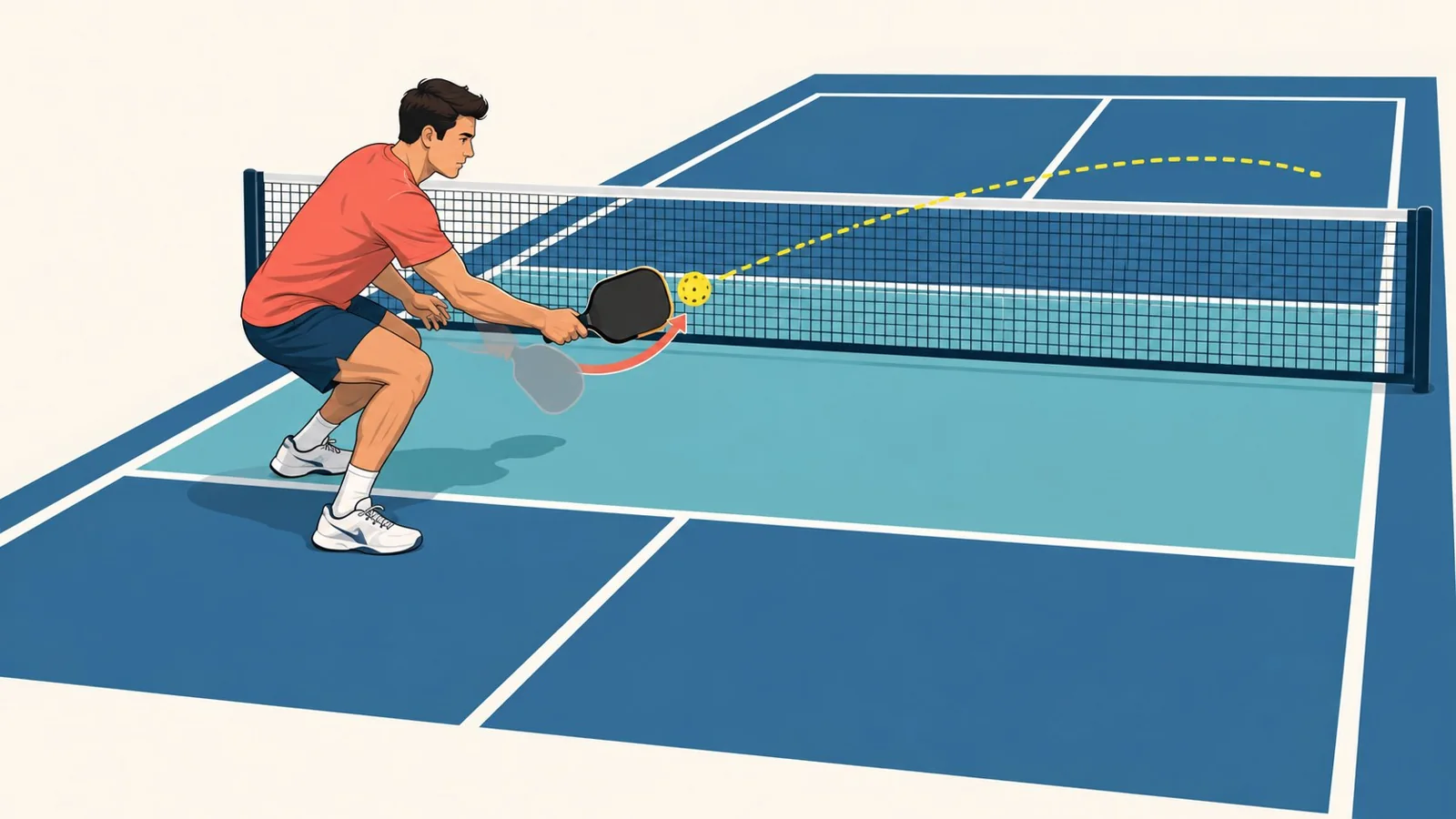
Begin with the paddle up and in front, knees comfortably bent, and weight slightly forward. Lower through your hips and knees instead of folding at the waist. Use a relaxed but controlled grip: light pressure keeps feel while a stable wrist keeps the face predictable. Soft hands absorb incoming pace rather than punching it back.
Meet the ball in front of the body, usually between the lead hip and lead foot. Contact beside or behind the hip often opens the face and sends the dink upward. Keep the swing small, led by the shoulder, with little or no wrist flick.
Build a low, useful arc
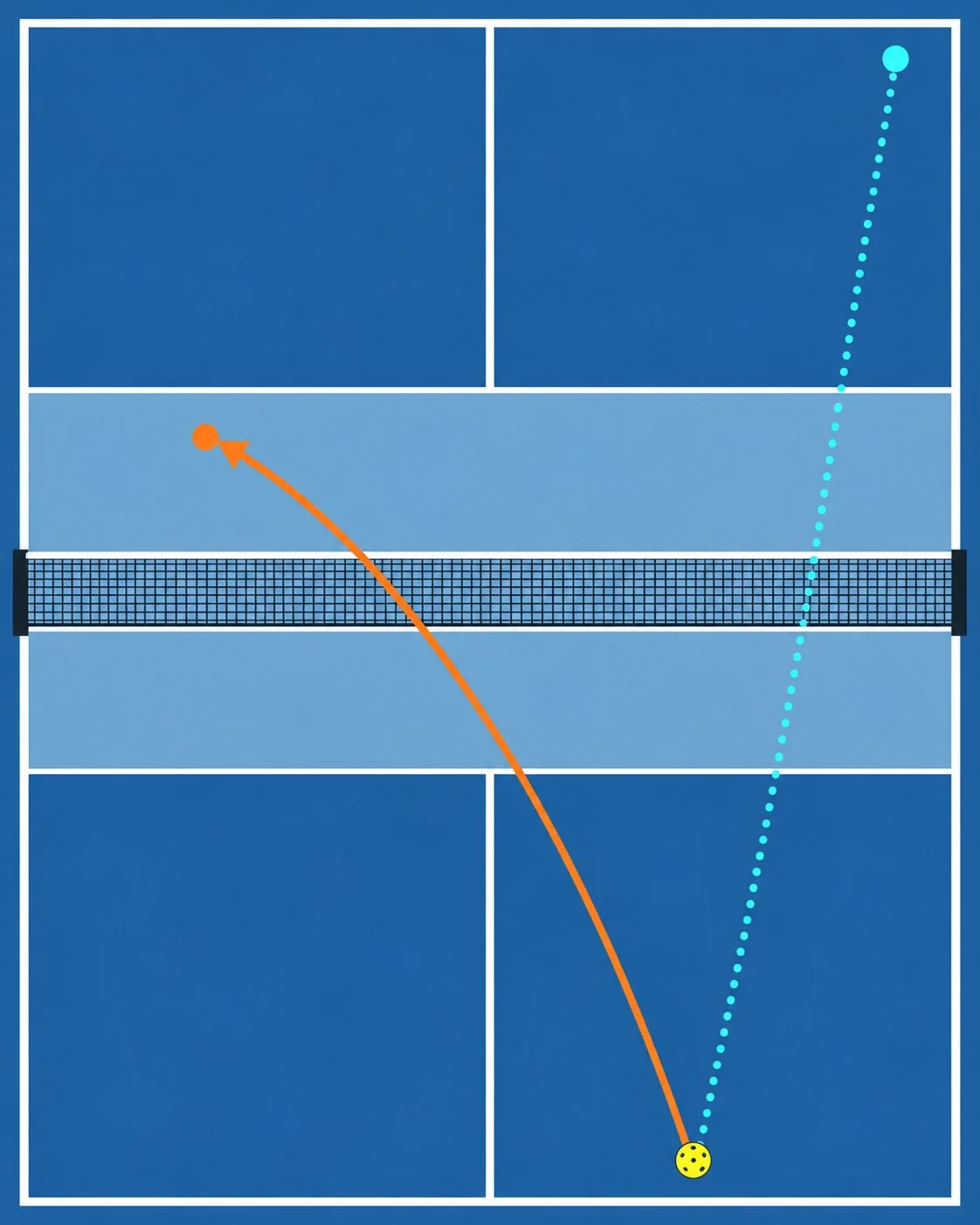
A good dink clears the net with a small margin and lands shallow in the opponent’s kitchen. Crosscourt is a dependable pattern because the diagonal gives more landing distance and sends the ball over the lower middle portion of the net. A down-the-line dink is a useful change-up, but it has less court to work with and crosses a higher section of net.
Choose patience over a forced attack
Continue dinking when the ball is below net height or your balance is compromised. Speed up only when the opponent’s ball rises enough for you to drive down. When an opponent accelerates, absorb the pace with a short, quiet reset into the kitchen.
Practise crosscourt rallies, then vary the feed so some balls arrive wider or lower and require a small adjustment through the legs. Add a figure-eight pattern with a partner or use a wall for short repetitions. Keep the paddle forward, eyes on contact, and recover after every shot.
Use this checklist: paddle forward, knees doing the lowering, relaxed grip, ball met in front, and compact swing. If the dink pops up, check the contact point and grip before adding force. Reliable dinking comes from repeatable positions and patient choices, not swinging harder.
Practise control under pressure
A dink is a setup shot, not a promise to attack on the next ball. Stay patient until a ball rises above net height and gives you a safe downward target. A soft, low reply can force a lift; that is when the attack becomes available.
Avoid folding at the waist, squeezing the grip, contacting beside the hip, and trying to attack a ball that is below the net. These errors make the ball rise or remove your recovery time.
Finish with deliberate repetitions: aim for 30 clean crosscourt dinks, then 50, without sacrificing height or balance. The best dink is not the softest ball imaginable; it is the one that clears safely, lands usefully, and leaves you ready for the next exchange.