Pickleball Drop Shot Height: Build Net Clearance Before Depth
Build a safer pickleball drop by prioritizing net clearance and a descending arc before chasing depth, then add compact contact, recovery, and drills.
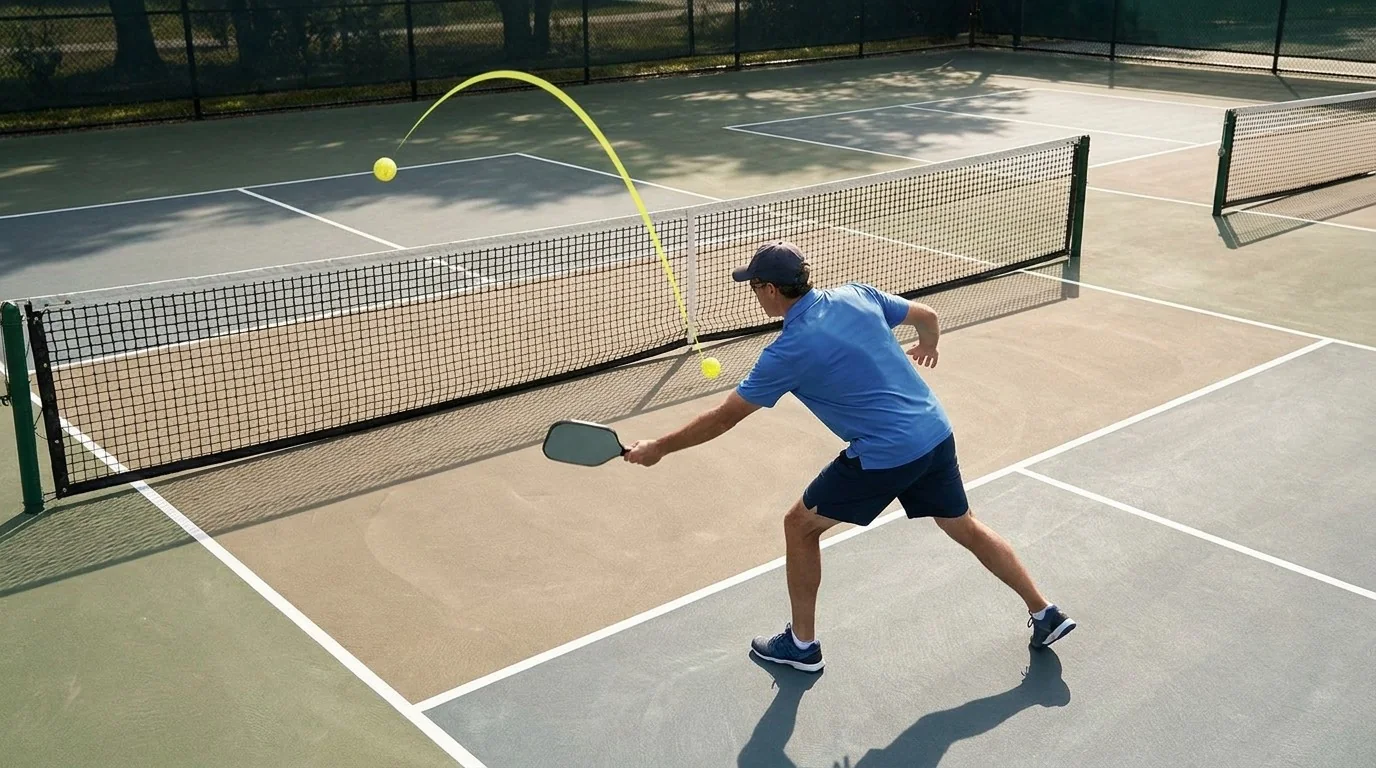
A useful pickleball drop shot is built from height first, then depth. The ball needs enough clearance to cross the net, start descending, and land where the opponent cannot attack it comfortably. When contact is low or awkward, a controlled arc is usually safer than trying to drive the ball flat.
Build net clearance before chasing depth
A drop should cross the net with a repeatable margin and descend into the opponent's non-volley zone. A flat ball can clip the net. A ball that climbs too high may arrive at a comfortable volley height. Establish a dependable window over the net before you worry about placing the ball closer to the back of the kitchen.
Your court position, contact height, and the incoming ball all change the useful arc. From deep court, you generally need more lift and distance. From the transition area, the shorter path may let you use a softer, lower trajectory. Do not try to use one identical swing from every location.
Make contact quiet and repeatable
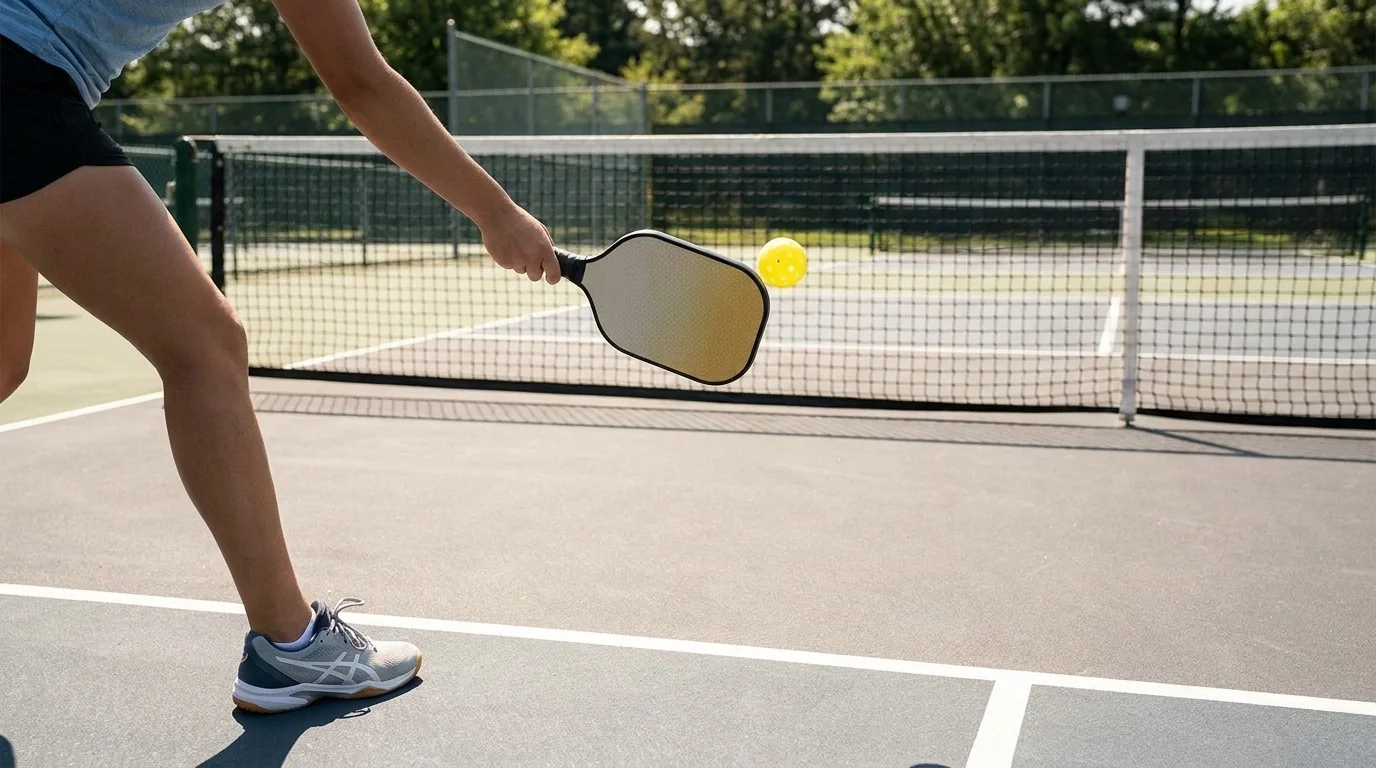
Prepare compactly with the paddle in front of your body. A relaxed grip and steady wrist help prevent the sudden push that sends a drop long. Let your legs and shoulder turn create controlled lift, while the paddle face guides the ball through the chosen window.
If you arrive late, shorten the motion and accept a little extra height rather than flicking at the ball. Use adjustment steps to create space, keep contact in front when possible, and keep your head steady. Finish balanced enough to watch the opponent's next contact.
Choose a landing window
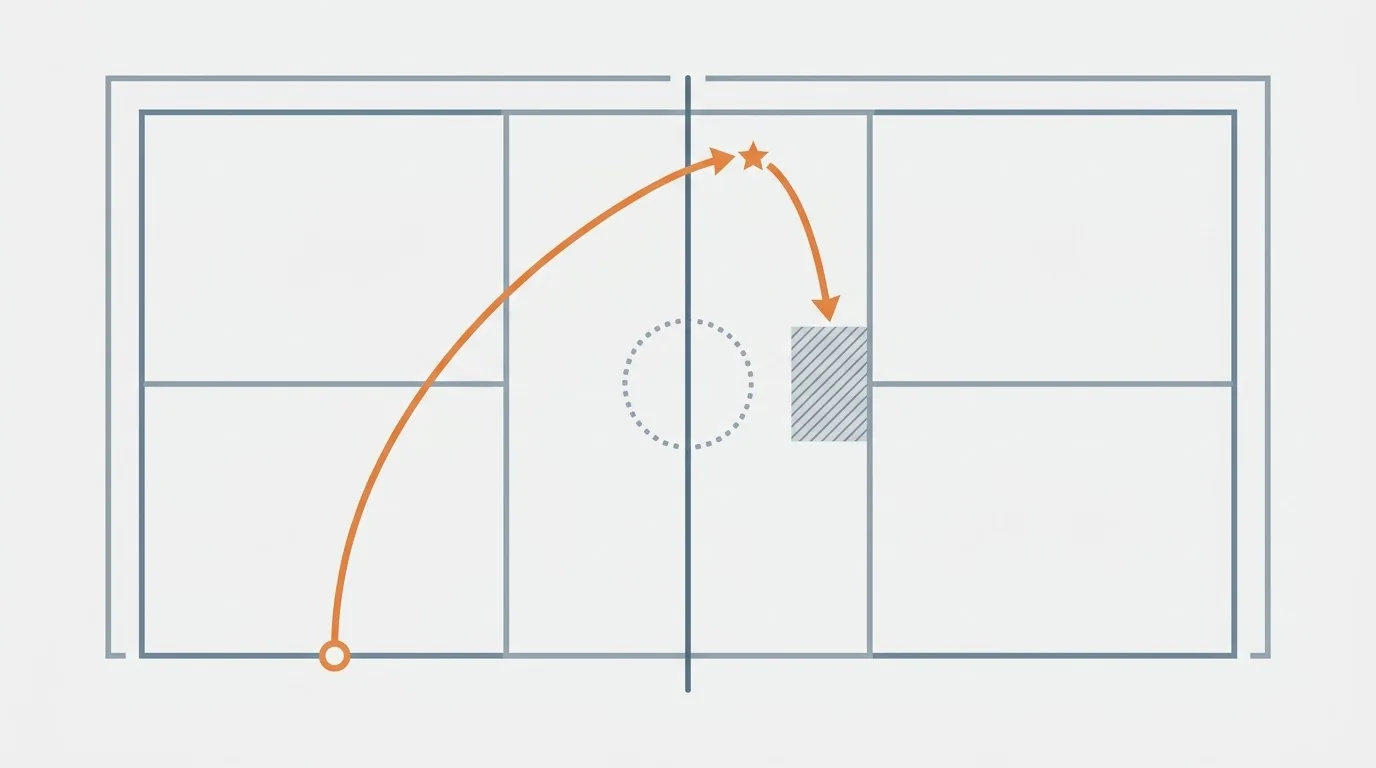
A crosscourt drop can offer more distance and a larger margin when the angle is available. A middle target can take away some of the opponent's angle and create uncertainty in doubles. The safer choice depends on the ball's height, your position, and the opponents' balance.
Landing near the kitchen is not enough by itself. The ball should descend low enough to limit an aggressive reply and give you time to move forward. If the incoming ball is too low for a comfortable drop, a reset or defensive lift may be the better choice.
Recover while the ball travels
Take the first recovery step as soon as you finish the stroke instead of watching the bounce. Move forward in stages, then use a split step as the opponent contacts the ball. Stop where you can handle the next shot. Rushing all the way to the kitchen line can leave you moving through the opponent's reply.
Fix the common errors
- The ball clips the net: add controlled lift and meet the ball farther in front when possible.
- The ball sails long: soften the grip, reduce the forward push, or create a clearer descending arc.
- The ball sits up: reduce excess height only after net clearance is reliable, and keep the paddle face steady.
- Contact feels rushed: use adjustment steps before preparing instead of reaching from an unstable base.
- You arrive late: start recovery immediately and split on the opponent's contact rather than after the bounce.
Practise height, then distance
Begin with cooperative feeds from deep court. Use a broad target inside the opponent's kitchen and score each attempt for safe net clearance, visible descent, and balanced recovery. Once the arc is repeatable, narrow the target and alternate forehand and backhand feeds.
Finish with a constrained rally. The drop player may advance only after a ball lands low enough to limit an attack. This keeps the order of work clear: build a safe window first, then improve depth and placement without giving up the next position.