Pickleball Drop Step for Lobs: Turn Safely and Recover
A practical pickleball footwork guide covering split-step timing, controlled movement through transition, kitchen shuffles, drop steps, and recovery.
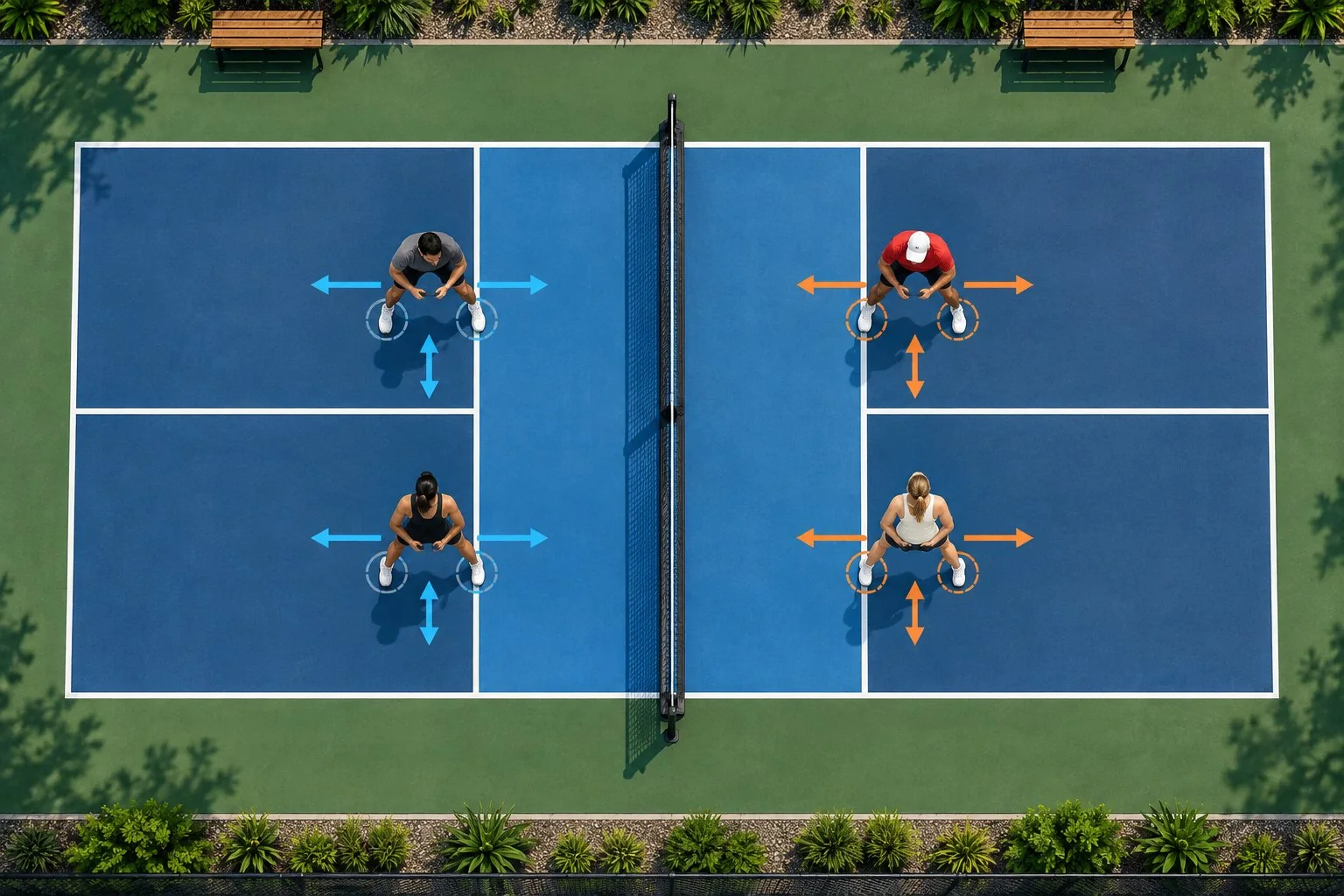
Good pickleball drop step for lobs does not begin with a bigger swing. It begins with arriving in a position where the swing is possible. A balanced split step, short adjustment steps, and a clear recovery habit help you reach the ball without reaching blindly or drifting through contact. The aim is simple: move efficiently, stop when you need to hit, and be ready for the next ball.
Time the split step to contact
The split step is a small, low hop that lands on both feet as the opponent makes contact. It is not a jump for height. Land with the knees bent, weight on the balls of your feet, and the paddle ready in front of the body. From that loaded position, you can push left, right, forward, or back without first having to unstick your heels.
Timing matters more than size. If you land too early, you begin drifting before you know the ball's direction. If you land late, you are flat-footed when the ball arrives and must chase it with a slow first step. Practise watching the opponent's paddle and making the landing coincide with contact. Use the habit on serves, returns, third shots, and kitchen exchanges rather than treating it as a warm-up trick used only once.
Move through the transition zone
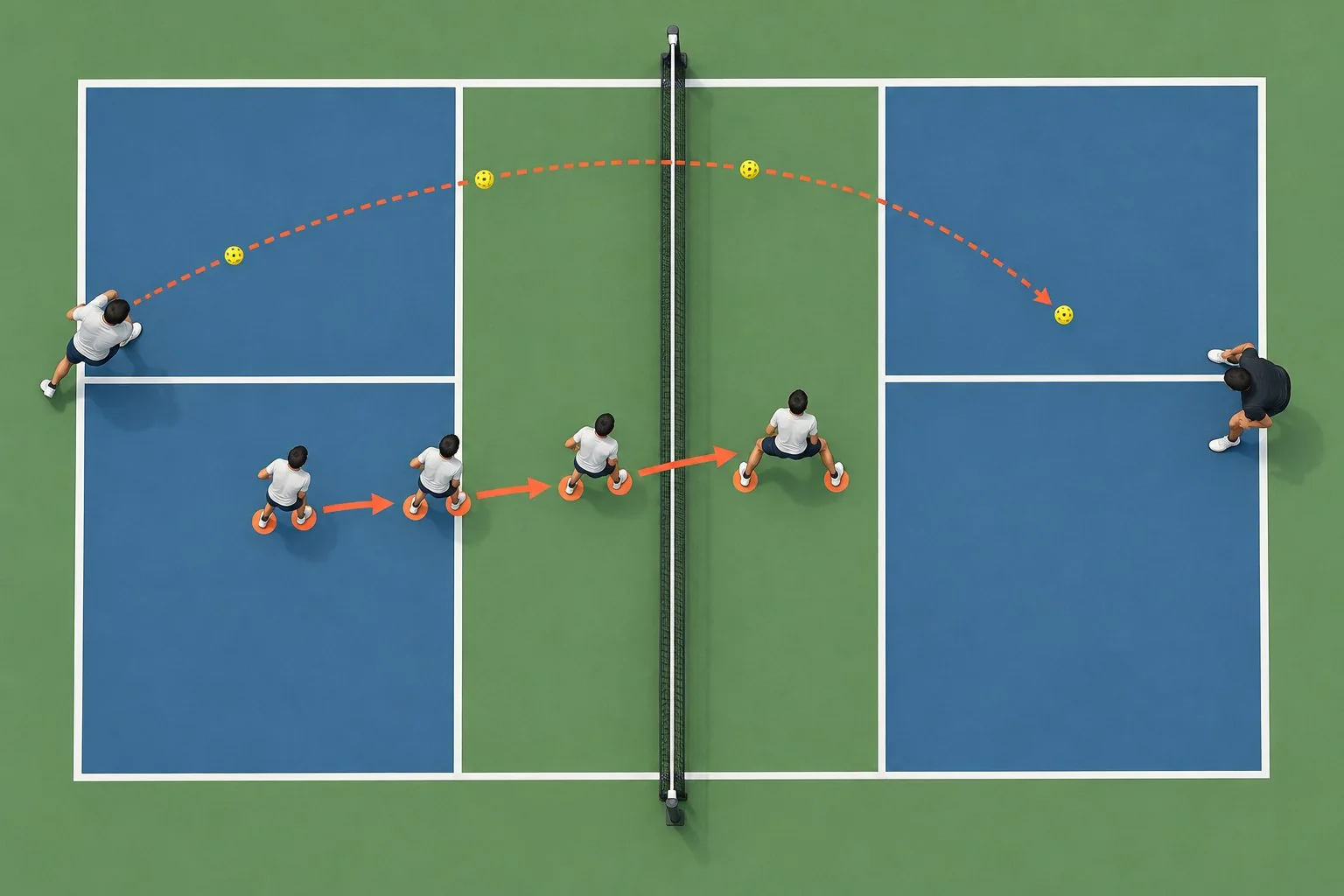
The space between the baseline and the kitchen line is uncomfortable because balls often arrive at your feet. Do not stop there simply because you hit a drop. After the shot, take two or three controlled steps toward the kitchen, then pause in a ready stance when the opponent is about to contact the ball. The pattern is advance, stop, read, and advance again.
If the incoming ball reaches you before you arrive, soften the response instead of forcing a drive while moving. A low reset into the kitchen can buy another step. The goal is not to produce a winner from the middle of the court; it is to survive the vulnerable zone and reach a position where both feet and the paddle are organised. On the receiving side, a deep return gives you more time to move forward, but balance still matters more than sprinting past the ball.
Shuffle at the kitchen and recover safely
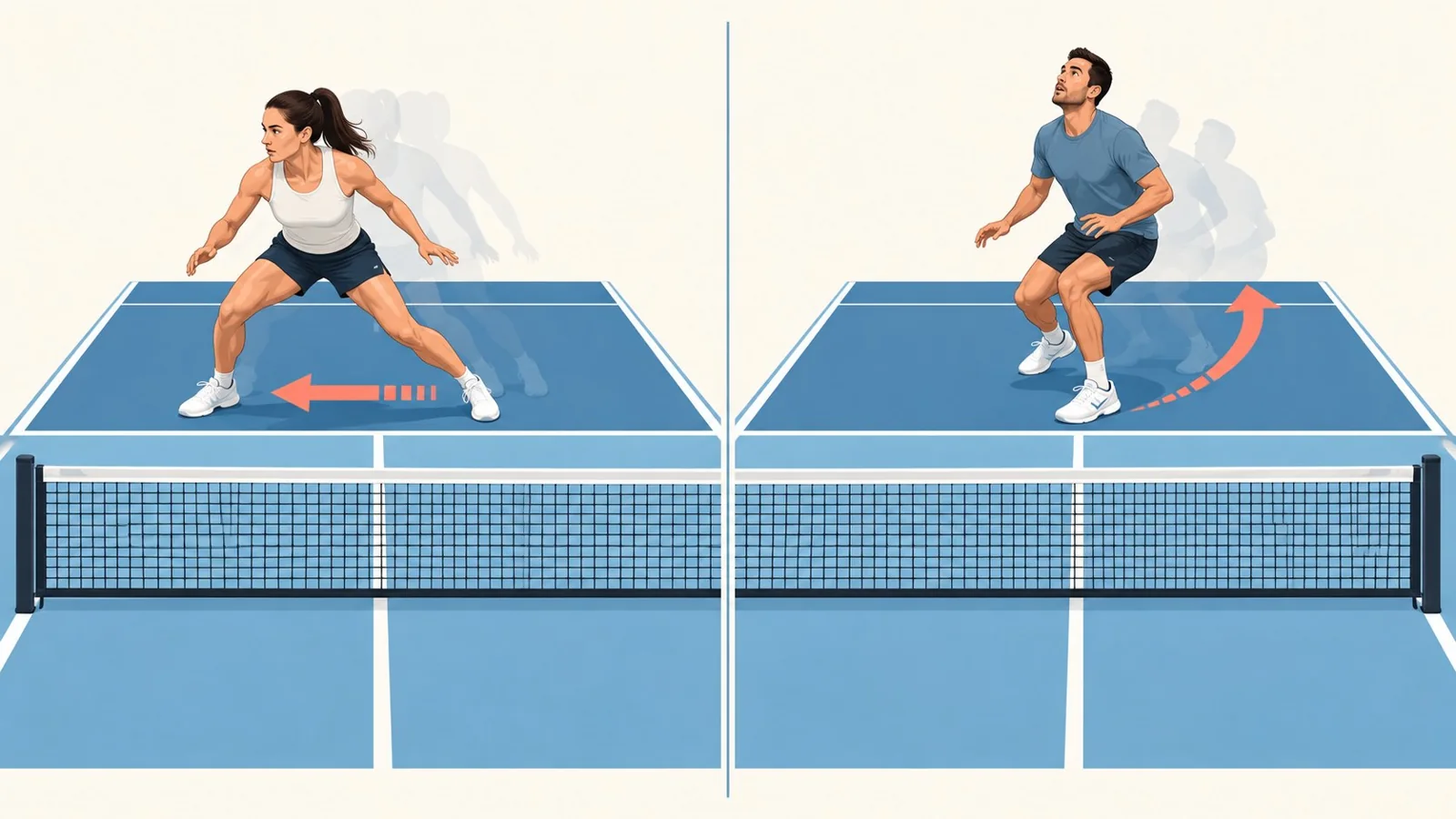
At the kitchen line, use short side-to-side shuffle steps for ordinary lateral movement. Keep the chest facing the net, let the lead foot move first, and bring the other foot along without crossing. Small steps keep the base adjustable so you can stop behind a dink and contact the ball in front rather than reaching with an extended arm. A wide ball that is beyond a few shuffle steps may require a crossover to cover ground, but return to a square stance as soon as possible.
When a lob goes over your head, do not run backward on your heels. Drop the back foot diagonally, open the hips toward the ball, and move sideways while tracking it over the shoulder. This drop step is faster and safer than backpedaling. After the overhead or controlled defensive reply, recover toward the kitchen line instead of admiring the shot. Any attack should finish with a ready position, because the next ball may come back immediately.
Build the habit without a partner
Start with shadow work: split step on an imagined contact, shuffle across the kitchen line, then reset to the middle. Add a transition pattern of three forward steps, a balanced stop, and a simulated soft reset. Finish with drop-step turns for both directions. Keep the movements quiet and compact; speed added before control usually creates wide steps and poor balance.
The most useful checklist is short: land the split step at contact, take small steps near the ball, do not pause in the transition zone, and recover after every shot. Footwork is not an advanced extra. It is the platform that lets ordinary technique hold up when the rally changes direction.