Pickleball Low Stance at the Kitchen: Move Fast Without Losing Balance
Build a low, balanced kitchen stance with bent knees, active feet, compact shuffles, and better recovery during fast pickleball exchanges.
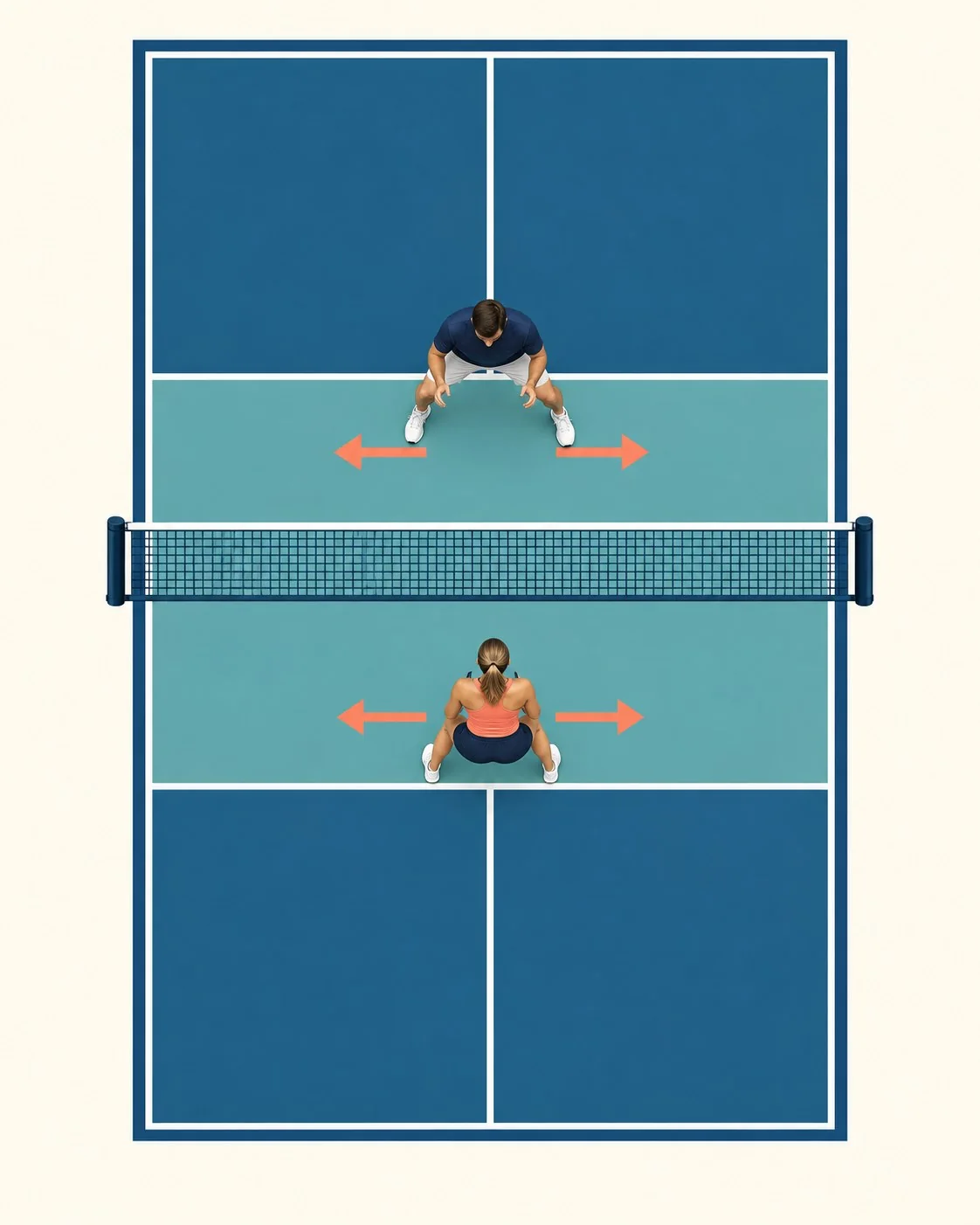
A strong pickleball low stance is not about crouching as low as possible. It is about keeping your center of gravity available for the next ball while your feet remain active. At the kitchen line, a balanced lower stance helps you react to quick volleys, reach dipping balls, and make compact shots without letting your upper body pull you off line.
Build a low, ready base
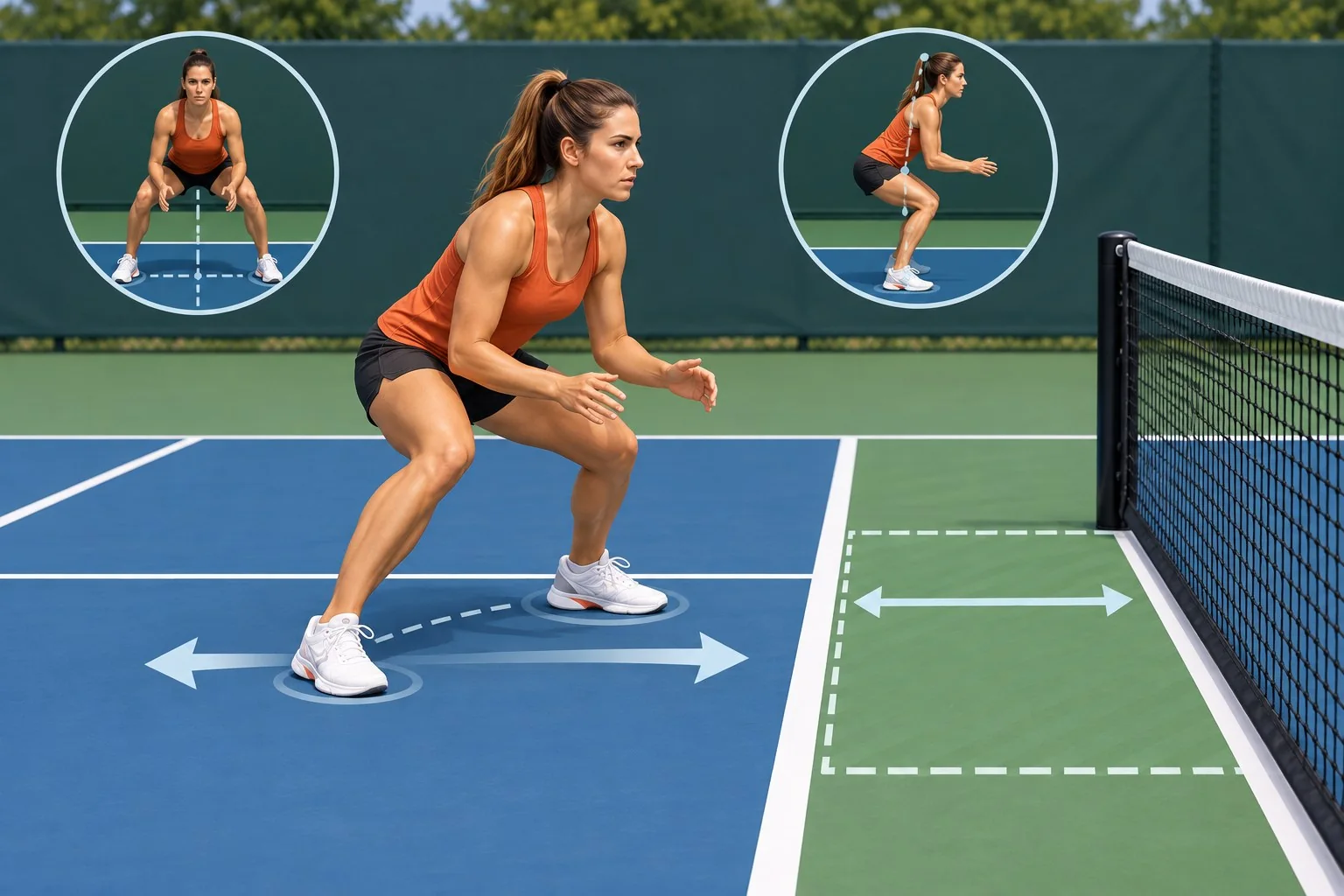
Start with your feet about shoulder-width apart, knees comfortably bent, and your weight slightly toward the balls of your feet. Keep your head level and your chest quiet rather than folding forward at the waist. Your paddle should stay in front of your body so the first movement comes from the feet, not a long arm reach.
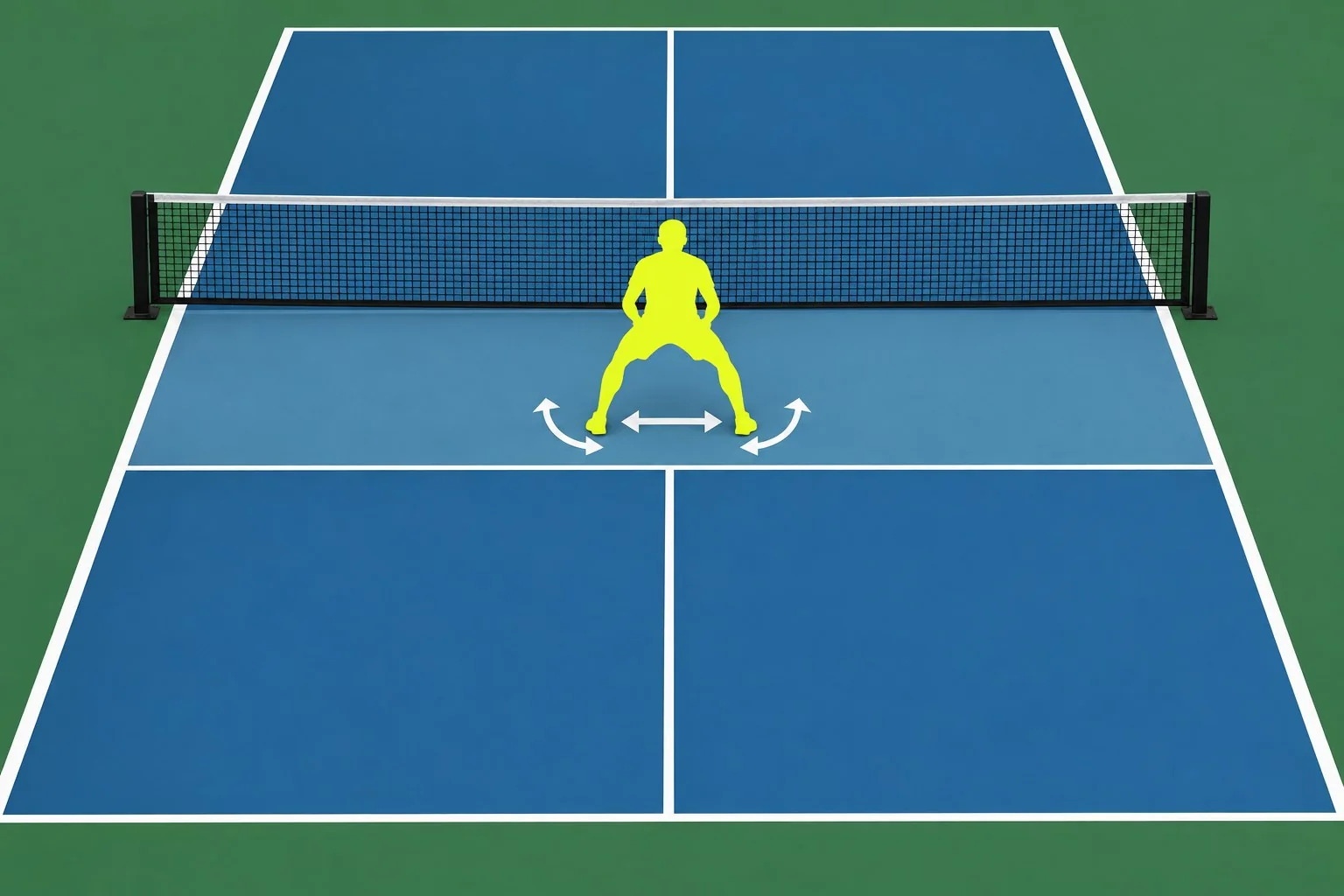
The right height is the one that lets you move immediately in either direction. If your legs are locked, the first step is slow. If you squat so deeply that your thighs are tense, you will struggle to shuffle and recover. Think athletic and springy: lower enough to stay stable, but relaxed enough to change direction.
When the ball drops below net height, bend more through the knees and hips instead of collapsing your shoulders toward it. This keeps your contact organized and reduces the chance of stepping into the non-volley zone while trying to reach a low ball. A quiet head also makes it easier to judge pace and height.
Shuffle before you reach
Use compact side-to-side shuffles to keep the ball in front of you. The foot nearest the direction of travel leads, and the other foot follows without crossing. This keeps your base connected to the court and lets you stop quickly for a dink, block, or volley. Crossing can be useful in an emergency, but it should not be your default for ordinary lateral coverage.
Stay light on your feet as the opponent prepares to hit. You do not need to bounce continuously; you need to avoid being flat-footed. A small adjustment step before contact can be more valuable than a dramatic lunge after the ball has already passed your comfortable hitting window.
As you move, keep your shoulders generally facing the net and your eyes on the ball. Let your feet create space instead of leaning sideways with a straight leg. After the shot, return to a balanced base immediately. The purpose of the movement is not merely to touch the ball; it is to remain ready for the next exchange.
Practise the position under pressure
Begin with a shadow drill. Stand at the kitchen line, shuffle two steps left, stop, and return to the middle. Repeat to the right. Keep the head level, the knees soft, and the feet quiet. Add a shadow volley only after you can stop without wobbling. This connects the lower stance to a compact upper-body response.
Use a short constraint drill to finish: shuffle to a marker, stop fully, make one compact shadow volley, then recover to the middle. This teaches the feet to brake before the hands respond and makes balance part of the shot rather than an afterthought.
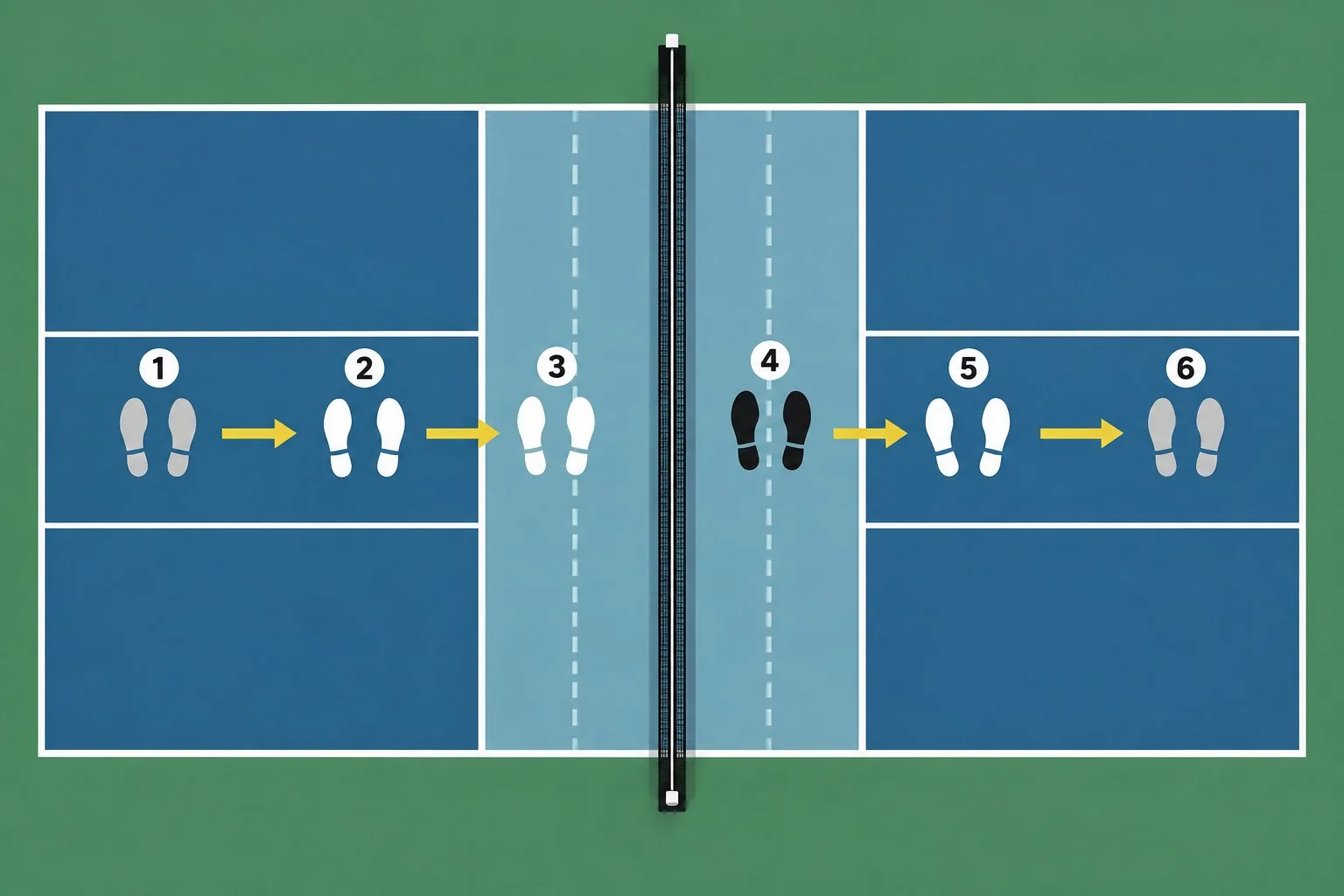
Next, have a partner send gentle balls alternately to both sides. Move first, set the feet, and then play a controlled shot. Ask the partner to vary the width gradually, but keep the feed slow enough that you can preserve balance. If you are reaching on every repetition, reduce the distance and rebuild the pattern.
Finally, practise a low reset or dink after a short shuffle. The priorities are simple: stay low, keep the paddle in front, make the smallest useful adjustment, and recover after contact. Great hands help, but efficient footwork keeps those hands in position. When rallies accelerate, a relaxed low stance gives you time to see the ball, choose a safe response, and remain ready for the next shot.