Pickleball Paddle Home Base: Reset Compactly Between Kitchen Shots
Learn how to keep the pickleball paddle quiet and ready between shots so you can react earlier, block safely, and recover for the next exchange.
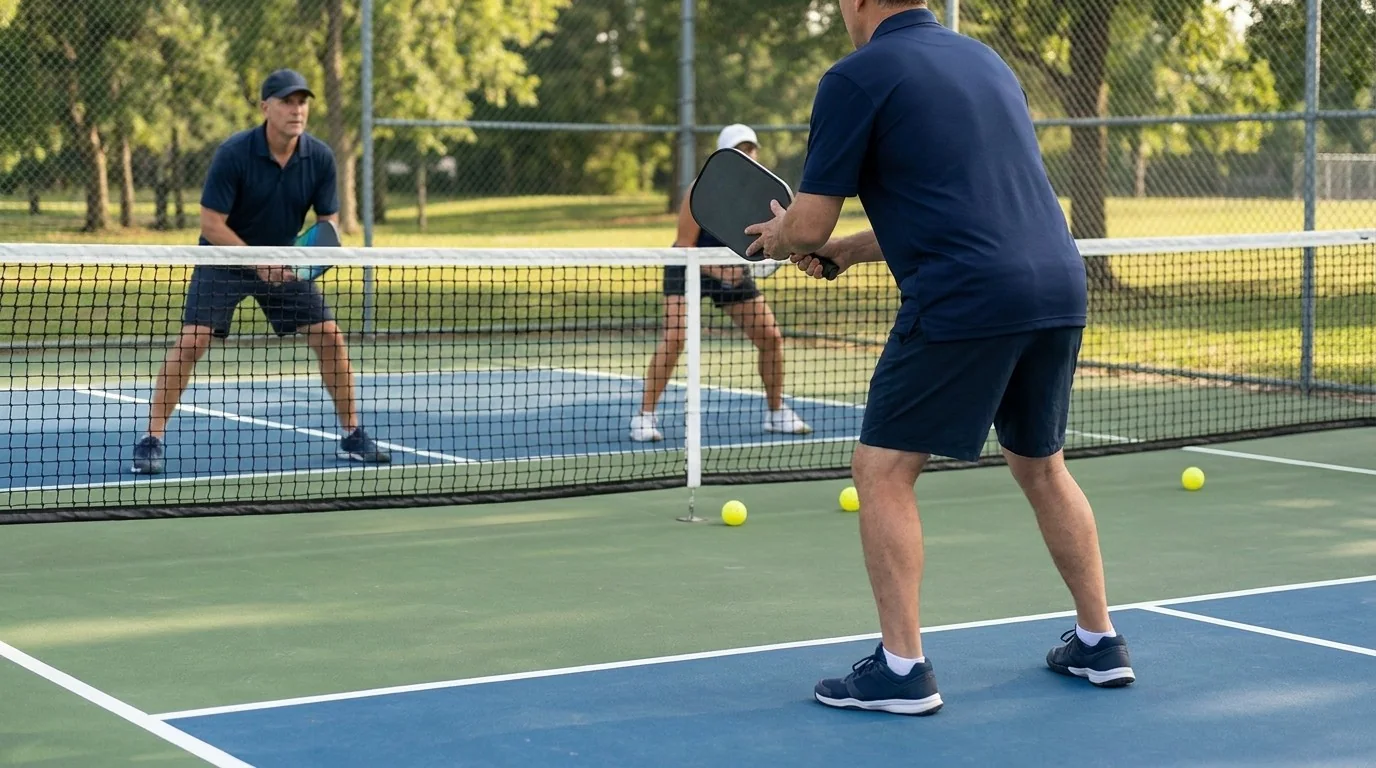
A useful kitchen ready position is a home base, not a frozen pose. Keep the paddle in front of your body, the grip relaxed, and your feet free to adjust. After each shot, return to that compact window so the next ball does not force a long recovery swing.
Set the paddle in front of you
Stand with your feet about shoulder width apart. Bend your knees comfortably and keep your weight balanced over the middle of your feet. Hold the paddle in front of your torso, roughly between waist and chest height. The head should be high enough to meet a quick ball without a large backswing. Keep the non-paddle hand close enough to help with preparation and balance.
The exact face angle will change with the incoming ball and your grip. Aim for three practical qualities: you can see the paddle, it can move a short distance, and you can adjust without tension. Do not lock the elbow or squeeze the handle. A tight arm makes small corrections slower and can send a blocked ball too high.
Keep the path short between shots
Kitchen exchanges change direction quickly. A paddle that drops below the waist needs extra travel before contact. One already held in front of the body can move a few inches to block, guide, or reset the ball. That shorter path helps protect the body without requiring a dramatic swing.
Quiet does not mean motionless. As you read the opponent's contact, make a small turn or change the face angle while keeping the paddle close. Let your feet create space and let the paddle complete the adjustment. If it wanders behind you, bring it back before the next exchange instead of trying to recover with the wrist.
Match the preparation to the ball
For a firm ball aimed at the body, keep the face stable and use a short cushioning motion. For a low ball, lower your whole base with your knees rather than dropping only the paddle hand. For a ball above the net, a compact punch can be useful when the height and spacing make the attack safe. The home base is a starting point, not a command to swing every ball the same way.
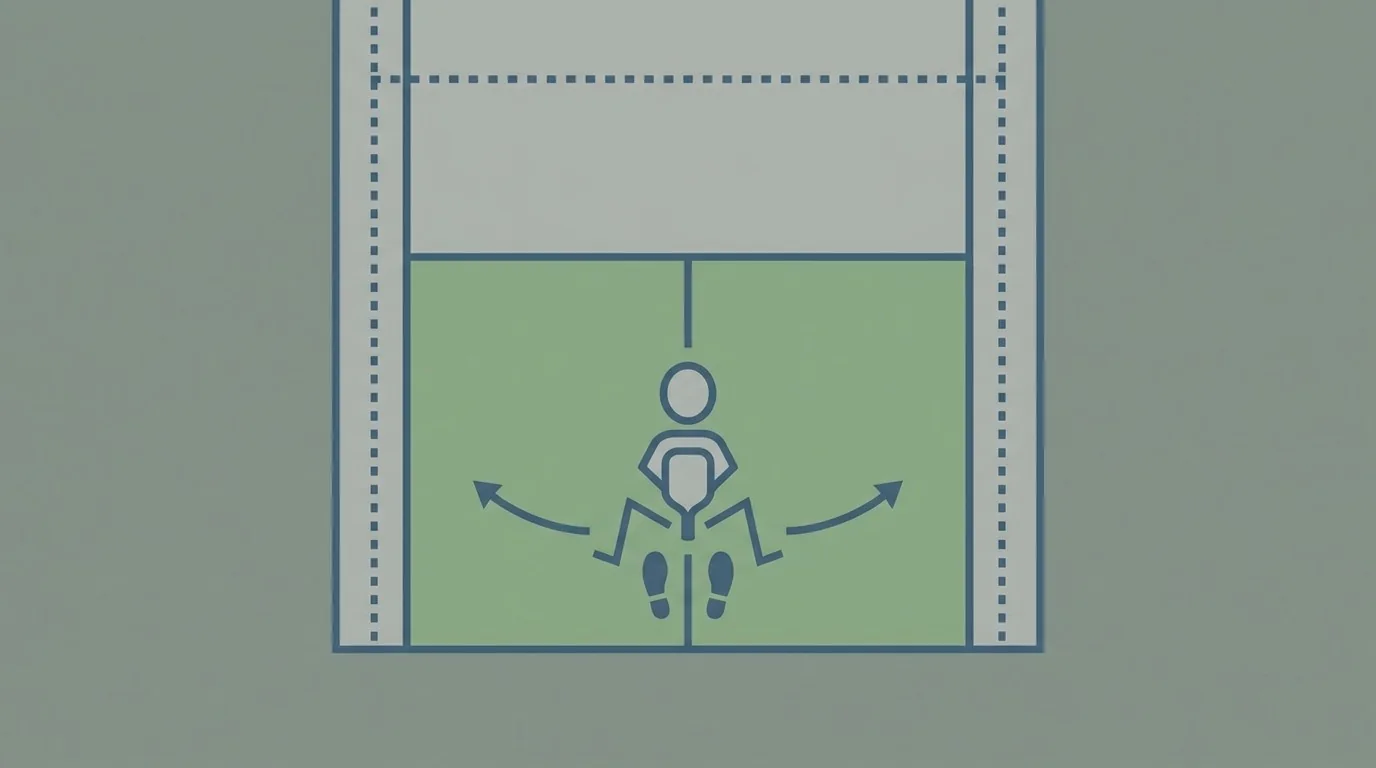
Fix the errors that slow your hands
Paddle below the waist: The first response takes longer and often turns into a large upward swing. Raise the paddle gradually while keeping the shoulders loose.
Paddle too far from the body: An extended arm is harder to redirect. Leave room for contact, but keep the preparation compact.
Grip too tight: Excess pressure reduces feel and makes a soft reset harder. Hold firmly enough to control the paddle, then relax between contacts.
Feet planted: A good paddle position cannot rescue a frozen base. Use a small split step as the opponent contacts the ball, then adjust before reaching.
Eyes fixed on the paddle: Keep the paddle in peripheral awareness and watch the opponent's contact and the ball's path.
Practise returning to home base
Start with a partner feeding gentle balls to your forehand and backhand. Hold the ready position, make the smallest useful adjustment, and return the paddle to the same compact window after each contact. Next, alternate body, forehand, and backhand feeds. The hitter should move the paddle only as much as needed while keeping the feet active.
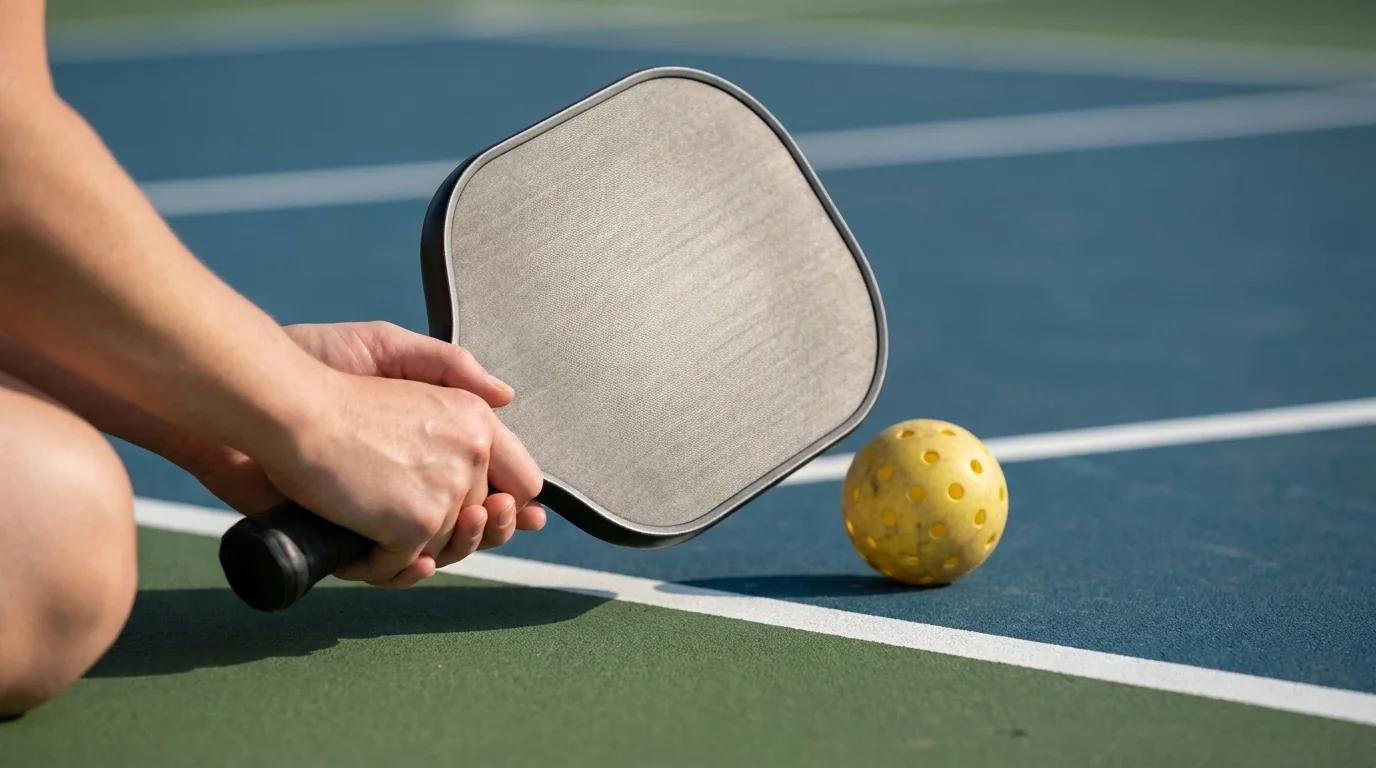
Finish with cooperative live dinks. Count a repetition when you split on the opponent's contact, keep the paddle available, and recover to a balanced base. The goal is not to freeze the paddle. It is to remove unnecessary distance and tension so the next decision starts earlier.
A reliable kitchen home base is visible, relaxed, and adaptable: paddle in front, elbows soft, feet ready, and eyes on the incoming contact. Practise returning there after every shot, then let the next ball decide whether you block, guide, reset, or attack.