Pickleball Reflex Drills for Faster Net Play
Improve pickleball reflexes with rapid volleys, random feeds, wall drills, balance work, anticipation cues, and safe weekly practice targets.
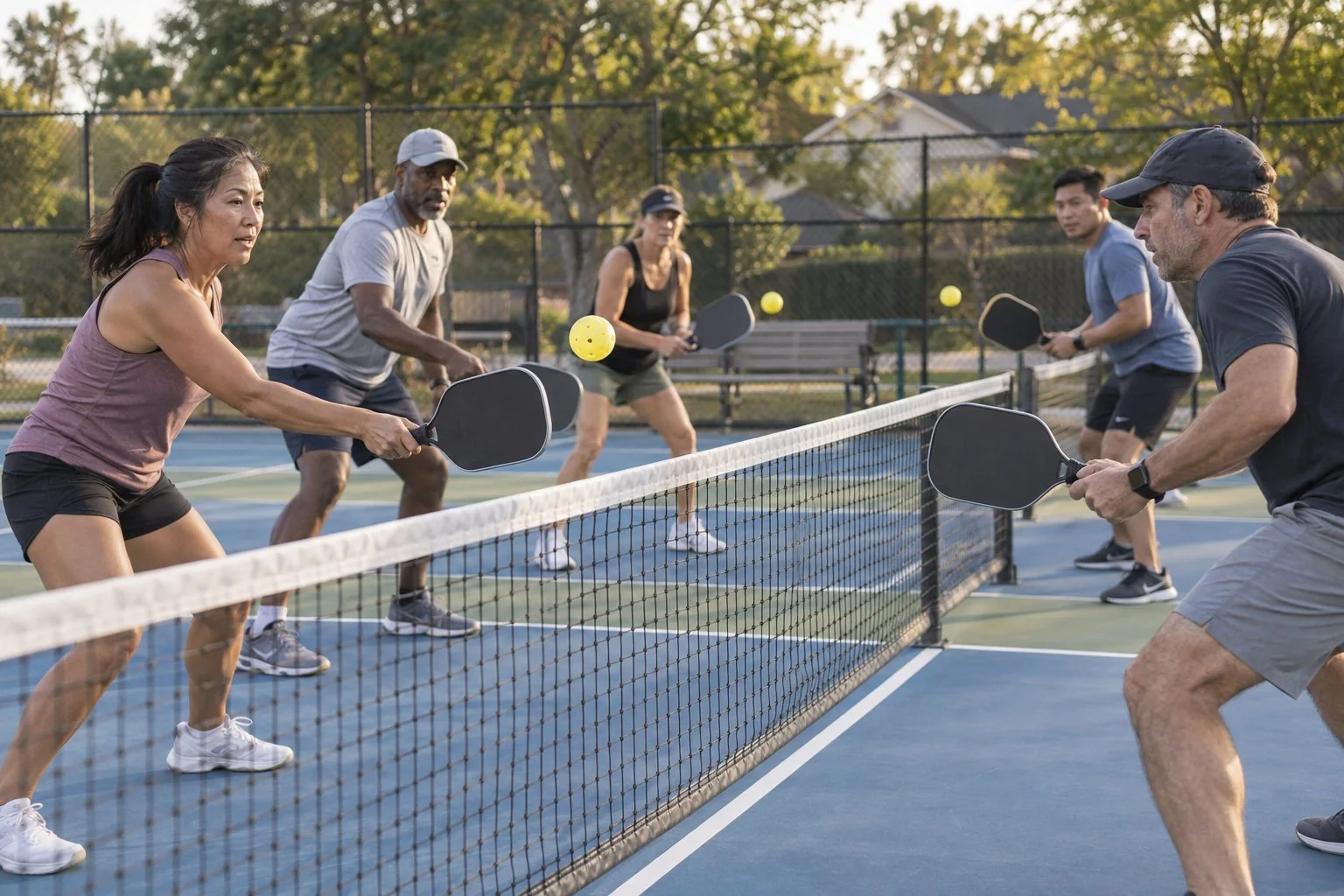
Pickleball reflex drills work best when they train the whole response: see the cue, keep a balanced stance, choose a simple shot, and recover the paddle. Fast hands alone do not solve a late decision. Short, controlled sessions can prepare you for quick exchanges at the kitchen without turning practice into random ball chasing.
Why do pickleball reflex drills matter?
At the kitchen line, the ball can arrive before there is time for a large swing. Players with better preparation often appear faster because the paddle starts in a useful position and the feet remain ready to move. Anticipation helps too: an open shoulder, a high paddle, or a player leaning back can reveal the likely direction before contact.
Keep the goal specific. Count clean returns, low contacts, or balanced recoveries rather than trying to hit harder every minute. If you return 14 of 20 feeds with the paddle above your waist and recover to ready position, your score is 14 ÷ 20 = 70 percent. Track the same test next week before increasing speed.
How do you practise rapid-fire volleys?
Stand a few feet apart near the kitchen line with a partner. Start with gentle forehand and backhand volleys, then vary the target between the body and each shoulder. Keep the swing compact and return the paddle to the centre after every contact.
Use three rounds of 30 seconds with 30 seconds of rest. If the ball begins flying high, reduce pace rather than forcing another shot. The drill is successful when you stay balanced and make a clear decision, not when both players create the loudest exchange.
Which random-feed drills improve reactions?
For a two-ball variation, let a partner hold two balls and feed them one at a time to different locations without a fixed sequence. Your job is to split-step, move the paddle, and send the ball safely back. Keep feeds slow at first so the eyes learn to find the next cue.
A drop-and-react drill uses a ball released from shoulder height. Start one step away, then catch it after one bounce or block it softly with the paddle before it reaches the ground. Do five attempts on each side, rest, and repeat. Do not dive or twist for a ball; the exercise should sharpen decisions without creating a fall risk.
What solo reflex drills can you do off court?
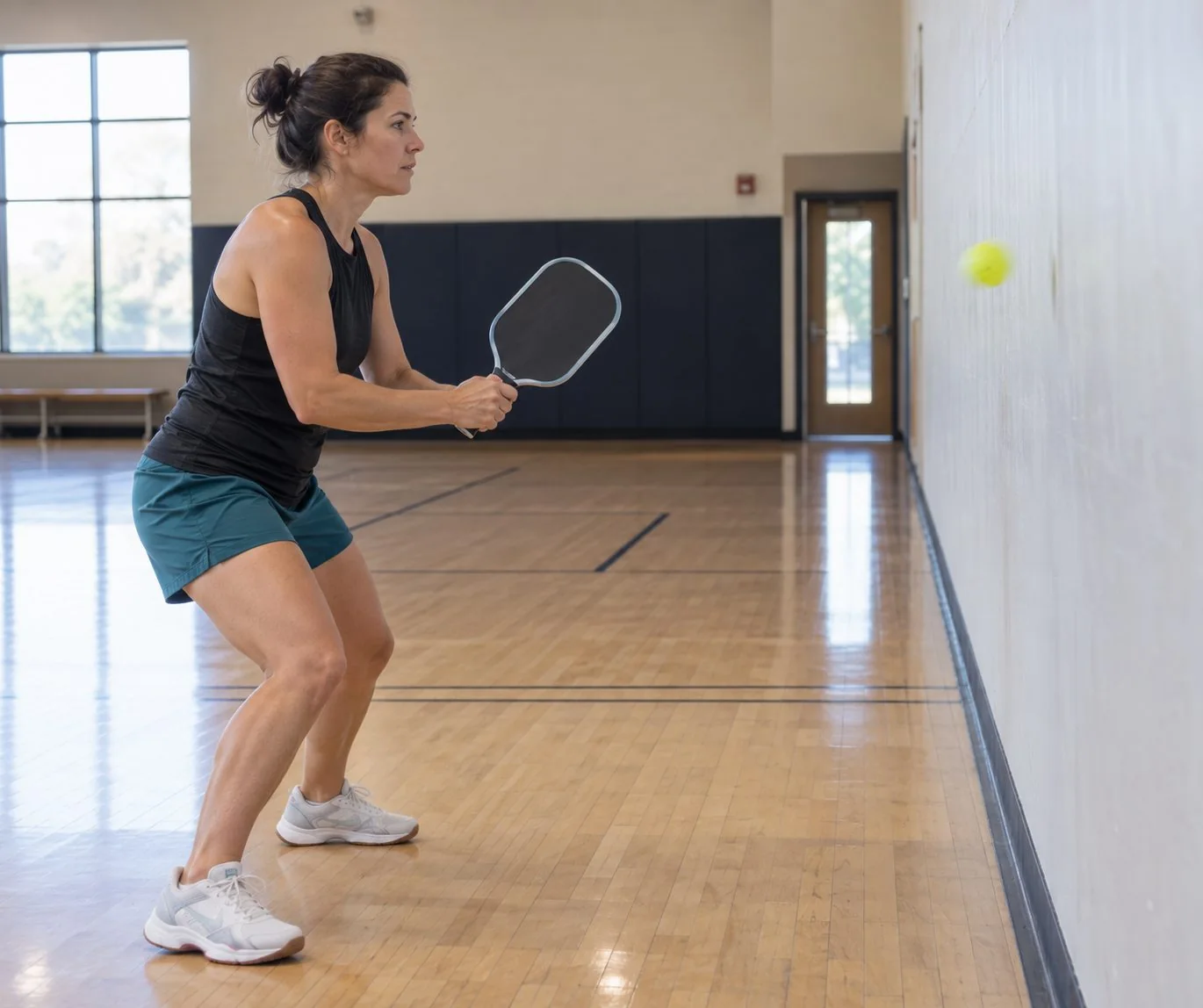
Wall volleys need little space. Stand about two metres from a wall and alternate forehand and backhand contacts for 20 seconds, keeping the paddle close to the chest. Complete four rounds with a full minute between sets. Move farther away only when you can control height and direction.
You can also use a reaction ball on a clear, hard surface. Drop it, watch the first bounce, and catch it with the opposite hand. Start with ten repetitions. A reaction ball is unpredictable, so remove nearby obstacles and stop if the exercise makes you lunge beyond control.
Shadow reactions train movement without a ball. Ask a partner to call “left,” “right,” or “body,” then split-step and rehearse the corresponding paddle position. Keep each set to 20–30 seconds. The quality of the first step matters more than speed.
How do strength and balance support reaction time?
Quick responses need a stable base. Two or three weekly sessions can include lateral cone steps, single-leg balance, calf raises, and controlled core rotations. Leave recovery between hard sessions, especially if your knees, calves, or shoulders are not used to sudden changes of direction.
Try four cone touches in a square, moving sideways rather than crossing your feet. Rest 45 seconds and complete three rounds. If your knee collapses inward or your feet tangle, shorten the distance and slow down. Better mechanics give the hands a reliable platform.
How do you read the opponent sooner?
Watch the contact zone, not only the ball. A player shifting weight backward may be preparing a drive; a short backswing often signals a soft shot. These are clues, not guarantees. Stay ready to adjust instead of guessing early and freezing.
Before each feed, return to a neutral stance with the paddle in front, knees soft, and weight centred. Breathe out during contact. Calm attention prevents a rushed swing, which is why the sharpest reflex often looks quiet.
What mistakes slow your reactions?
- Dropping the paddle between shots.
- Taking a full backswing at the kitchen.
- Watching only the ball.
- Training hard without rest.
- Chasing every feed off balance.
- Increasing speed before control.
Start with ten focused minutes, two or three times weekly. Add difficulty only when your accuracy and recovery remain steady. For movement foundations, see pickleball footwork drills and overhead defense.