Pickleball Shuffle-Step Footwork: Move Sideways Without Losing Balance
A practical guide to the pickleball shuffle step: stay square, move in compact lateral steps, stop before contact, and recover ready for the next ball.
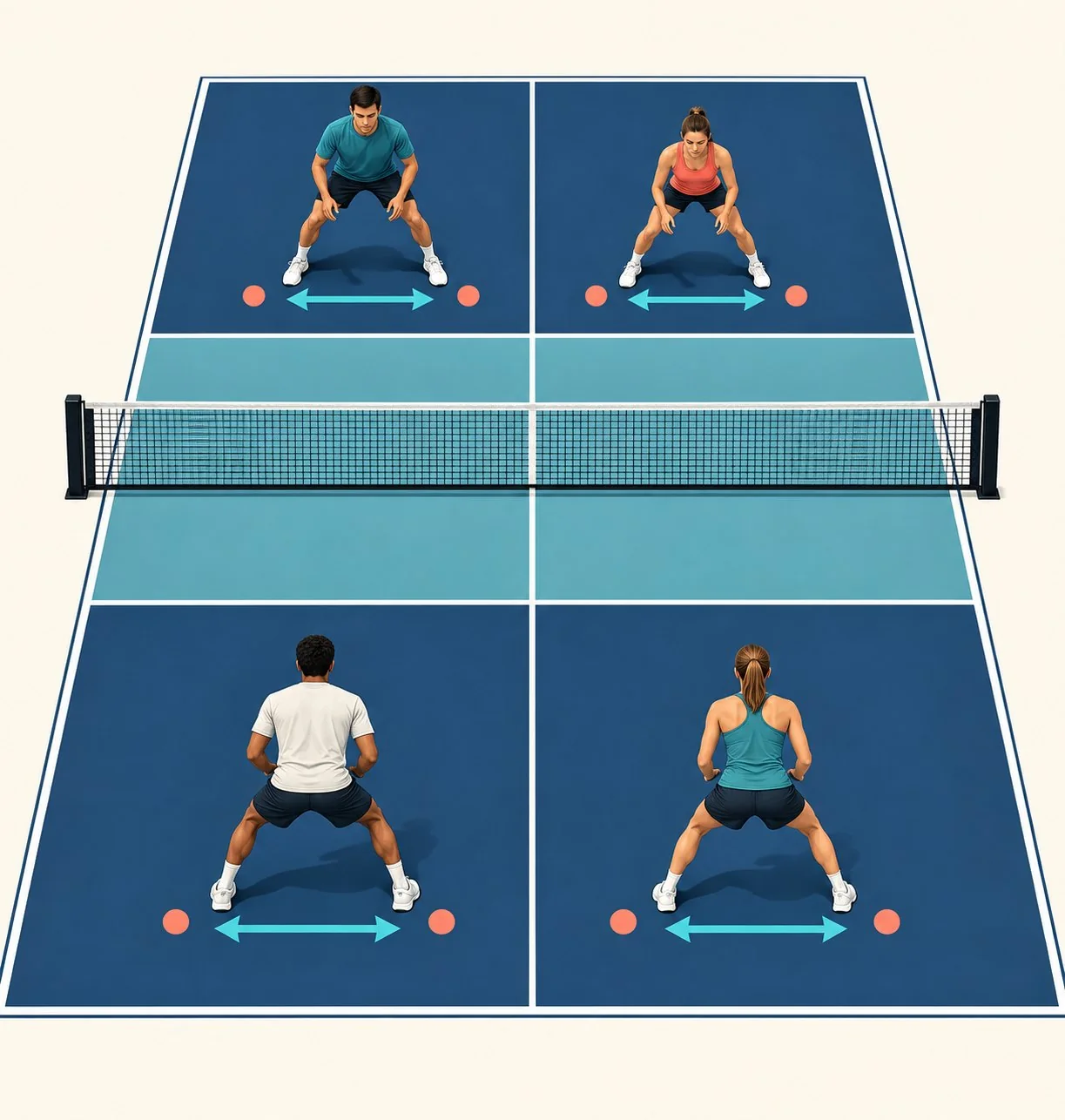
The pickleball shuffle step is a simple way to move laterally while keeping your body ready for the next ball. Instead of turning your hips and shoulders or reaching from a fixed spot, you use short, controlled steps to arrive behind the ball, stop with balance, and make a cleaner stroke. It is especially useful along the kitchen line, where rallies can change direction quickly.
Start square and stay light
Begin in a ready position with your feet about shoulder-width apart, knees slightly bent, heels light, and your upper body facing the ball. Keep the paddle in front of you, elbows relaxed, and your head level. The goal is not to crouch as low as possible; it is to create a stable base that can move without needing a reset.
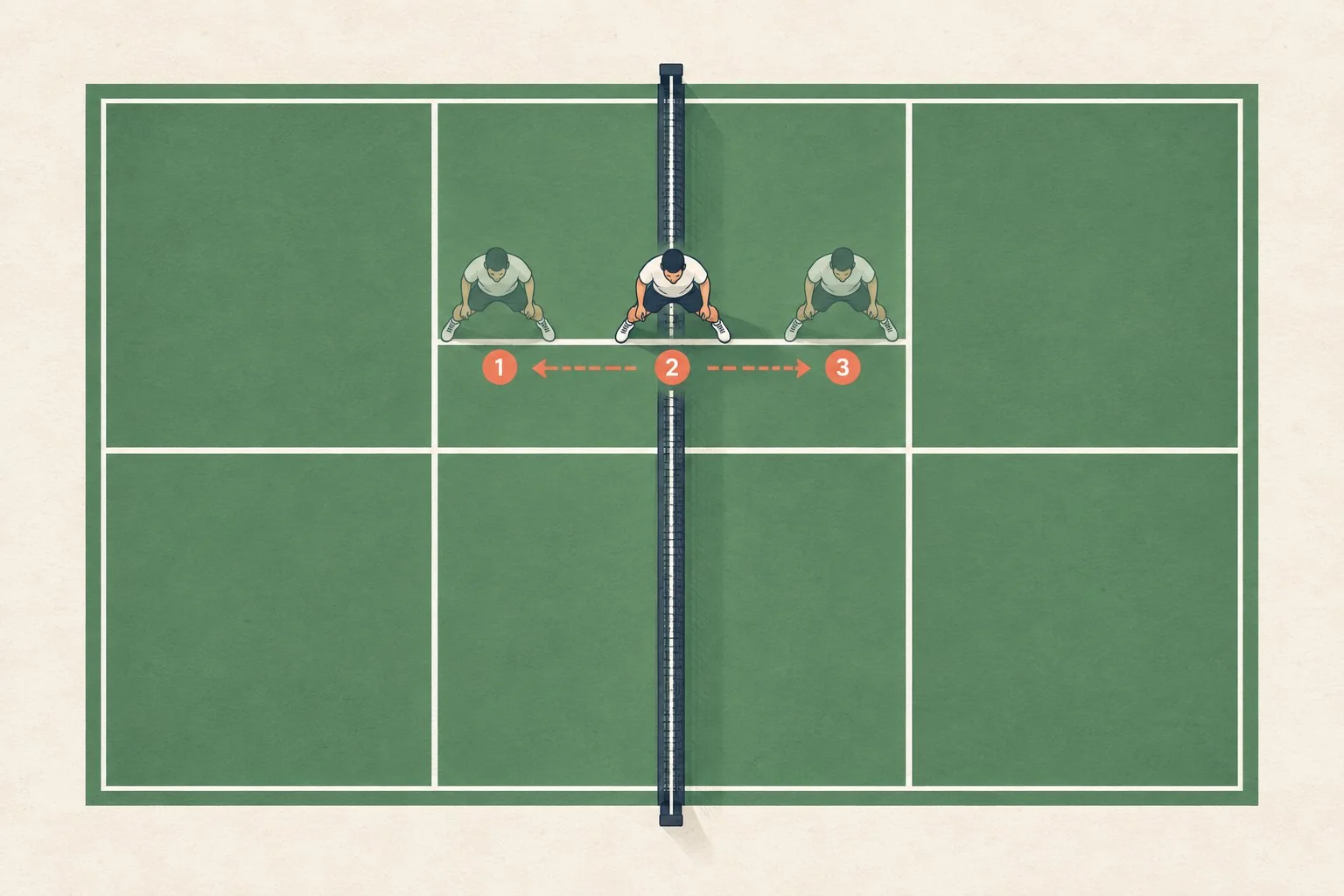
Move sideways with small, skipping-like steps. Let the foot nearest the direction of travel lead, then bring the other foot across without letting your feet tangle. Keep your hips, shoulders, and eyes facing forward as much as possible. Turning your body may feel faster for a moment, but it makes you spend extra time turning back toward the ball before the next exchange.
Stay comfortable rather than forcing a wide stance. A slightly wider base can lower your center of gravity and help with low balls, but only if you can still move smoothly. If your steps become so large that you have to lean or hop to recover, shorten them.
Arrive behind the ball before you swing
The shuffle-step is not only a way to cover distance. It is a way to put your body in a better relationship with the ball. As you move, aim to get your feet set so the ball is in front of you and within a comfortable hitting window. Avoid stretching sideways for a shot that your feet could reach with one or two small adjustments.
When you reach the useful position, come to a complete stop whenever the rally allows it. A balanced stop gives you more control over direction and depth than trying to stroke while your body is still sliding. After the shot, shuffle back toward your ready position and repeat the sequence: ready position, move, stop, strike, recover.
This is also a practical way to handle both forehand and backhand balls. Backhand movement may tempt you to cross over early, especially when the ball is wide. Use a crossover only when the distance truly demands it; for normal lateral coverage, staying square with compact steps makes the next reaction easier.
Build the pattern with simple drills
Start without a ball. Choose a court line, stand behind it, and shuffle from one end to the other while keeping your shoulders parallel to the line. Focus on quiet feet, a level head, and a comfortable rhythm. Then add a shadow stroke after each direction. Stop first, make the shadow motion second, and shuffle back only after the finish.
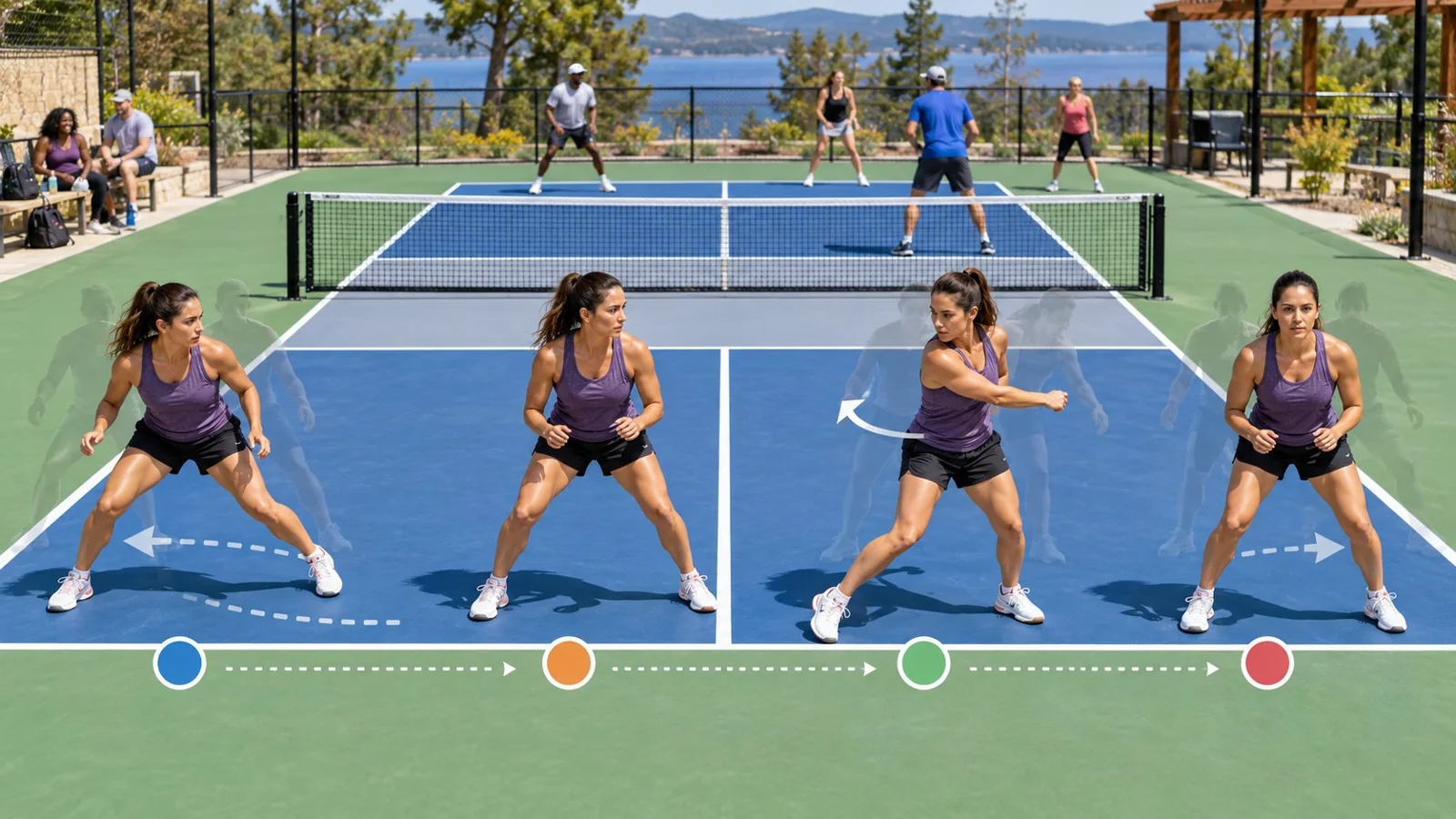
Next, add a ball. A partner can feed gently to one side, allowing you to shuffle behind it, stop, and play a controlled shot. Have the partner alternate sides so you practise both directions. Keep the feed easy enough that you can learn the movement instead of chasing emergency balls.
Finally, connect the shuffle-step with a split step and, when necessary, a short lunge for a ball just beyond your normal reach. These movements work together: the split step prepares the reaction, the shuffle-step handles ordinary lateral distance, and the lunge extends the final reach. In every version, balance matters more than speed. Efficient feet reduce rushed swings, improve accuracy, and leave you ready for the next exchange.