Pickleball Transition Zone Reset: Stay Low and Move Through
A practical guide to resetting from the pickleball transition zone with a low target, relaxed grip, controlled footwork, and a balanced recovery.
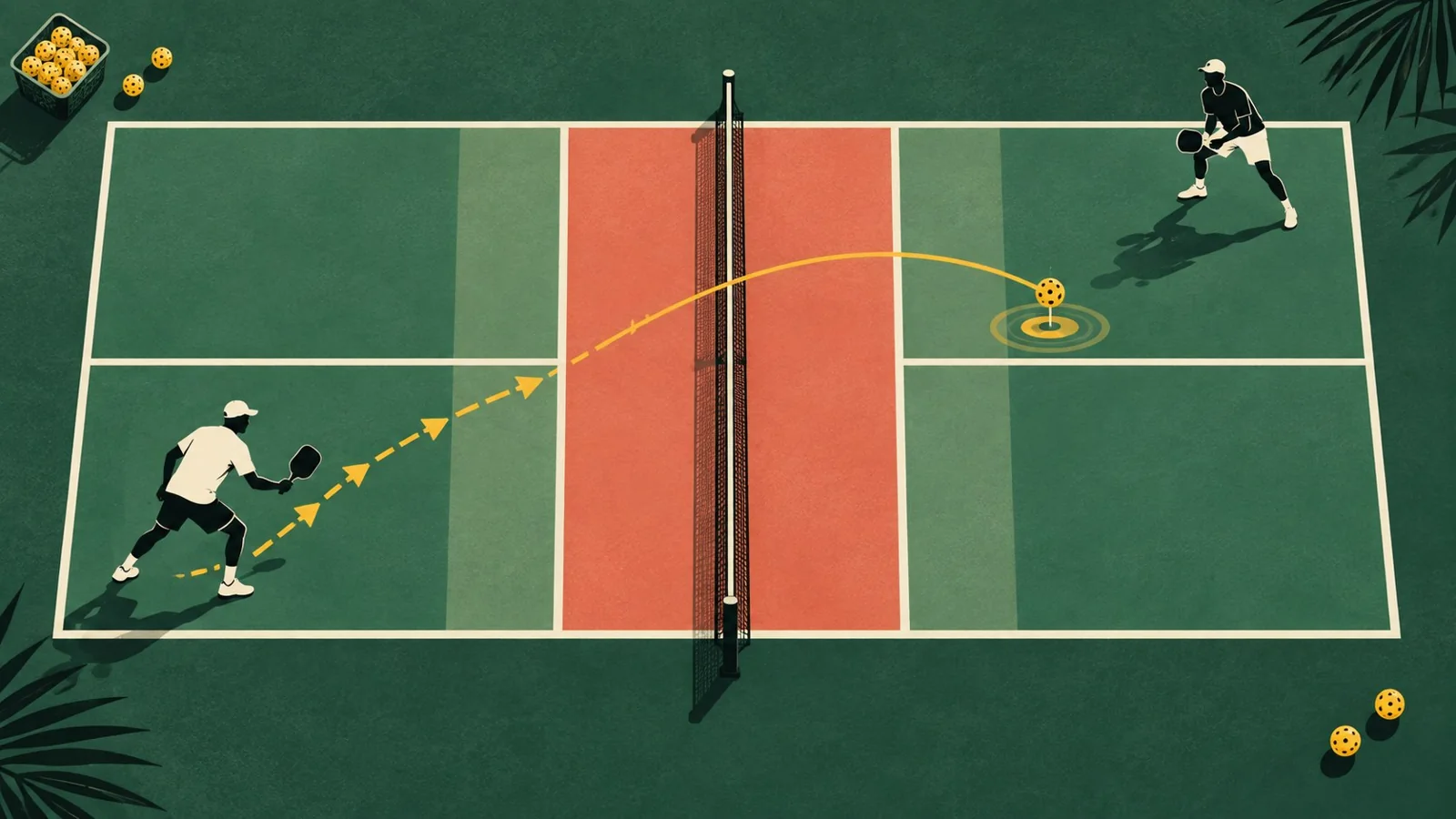
The transition zone is the stretch between the baseline and the kitchen line. You must cross it when moving forward, but lingering there gives opponents a comfortable target: a ball driven down at your feet. A reliable pickleball transition zone reset is built around staying low, choosing a controllable target, and moving with purpose rather than rushing blindly.
Why the transition zone demands a different shot
The transition area feels awkward because the ball is often dropping, your feet are still moving, and the opponent can see your body below the net. A hard swing is difficult to control from that posture. Instead, lower your center of gravity, keep the paddle in front, and prepare to absorb pace. Your immediate objective is to make the next ball playable and create a chance to advance.
Read the incoming ball early. If it arrives low at your feet, soften the hands and use a compact motion. If it sits higher and you are balanced, you may have more options, but do not force an attack simply because the ball is reachable. The transition zone rewards patience: a neutral reset that lands low is often better than a fast ball that rises into an easy counter.
Build the reset around balance and margin
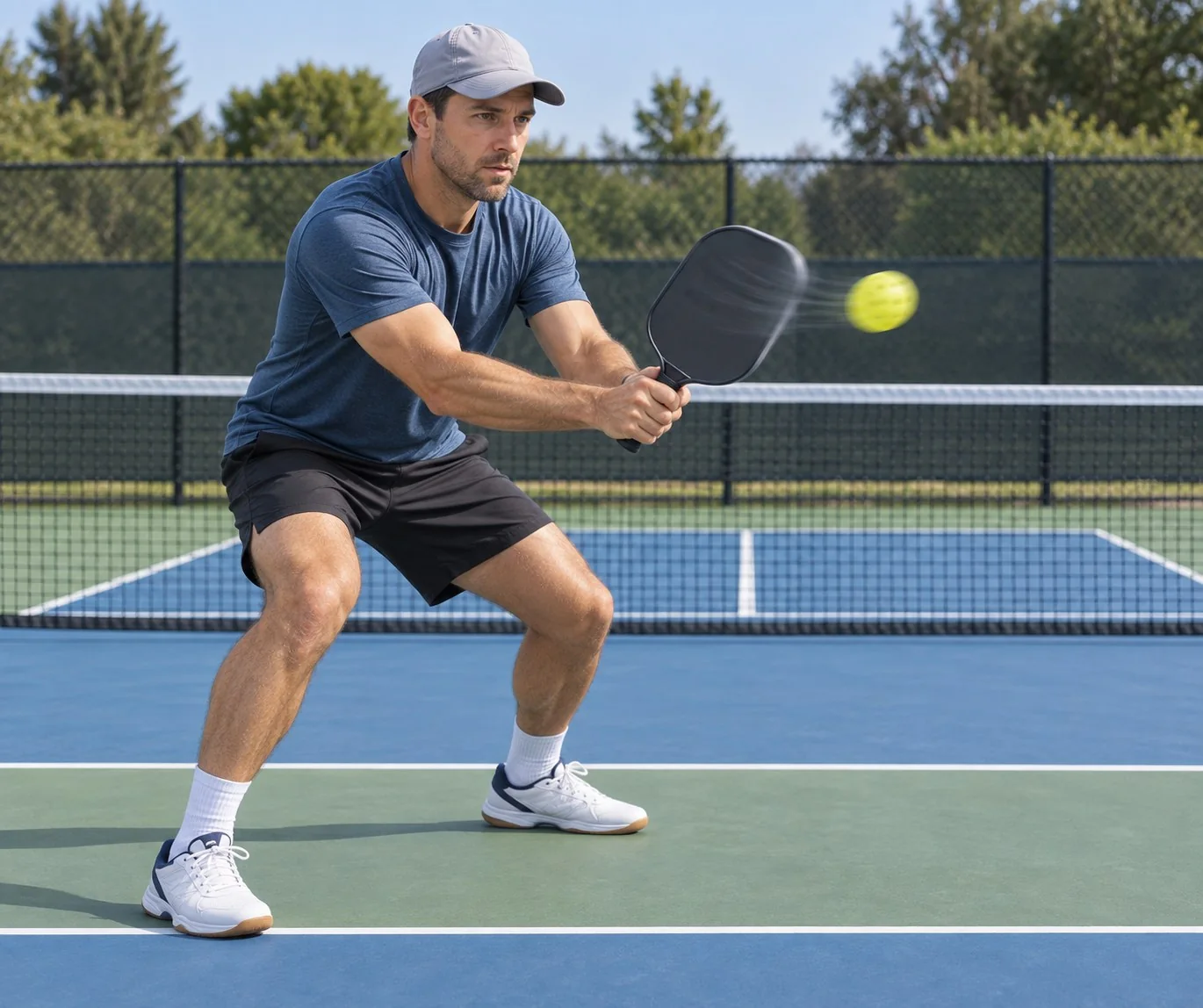
Stop your forward momentum before contact whenever you can. Use short adjustment steps, then settle with the feet a little wider than the hips and the weight evenly distributed. A moving or leaning body tends to lift the ball. Keep the grip relaxed so the paddle can absorb the opponent’s pace instead of adding unnecessary force.
Aim for a low landing in the opponent’s kitchen, with enough net clearance to tolerate a small timing error. The middle is a useful first target because it offers margin from the sidelines. As control improves, direct the reset away from the opponent who is best positioned to attack. Keep the paddle face stable and let a small lift from the legs and shoulder guide the ball; avoid a wristy scoop.
Move through the zone after the reset
A reset is not the end of the sequence. Once the ball leaves your paddle, take controlled steps toward the kitchen. Watch the opponents’ preparation and pause in a balanced split step as they make contact. If your reset floats high, hold a little deeper and prepare to defend. If it travels low and forces an uncomfortable reply, continue forward and close the space together with your partner.
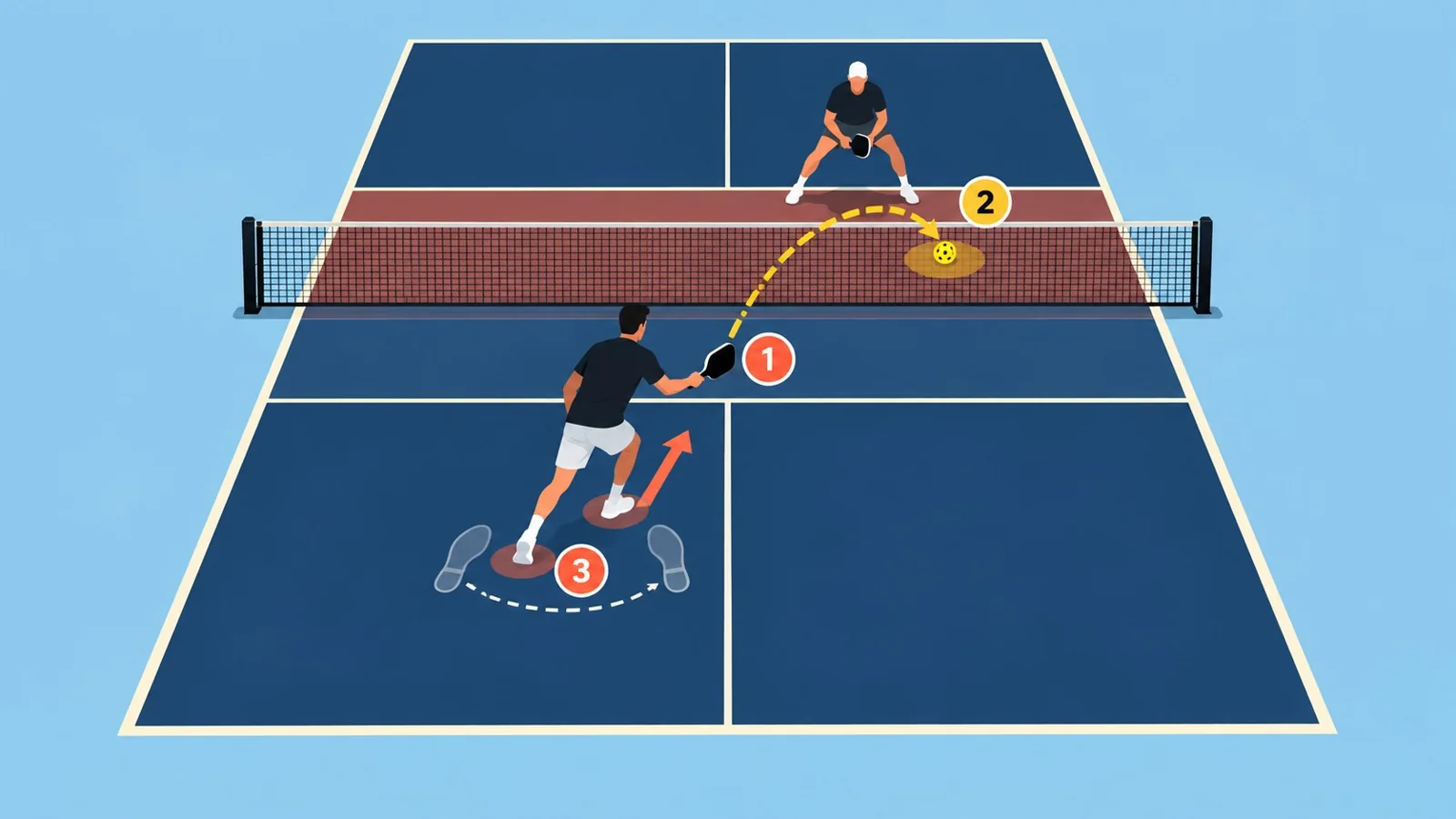
Practise the pattern with a partner feeding balls toward your feet from the kitchen line. Start in the transition area, reset ten balls to a generous kitchen target, and count only shots that clear the net, land low, and leave you balanced. Then add movement: begin one or two steps deeper, advance under control, stop before contact, and split step after the reset. Change the feed from the middle to each hip so your feet learn to create space without a large swing.
Common misses have clear fixes. A ball that pops up often comes from leaning, a tight grip, or an open paddle face. A ball into the net usually needs slightly more lift or a contact point farther in front. A ball that flies long may reflect too much backswing or an attempt to hit through incoming pace. Correct one variable at a time, then return to the same low target.
The transition zone becomes manageable when you stop treating it as a place to win immediately. Stay low, absorb the ball, reset with margin, and move only when the shot gives you time. That sequence turns a vulnerable position into a controlled route to the kitchen.