Pickleball Transition Zone Traffic Lights: When to Move or Hold
Learn when to move or hold in pickleball transition with split-step timing, third-shot choices, resets, and a practical traffic-light decision system.
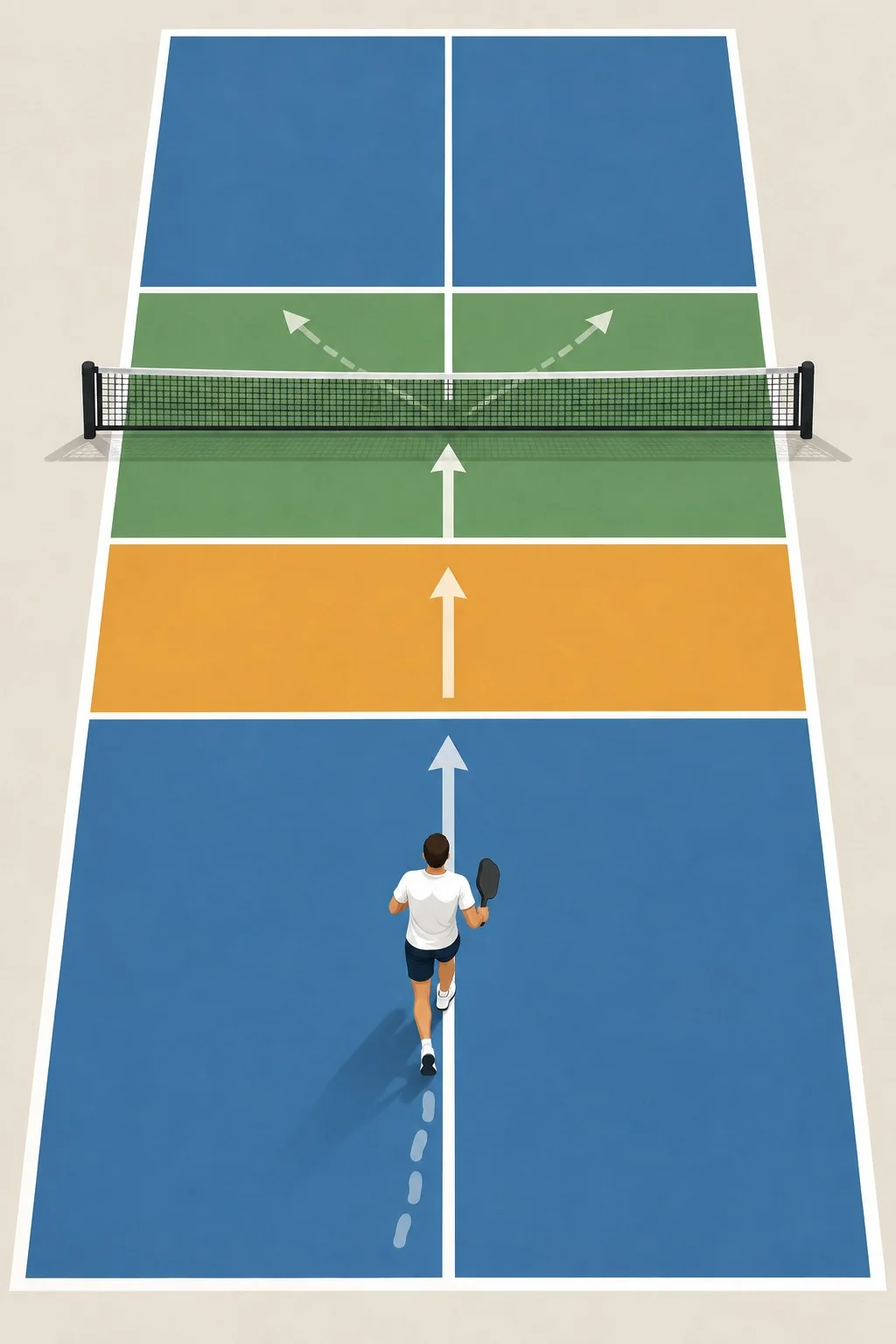
The hardest part of moving from the baseline to the kitchen is not simply covering distance. It is knowing when forward movement is safe. The pickleball transition zone traffic lights framework turns a fast rally into three visual decisions: stop and defend, advance cautiously, or close the gap with purpose. It helps you avoid charging into a ball that is already set up for an attack.
Treat the transition zone as a passage
The transition zone is the space between the baseline and the non-volley zone line. It is useful ground to cross, but a poor place to stand still. From there, an opponent at the kitchen can send the ball down toward your feet, while you have less time than a baseline player and fewer angles than a kitchen player.
The serving team normally begins at a positional disadvantage because the serve and return must bounce before the serving team can play its next ball. The receiving side can move forward after its return, while the serving side must first create a playable third shot. That sequence explains the central rule of transition movement: make the ball useful, then take ground. Do not sprint first and hope the shot rescues you.
Use the split step to stop your momentum
After your shot, take controlled steps forward while watching the opponent’s preparation. Before the opponent makes contact, stop and perform a small split step. Land with the feet slightly wider than the shoulders, knees soft, weight on the balls of the feet, and the paddle in front. The split step is not a jump for distance. It is a brief reset that lets you react in either direction.
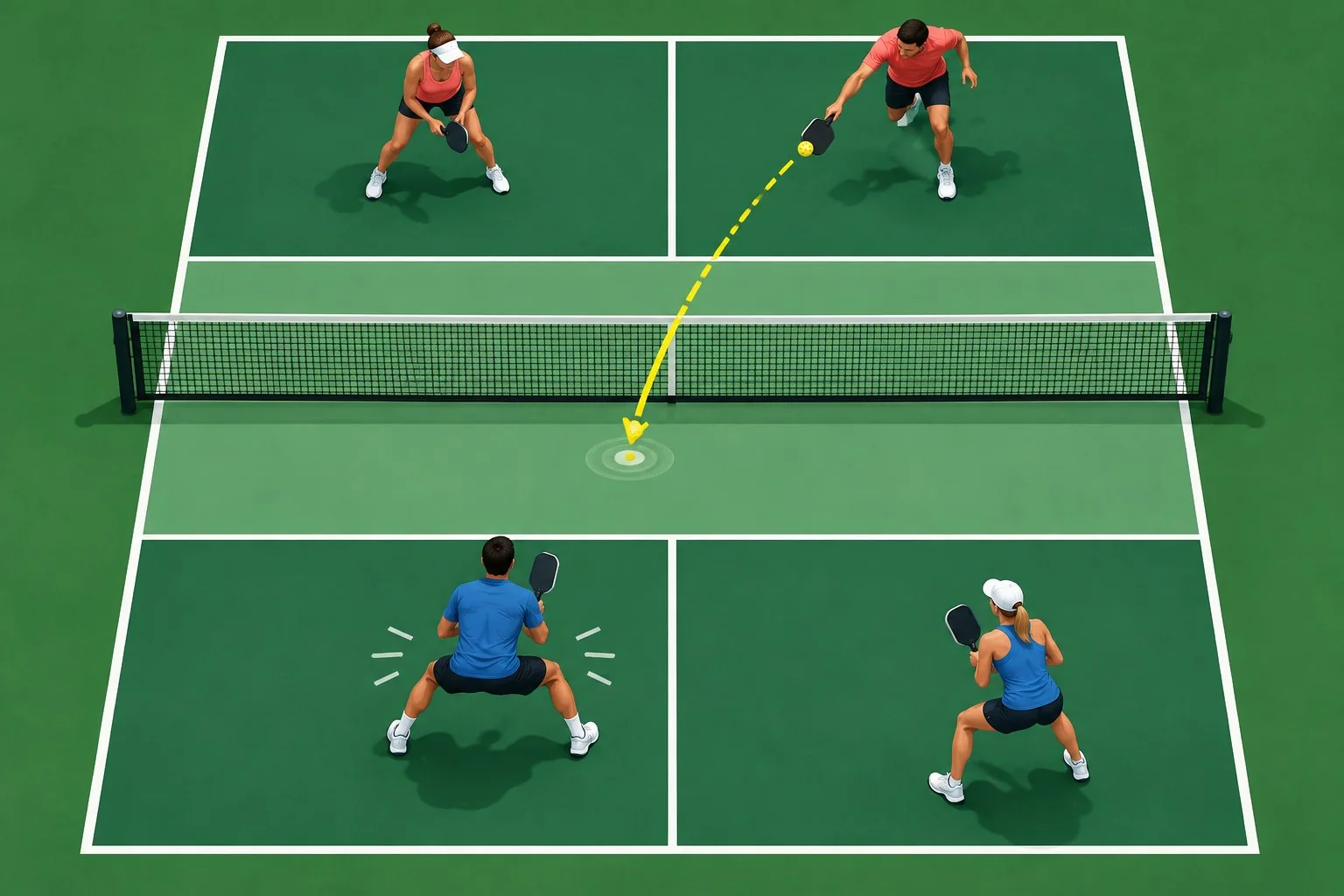
A common mistake is to keep walking as the opponent strikes. That commits your body to forward momentum and makes a low ball much harder to handle. Another is to split too early, then stand flat-footed when the ball arrives. Match the landing to contact, so the feet are ready at the instant the opponent’s paddle meets the ball.
Read the traffic light before taking another step
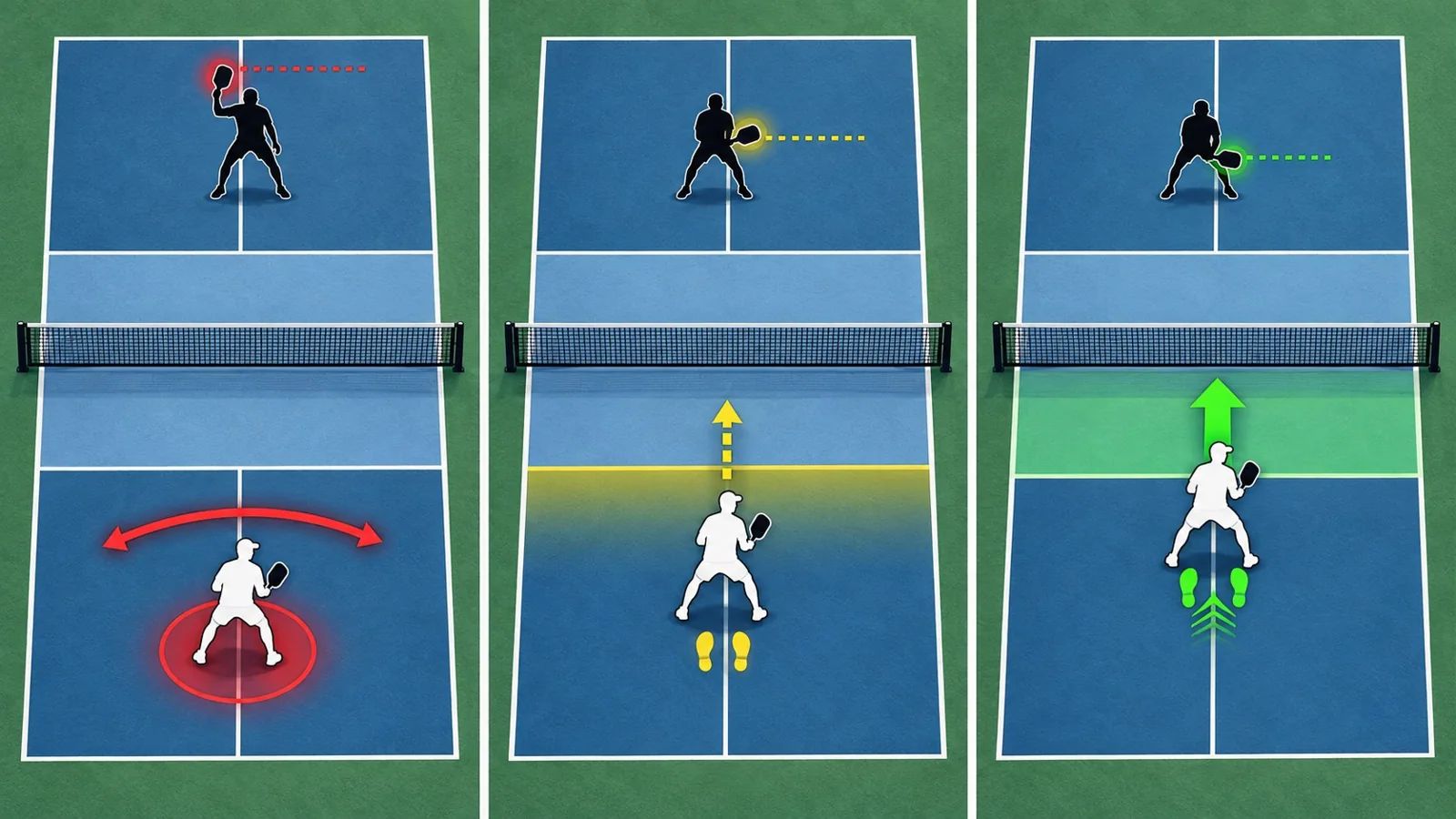
Use your opponent’s paddle height as a simple decision filter. A red light means the paddle is high, around shoulder level or above. Expect pace and a ball at your feet. Plant, split step, and prepare to reset rather than taking another step into danger.
A yellow light means the paddle is around waist to chest height. The opponent has several choices, so shorten your steps and stay ready. You may gain a little ground, but do not sprint. Keep the paddle prepared for a drive, dink, or soft ball.
A green light means the opponent is contacting low, with the paddle below the waist or near knee height. Their attack angle is limited because they must lift the ball. Close the gap purposefully, then arrive balanced near the kitchen instead of running through the line.
Choose the shot that earns your next step
From the baseline, a controlled third-shot drop can arc into the kitchen and force the opponent to hit upward. That gives you time to advance. A drive can be useful when you are rushed, the opponents have left the kitchen, or the ball is suited to a firm low attack, but a high drive may give an established kitchen team an easy response.
Once you are in transition, the reset is the key survival shot. Keep the grip soft, let the paddle absorb pace, and send the ball low into the kitchen. The reset does not need to win the point. It needs to neutralize the attack so you can take another step after the ball has done its job. If your ball floats high, hold your position or even retreat slightly rather than pretending the lane is open.
Practise the stop-go-read rhythm
Begin with shadow repetitions: start at the baseline, imagine a controlled drop, take two steps, split, imagine a reset, take one step, split again, and finish at the kitchen. Then add a partner who feeds a mixture of low balls and attackable balls. Advance only after a low feed; stop and reset after a high feed.
In doubles, call early when a ball pulls one partner wide. Lead with the outside foot, keep the body aligned with the court, and avoid crossing steps that delay recovery. The goal is not to reach the kitchen fastest. It is to arrive with a stable base, a prepared paddle, and both partners able to defend the next ball.