Pickleball Volley Control: Match Paddle Angle to Ball Height
Learn pickleball volley control by matching paddle angle and energy to ball height, then practise compact contact, useful targets, and recovery at the kitchen.
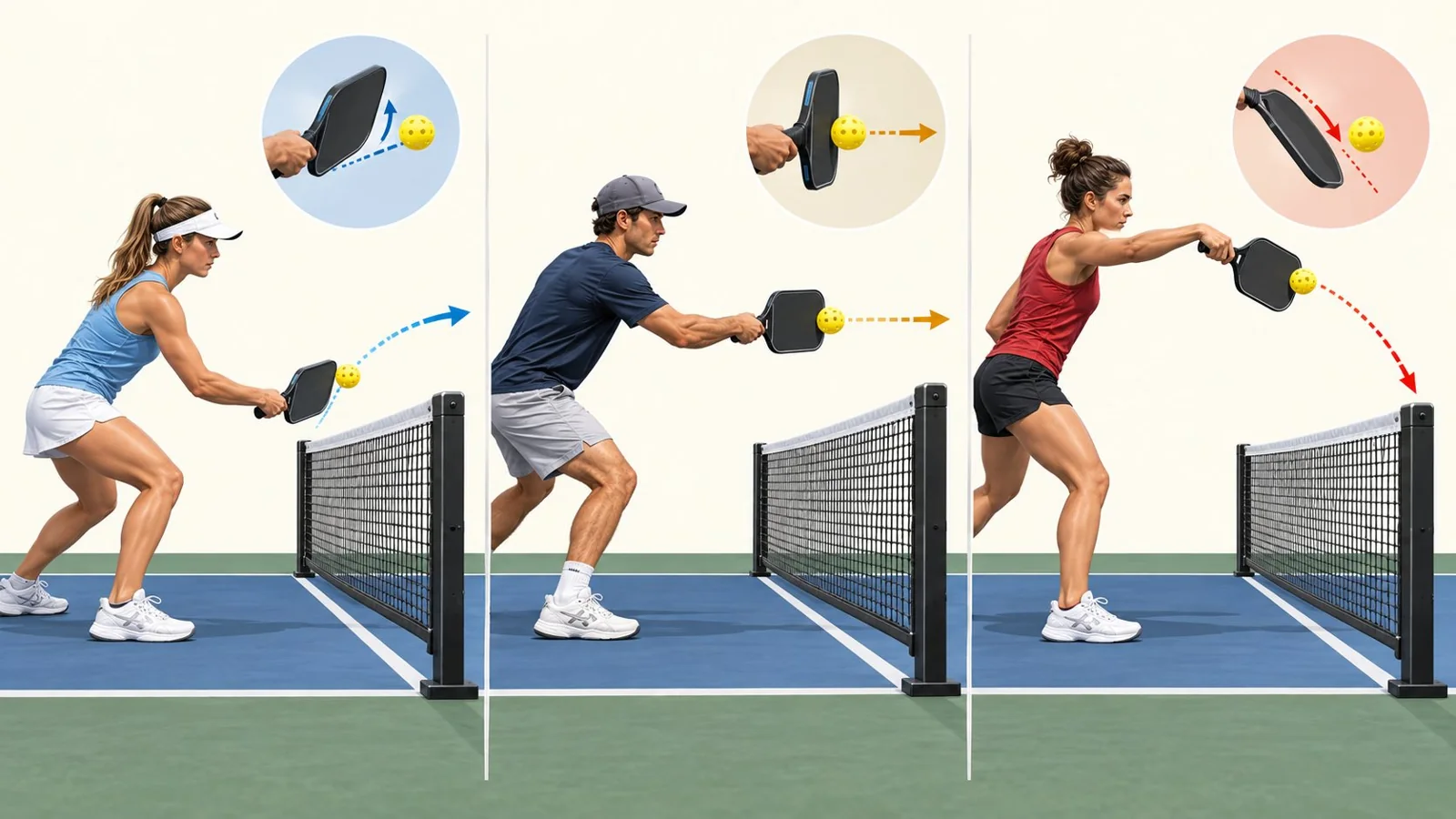
Pickleball Volley Control starts before contact. At the kitchen line, the ball may arrive low, level with the tape, or comfortably high. Each height asks for a different blend of paddle angle and energy. The reliable player does not swing at every ball the same way; they prepare early, keep the paddle in front, and choose a response that preserves the next position.
Build a stable volley foundation
Begin in a balanced athletic stance with your feet ready to move, knees comfortably flexed, and the paddle in front of your chest. A neutral continental-style grip makes it easier to move between forehand and backhand without a large hand change. Keep the grip relaxed enough to absorb pace, but firm enough that the paddle face does not wobble at contact.
Use a compact motion. A volley is not a groundstroke with a shortened backswing. The paddle starts in front, travels a short distance, and returns to the ready window after contact. Make contact in front of your body while you can still see the ball clearly. If the ball gets beside or behind you, reaching harder usually costs control; move your feet, block, or allow the ball to bounce when the situation permits.
The paddle face is your first direction cue. An overly open face can lift the ball into an opponent’s attack zone. An overly closed face can send a low volley into the net. Set the face before contact and keep the wrist quiet through the short movement rather than trying to flick the ball at the last moment.
Match the response to the ball height
A low volley needs help clearing the net, so use a slightly open face and soft hands. Think of receiving the ball rather than striking through it. Absorb some of the incoming pace and guide the ball to a safe target, often low and crosscourt. Do not add a big upward swing: that is how a defensive ball becomes a pop-up.
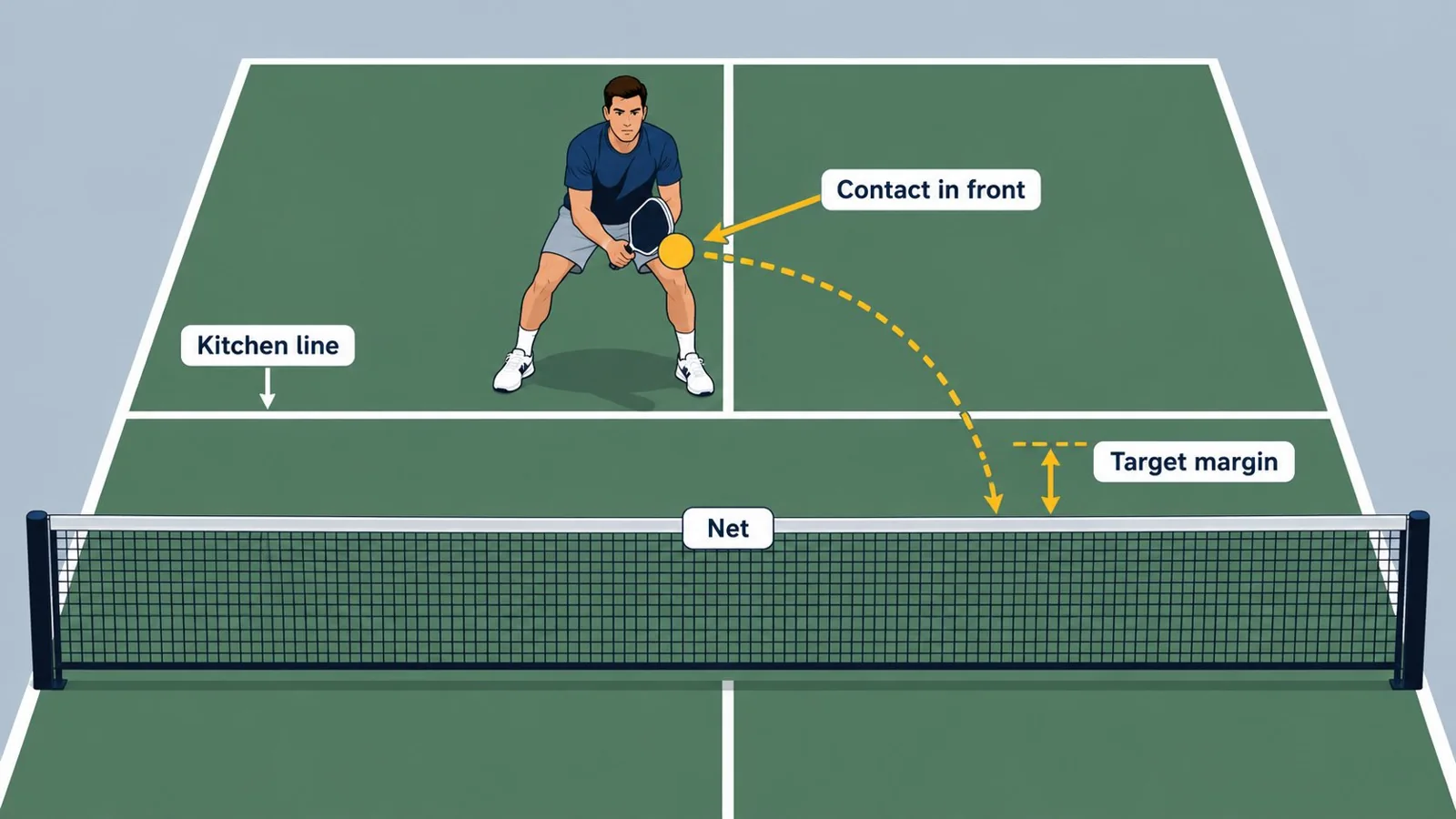
At a middle height, keep the face close to square and add a small forward push from the shoulder. This punch volley is compact and useful for redirecting pace. Aim with margin rather than chasing the sideline. A target that clears the net comfortably and reaches the opponent’s feet is usually more valuable than a harder ball with no room for error.
When the ball arrives high enough and your feet are set, you can close the face slightly and apply more forward energy. That is an opportunity to attack, not a requirement. If you are stretched, falling backward, or still moving, a controlled block is often the better choice. Ball height matters, but balance and contact position matter too.
After every volley, recover the paddle to the ready position and regain your base. Do not admire the shot or let the follow-through pull you across the court. At the kitchen, the next ball may arrive immediately; a short recovery is part of the shot itself.
Practise the decision, not just the swing
Start with ten gentle feeds at knee-to-thigh height. Keep the paddle face stable and send each ball back with minimal force. Then repeat with waist-height feeds, adding a modest punch. Finish with higher feeds, choosing a controlled attack only when your feet are planted. Change one variable at a time so you can feel what the face and energy do to the trajectory.
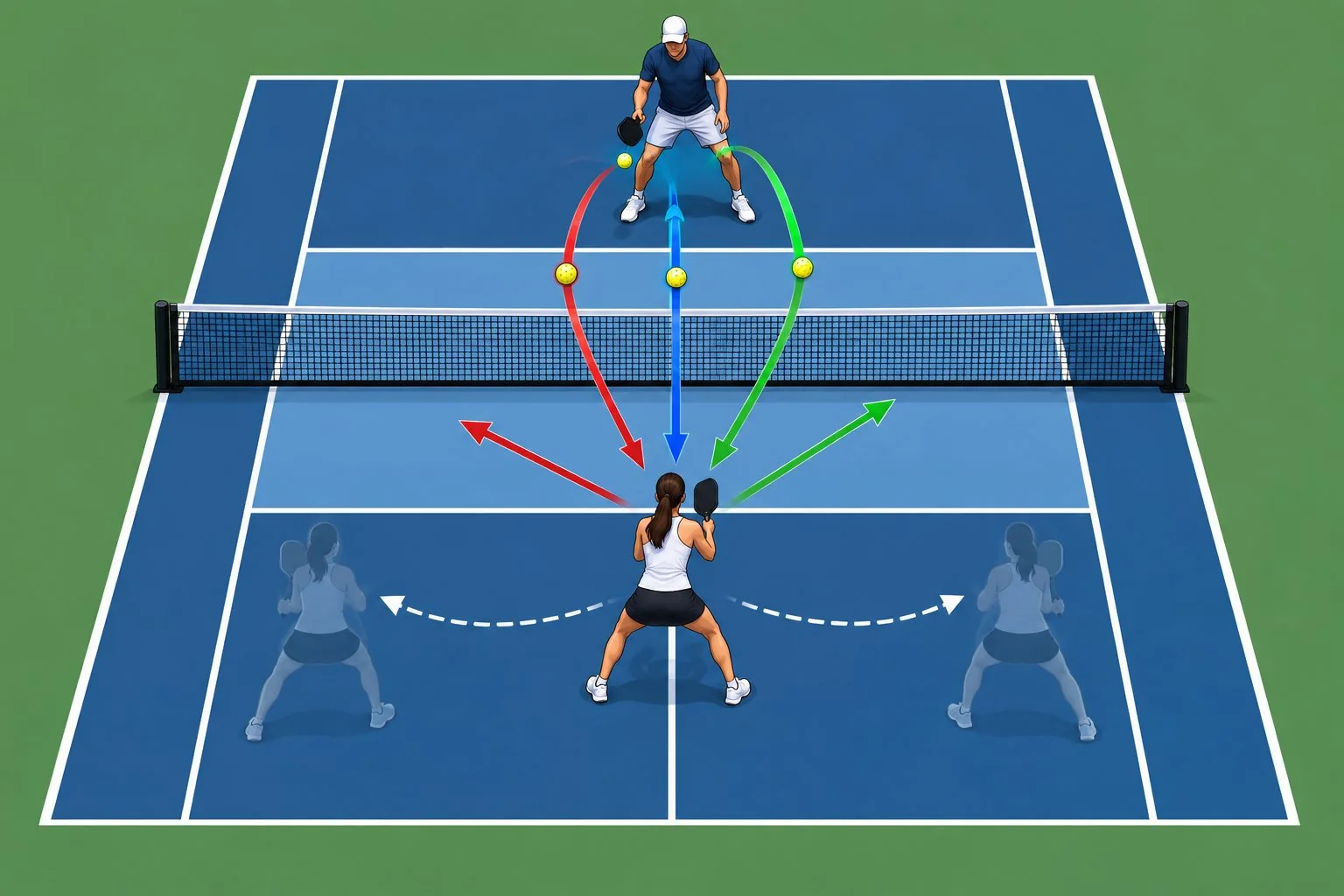
Next, ask a partner to mix the feeds without announcing the height. Your call is simple: block, punch, or attack. The feeder should vary direction gradually, first to the paddle side and then toward the body. Keep the drill cooperative; the aim is clean contact and a repeatable recovery, not winning the feeding exchange.
If volleys keep flying high, check whether the paddle is dropping below the ball or the grip is becoming rigid. If they keep catching the net, check whether you are attacking a low ball or closing the face while contacting late. Choose one cue for a session—paddle up, contact in front, or quiet hands—and measure how many controlled balls you can play before an error.
The practical sequence is simple: read the height, set the face, match the energy, contact in front, and recover. With that order, volley control becomes a decision skill rather than a frantic attempt to hit every ball harder.