Pickleball Volley Cushioning: Match the Ball Instead of Fighting Pace
Prepare for the next pickleball volley by setting your feet and paddle early, reading the ball, and responding with control rather than a rushed swing.
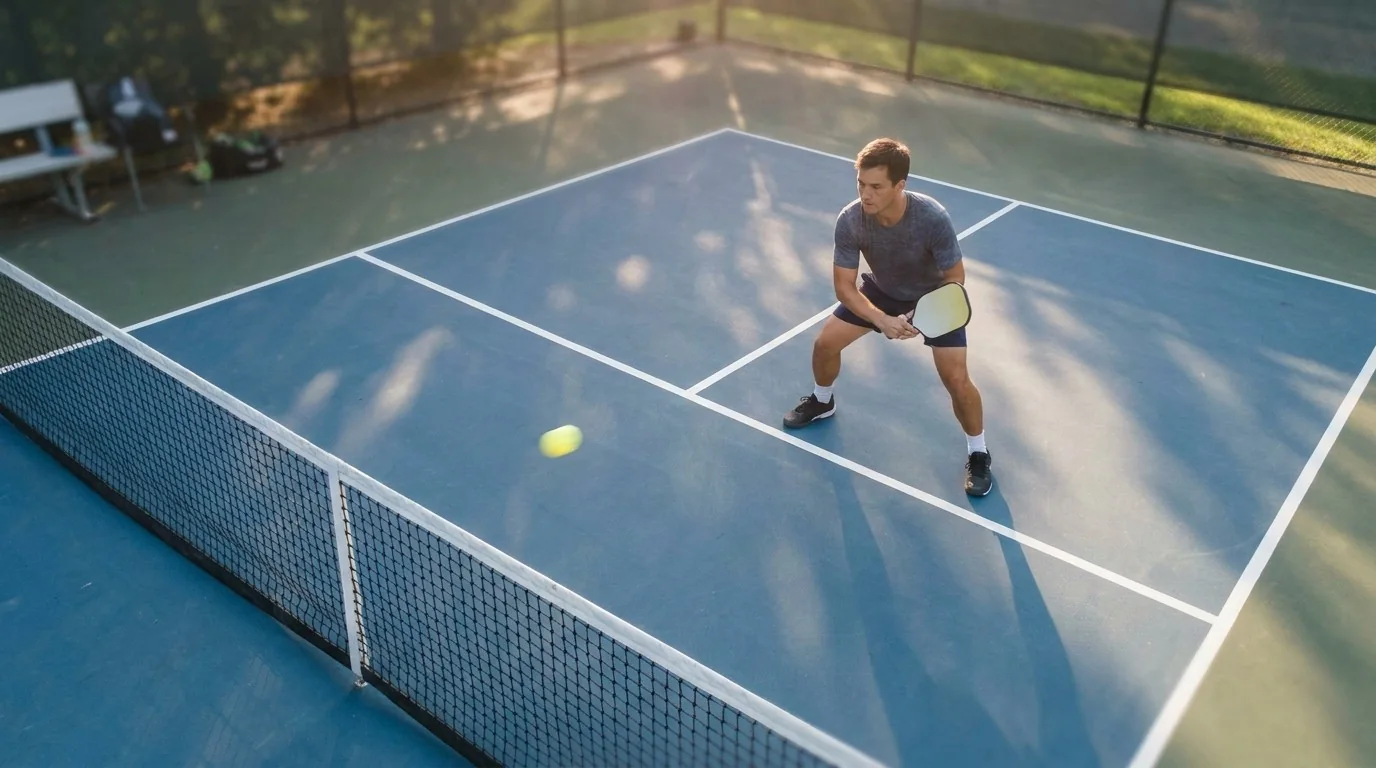
Good pickleball volley cushioning gives you a way to handle an opponent’s pace without adding more of your own. Instead of taking a full swing at a hard drive, keep the motion compact, stabilize the paddle face, and let the ball leave low. The point is not just to survive the contact. You want the next ball to arrive slower and safer while your feet remain ready for the reply.
Start with a quiet paddle
Set your feet comfortably apart, soften your knees, and hold the paddle in front of your body. Use enough grip pressure to keep the face steady, but do not squeeze until the arm becomes rigid. When the ball is coming fast, meet it in front of you rather than creating a long backswing.
Paddle angle determines the first result. Open the face too much and the ball floats high. Close it too much and the ball runs into the net. Begin near neutral, then make small adjustments for the ball’s height and spin. Keep the contact quiet because the opponent has already supplied most of the pace.
Absorb pace without swinging
Take a short adjustment step toward the ball, then allow the paddle to give slightly at contact. This is not a big recoil. Imagine catching the ball out in front and guiding it over the net. A brief punch can help when the ball sits up, but a hard drive usually calls for the quieter block.
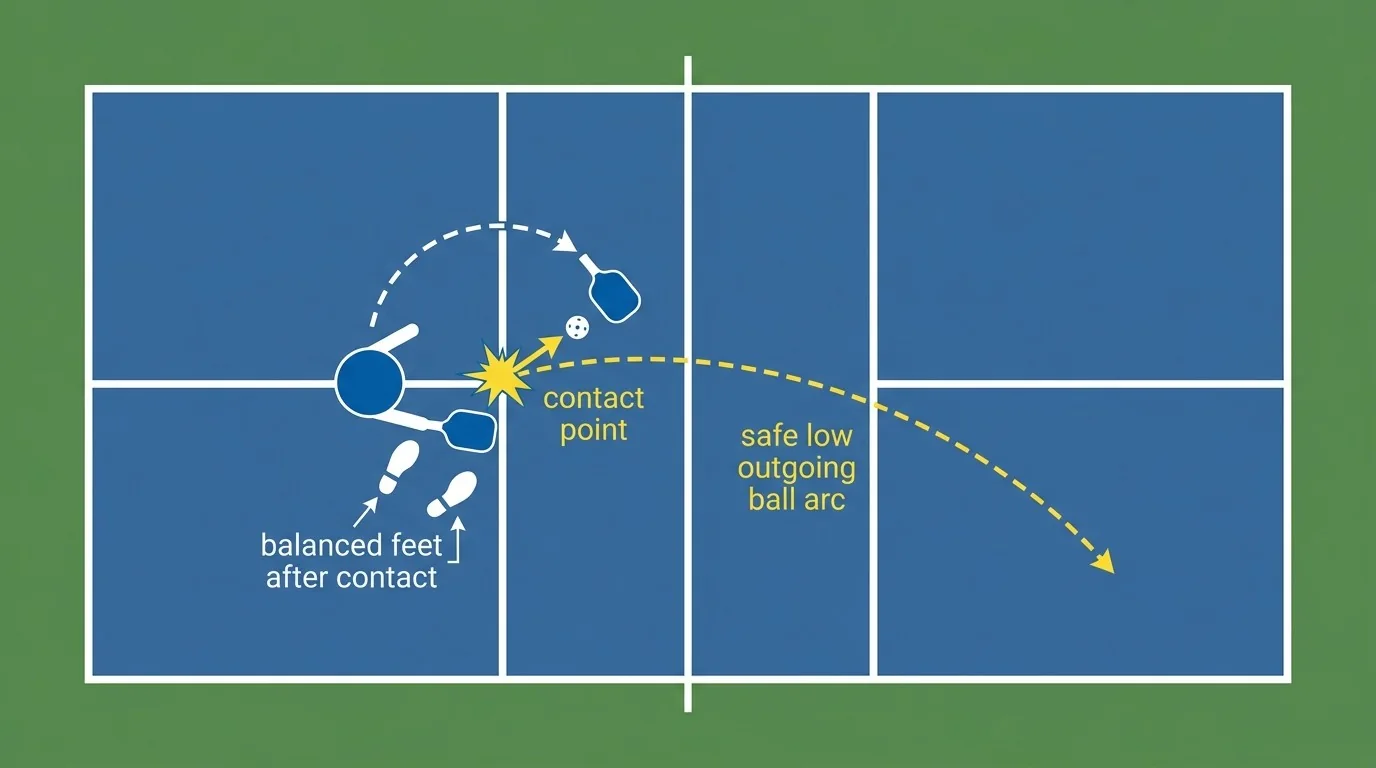
A partner feed makes the adjustment easier to see. Have the feeder send firm balls to the paddle and try to keep each return below a comfortable attacking height. Check whether the face changes at contact. If the ball floats, soften the hands or close the face a little. If it dies in the net, open the face slightly or take the contact farther in front.
Choose a safe target
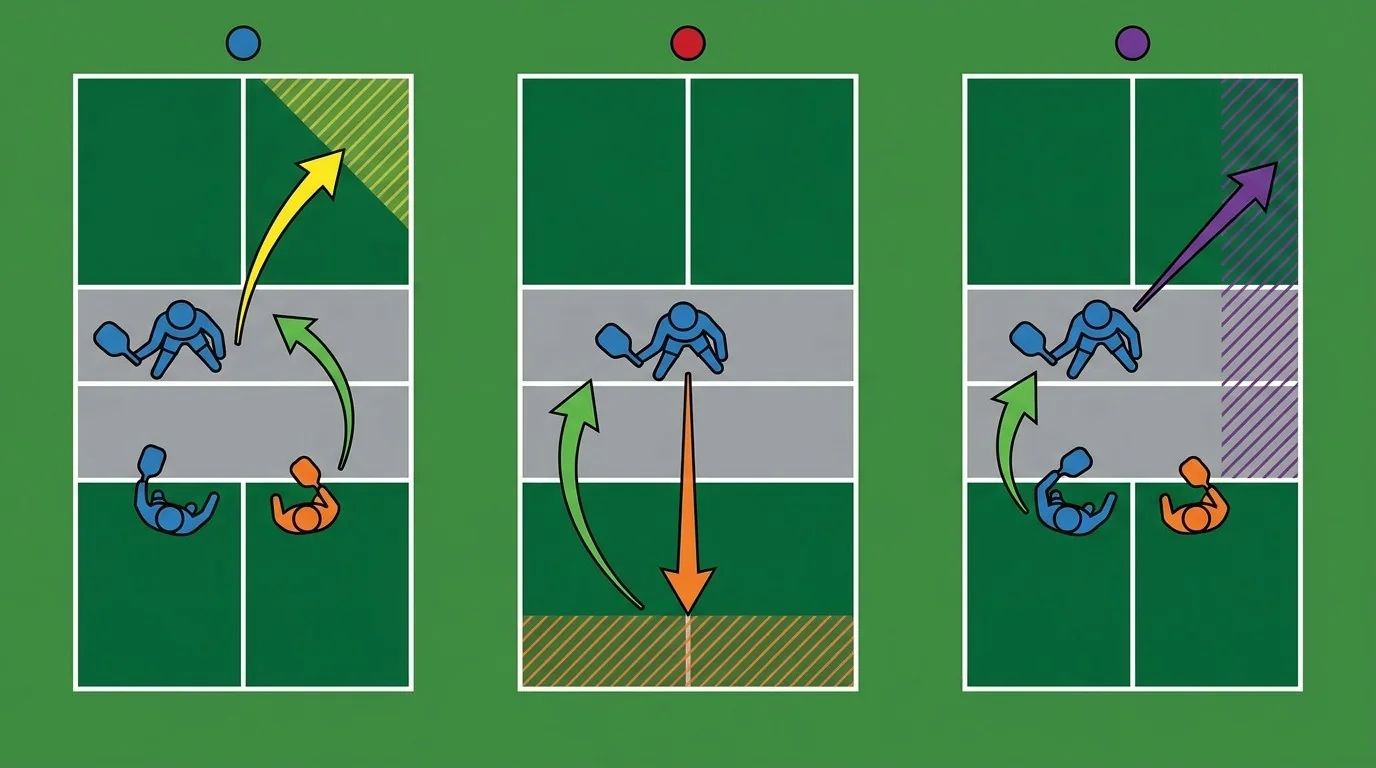
The opponent’s feet or the open middle are often better targets than the sideline. A low ball at the feet asks the opponent to lift. A controlled block through the middle can also create hesitation between two players. Do not try to win the point with every block. Depth and height matter when they leave the opponent with an awkward contact, not simply because the ball travels fast.
At the kitchen line, keep the paddle head above your hands and keep your shoulders generally square to the net. On a wide ball, move your feet first so contact stays in front. Do not reach and twist the face at the last moment. For a ball at the body, create space with a small adjustment and block through the lane that opens.
Practise the pattern under pressure
Start with cooperative feeds from the kitchen. Block ten balls to the middle, ten to the forehand foot, and ten to the backhand foot. Reset your stance after every contact, and count only balls that clear the net low and land in a useful area. Then ask the feeder to vary the pace. Your job is to change the amount of cushion without changing the basic shape of the swing.
The common faults are clear once you know what to watch. A long backswing adds unwanted pace. A locked wrist makes the face unpredictable. Reaching instead of moving sends the ball wide, while a face that opens under pressure creates a pop-up. Keep the motion compact, absorb the incoming speed, aim low, and bring the paddle back to ready position immediately after contact.