Return and Run in Pickleball: Move Forward Without Rushing
A practical guide to the return and run pattern, forward movement, low returns, and balanced kitchen positioning.
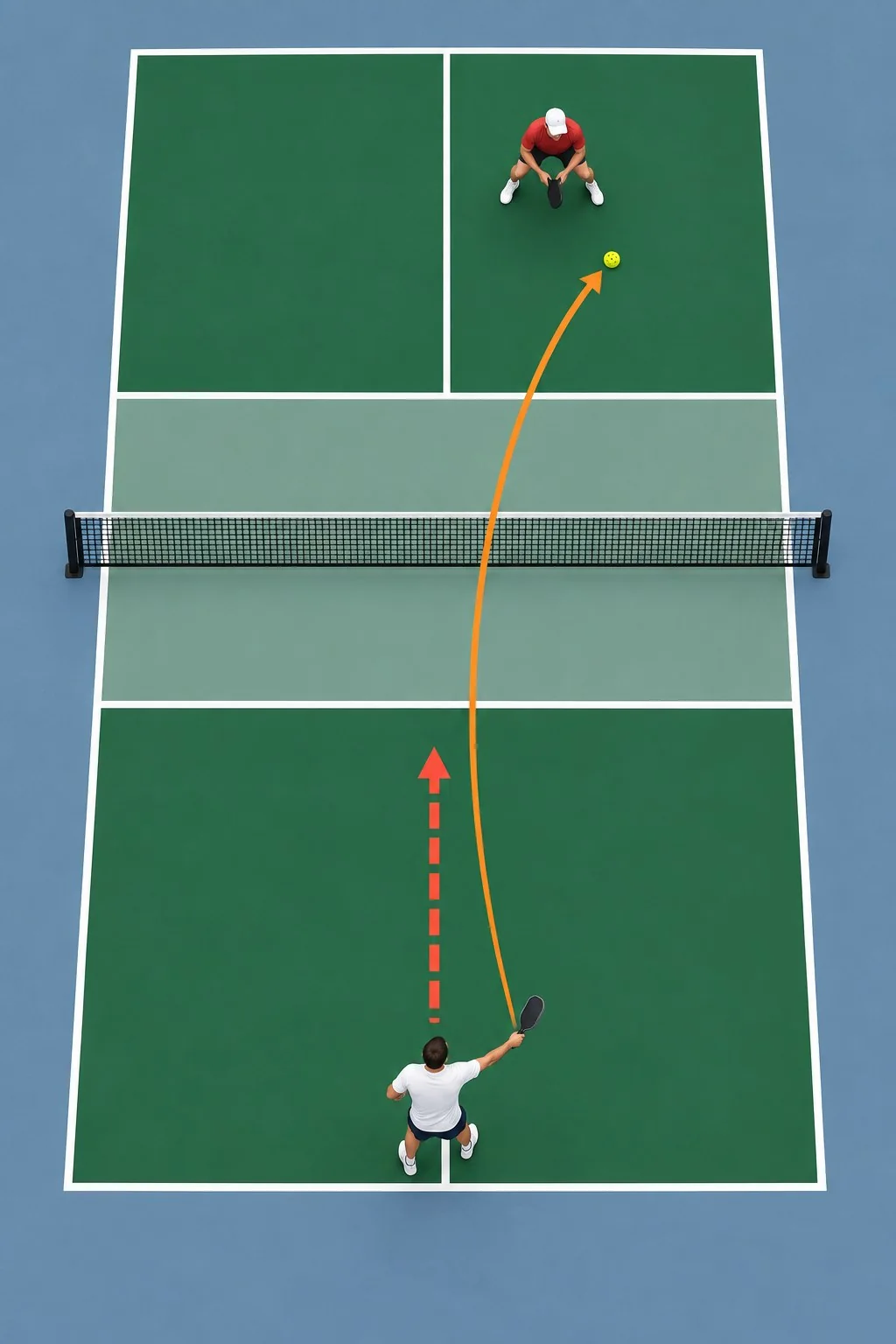
The return and run pickleball pattern gives the receiving team an early chance to improve its court position. After the serve bounces, the receiver sends a controlled return and begins moving forward. The purpose is not to sprint blindly or force a winner. It is to use the return’s depth and shape to create time, then arrive near the non-volley zone ready for the next shot.
Start with a return that buys time
Read the serve before deciding how aggressively to move. Set the feet behind the bounce, track the ball, and make contact in front of the body. A deep return is usually more useful than a hard one because it keeps the serving team farther from the kitchen and makes its third shot more difficult to attack. Aim with margin rather than brushing the sideline.
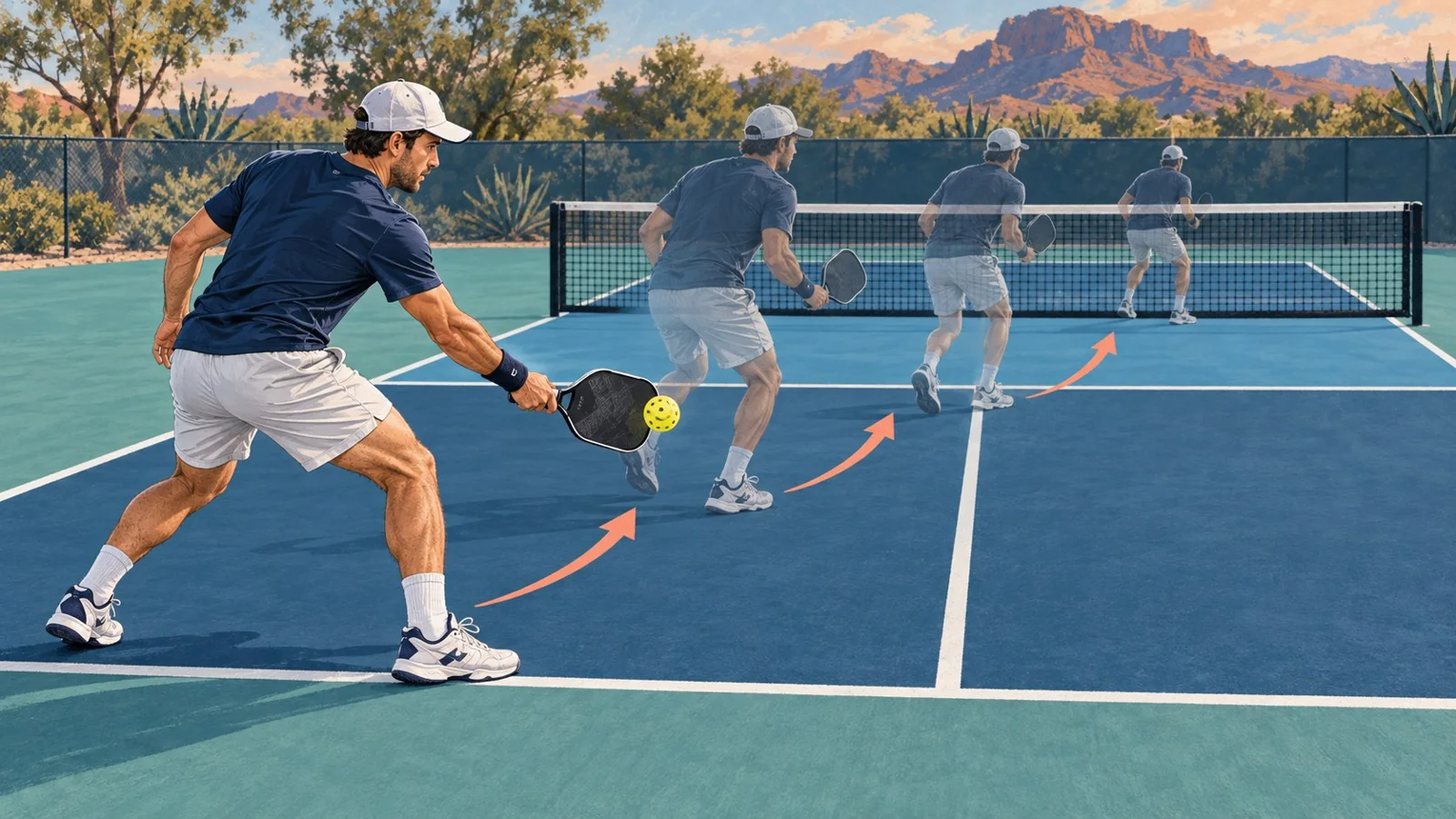
Keep the paddle face stable and finish under control. If the serve arrives deep, take a small adjustment step instead of reaching. A balanced contact lets you direct the ball while preserving the first step forward. Do not begin running so early that your body is still falling away when you strike; the return must remain accurate enough to support the movement that follows.
Move forward in rhythm with the ball
Once the return leaves the paddle, use efficient steps toward the kitchen. Follow the ball rather than racing to a fixed spot. The ball’s flight gives you time to advance, and the opponent’s contact tells you when to slow down. Take a split step as the next shot is about to be struck so both feet are available for a drive, block, or reset.
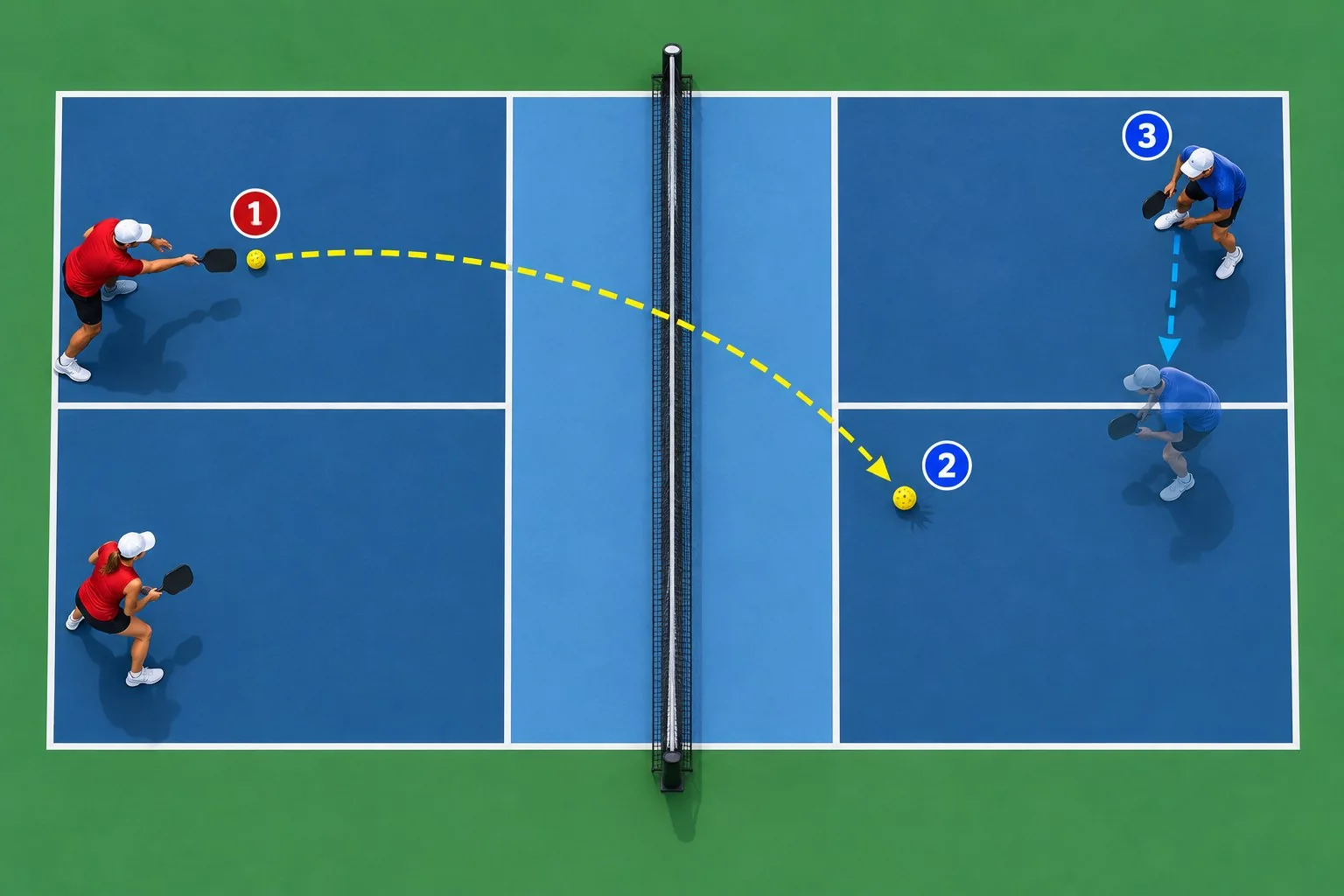
The serving team must respect the two-bounce rule: the serve and return both bounce before a volley is legal. That rule creates the receiving team’s opportunity to move forward, while the server must allow the third shot to bounce. Use that time intelligently. If your return is deep, continue forward with confidence. If it is short or floats high, shorten the run and prepare for pressure instead of charging into an exposed position.
Keep the next ball low and stay connected
Low shots reduce the opponent’s comfortable attacking options. A ball that travels low over the net is harder to strike sharply downward, while a high ball gives the opponent a clearer target. This does not mean every return must skim the tape. Choose a safe height that clears the net and lands deep, then look for the next opportunity to keep the exchange low.
In doubles, move as a pair. The partner should advance with the receiver while preserving useful spacing and protecting the middle. If one player runs far ahead, a gap opens between teammates. If the return is weak, both players should recognize the danger and stop in a balanced transition position rather than pretending the kitchen is already secure.
Practice the decision, not only the swing
Begin with gentle serves. The receiver calls the target, returns deep, and takes three controlled steps forward before settling. Add a partner feed that alternates deep and short returns. On a deep return, advance; on a short or high return, pause and prepare. Then add a live third-shot response and practise the split step just before contact.
Common mistakes include watching the return instead of the opponent, running before completing contact, crossing the kitchen too quickly, and continuing forward after a weak ball has invited an attack. Review each repetition with three questions: Was the return deep enough to buy time? Did the first step begin after stable contact? Did the player arrive balanced and connected with the partner? Those answers turn return and run into a repeatable court habit rather than a frantic chase.