Third-Shot Drop Height and Depth: Build a Safer Pickleball Arc
Build a safer third-shot drop by controlling net clearance, apex, landing depth, contact, and the forward transition.
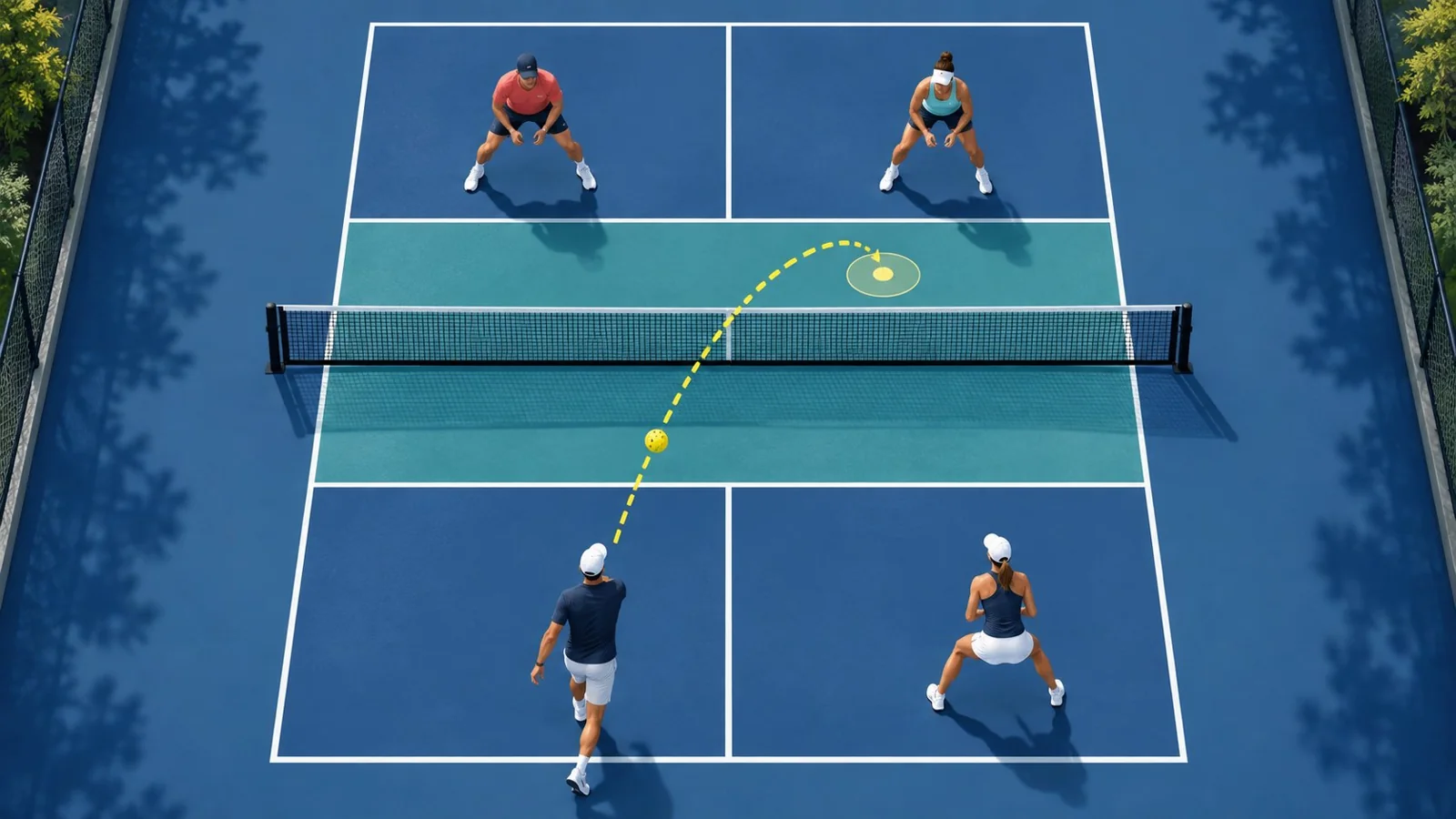
The third-shot drop height and depth is the serving team’s bridge from the baseline to the kitchen. It is the third ball of the rally, after the serve and return: a soft, controlled arc that lands in the opponents’ non-volley zone. Because the ball must bounce there, the returners cannot attack it like a high volley, giving you and your partner time to move forward.
Build the drop with repeatable mechanics
Start with a continental grip and light pressure—firm enough to control the face, relaxed enough to absorb pace. Set your feet about shoulder-width apart, bend through the knees, and keep your weight balanced slightly forward. Face the target rather than falling away from the shot.
Use a compact backswing, not a groundstroke windup. Let the paddle travel low to high in a smooth U-shaped path. The shoulder and arm provide the motion; keep the wrist quiet. Meet the ball in front of the body, around the line of the front foot, with the face slightly open. A gentle lift gives the ball the arc it needs to clear the net and fall into the kitchen.
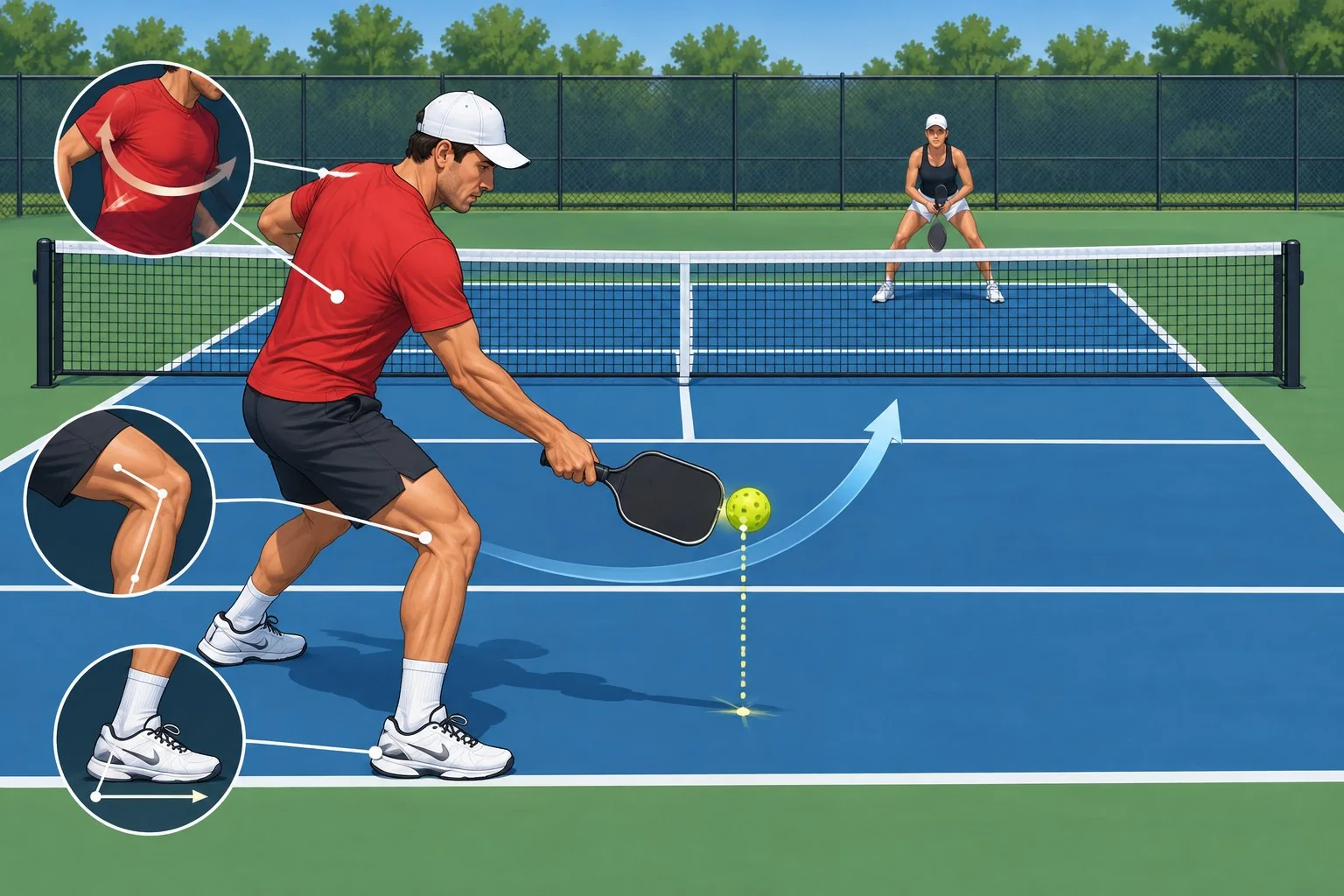
Let the follow-through continue forward and upward toward the landing area. The ball should clear the net with usable margin, peak around the net area or on your side, then descend rather than still rising as it reaches the opponent. Do not chase the tape with a flat swing; a soft drop is effective because it arrives low after the bounce.
Decide when to drop and when to drive
Choose the drop when the return is deep and low, both opponents are settled at the kitchen, or you need time to close the distance. After contact, move immediately: take controlled steps toward the transition zone and split-step as the opponents play. A good drop that leaves you frozen at the baseline has only done half its job.
Drive instead when the return is short and high enough to attack, an opponent is still moving forward, or wind makes a delicate arc unreliable. The best decision depends on the ball you received, not on a promise to use the same third shot every time.
Fix the mistakes that cost consistency
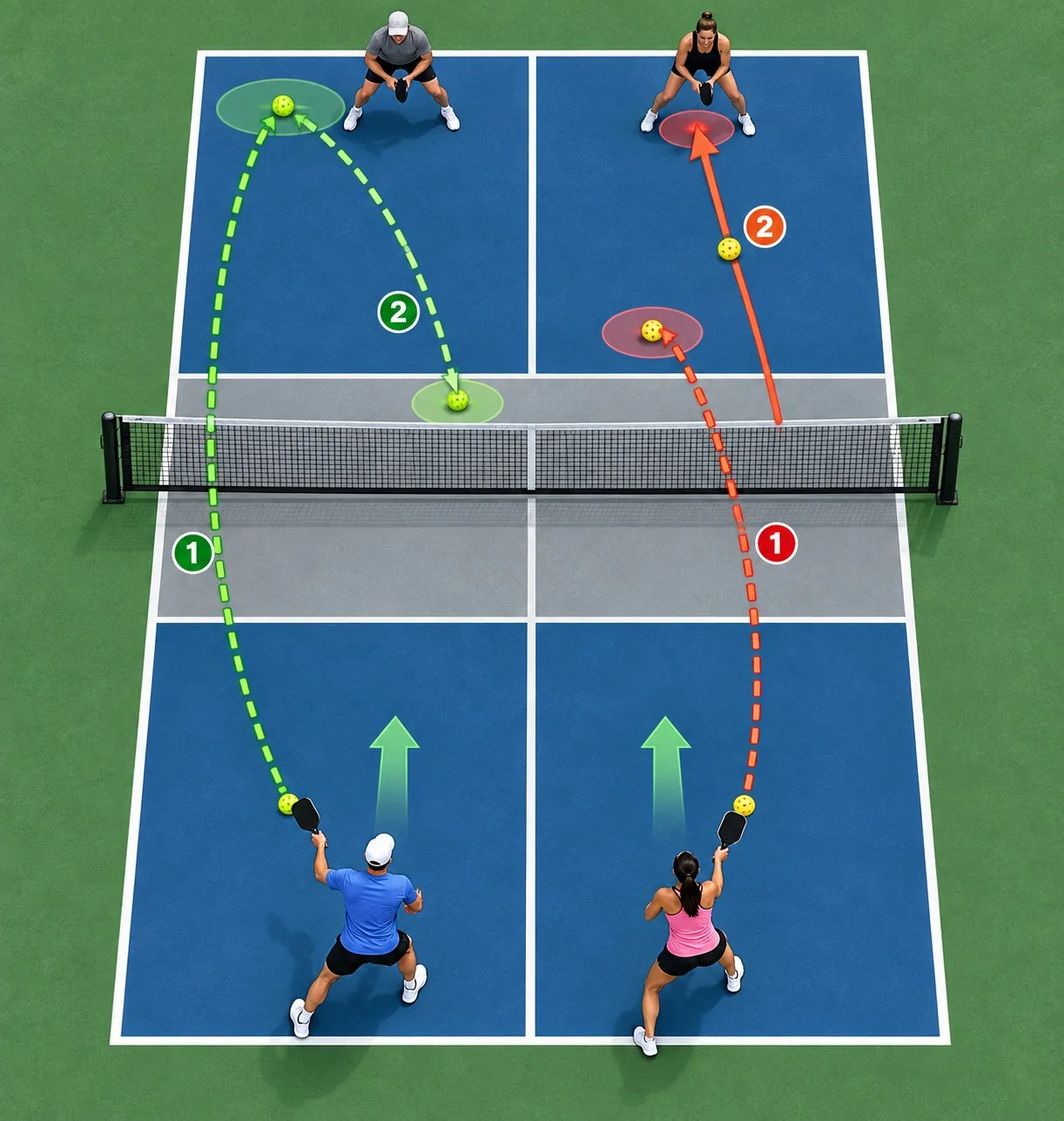
Too much arm speed sends the ball long or into the net. Shorten the motion and soften the grip. Too much wrist changes the paddle angle from shot to shot, so let the shoulder guide the stroke. Standing upright encourages a scoop and a high, attackable ball; lower through the knees instead.
Another common error is failing to move after the drop. Treat the shot and the advance as one action. If the first drop is not perfect and you are still in transition, play another soft reset rather than forcing a winner.
Practise the drop under pressure
Build range progressively. Start near the kitchen line with a partner feeding balls, then step back after ten controlled successes until you reach the baseline. Add a target in the opponent’s kitchen and record your results over twenty attempts. Next, rehearse the full serve-return-drop sequence so your feet must read the return before the swing begins.
A useful live drill is to score only the serving team’s third shot: a soft landing in the kitchen earns the point, while a miss gives it away. Finish each session with drop-and-move repetitions. Keep the grip relaxed, the contact in front, the path low to high, and the feet active after the ball leaves the paddle.