How to Choose a Pickleball Paddle for Beginners
Choose a first pickleball paddle with practical targets for weight, core, thickness, grip, shape, budget, and long-term comfort.
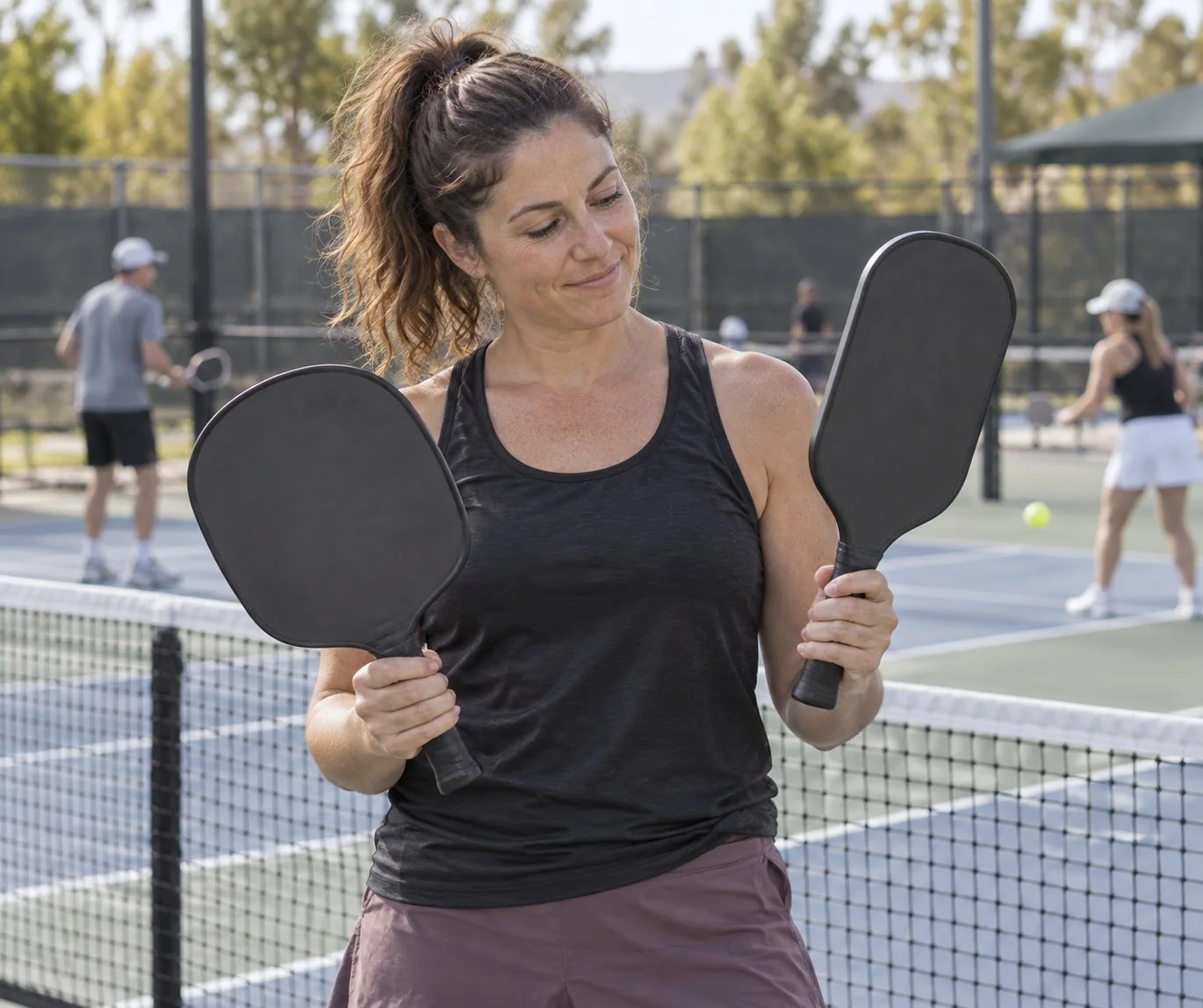
How to choose a pickleball paddle as a beginner comes down to comfort, control, and a forgiving hitting area. Start with a balanced model rather than the most powerful or expensive option. A paddle that helps you block, defend, and repeat a dink gives you more useful practice than a demanding competition model.
How to choose a pickleball paddle by weight
A medium paddle is a practical starting point. The source guide places that range at 207–235 g. Converted to ounces, 221 g is about 7.8 oz because 221 ÷ 28.35 = 7.80. That weight can offer stability without making quick net exchanges feel sluggish, though your arm, grip, and balance still matter more than a number on a product page.
Lighter paddles can speed up hand battles, but they may require more effort from the player to create depth. Heavier paddles often feel stable on blocks and drives, yet can fatigue the wrist, elbow, or shoulder. If you have previous arm pain, try a lighter sample and hit gentle blocks before committing to a full session.
Do not compare weight alone. Two paddles listed at 220 g can swing differently when one has more mass toward the head. Hold each one with a relaxed grip, make several shadow swings, and notice whether your shoulder stays loose.
What paddle core and thickness should a beginner choose?
A polymer honeycomb core is a sensible default for a first paddle because it generally offers a predictable, muted feel. A thicker core, commonly 14–16 mm in beginner-oriented guides, tends to favour control and a softer response; thinner construction can feel livelier but may be less forgiving when contact is inconsistent.
The face also changes the feel. Entry-level fiberglass can provide easy ball response, while carbon surfaces are often chosen for a more controlled contact and added texture. Neither material fixes poor timing. If you are still learning the basic swing, a broad sweet spot is usually more valuable than a specialist surface.
For a concrete checklist, look for a polymer core, roughly 14–16 mm thickness, medium weight, and a conventional rather than strongly elongated shape. Treat these as selection targets, not rules that every player must follow.
How to measure pickleball paddle grip size
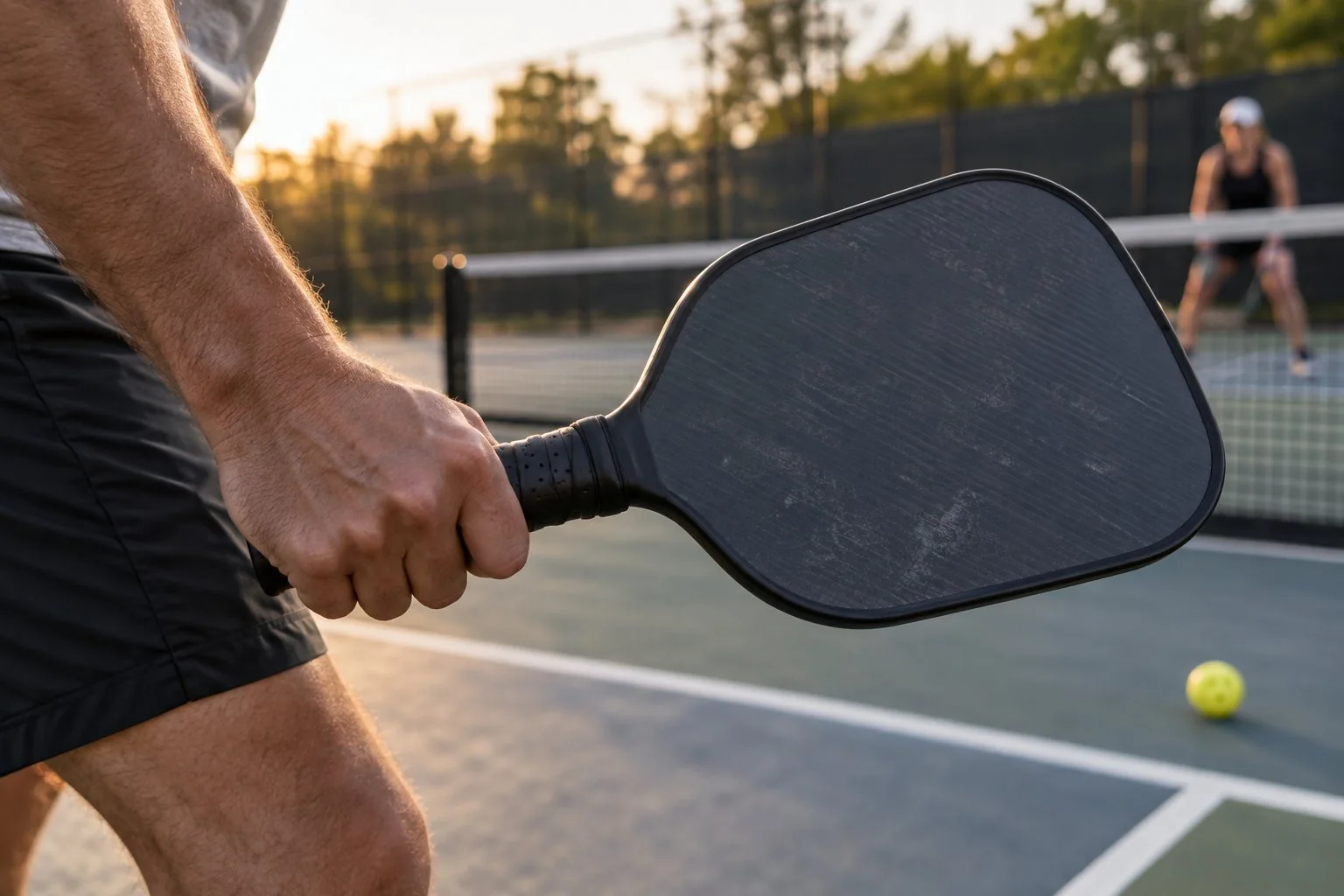
The grip must let you hold the paddle securely without squeezing. A beginner reference range is about 10–11.5 cm in circumference. Measure around your hand, then compare the result with the manufacturer’s chart; if you are between sizes, a slightly smaller grip can usually be built up with an overgrip, while an oversized handle is harder to reduce.
Test the handle with your usual playing hand. Leave a small, comfortable gap between your fingertips and the heel of your palm, and check that your wrist can turn without forcing the thumb or index finger into an awkward position. Use the same tape or overgrip thickness you expect to play with, because it changes the final circumference.
How much should a beginner paddle cost?
The guide uses €30–€60 as an orienting entry range and €60–€120 for a step-up range once you understand your preferences. A two-paddle set with balls can make sense for a couple starting together, but inspect the specifications rather than assuming a bundle is automatically good value.
Spending more does not guarantee faster improvement. Before paying, check the stated weight, thickness, core, grip, sweet-spot shape, and competition approval if you intend to enter sanctioned events. A listing that omits the weight or grip measurement deserves extra caution.
When should you replace your first paddle?
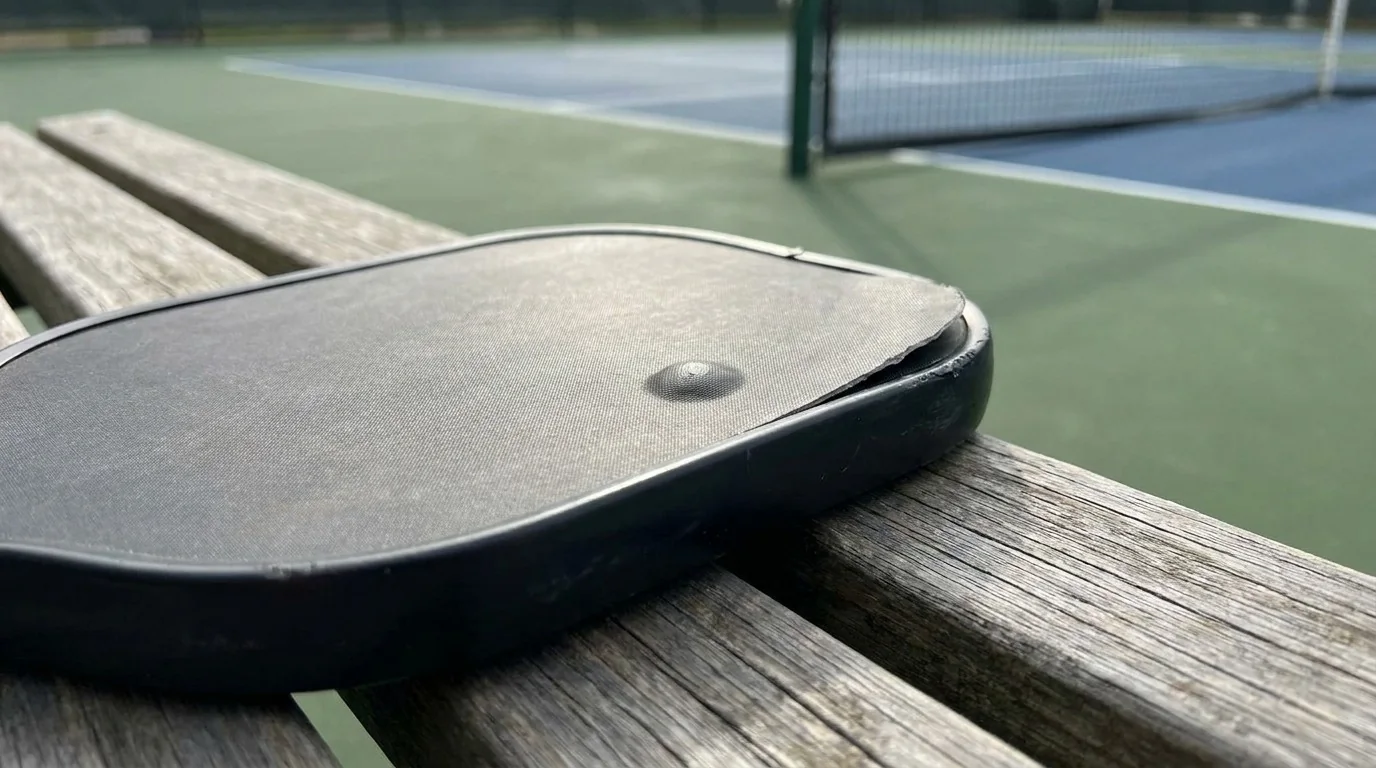
Regular recreational use may keep a beginner paddle useful for months, but the calendar is not the only test. Replace it when the face develops inconsistent dead spots, different areas make noticeably different sounds, or new wrist and elbow discomfort appears. You may also be ready for a different model when you centre the ball consistently and can name the missing trait, such as more texture, depth, or blocking stability.
For related fundamentals, read how to hold a pickleball paddle and third-shot strategy.