Pickleball Dink Height: How to Keep the Ball Low
Pickleball dink height affects time, bounce, and attack risk. Learn a practical contact check, target zone, and drills for keeping soft shots low.
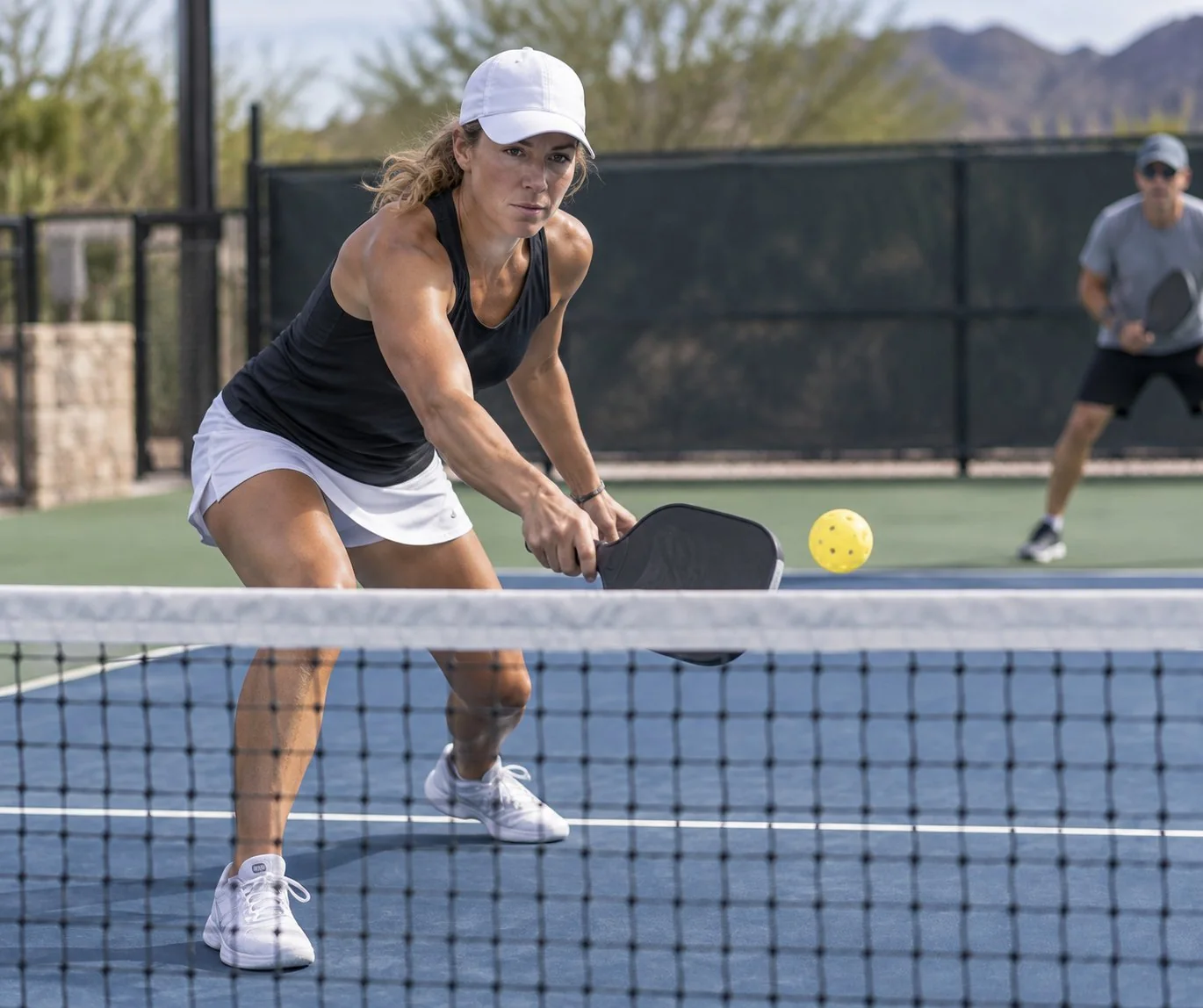
Pickleball dink height should clear the net with enough margin to land in the opponent’s non-volley zone, but a high soft shot gives the opponent more time and may invite an attack. The goal is not to scrape the tape; it is a repeatable low arc with a safe landing area.
What height should a dink have?
A useful practice target is a ball that crosses only modestly above the net and lands well inside the kitchen. The exact clearance changes with net height, contact point, spin, and wind, so avoid treating one measurement as a universal rule. From a side view, the ball should rise, clear the tape, then descend before the opponent can volley it.
For example, aim for a landing roughly 30 centimetres inside the kitchen rather than the nearest line. That margin gives a miss-hit some room while still forcing a bounce. It is a training illustration, not an official target.
Which contact errors make the ball pop up?
An open paddle face sends the ball higher, especially when the swing lifts from below the ball. A stiff wrist can also make the contact abrupt. Keep the paddle head stable, meet the ball in front of the hip, and use a compact forward movement instead of scooping upward.
Watch the opponent’s paddle, not only your own shot. If your dink repeatedly reaches shoulder height, shorten the swing and check whether the contact is too low or too far behind the body. A lower starting position can help, but bending excessively often removes balance.
How can you practise the trajectory?
Begin with 20 cooperative dinks crosscourt. Count balls that clear the net, land in the kitchen, and remain low enough that the partner cannot comfortably attack. If 14 of 20 meet the target, keep the same preparation and change only the direction or depth. Recording the count makes a small technical change easier to evaluate.
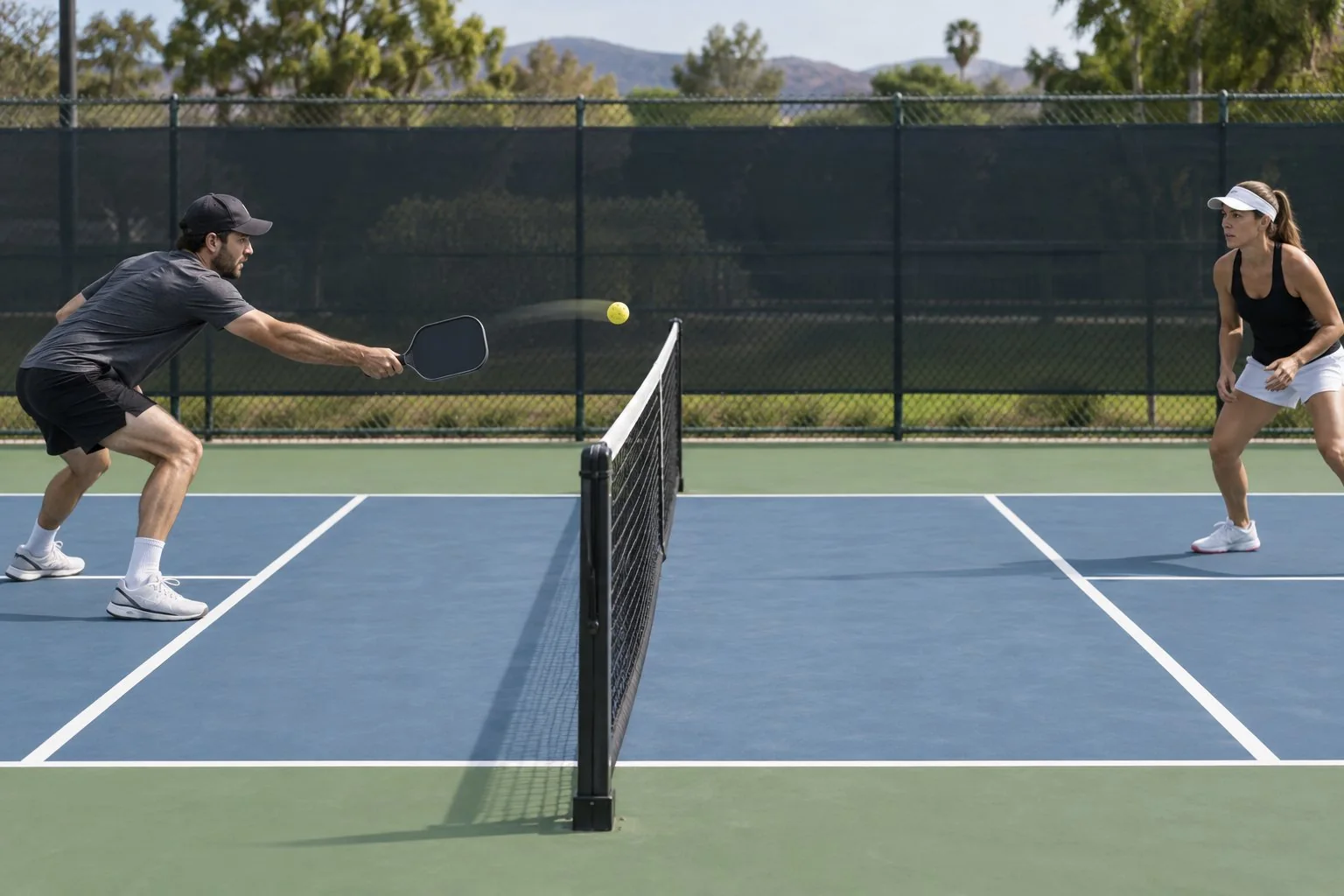
Next, place a visual target about 30 centimetres inside the kitchen line and alternate five balls to that area with five to the middle. Do not add speed until the arc is stable. When wind changes, increase net clearance slightly rather than swinging harder.
When is a higher dink acceptable?
A higher ball may be useful when the opponent is deep, off balance, or moving laterally, provided it still lands safely and cannot be attacked. Against a patient player at the kitchen, however, height without depth often creates an easy volley. Choose the arc from the opponent’s position, not from habit.
Quick check between rallies
Ask three questions: Did the ball clear the net safely? Did it land inside the kitchen? Could the opponent attack it before the bounce? If the answer to the third question is yes repeatedly, reduce the swing, stabilise the paddle face, and select a larger landing margin.
Leitura complementar
Veja também Pickleball Court Fence Maintenance: What to Check e Pickleball Court Drainage: How to Check Standing Water para comparar situações próximas sem misturar as regras.