Pickleball Tournament Strategy: A Practical Plan
Build a pickleball tournament strategy with pressure practice, warm-up timing, opponent scouting, shot selection, timeouts, and match-day adjustments.
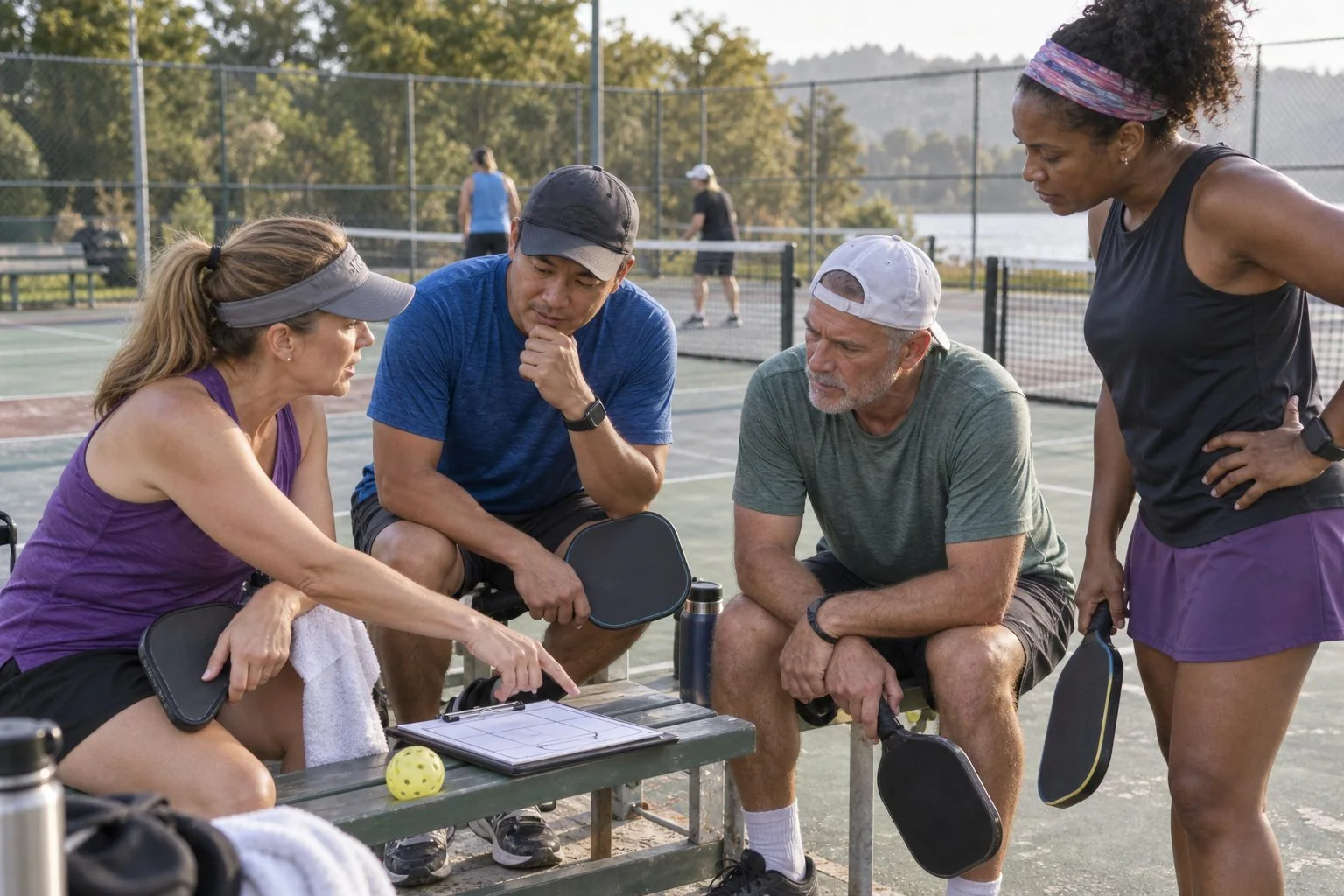
Pickleball tournament strategy starts before the first serve. Build a small plan around your dependable shots, prepare your body and equipment, study opponents during pool play, and use a repeatable reset between points. The aim is not to copy a professional. It is to make good decisions when the score and the noise make rushed choices tempting.
What makes pickleball tournament strategy different?
A tournament day adds waiting, unfamiliar opponents, changing court conditions, and several matches to the ordinary demands of pickleball. A shot that feels automatic in a relaxed game can disappear when you are down 8–2. That is why a useful plan begins with your actual strengths rather than an ideal version of your game.
Write down three reliable patterns. For example, you may trust a deep return, a controlled third-shot drop, and a crosscourt dink to the backhand. Your plan should create chances to use those patterns, while keeping a safer option ready when the first choice is unavailable.
How should you prepare the week before a tournament?
Five to seven days out, practise pressure rather than adding endless volume. Play tiebreakers, make certain points worth two, or require a clear target before the rally starts. The exact game matters less than learning to serve and choose a shot while your heart rate is up.
Lock in your paddle, grip, shoes, and balls. Tournament morning is a poor time to test a new setup. Protect sleep and hydration too. If you normally drink 500 ml during a two-hour session, bring enough for the venue and adjust for heat; this is a practical planning example, not a universal prescription.
How do you warm up for a tournament match?
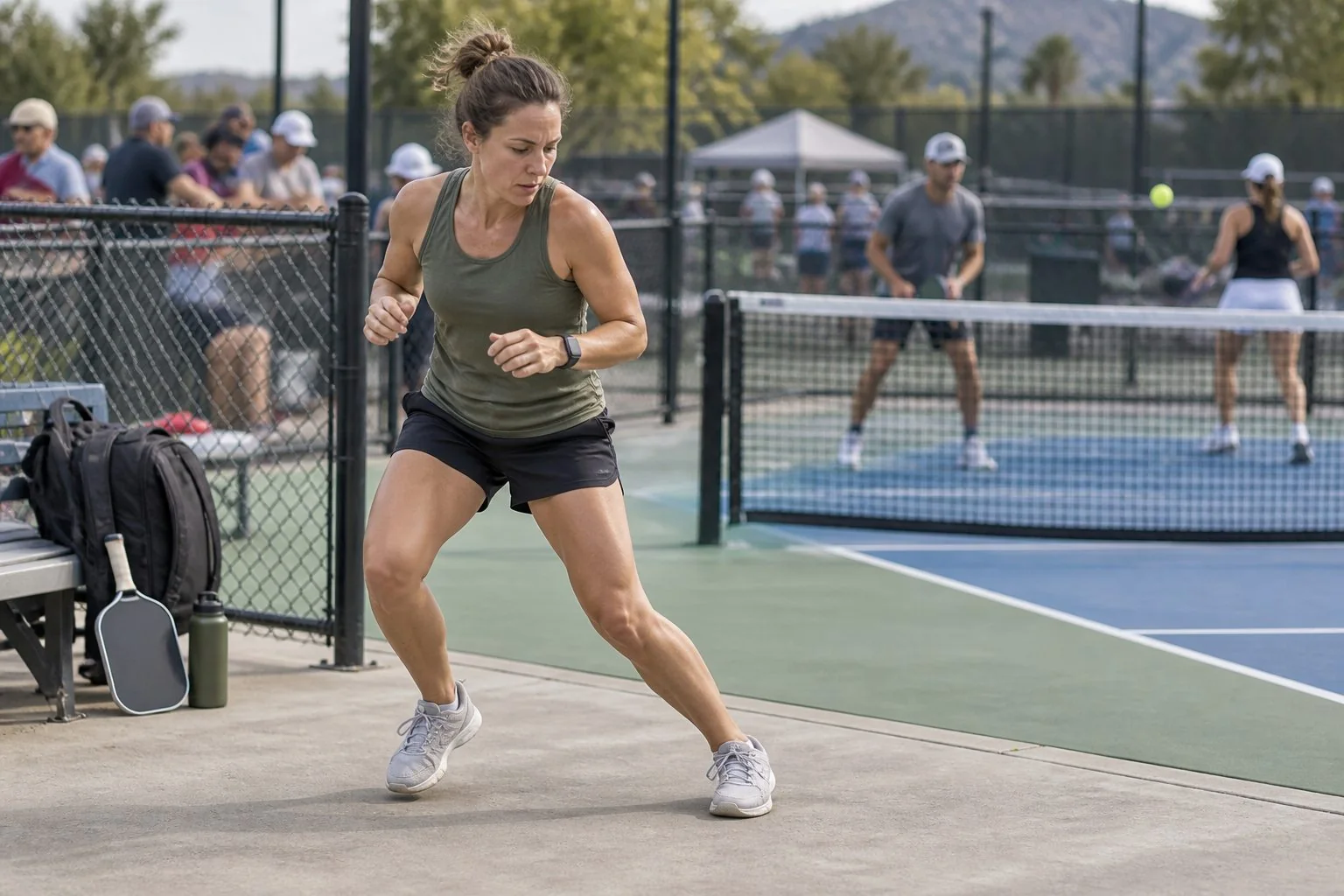
Arrive 30–45 minutes early when the venue allows it. Begin with leg swings, shoulder circles, light lateral shuffles, and easy movement before hitting. Then progress from soft dinks to drives, volleys, and the shots you expect to use first.
A simple 12-minute sequence could be three minutes of walking and mobility, three minutes of side steps and short accelerations, three minutes of controlled dinking, and three minutes of drives and volleys. You should feel alert, not tired. Finish with several third shots if that stroke anchors your plan.
How can you scout opponents during pool play?
Pool play is also an observation period. Notice how each opponent handles pace, deep returns, body shots, and balls above the net. Record three items: the shot they trust, the shot that breaks down, and the decision they make when frustrated.
Suppose a player repeatedly attacks a high ball but floats a low backhand volley. Your adjustment is not to attack every ball blindly. Move the rally toward low contact, then attack only when the ball rises enough to justify it. In doubles, agree with your partner who covers the middle and which opponent receives more pressure; a target is useful only when both players understand the reason.
When should you change the plan?
Do not abandon a sound pattern after one miss. Use a five-error rule as a practical decision aid: if the same choice produces five consecutive errors or weak replies, change one variable, such as height, speed, direction, or target. If you miss twice but the ball was well selected, keep the pattern and improve the execution.
Common adjustments include slowing the rally with resets, serving more to the body, directing pressure toward a backhand volley, or using the middle to remove angles. Change one thing at a time so you can tell whether it worked.
How do you manage pressure between points?
Use a short routine. Turn away from the net, take one steady breath, name the next task, and check the score only once. “High margin to the middle” is more useful than replaying the last error. A timeout can interrupt a run and give partners time to agree on one clear adjustment; it is a tactical pause, not an admission of failure.
At 10–9, choose a dependable serve and a familiar third-shot pattern. That is not the moment for a low-percentage trick you have practised for three weeks. At 0–0, build information. At the closing score, reduce unnecessary variables.
What should you remember on tournament day?
- Build around shots you can repeat.
- Practise pressure before competition.
- Warm up in stages.
- Scout tendencies, not personalities.
- Change a pattern only after evidence.
- Reset before every point.
For related match preparation, read pickleball singles strategy and third-shot strategy.