Pickleball Warm-Up Routine: What to Do Before Play
Use this pickleball warm-up routine before play: raise your temperature, move the shoulders and hips, rehearse footwork, and finish with easy rallies.
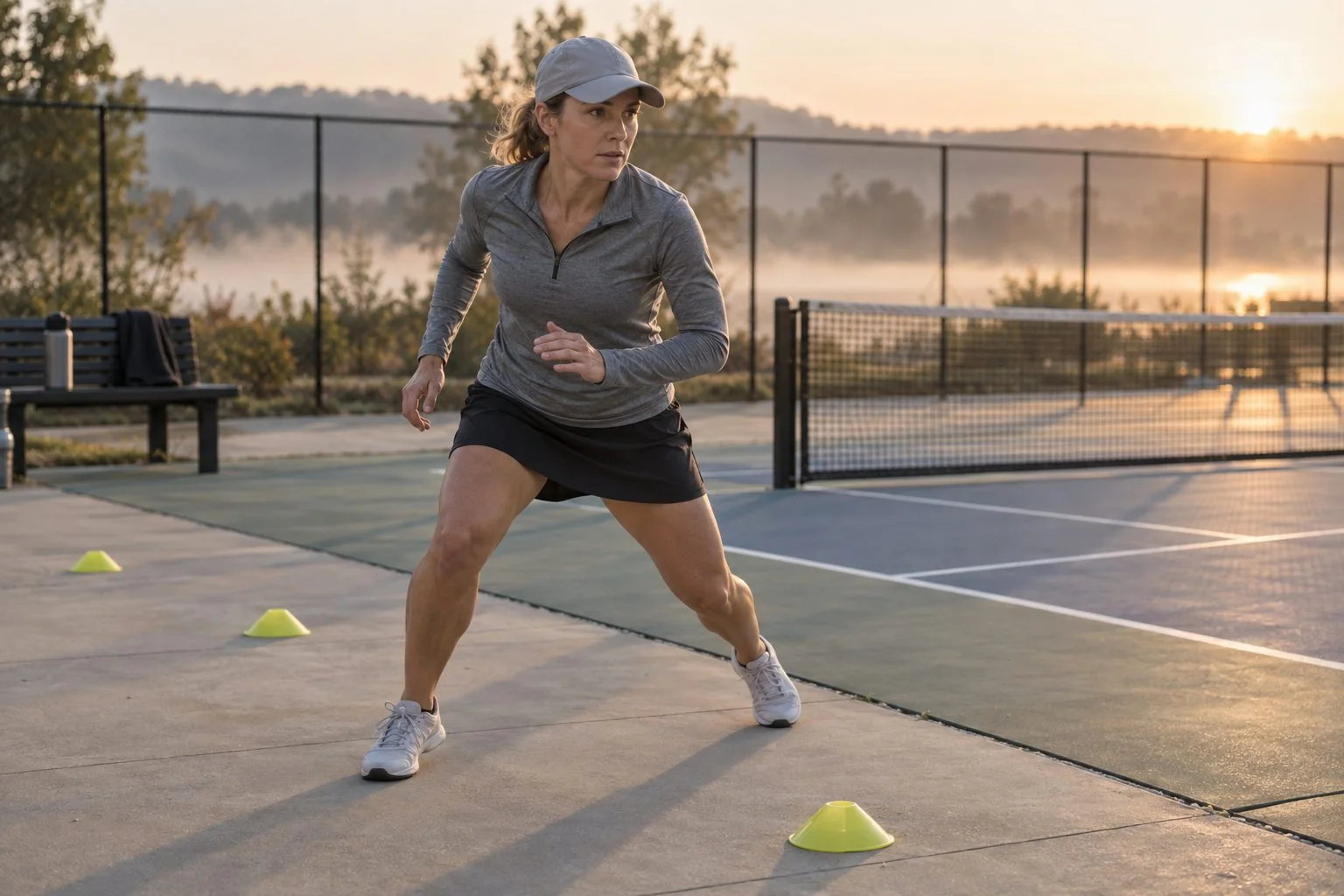
A pickleball warm-up routine should raise your temperature and rehearse the movements you will use, not exhaust you before the first point. Eight to ten focused minutes is enough for a practical pre-match sequence.
How long should a pickleball warm-up take?
Start with two minutes of easy walking, side steps, and relaxed arm swings. The goal is to move from stillness to light effort. If you begin with a hard sprint, you spend energy before you have tested your range of motion.
Use a simple example. For a 10-minute routine, spend 2 minutes walking, 3 minutes on dynamic mobility, 3 minutes rehearsing footwork, and 2 minutes on gentle paddle contact. The arithmetic is 2 + 3 + 3 + 2 = 10 minutes. Treat this as a training example, not a medical requirement.
Which movements belong in the routine?
Move the ankles, knees, hips, shoulders, and wrists through comfortable ranges. Add eight controlled calf raises, six bodyweight squats, and several side steps in each direction. Keep the pace smooth. A warm-up should not create sharp pain, numbness, or a feeling that a joint is catching.
Then rehearse pickleball positions. Take three short steps toward the kitchen line, split your feet, and recover to a balanced stance. Repeat to both sides. Keep the steps quiet rather than reaching with one leg and losing your base.
Should you stretch before pickleball?
Dynamic movement usually fits the opening sequence better than forcing a long static stretch on cold muscles. Gentle mobility is different from bouncing into a painful range. Save longer relaxed stretches for after play if they feel comfortable, and stop any movement that produces sharp pain.
How do you finish before the first point?
Use five to ten easy dinks or soft groundstrokes, then a few controlled returns. Notice the bounce, wind, and court surface. Do not turn the last warm-up ball into a maximum-power drive. If you want more movement ideas, review these pickleball reflex drills and this tournament strategy plan.
How should you adjust the routine?
Change the sequence when the court, weather, or your body changes. On a cold morning, spend longer walking and making controlled leg swings before you add quick steps. On a hot day, keep the effort easy and drink according to thirst. The warm-up prepares you; it should not become a conditioning session.
A useful tracking method takes three notes: minutes completed, movement that felt restricted, and whether the first rally felt balanced. If your right shoulder feels tight for three sessions in a row, reduce hard overhead rehearsals and address the restriction rather than simply swinging faster.
Common warm-up mistakes
Skipping movement because you arrived late is one mistake. Another is copying a professional’s intense sprint sequence without knowing your own limits. Long static stretches, maximal serves, and repeated jump drills can all consume energy before play. Keep the final contact soft enough that you can still speak in full sentences.
Stop if you feel chest pain, faintness, sudden weakness, or sharp joint pain, and seek appropriate help. A warm-up guide is general information, not a diagnosis or a substitute for clinical advice.