Pickleball Backhand: Build a Reliable Shot
Build a dependable pickleball backhand with practical grip, footwork, contact, shot selection, corrections, and drills.
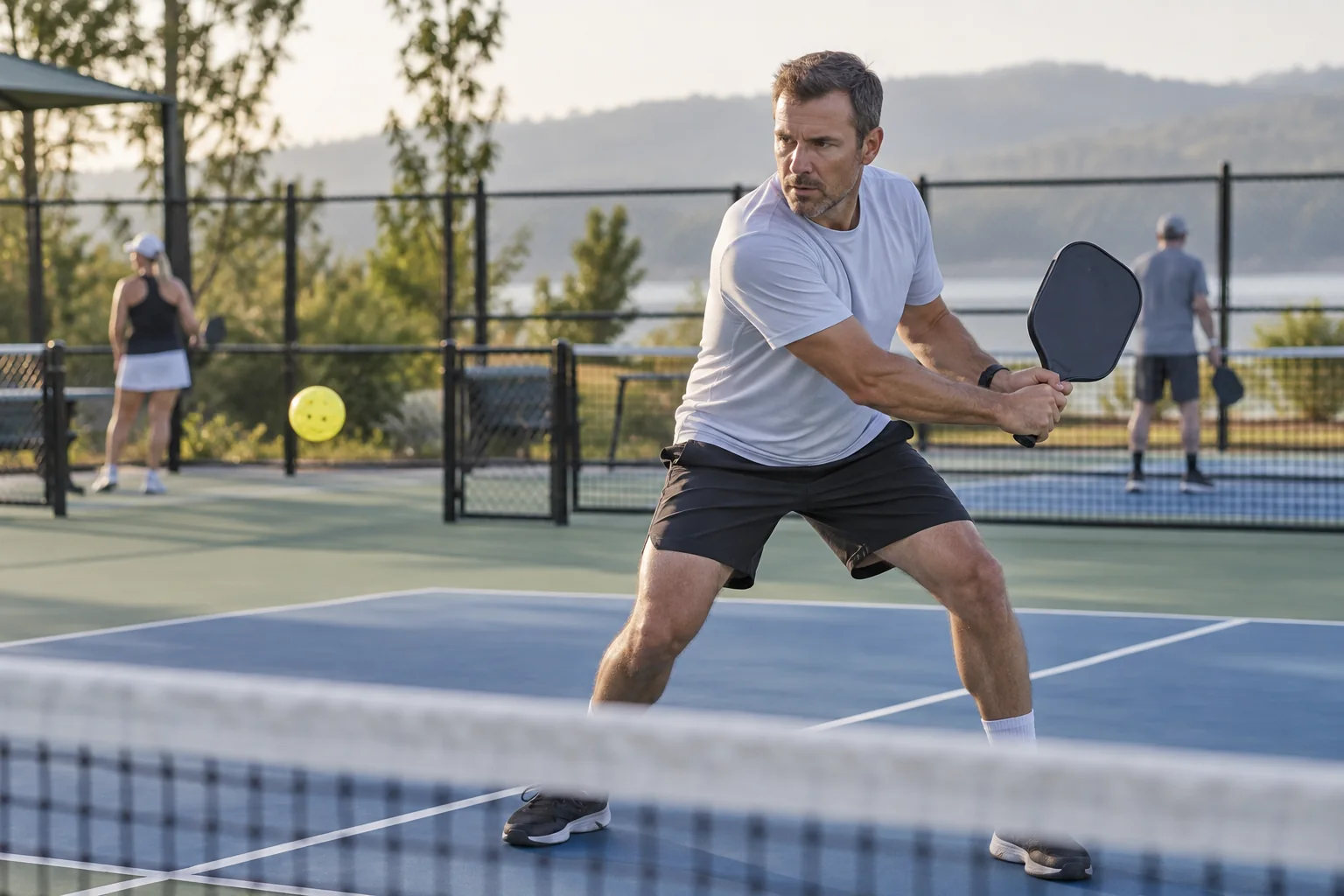
A reliable pickleball backhand starts before the swing. Turn early, create space, contact the ball in front of your hip, and keep the paddle path compact. Those four habits support a drive from the baseline, a soft dink at the kitchen, a third-shot drop, and a defensive volley when the pace rises.
What is a pickleball backhand?
A backhand is any shot played on the non-dominant side of the body. For a right-handed player, that is usually the left side; for a left-handed player, it is the right. In pickleball, the backhand appears in returns, transition resets, kitchen dinks, drives, and punch volleys, so it is a family of shots rather than one identical swing.
Avoiding that side creates a predictable gap. If you run around every backhand, you move late, leave open court behind you, and tell the opponent where to aim. The better target is not a spectacular winner. It is a repeatable contact that stays low enough to keep the next ball manageable.
How should you grip a pickleball backhand?
A continental grip gives a neutral starting point for quick exchanges and punch volleys. For a two-handed backhand, keep the dominant hand in that base position and place the non-dominant hand above it in a comfortable forehand-style grip. The lower hand guides stability; the upper hand helps turn the paddle through the ball.
A one-handed backhand can provide extra reach and useful slice, especially on a wide ball, but it asks for more timing. A two-handed stroke usually gives a newer player a shorter swing and a steadier contact window. Choose the version you can repeat without squeezing the handle or flipping the wrist.
Use this test: hold the paddle in front with relaxed shoulders, then make ten slow shadow swings. If the face changes sharply from one repetition to the next, reduce the motion and soften your grip rather than adding speed.
How do you prepare and make contact?
Start in a split stance with a small knee bend. When the opponent strikes, split-step, turn the shoulders, and bring the paddle into a prepared position before the ball reaches your side. Your feet should move the body into the shot; the arm should not reach back in a panic.
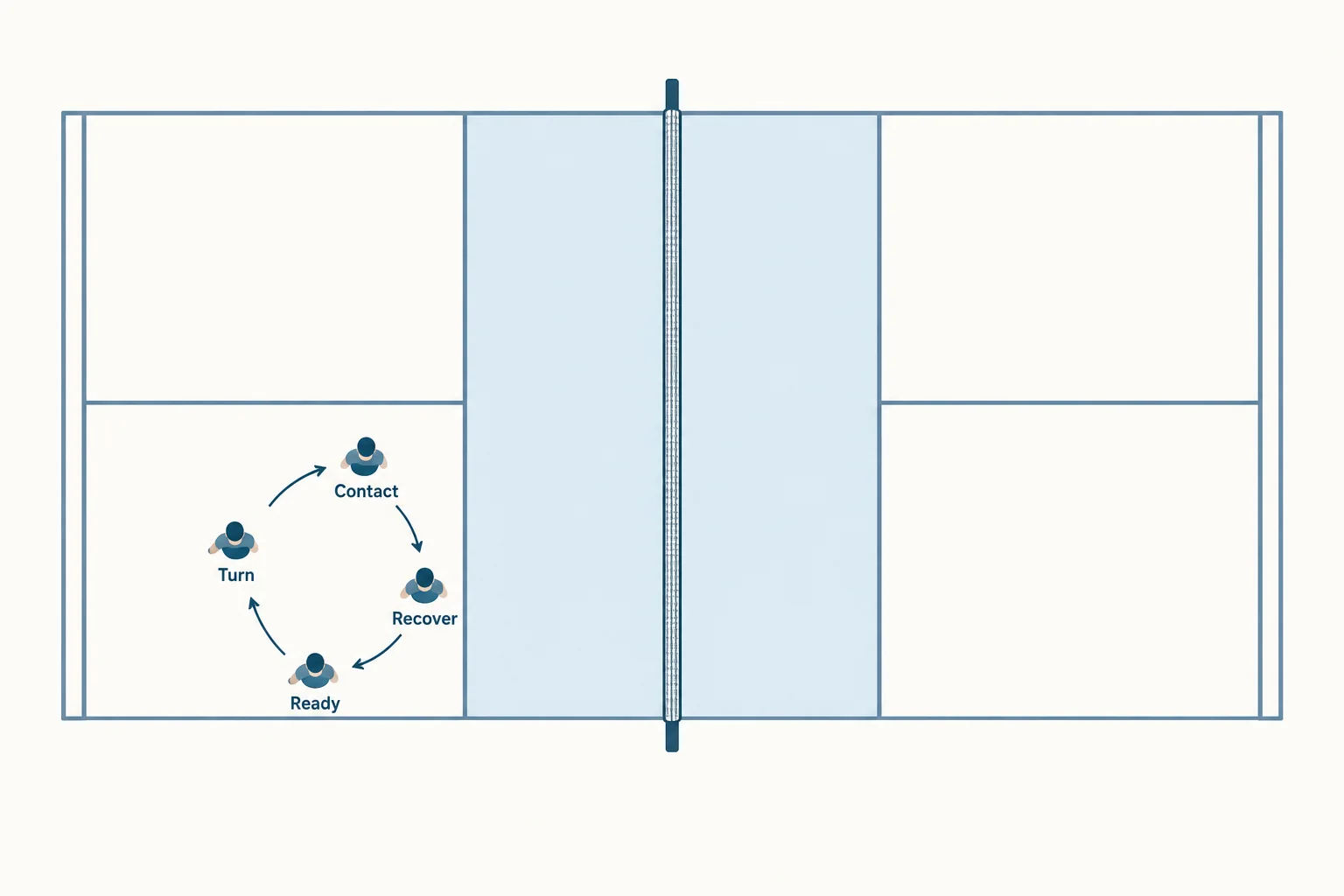
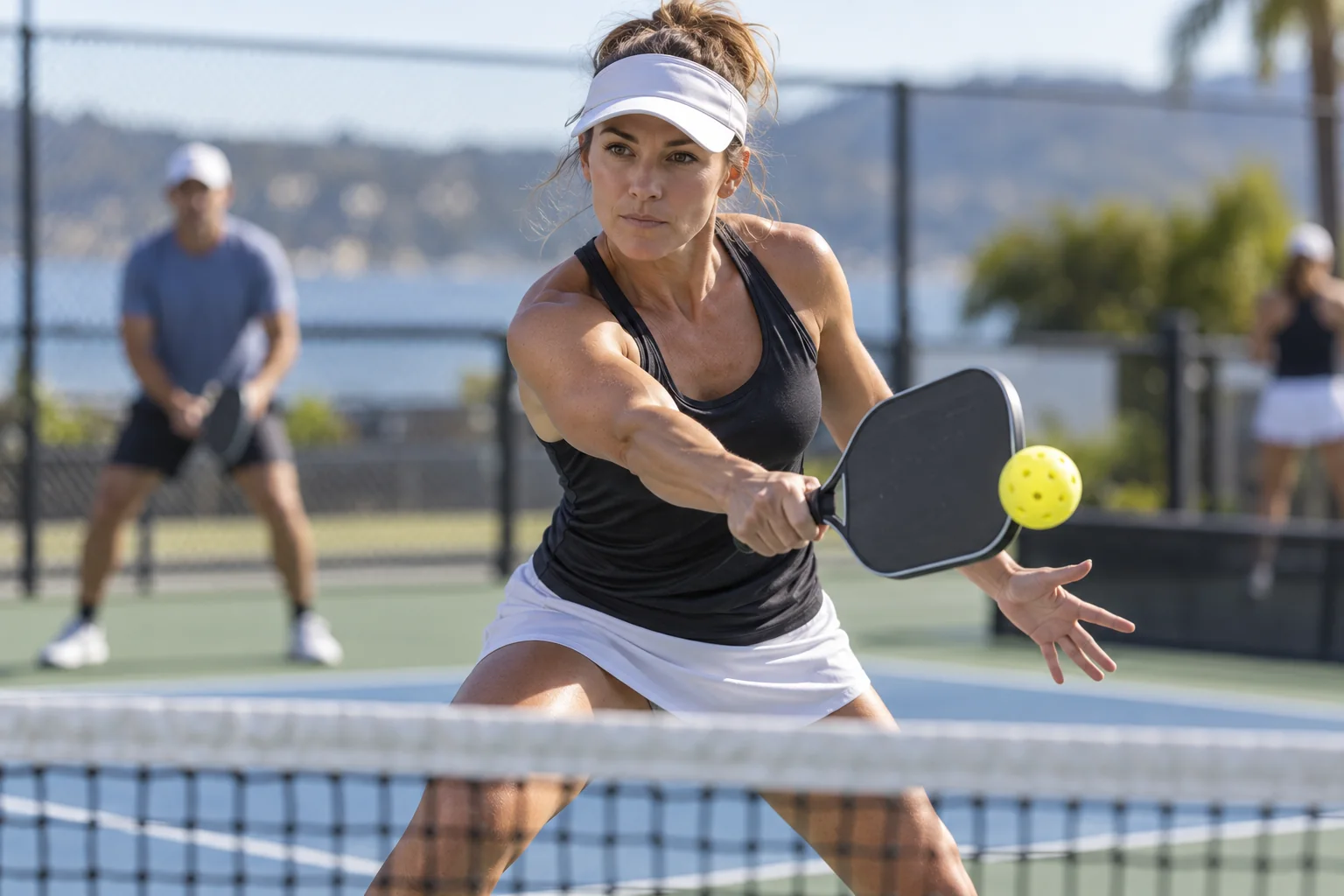
Aim to contact the ball slightly in front of the lead hip, about one relaxed arm’s length away. Too close produces a jammed, arm-only swing. Too far pulls the shoulder open and steals balance. After contact, let the paddle travel toward the target, then recover to a ready position instead of admiring the shot.
For a simple practice calculation, feed 20 backhands and count contacts made in front with balanced recovery. If 15 meet that standard, the rate is 15 ÷ 20 = 0.75, or 75%. Treat that as a training measure, not a match prediction; add movement and a live opponent only after the contact pattern is stable.
Which backhand shot should you choose?
Backhand drive
From the baseline, use a compact low-to-high path when the ball is comfortable between knee and hip height. Drive through the ball with shoulder and torso rotation, not a last-second wrist snap. A deep, controlled drive can pressure a moving opponent, while a rushed drive often sits up.
Backhand dink
At the kitchen, shorten the motion. Keep the paddle face quiet, absorb pace, and send the ball over the net with enough margin to land in the opponent’s non-volley zone. When the ball is below net height, a soft dink is usually safer than forcing an attack.
Backhand drop
A third-shot drop needs more lift and less forward force than a drive. Brush upward, clear the net with margin, and aim for a soft landing in the kitchen. If the ball lands short and high, the opponent receives an easy attack, so depth and arc matter more than making the shot look delicate.
Backhand punch volley
Against pace at the kitchen line, use almost no backswing. Keep the paddle in front, meet the ball early, and redirect it low. The goal is control and absorption, not a full-power swing.
What are common backhand mistakes?
- Late preparation: turn when the opponent strikes, not when the ball is already beside you.
- Crowded contact: use a small adjustment step to make room instead of folding the elbow into the ribs.
- Wrist flipping: keep the face stable through contact and let the shoulder turn create the swing.
- Over-swinging: shorten the motion when the ball is fast or low.
- Poor recovery: finish balanced, then return the paddle to the ready position.
- Forcing offense: attack only when the ball is high enough and your contact is controlled.
Try a catch drill before using the paddle. Have a partner feed ten balls to the backhand side, and catch each one in front of the lead hip with the shoulders turned. If the ball lands against your body, fix the feet and spacing first; more swing will not solve a crowded contact.
How can you practise the backhand?
Use three short blocks. First, shadow-swing ten times with an early turn and compact preparation. Next, hit 20 cooperative drives while your partner feeds to one predictable zone. Finally, play 10 kitchen exchanges using only dinks and punch volleys, counting whether the paddle stays in front after every shot.
Change one variable per round. Move the feed wider, add a deeper ball, or increase pace, but do not change grip, swing length, and target together. A useful session ends with one clear note, such as “turn earlier” or “recover after contact,” rather than a long list of corrections.
Pickleball backhand FAQ
Should beginners use a one-handed or two-handed backhand?Either can work. Start with two hands if stability and a compact swing help you make earlier contact; keep practising one-handed reach and slice when the ball pulls you wide.
Why does my backhand float high?Check the paddle face, contact height, and preparation. A late swing or an open face often lifts the ball, while a shorter motion and contact in front make the trajectory easier to control.
Should I always attack a backhand ball?No. Drive when the ball is comfortable and your balance is set. Reset or dink when the ball is low, late, or outside your contact zone.
For movement practice, use pickleball footwork drills. To connect the drop with the next shot, read third-shot strategy, then review pickleball doubles strategy.