Pickleball Doubles Communication: Calls That Work
A practical guide to pickleball doubles communication, with reliable calls, middle-ball coverage, poach signals, and partner drills.
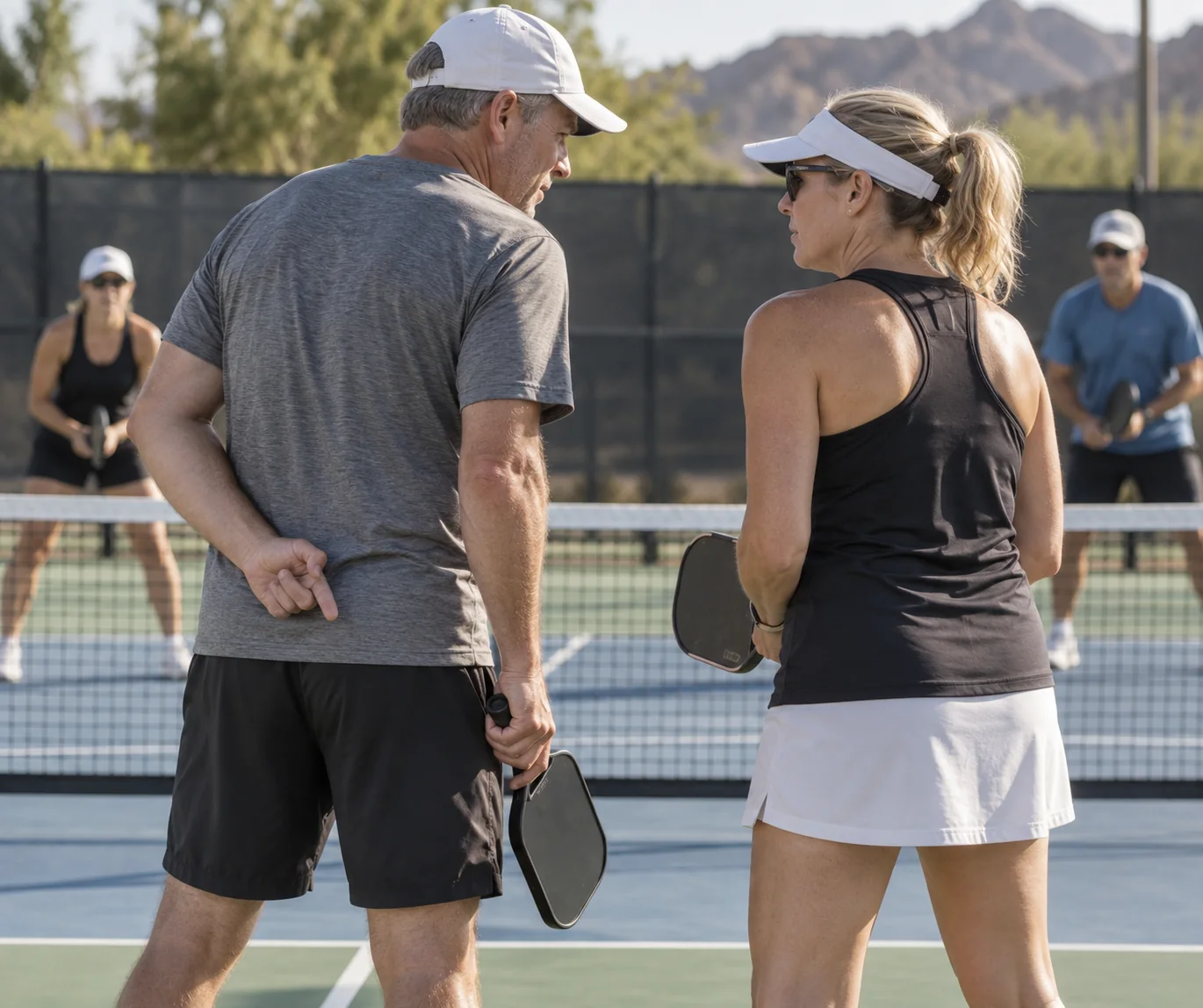
pickleball doubles communication does not require constant talking. It requires a small set of calls that both players understand before the rally begins. Agree on who takes the middle, signal planned movement, and speak early enough to change a decision. That is how two individual players start moving as one team.
What calls should pickleball doubles partners use?
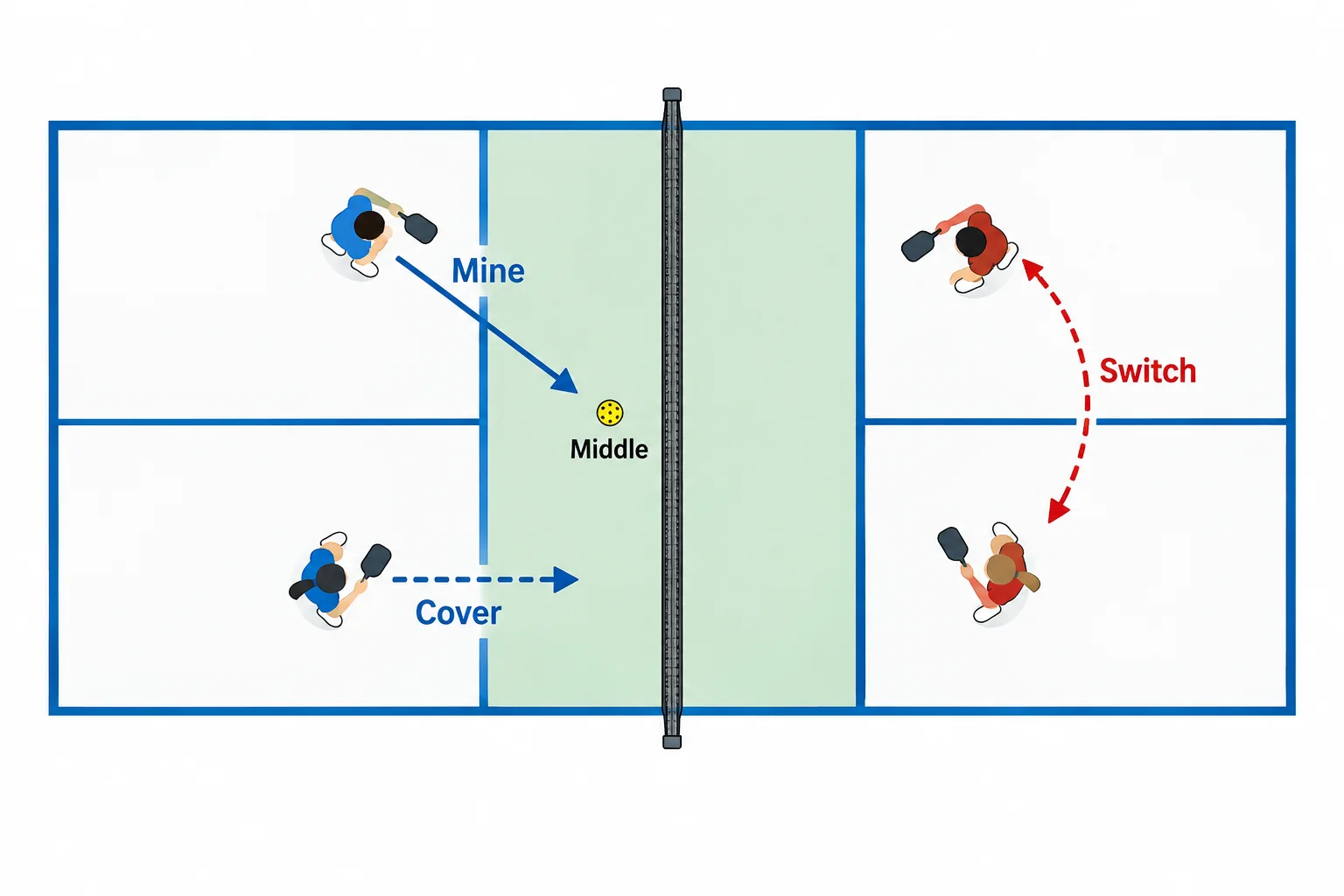
Start with six words: “Mine,” “You,” “Switch,” “Stay,” “Bounce,” and “Out.” Give each call one job. “Mine” means the speaker is taking the ball. “You” transfers responsibility. “Switch” tells the partner to exchange court sides after a poach, lob, or chase. “Stay” keeps the current formation. “Bounce” asks the partner to let the ball land, while “Out” signals that the ball is expected to miss.
Keep the vocabulary short. A new team does not need ten coded plays. Before a match, decide whether “Out” is advice or a call the hitter should trust, then use that meaning consistently. A quiet “Mine” may work during a soft dink, but a fast hands exchange or windy outdoor point needs a louder call.
How early should you call the ball?
A call is useful only before your partner commits weight, paddle, or court position. If both paddles are already moving toward a middle ball, “Mine” has become a report about the mistake rather than a solution.
Use this timing rule:
- Call a lob as soon as its flight is clear.
- Claim a middle drive before it reaches the kitchen line.
- Say “Switch” while both players can still change direction.
- Signal a planned poach before the serve or return.
After your partner calls “Mine,” do not stop moving. Release the ball, cover the space their movement opened, and prepare for the likely reply. For example, if your partner takes a lob on your side, you fill the uncovered half instead of watching the same ball. The call assigns the hitter; it does not cancel the partner’s next job.
Who should cover the middle in doubles?
Many teams use “the forehand takes the middle” as a default. It often gives the player a stronger swing and better reach, but it is not a law. Balance, handedness, ball height, and court position still matter. A player falling backward should not reach across a stable partner just because the forehand normally owns that space.
Set the default before the point. Then let “Mine” or “You” override it when the actual ball changes responsibility. Once one player claims the ball, the other should believe the call and protect the next angle rather than reaching for the same shot.
A simple practice example: feed 10 balls through the seam. If both players hesitate on four, the team has a 40% confusion rate in that drill, not a reason to blame either player. Repeat the same feed with one agreed default and an early call, then track whether the hesitation falls.
How do poach signals work?
A poach means crossing toward your partner’s side to intercept a ball. It can create a better contact, but it also exposes the space you leave. Planned movement needs a signal before the rally; the partner then knows to cover the vacated sideline. During the crossing, “Switch” can confirm the rotation.
Do not poach every reachable ball. Commit when three conditions line up: you expect a controllable contact, your partner can cover behind you, and the opponent’s position makes pressure worthwhile. If your partner is still moving or cannot see the play, staying home is usually stronger.
What is a practical communication drill?
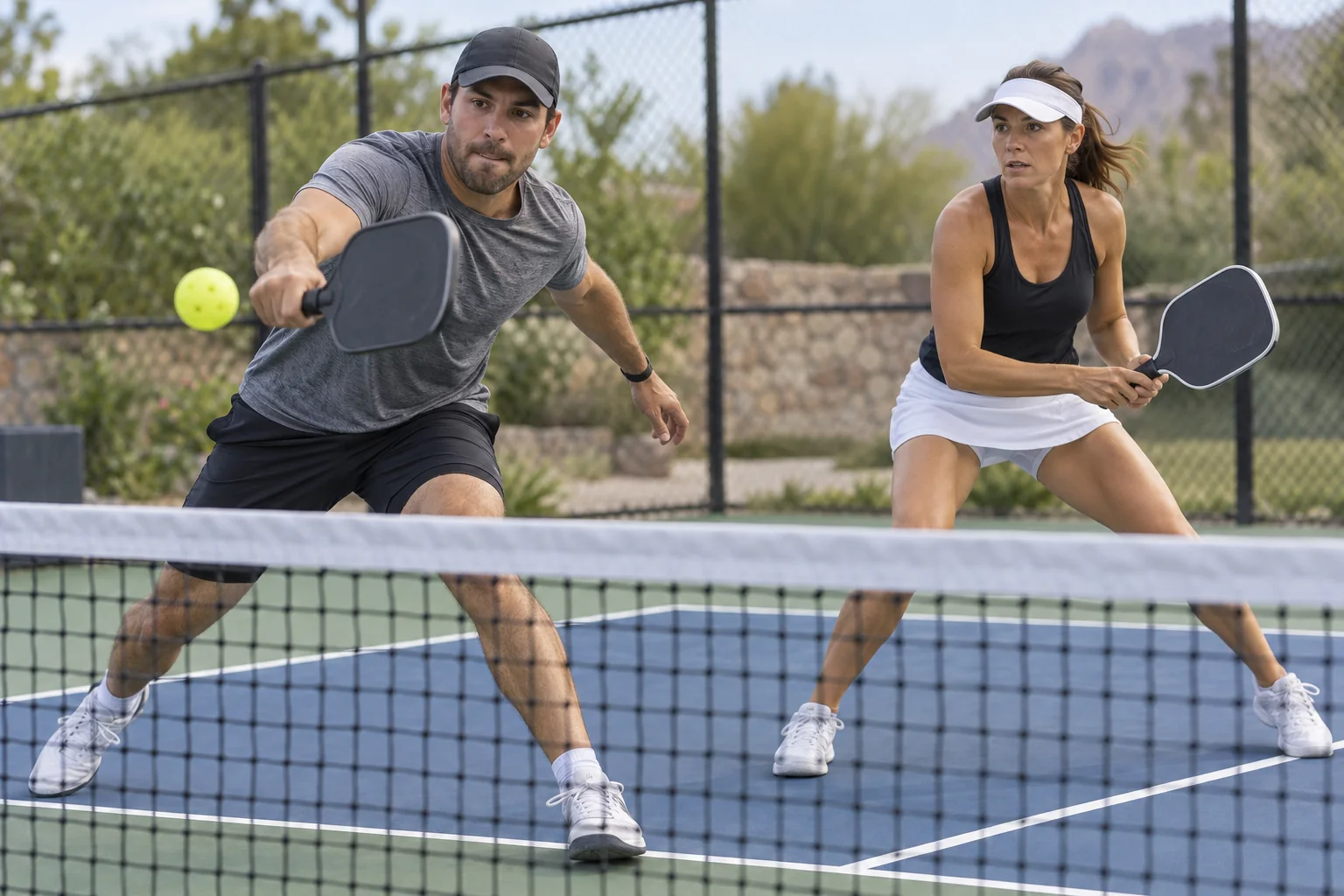
Use a three-stage drill with a partner. First, play 10 points while using only “Mine” and “You.” Next, add “Switch” during one planned poach per point. Finally, pause after each rally and name one adjustment, such as “call earlier on the lob” or “cover the sideline after my cross.” Keep the review to one job; a long technical lecture cannot help the next ball.
The goal is not noise. It is a shared decision made in time.
Pickleball doubles communication FAQ
Should both players call a middle ball?No. Agree on a default, then let the first clear call settle the responsibility. The partner should cover rather than challenge it.
What should a partner do after “Mine”?Move into the space created by the hitter, raise the paddle, and prepare for the most likely return.
When should a team use a hand signal?Use it before the serve or return for a planned poach, switch, or target. Verbal calls handle changing situations during the rally.
For broader positioning context, see pickleball doubles strategy and third-shot strategy. Players working on movement can also use pickleball footwork drills.